Can Israeli leaders afford not to change after the American midterm results? - opinion

The votes were cast in America, but the warning should be heard in Jerusalem.
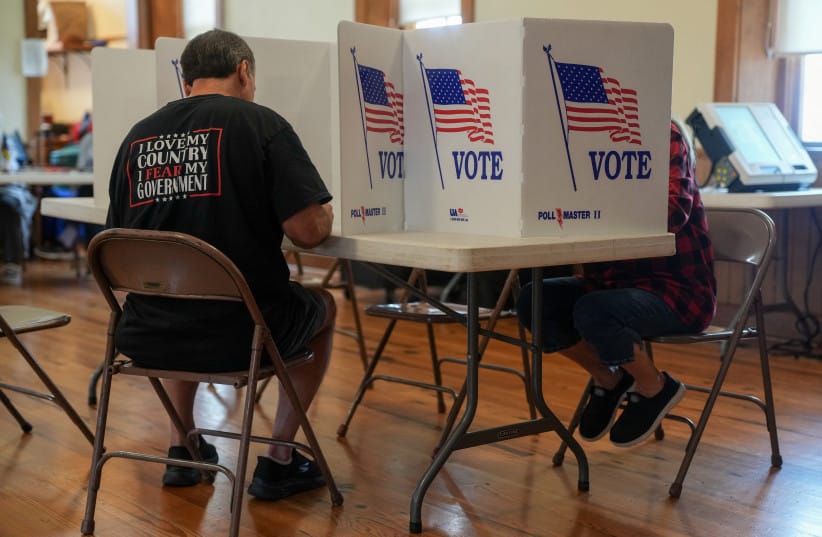
The 2026 midterm elections have given Democrats control of both houses of Congress. Something fundamental is changing. The question is whether Israel’s leaders are prepared to recognize it.
The result was not a referendum on Israel. Americans voted amid rising costs, political distrust, and fatigue with the Iran war. But a country whose security depends so heavily on the United States cannot afford to regard American domestic politics as a distant spectacle. Washington’s upheaval changes the conditions in which Jerusalem must choose.
There is also a lesson in democracy. The American constitutional system reminds us that no president, however powerful, owns the state. Voters can withdraw consent. Congress can reclaim authority. Institutions outlast their temporary occupants. Political leadership is a public trust, not a personal entitlement. That principle should resonate in every democracy, including Israel’s.
The most consequential change, moreover, did not begin on election night. It is unfolding within American society itself. Pew Research Center found that only 28% of Republicans under 35 viewed the Israeli government favorably, compared with 68% of Republicans aged 50 and older. The shift reaches beyond the progressive left into a younger conservative America that Israel has long assumed would remain sympathetic.
Many younger Americans assess alliances through questions of accountability, human rights, and the political purposes for which force is used.
Israel may contest their conclusions. It cannot afford to ignore their questions.
Iran war needs concrete political destination, not permanent confrontation
Iran makes the dilemma unavoidable. The Iranian regime is a brutal dictatorship whose sponsorship of terrorism and pursuit of regional domination remain threats of the first order. Its nuclear ambitions have not vanished, nor will its rulers voluntarily renounce them. American strikes have inflicted serious damage on Iran’s nuclear and military infrastructure, but weakening a threat is not the same as resolving it.
The task now is to turn those military gains into enforceable limits on Tehran’s capabilities, credible deterrence, and secure passage through the Strait of Hormuz. Energy must flow, commerce must recover, and ordinary life must resume.
Israel has every right to defend its citizens; no serious friend should confuse a political endgame with appeasement. But war without a political destination risks becoming permanent confrontation.
The same strategic discipline is needed on the Palestinian question. No credible regional order can be built on the permanent absence of a political horizon. The Abraham Accords opened a historic door, but their promise cannot be fully realized without addressing the Palestinian question.
The region needs an Israel that is secure and respected, able to deepen reconciliation and transform military strength into lasting political achievements.
Israeli leaders must rebuild American alliance across political divide
What, then, should Israel’s leaders do?
Rebuild the alliance across America’s political divide rather than staking Israel’s future on one faction. Speak seriously to the younger generation, including those who disagree. Define a realistic political endgame for Iran. Treat regional partnerships as strategic relationships to deepen, not trophies to display.
That brings Israelis to the most uncomfortable question. Can the same doctrine - and the same leadership - continue unchanged when the world that sustained that doctrine is changing? It is for Israeli citizens, not foreign friends, to choose their leaders.
America has just demonstrated that its institutions are greater than its leaders. Israel must ask whether its own leaders remember the same truth. Presidents come and go; parliamentary majorities rise and fall. States endure only when they recognize the changes around them and summon the courage to adapt while they can.
The danger for Israel is not that America has changed. It is that Israel might refuse to change with it.
Ahmed Charai is the publisher of the Jerusalem Strategic Tribune, TV Abraham, and Radio Abraham. He serves on the boards of several prominent institutions, including the Atlantic Council, the Center for the National Interest, the Foreign Policy Research Institute, and the International Crisis Group. He is also an International Councilor and a member of the Advisory Board at the Center for Strategic and International Studies.
KioskNews shows a cleaned-up reading view extracted from the publisher’s page — the original always lives on their site, not ours.