Pushed off a Mumbai local, he was told his foot was lost. How surgeons sewed it back
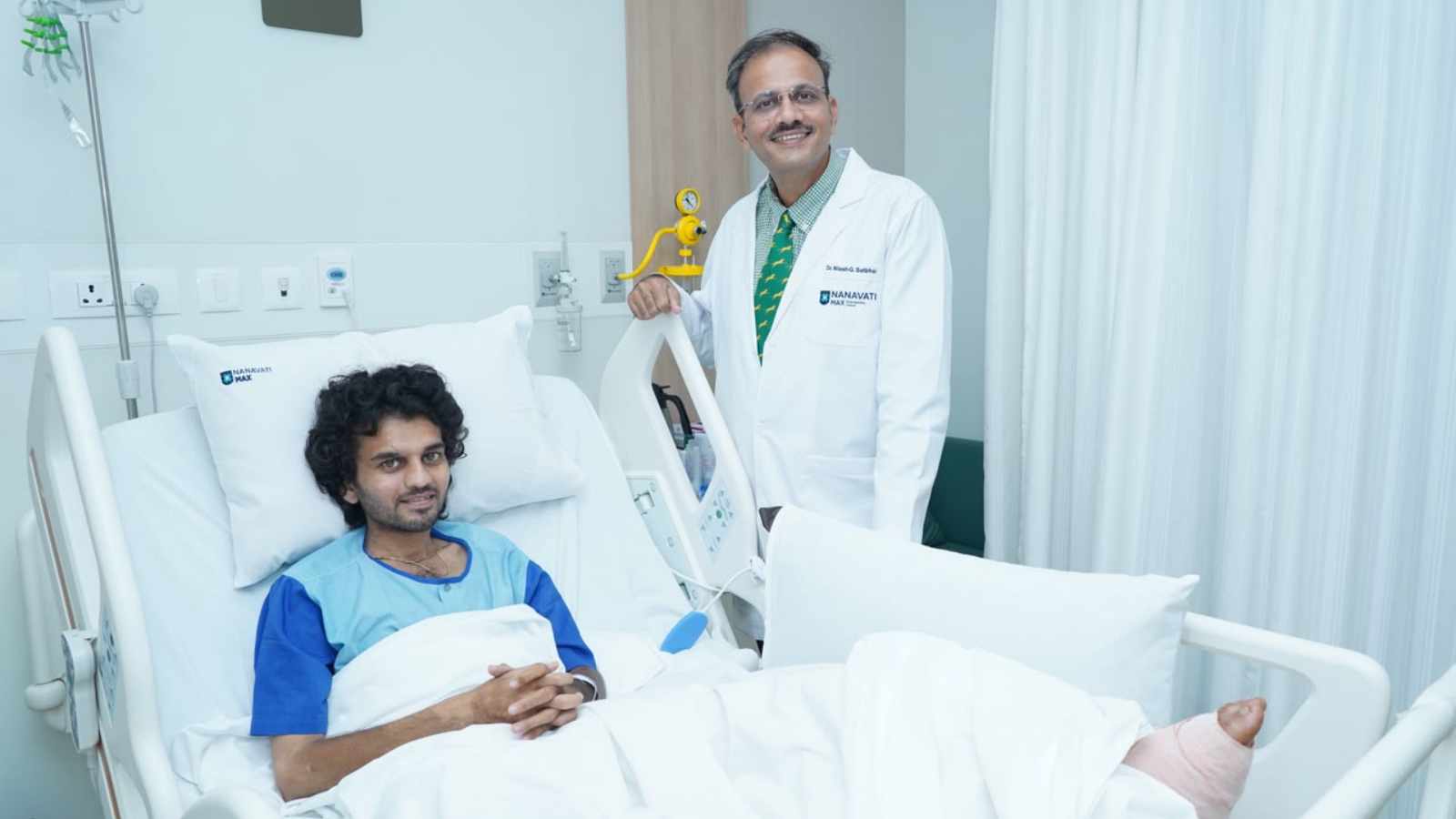
Doctors at the hospital where his family took him didn’t hold out much hope. Ronak Bhuptani’s left foot had been severed under the wheels of a Mumbai local train, and his family says they were told it couldn’t be saved. The plan was to cut a little higher and fit a prosthetic leg.
Two months later, the foot is still his. Surgeons at Nanavati Max Super Speciality Hospital in Vile Parle reattached it after it had gone nearly nine hours without blood supply, according to the hospital. The 30-year-old chartered accountant was discharged on October 17, the wound has almost completely healed, and he is set to begin rehabilitation in a week or two.
It started with a delayed train. On September 18, Ronak was returning to Mumbai from Mathura and needed to reach his office in Andheri quickly.
“On September 18, 2026, I was returning from Mathura to Borivali on the Rajdhani Express. Because the train was delayed and I needed to reach Andheri quickly for office work, I boarded a local train from Borivali to Kandivali. Due to the heavy morning rush as we approached Kandivali station, I got pushed since it was crowded, fell off the train, and my left leg got trapped under the wheels,” Ronak said.
Railway personnel pulled him out and rushed him to hospital, he recalled. “Fortunately, a friend spotted me, and because I remained conscious throughout, I gave him my phone password so he could alert my family,” he said.
After initial treatment at Shatabdi Hospital, his family moved him to a private hospital in Kandivali West. There, he says, doctors told them the leg couldn’t be fixed, that they would have to amputate a little more and fit a prosthetic leg, and that “any surgeon in Mumbai would say the same”.
The family’s spiritual guide pushed them to try a super-speciality hospital and arranged an appointment with Dr Nilesh G Satbhai, Director of Plastic, Reconstructive Microsurgery and Hand Transplantation at Nanavati Max.
Story continues below this ad
A multidisciplinary team led by Dr Satbhai and Dr Gautam J K Tawari, Senior Director, Arthroscopy and Sports Medicine, attempted an emergency replantation of the completely severed foot. They restored blood flow by repairing the damaged blood vessels, nerves and muscles.
Reattaching the foot was only half the job. The skin and soft tissue around the injury had been badly torn. “The complexity of this case lay not only in reattaching a completely amputated foot but also in repairing the extensive damage to the surrounding skin and soft tissues,” Dr Satbhai said.
Over several more surgeries, doctors stabilised the foot and covered the wound with healthy tissue and skin taken from Ronak’s thigh to protect the structures underneath. They also used dermal substitutes and laser therapy to help the tissue grow and the wound heal. Once the foot was back on, Dr Tawari said, the focus shifted to making sure it healed properly and became stable enough for him to move on it later.
Ronak spent nearly a month in hospital. He is now recovering at home in Kandivali, where he lives with his parents and brother. The wait before rehabilitation is mainly to let the bone heal and settle before the limb is put through any movement, Dr Satbhai said. The road ahead won’t be entirely smooth.
Story continues below this ad
“While his sensations are expected to progressively improve and his function is likely to get better over time, the reconstructed leg will initially be shorter than the other. This is because some amount of tissue was lost in the accident and during the amputation and reconstruction. To begin with, there will be some discrepancy in the length of both the legs. Initially, this can be adjusted through footwear modifications. Later, once everything has healed, we can consider procedures to lengthen the leg and balance the length on both sides,” Dr Satbhai said.
One option, he said, is an orthopaedic procedure called bone transport, or bone lengthening. Surgeons cut the bone at a specific point and pull the two ends apart very slowly, so new bone grows into the gap and makes up the missing length.
KioskNews shows a cleaned-up reading view extracted from the publisher’s page — the original always lives on their site, not ours.