US colleges are so short of students they're admitting people who never applied
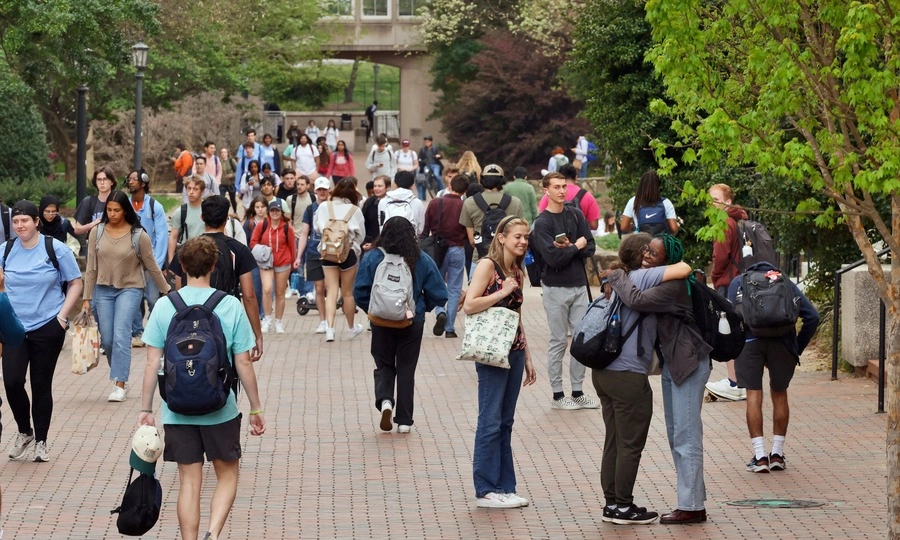
Hundreds of U.S. colleges are admitting high school students who never applied, as the number of American 18-year-olds begins a long decline.
The practice, known as direct admissions, has colleges extend offers based on little more than a high school transcript.
Students fill out a brief form on a matching platform, submit a transcript and wait for acceptances to arrive automatically. There are no essays, no questions about extracurriculars, no standardized test scores and no application fees. Colleges can still rescind an offer if a student's grades fall sharply in the final year of high school.
Common App, the shared application platform used by more than 1,100 colleges, opened its 2026-2027 direct admissions program with 234 participating institutions, Inside Higher Ed reported in August. The program had 70 members when it launched in full for the 2023-2024 cycle.
Participation is limited to first-generation students and those from low- and middle-income households. More than a dozen states run their own direct admissions initiatives, according to The Wall Street Journal.
"Instead of a student applying to the institution, the institution applies to them," Angel Perez, chief executive of the National Association for College Admission Counseling, told The Wall Street Journal, calling it a way for students to avoid jumping through hoops to get into college.
An analysis by the consulting firm Ruffalo Noel Levitz, using the latest census figures, projects 650,000 fewer 18-year-olds per year by 2039 than there are now, a decline of 15%, NPR reported.
The Western Interstate Commission for Higher Education projects the annual number of high school graduates will erode 13%, or nearly half a million, by 2041.
Fewer applicants leave some universities unable to make enough money to keep their doors open, Carleton College economist Nathan Grawe told the BBC in February.
Direct admissions has spread fastest among less selective private colleges, which compete hardest for the shrinking pool.
"We can no longer take a posture that expects our students to come to us," said Karlyn Crowley, president of Kalamazoo College in Michigan, which added direct admissions this year through EAB's Match platform. "We're at a new moment."
The liberal arts college enrolls about 1,200 undergraduates.
 |
|
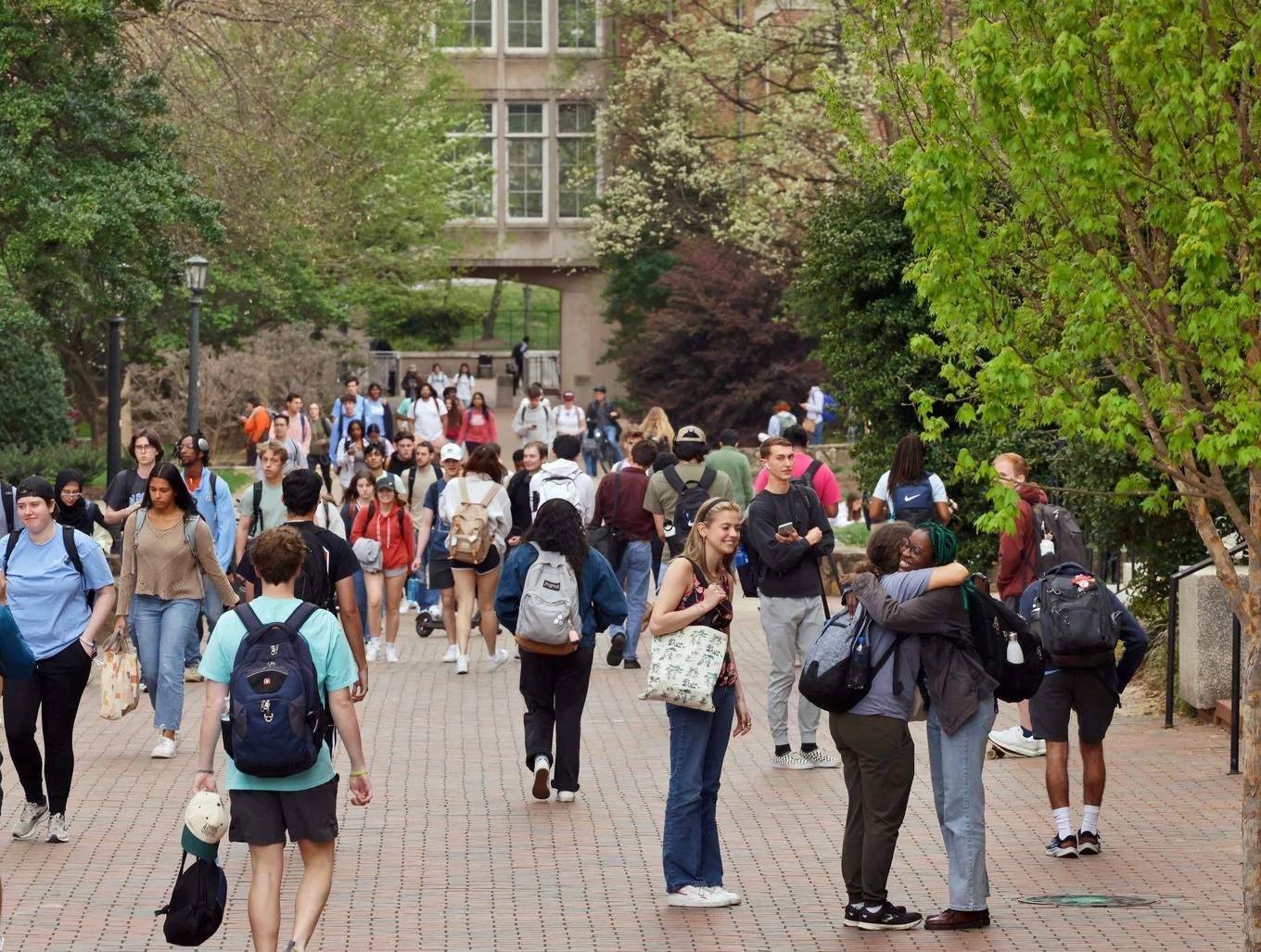
Members of the University of North Carolina's diverse student body mingle and make their way across campus as the Supreme Court weighs the issue of race-conscious admissions to colleges, in Chapel Hill, North Carolina, U.S., March 28, 2023. Photo by Reuters |
Eden Johnson, a high school senior in Georgia, was admitted to Fort Valley State University this year without applying, at a campus where she had attended a summer program.
Johnson, who plans to study biology, has still drawn up a list of about 20 colleges and intends to apply to most of them the conventional way, the Journal reported.
Fort Valley State was closer to a safety school for her, but the unsolicited letter eased her self-doubt. "It just felt good to know that somewhere wanted me," she said.
About 60% of students who enrolled through Niche's direct admissions tool last cycle were students of color and roughly 43% were the first in their families to attend college, Inside Higher Ed reported.
Among students who enrolled at those same institutions by other routes, 48% were students of color and 34% were first-generation.
Nearly 19,000 Alabama seniors took part in the state's first year and received 141,418 admission and potential scholarship offers from 39 in-state colleges, 17 of them four-year institutions.
The potential in-state scholarships were valued at about $2.8 billion. The nonprofit Alabama Possible leads the initiative with the state education department and community college system, using EAB's Appily Match software.
"Alabama Direct Admission is changing the question for thousands of students from 'Can I get into college?' to 'Which college opportunity is right for me?'" said Chandra Scott, executive director of Alabama Possible, as the program entered its second year. "That is a powerful shift."
Jacksonville State University, which joined Alabama's program last year, drew about 2,000 direct admission inquiries and enrolled 150 to 200 of those students, a lower conversion rate than through traditional admissions, according to the Journal.
Jessica Wiggins, the university's vice president for enrollment management, likened it to dating, saying it is easier to focus on someone already showing interest.
Michigan's new MI College Match lets participating colleges attach scholarship offers to their admission letters so a student can see what a school will actually cost before engaging with it, and 21 colleges were listed as taking part as of Aug. 28.
"When colleges say, 'We want you here, and you're already admitted,' it changes the entire conversation around postsecondary education," said Ryan Fewins-Bliss, executive director of the Michigan College Access Network.
Students offered direct admission were 12% more likely to take steps toward enrolling, with the largest gains among Black, multiracial, low-income and first-generation students, according to a study co-authored by University of Wisconsin-Madison education policy professor Taylor Odle, but those steps did not consistently produce enrollment.
Students who receive offers still give up on attending once they weigh tuition and living costs.
KioskNews shows a cleaned-up reading view extracted from the publisher’s page — the original always lives on their site, not ours.