UPSC Essentials | Daily subject-wise quiz : Science and Technology MCQs on PSLV-C62/EOS-N1 Mission, risks of high-dose ingestion of bromate and more (Week 190)
UPSC Essentials brings to you its initiative of subject-wise quizzes. These quizzes are designed to help you revise some of the most important topics from the static part of the syllabus. Attempt today’s subject quiz on Science and Technology to check your progress.
🚨 Click Here to read the UPSC Essentials magazine for November 2026. Share your views and suggestions in the comment box or at manas.srivastava@indianexpress.com🚨
1. Gastrointestinal distress
2. Central nervous system depression
3. Hemolytic anaemia
4. Excessive fluid in the lungs
(a) 2 and 4 only
(b) 1 and 3 only
(c) 1, 2, 3 and 4
(d) 3 and 4 only
Relevance: Bromate is relevant to the study of chemical contaminants, food safety and public health. It also highlights concerns surrounding food additives, drinking-water contamination and the regulation of chemical substances.
Explanation
— India’s apex food safety regulator, the Food Safety and Standards Authority of India (FSSAI), announced enforcement action against nine entities — including ‘sanction of prosecution’ for India’s largest bottled water manufacturer, Bisleri. ‘Sanction of prosecution’, under Section 42 of the Food Safety and Standards Act, 2006, refers to the official approval required from the Commissioner of Food Safety before criminal legal proceedings can be launched against an offender.
What risk do bromate and PAHs pose?
— According to the World Health Organisation (WHO), the chemical compound is not typically present in natural raw water at high levels; rather, it primarily forms as a disinfection by-product during drinking-water treatment processes.
— Exposure to bromate carries several significant health risks, categorised by toxicity and long-term carcinogenic potential.
— High-dose ingestion causes severe gastrointestinal distress (nausea, vomiting, abdominal pain, diarrhoea), central nervous system depression, hemolytic anaemia (a disorder involving destruction of red blood cells), and pulmonary edema (excessive fluid in the lungs), according to the WHO.
— Further, severe acute poisoning can result in irreversible renal failure and deafness/hearing loss. Animal studies demonstrate that elevated bromate intake leads to severe kidney and liver toxicity, evidenced by marked increases in blood urea nitrogen and liver enzymes, as well as kidney tissue lesions.
— Polynuclear Aromatic Hydrocarbons (PAHs) are chemicals that occur naturally in coal, crude oil, and gasoline, and are produced when coal, oil, gas, wood, garbage, and tobacco are burned, according to the US Environmental Protection Agency.
Therefore, option (c) is the correct answer.
QUESTION 2
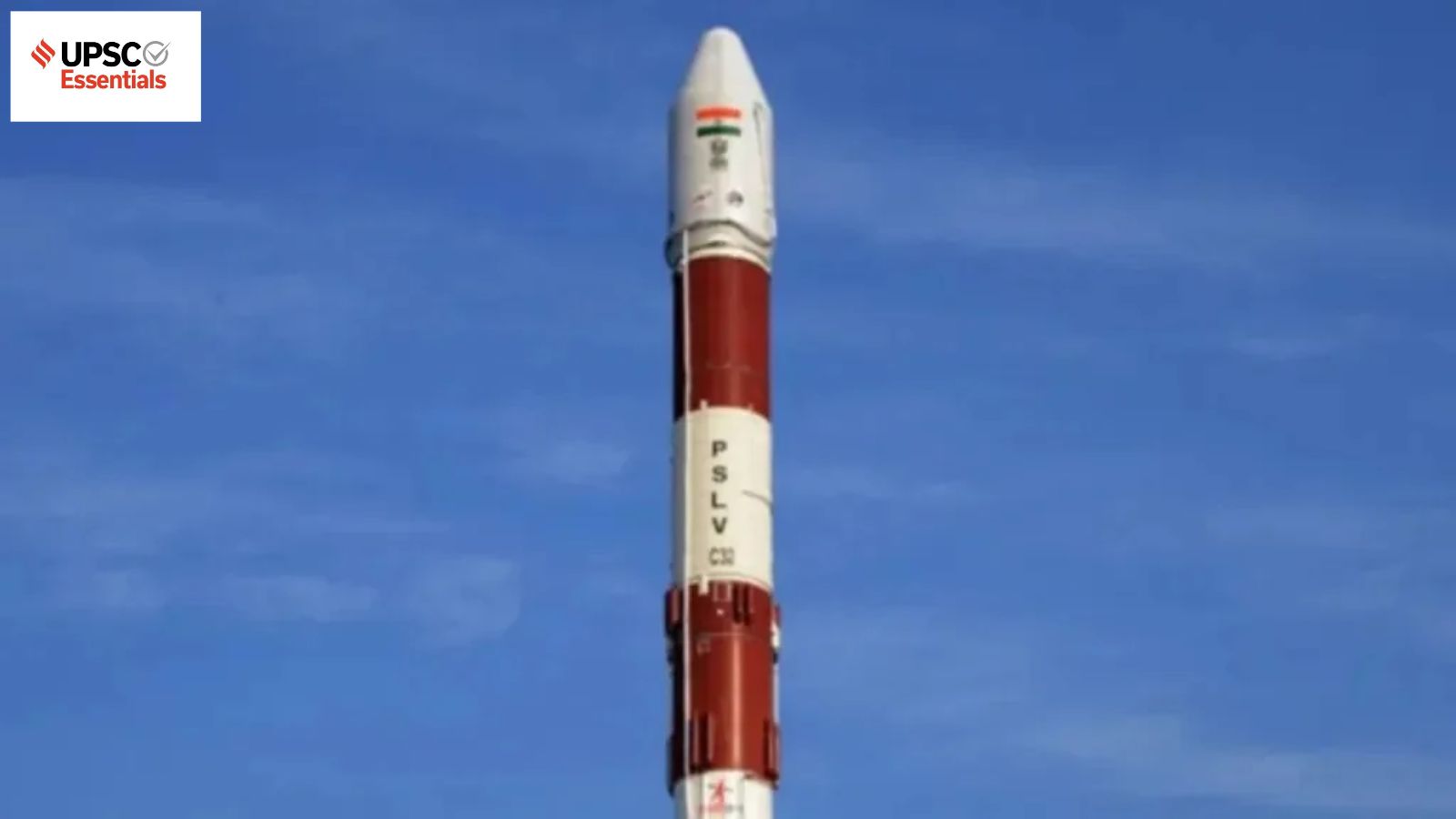
With reference to the PSLV-C62/EOS-N1 Mission, consider the following statements:
1. The mission aims to put EOS-N1 and 14 Co-passenger satellites into a Sun-synchronous orbit.
2. The mission is a joint mission of the Indian Space Research Organisation (ISRO) and the Japan Aerospace Exploration Agency (JAXA).
Which of the statements given above is/are correct?
(a) 1 only
(b) 2 only
(c) Both 1 and 2
(d) Neither 1 nor 2
Relevance: PSLV is an important component of India’s space launch capabilities and commercial satellite launch services. The mission is relevant to understanding ISRO’s launch vehicles, Earth observation satellites and Sun-synchronous orbits.
Explanation
— The Maiden flight of India’s privately built PSLV-N1 is likely to be pushed to early 2027, further extending the timeline for the programme under which at least two launches were planned this year. The rocket was to carry ISRO’s earth observation satellite EOS-10.
— PSLV-C62 vehicle will carry EOS-N1 and 15 Co-passenger satellites. It is a Commercial mission of NewSpace India Limited (NSIL). EOS-N1 and 14 Co-passenger satellites will be injected into a Sun Synchronous Orbit and KID Capsule into a re-entry trajectory. Hence, statement 1 is correct and statement 2 is not correct.
— After injection of EOS-N1 and 14 satellites, PS4 stage will be re-started to de-boost and enter a re-entry trajectory, followed by KID Capsule separation. Both PS4 stage and KID capsule will re-enter into Earth’s atmosphere, and impact will be in the South Pacific Ocean. Launch is planned from First Launch Pad (FLP), Satish Dhawan Space Centre (SDSC-SHAR), Sriharikota.
Therefore, option (a) is the correct answer.
(Other Source: http://www.isro.gov.in)
QUESTION 3
The term ‘Inference platforms’ refers to:
(a) Platforms that allow developers to train and fine-tune AI models using large datasets and specialised computing infrastructure.
(b) Platforms that provide cloud-based environments for storing, labelling and managing datasets used in developing artificial intelligence models.
(c) Platforms that enable businesses to develop AI applications by designing, testing and deploying machine learning algorithms from scratch.
(d) Platforms that provide cloud-based infrastructure for running pre-trained AI models and generating outputs without requiring users to manage the underlying computing hardware.
Relevance: AI inference is an important component of the artificial intelligence lifecycle, alongside model training and development. Understanding inference platforms is relevant to emerging technologies, AI infrastructure and India’s efforts to strengthen its domestic AI ecosystem.
Explanation
— Indian artificial intelligence (AI) startup Sarvam has defended its decision to offer Chinese-developed AI models through its newly launched Token Factory platform, clarifying that the service runs on privately procured computing infrastructure without government subsidies.
— Sarvam’s Token Factory is an AI inference platform that allows businesses to run different AI models using Sarvam’s computing infrastructure located in India.
— Inference platforms are services that allow businesses and developers to run AI models without having to purchase expensive computing hardware or manage the infrastructure themselves. While developing and training an AI model requires substantial investment, running it at scale also demands considerable computing resources.
— Inference providers offer access to different AI models through application programming interfaces (APIs), typically charging customers based on the number of tokens processed. This allows businesses to choose models suited to specific tasks without being tied to a single developer, while benefiting from economies of scale and optimised computing infrastructure.
Therefore, option (d) is the correct answer.
QUESTION 4
With reference to H5N1, consider the following statements:
1. It is a strain of avian influenza.
2. The virus is restricted to poultry and does not infect other animal species.
3. The H5N1 virus does not have a vaccine.
How many of the statements given above are correct?
(a) Only one
(b) Only two
(c) All three
(d) None
Relevance: H5N1 is relevant to the study of emerging and re-emerging infectious diseases, particularly zoonotic diseases. The topic connects virology with disease transmission, animal-to-human spillover, vaccination and public health preparedness.
Explanation
— For years, India has dealt with recurring outbreaks of bird flu, caused by the highly pathogenic H5N1 strain of avian influenza. While the disease has primarily affected poultry, the virus has increasingly been detected in other animal species, including tigers, leopards, and other mammals. It has also infected humans, raising concerns about its potential to pose a wider public health threat. Hence, statement 1 is correct and statement 2 is not correct.
— Now, scientists at the ICAR-National Institute of High Security Animal Diseases (NIHSAD) in Bhopal have developed India’s first indigenous vaccine against H5N1 for chickens. Hence, statement 3 is not correct.
— A clade is a genetic grouping of viruses that share a common ancestry. H5N1 is the name of the virus subtype, while 2.3.2.1a identifies a particular genetic lineage within it. This is important because influenza viruses continue to change over time, and vaccines need to be suited to the strains circulating in a population.
— The vaccine is intended to protect chickens, not humans. Its potential public health benefit lies in reducing the circulation of the virus among birds and, consequently, the opportunities for transmission to people who come into contact with infected poultry.
QUESTION 5
Recently, a kidney disease called ‘membranous nephropathy’ was in the news. It is known to be caused by high levels of:
(a) Mercury
(b) Lead
(c) Arsenic
(d) Cadmium
Relevance: The question links environmental pollution and heavy metal toxicity with human health and organ-specific diseases. It connects environmental health, industrial pollution and the biological consequences of exposure to hazardous substances.
Explanation
— A 17-year-old girl from Keralam developed a kidney disease called membranous nephropathy and was hospitalised after she used a so-called fairness cream with alarmingly high levels of mercury.
— The girl purchased a fairness cream from an e-commerce platform after a vlogger recommended it. After she complained of swelling on the body (edema), bubbly urine and other symptoms, she was taken to the Aster MIMS Hospital at Areekode in Malappuram.
— She was then diagnosed with membranous nephropathy, a medical condition in which the immune system damages the glomeruli, or the tiny filtering units of the kidneys. The resulting injury allows proteins, particularly albumin, to escape into urine.
— The patient’s history showed that she has been using a fairness cream, whose samples were tested outside the state and found to have high mercury levels. Several people have since shared similar experiences on social media.
Previous Daily Subject-Wise-Quiz
Daily Subject-wise quiz — History, Culture, and Social Issues
Daily subject-wise quiz — Polity and Governance (Week 190)
Daily subject-wise quiz — Science and Technology (Week 189)
Daily subject-wise quiz — Economy (Week 189)
Daily subject-wise quiz — Environment and Geography (Week 189)
Daily subject-wise quiz – International Relations (Week 189)
Stay updated with the latest UPSC articles by joining our Telegram channel – IndianExpress UPSC Hub, and follow us on Instagram and X
KioskNews shows a cleaned-up reading view extracted from the publisher’s page — the original always lives on their site, not ours.