Doing more with fewer people: How AI is changing Chinese companies

BEIJING: Zhang Pengtao has spent 14 years running an advertising and video production business, but his operation today looks very different from the seven-person studio he once had.
The 37-year-old now runs ACE Studio without any other staff, using artificial intelligence to handle work that would otherwise require more people.
He is among a growing number of one-person companies, or OPCs, in China.
There were reportedly more than 16 million such businesses nationwide as of June 2025.
Despite having no coding background, Zhang used OpenAI's coding agent Codex to build his own tools for managing projects and finances.
His software allows users to keep track of costs and calculate how much each project has earned.
“If you are an OPC, you probably would not hire a separate accountant just to handle your bookkeeping because the cost of doing that would be around 8,000 yuan (US$1,200) per month,” he told CNA.
FROM THREE DAYS TO THREE HOURS
AI has also changed the video production work Zhang does for clients.
Much of the process that previously required traditional production methods can now be done on his laptop.
"I first come up with the creative concept. Then feed it directly into Codex, and it can generate an online presentation, create the images, and put the entire presentation together," he said.
“What used to take three days can now be done in about three hours.”
Zhang estimates that his productivity has roughly tripled, while the number of clients he works with has doubled. He is also using AI to expand beyond traditional client work.
"This year, I started taking another path, creating content. Instead of serving just one client, I'm serving people, individual users."
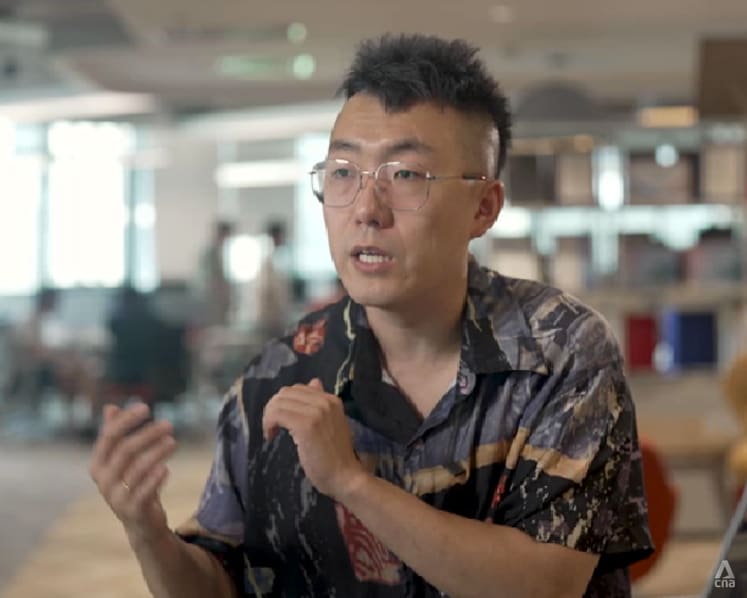
Over the past year, Zhang has earned close to US$30,000 from brand deals.
He also runs paid offline AI training sessions, typically charging about US$750 to US$1,500 per session, while using his content to attract new clients.
He estimates that his annual income is now 60 to 80 per cent higher than when he ran the seven-person studio, even after accounting for his AI costs.
Zhang spends about US$3,000 a month on AI subscriptions and other digital tools. But he cautioned that AI alone was not responsible for the results.
“I may be getting these results now, but before making AI videos, I'd already spent 14 years working in video production,” he said.
USING AI TO ACQUIRE EXPERTISE
While ACE Studio is using AI to amplify years of experience, another Chinese company is using the technology to acquire expertise.
The five-member team behind AI video platform Toonflow had no traditional filmmaking background when its founders spotted an opportunity in the AI-generated content industry.
"The biggest way AI has helped me is by allowing me to acquire knowledge about the film and television industry much faster,” said Zhang Shun, general manager of Beijing Aia Technology, which runs Toonflow.
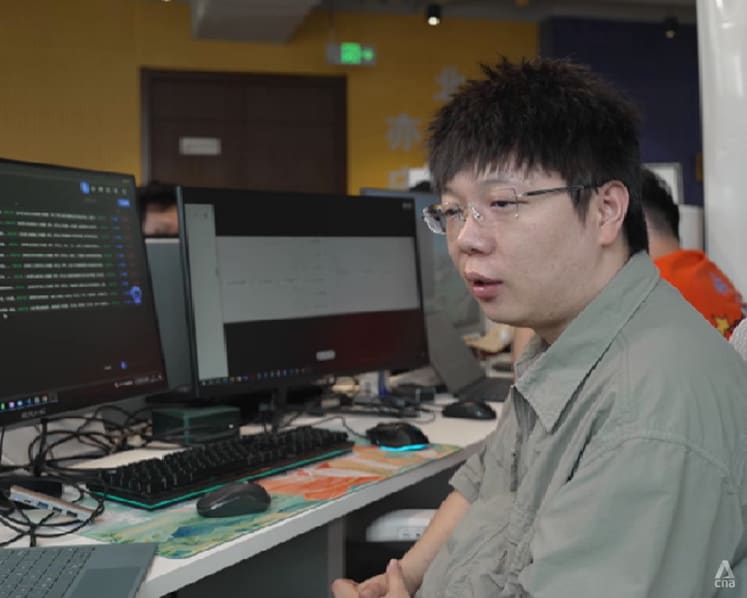
He said he then used that knowledge to build the platform's AI framework, while also relying on AI to help design and optimise prompts.
Toonflow uses AI agents for different stages of video production.
A novel can be fed into the system, which breaks down the story and identifies elements such as key events, characters and plotlines. It then creates a script, storyboard and visuals before turning them into a finished video.
The company produced a two-minute clip in two hours at a cost of about US$20.

But its team draws a line at using AI to bridge every gap in its expertise.
“I can judge whether an AI-generated solution is good or bad. Our engineers can judge whether AI-generated code is good or bad. We know how to evaluate the quality of the output,” Zhang said.
“But finance is different. We don’t have the expertise to tell whether AI is doing it correctly, and that’s risky.”
A COMMUNITY BUILT FOR OPCs
While AI can give OPCs more capability, it cannot give them customers. Communities designed specifically for these businesses are now emerging to help fill that gap.
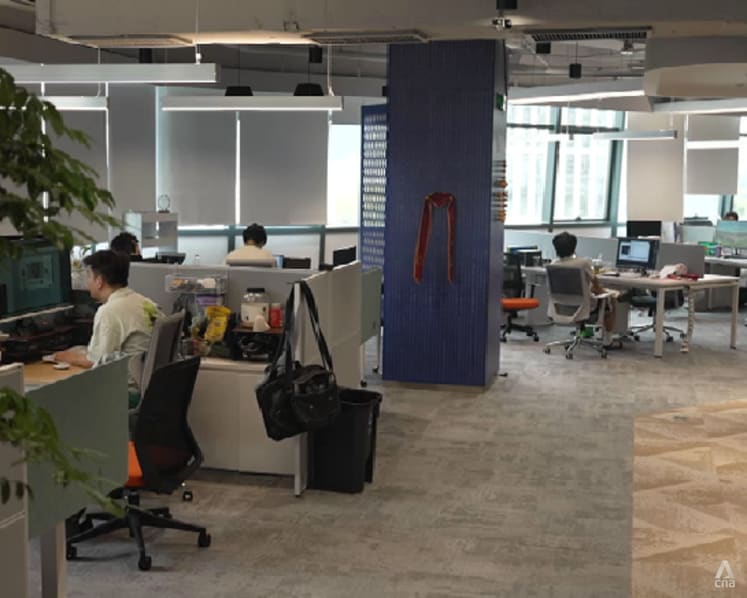
In Beijing, a 3,000 sq m space has been set up for OPCs, with workspaces, an AI content studio and on-site business registration services.
Unlike a traditional startup incubator, the WaytoAGI Moshu OPC Community is designed specifically for such ultra-lean businesses.

Zhuang Jianyu, ecosystem lead at the community, said AI can optimise or partly replace some tasks, but there are limits to how far that can go.
“If OPCs want to promote and grow their products or projects on a larger scale, investing in additional manpower is still necessary,” she said.
Launched in April, the initiative is operated by WaytoAGI, an AI developer community, with the Beijing Economic-Technological Development Area, also known as Beijing E-Town, providing government support and resources.
For the community, an OPC can refer to a single founder or a small team of around three to five people using AI to operate a business.
More than 600 applicants applied for its first intake, of which 56 were selected based on factors including whether they had an active project, how they used AI, the potential of their product and what they could contribute to the community.
Office space is free for the first year, while founders who qualify can also apply for government-subsidised housing for eligible talent.
FINDING CUSTOMERS, AND EACH OTHER
Beyond cutting costs, the community also connects OPCs with projects and collaborators.
“We have built something like a service platform or system that can bring in external resources and orders, which we then distribute to the OPCs,” Zhuang said.
The model is still being developed, but it has already been tested on a project with tech giant Alibaba that brought together 27 AI content creators.
The longer-term idea is for larger jobs to be broken up, allowing several OPCs with different capabilities to work together on a single project.
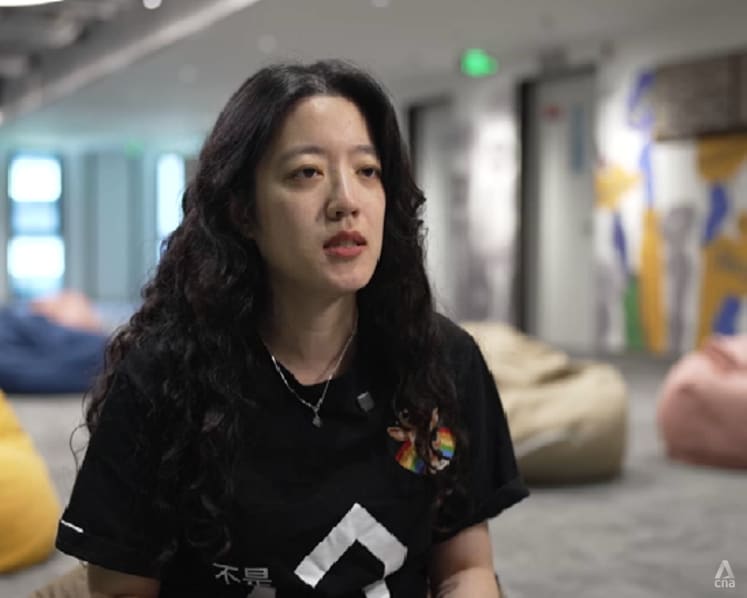
“They may have strong technical or product capabilities, but without the right channels to promote their work and gain visibility, it can be difficult for them to find suitable clients or business opportunities,” Zhuang said.
Private networks are emerging around the OPC model too.
Shanghai entrepreneur Karen Dai has run SoloNest since 2024, a paid community for selected aspiring solo entrepreneurs. Dai also operates her own business solo.
For around US$200, members get a year of access to workshops and sharing sessions, as well as introductions to potential collaborators and investors.
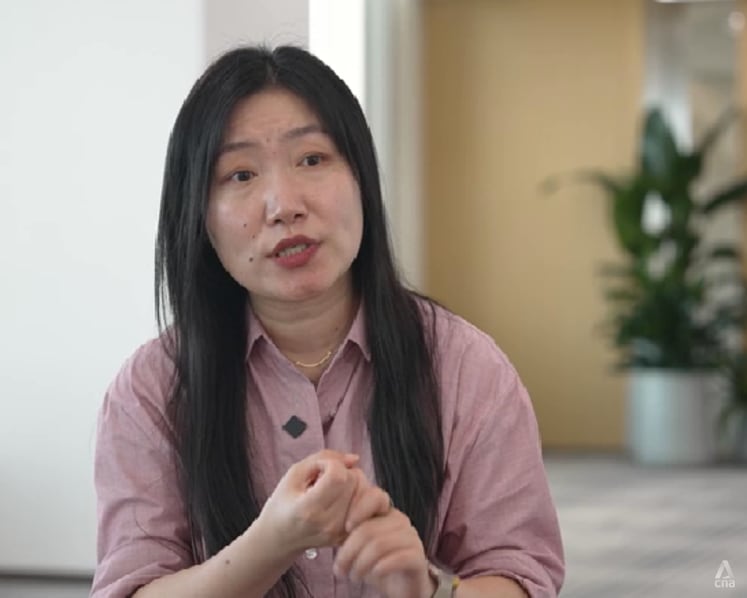
“When they’re looking for specialised talent, experts, potential partners or other resources, they come to me. I act as a bridge,” Dai said.
“One-person companies could become the ‘external brains’ or plug-ins for larger businesses, forming teams to provide services to them. But for that to happen, someone needs to secure those corporate projects,” she added.
LARGER COMPANIES EXPERIMENT WITH AI AGENTS
Using AI to do more with fewer people is not confined to OPCs and small teams. Larger companies are also experimenting with AI agents across their organisations.
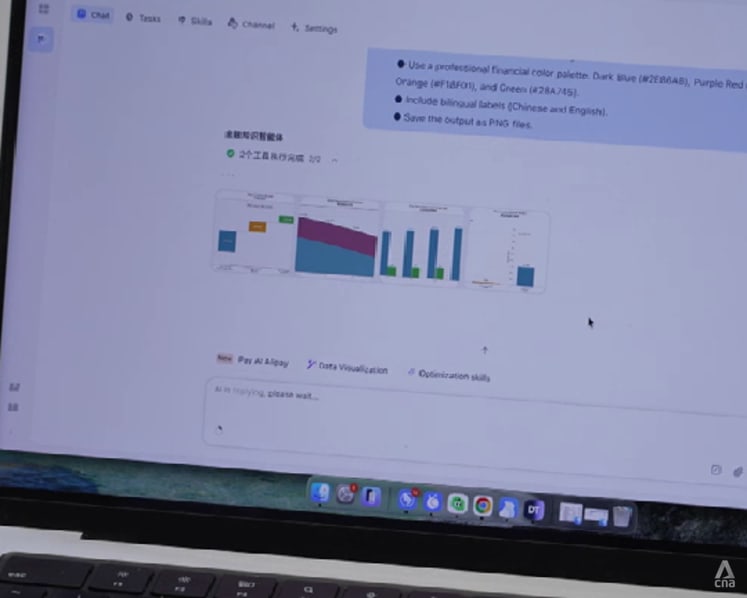
One example is DT Claw, an AI assistant developed by Ant Digital Technologies, the enterprise technology arm of Chinese fintech giant Ant Group.
The company says it can produce an investment research report within minutes, compared with the three to four hours a senior financial analyst might need.
But introducing AI agents across a company could require more than technological change.
“I think the biggest resistance comes from a company's internal organisation and the mindset of its employees. That's a huge obstacle,” said Leo Li, president of international business at Ant Digital Technologies.
Li said AI adoption needed to be driven from the top “because it involves changes to internal processes and even the redistribution of power within an organisation”.
He said early attempts to introduce AI agents often mirrored existing company structures, with individual positions represented by separate agents, including C-suite roles.
But among some young companies and startups, multiple AI agents are instead working together and making decisions collaboratively, he said.
Li believes this could eventually lead to flatter organisations with fewer layers of middle management.
“During this period of AI transformation, some jobs will definitely be affected in the short term. But in the long term, more and more people will be needed,” he said.
WHAT WILL COMPANIES LOOK LIKE?
Some researchers see a connection between the rise of OPCs and efforts by larger companies to use AI to operate with fewer people.
“If AI becomes powerful enough, then in theory, all organisations could become small-team companies or even OPCs,” said Wang Wenbo, an associate professor in the Department of Marketing at the Hong Kong University of Science and Technology.
“That’s why we need to look at OPCs as part of a bigger picture: large companies are slimming down, one-person companies are growing into small teams, and those small teams are becoming capable of doing many of the things that large companies can do.”
KioskNews shows a cleaned-up reading view extracted from the publisher’s page — the original always lives on their site, not ours.