‘They will never be forgotten again’: uncovering the buried history of Australia’s enslaved South Sea Islanders
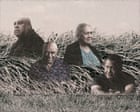
Harry Tanner was born in 1855 on Tanna Island in Vanuatu and abducted to work in Queensland’s sugar plantations under a practice known as blackbirding.
Neither Harry nor his son Robert – Graham Tanner’s grandfather – had any rights or recognition as Australian residents. Arthur James “Hobie” Tanner, Graham’s father, was described on his unofficial birth certificate as the son of a slave.
“Us guys are that close. Our dads had this,” he says. “Islanders were slaves, buried where they dropped.”
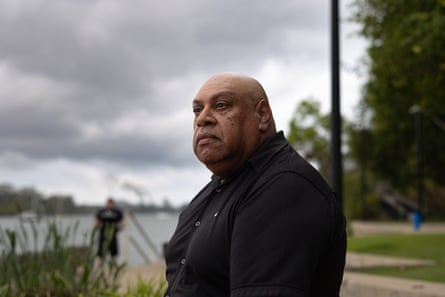
Leaning across a table that overlooks the river in the Queensland port city of Bundaberg, one of the hubs of the nation’s sugar industry – and of blackbirding – Tanner can see his family’s history.
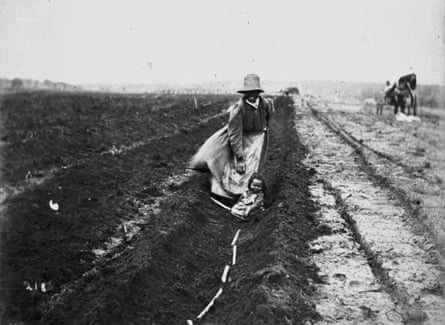
Between the 1860s – the decade the emancipation proclamation was signed in the United States – and the 1910s, at least 62,000 Pacific Islanders were coerced, tricked or kidnapped to provide labour on Australian sugar cane plantations. Hidden in the humid north, the use of indentured workers spread.
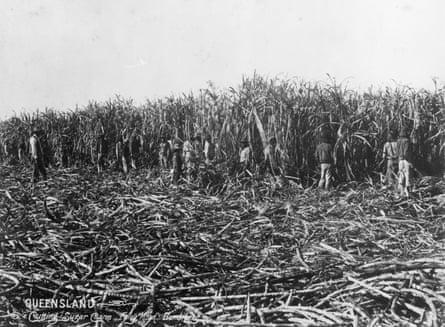
The term “blackbirding” to describe this practice was taken from the transatlantic slave trade. At least 15,000 Islanders died on the cane fields, succumbing to overwork, malnutrition or exposure to diseases brought to Australia from Europe. The mortality rate was about 25%.
Australia’s history of slavery is rarely mentioned. But for the descendants of those taken, the Australian South Sea Islander (ASSI) community, this dark past is held close, buried beneath paddocks in thousands of largely unmarked graves.
Sunnyside
Just outside Bundaberg is Sunnyside, a former sugar plantation owned by the family of former federal Labor MP Brian Courtice for more than a century.
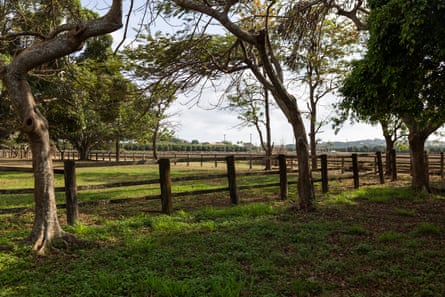
Down the driveway is a stately old home in the high-stumped Queenslander style alongside two ancient weeping fig trees. About 30 metres from the veranda is a rectangular patch of buffalo grass, framed by a timber fence. The air hums with insects and birdsong.
Beyond the fence, red-dirt paddocks, leased for sweet potatoes, stretch toward the horizon. And beneath the buffalo grass, shaded by the reaching branches of the trees, lie the remains of 29 South Sea Islanders.
Courtice’s grandfather and great-uncle bought the property in 1922, two decades after the blackbirding era ended.
“The past had already been completely sanitised,” Courtice says. “If it wasn’t for the old farmers telling my grandfather that they used to see freshly dug graves when they hauled their drays through here, no one would have ever known.”
In 2013, Courtice arranged for a local cemetery worker to use a ground-penetrating radar to survey the plot.
“She walked it up and down,” he says. “Then she stopped, got out the can of spray paint, and started marking rectangles in the grass. Thirteen in the front row. Ten in the second. Six in the third. When she got to the fourth grave in the front row, she looked up and said: ‘That’s a child … It’s a small grave.’”
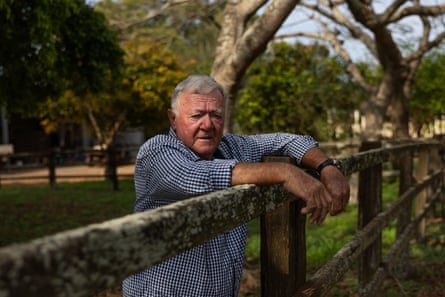
The burial ground was added to the Queensland heritage register that year, 150 years after the trade began. Despite the scans revealing 29 graves, the plantation’s original owner had only officially registered seven deaths. Reading the seven registered names, the then Solomon Islands prime minister, Gordon Darcy Lilo, who attended a recognition ceremony for the graves, identified that three likely came from New Caledonia, two from the Solomons and two from Vanuatu. The remaining 22, including the child, remain nameless.
The two towering fig trees were also listed that year, while the dry-rubble boundary wall at Sunnyside – built by enslaved people – had been heritage listed since 1996.
“Oral history passed down through the Islander community says a man was hanged from that branch after an altercation,” Courtice says, sitting in the trees’ shade.
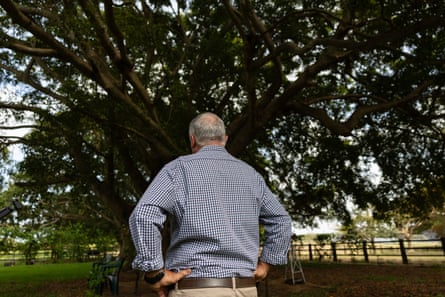
“There would be thousands buried in Bundaberg where the big plantations were like Fairymead and Bingera,” he says. “There would be thousands buried in Mackay, in Innisfail, in Cairns, in Maryborough.”
The true number of those who died may never be known, Ryan Butta, a historian and author, says.
“Death certificates were often not used because the man or woman was never taken to hospital,” he says. “So those deaths go unrecorded.”
Building the landscape
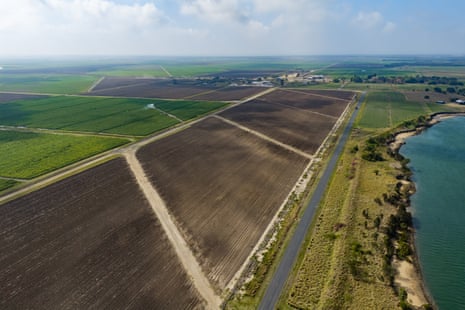
From the summit of the Hummock – an extinct volcanic crater rising above Bundaberg’s flat coastal plain – the land is a patchwork of green, brown and yellow paddocks. Cane stalks rustle in the sea breeze and tractors and cane trains rumble along Fairymead Road, named for one of the biggest plantations in the region. It’s now home to Bundaberg Sugar.
The physical labour of generations of South Sea Islanders is etched across the terrain. Miles of dry-rubble walls, hand-stacked from volcanic basalt rocks cleared from the red soil, line the fields.
Down on the coast, the same stones form the Bargara basin, a sheltered tidal pool built by hand by South Sea Islanders so white townsfolk could swim, safe from the choppy waters and sharks of the open ocean. The rocks have sat there so long they are now carpeted with curling green mangroves.
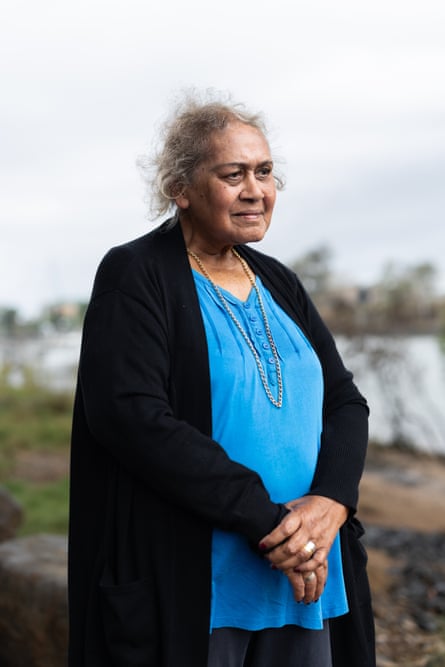
“My grandfather was one of the people who built the basin … one of a hundred,” says Aunty Alice Long, a Bundaberg ASSI elder. Her grandfather, Vira Long, was abducted from Longana village on Ambae Island in Vanuatu and renamed Robert.
“Imagine how long it would take to build,” Long says. “A couple of people would have picked the big rocks up together.”
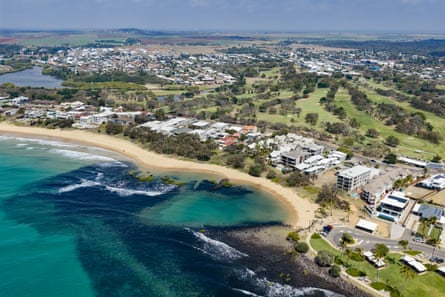
A plaque at the basin says that employers paid 10 shillings for each blackbirded labourer and were required to cover the £10 fee for return passage after a three-year period of indentured servitude was up. Those rules were poorly enforced.
Out of necessity, blackbirded labourers forged a common tongue, blending island dialects with English to create Bislama, a pidgin dialect now commonly used in Micronesia and Melanesia.
“That language was formed here in Bundaberg,” says Tanner.
A brutal practice
Sunnyside was established 1875 by Edward Turner, whose brutality is preserved in court archives. Turner was prosecuted by Polynesian labour inspector William Corfield for starving his workers – dividing 1lb (450g) of meat a day between 11 men and feeding them rotten potatoes which a magistrate deemed “unfit for pigs”.
Turner was also convicted of assaulting a woman named Raincomb, who had been taken from Ambrym Island in Vanuatu.
Labourers on Sunnyside weren’t provided accommodation and had to build shanties from dried cane refuse. “One of the ways they circumvented the British anti-slave laws was to let them have Sunday off,” Courtice says.
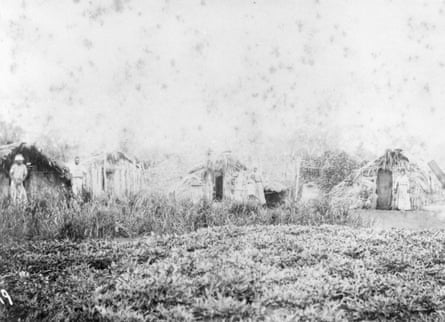
“Plantation owners paid a recruitment and shipping fee of just one or two pounds. An islander was worth less than a draught horse. If four or five died in a season, you simply ordered another boatload from the New Hebrides [a colonial name for Vanuatu].
“They were worked until their bodies broke, starved on rations unfit for animals, and when they died, they were buried in the paddock like livestock.”
A dark trade
Australia’s sugar boom was forged in the shadow of abolition.
Even after Britain technically abolished slavery in the colonies 1833 and paid compensation to 46,000 slave owners for the loss of their human “property”, colonial capital flowed into the Pacific. The unmarked graves at Sunnyside show that the abuses of plantation labour were not limited to the West Indies or the American South, Butta says. “They are evidence that these abuses happened here.”
Louis Hope, a Queensland sugar pioneer, came from a prominent slave-owning and slave-trading family, while the Fairfax family – proprietors of the Sydney Morning Herald until the 1990s– were major shareholders in the Colonial Sugar Refining Company (CSR).
At the same time, First Nations people across Australia were forced into unpaid domestic servitude, pastoral work and the perilous pearling industry.
When Australia federated in 1901, the new commonwealth moved to entrench the White Australia policy, ordering the mass deportation of Pacific Islander workers. Some avoided deportation by walking or swimming across into northern New South Wales, joining a community of escaped workers.
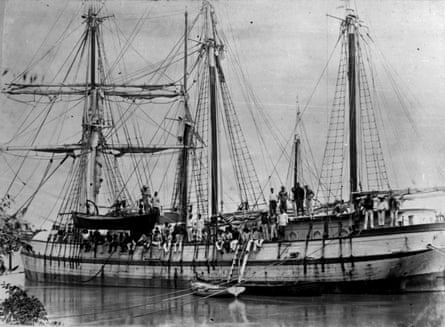
The terror of abduction was passed down through generations. When a replica colonial schooner visited the river in Bundaberg, Long climbed down into the cramped hold where captives had been confined – a visceral glimpse into what her ancestors endured.
Asked how she responds to the national myth that Australia never had slavery, Long says: “I just laugh.”
Those who remained in Bundaberg after the deportation push were shut out from white society. Prevented from buying or renting homes in town, families took refuge in the bush along Dr Mays Road in an area known as Moke’s Scrub.
To survive, families lived “the island way,” Long says, cultivating tropical fruits.
“Our people lived in that bush, our grandparents, all along this big long creek,” says Uncle Joe Nagas, an elder who recently returned to his home town of Bundaberg. “When they came out of the scrub, the only way they could get a house was to go to the farmer and work for them, and the farmer paid them back with a bit of property.
“They knew they were good workers … cane cutting was the best money they could get, even after blackbirding.”
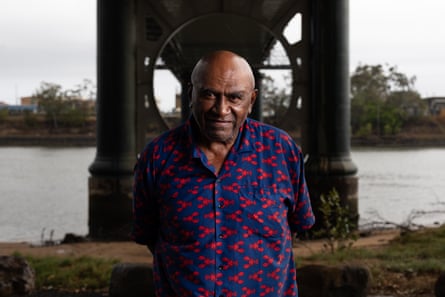
His father, Gordon Nagas, was a preacher who managed to buy five acres in the 1950s.
“Not many dark people owned land back in the 50s,” he says. “Now the grandchildren go up there at Christmas time and there’s full mango trees because they planted them years ago.”
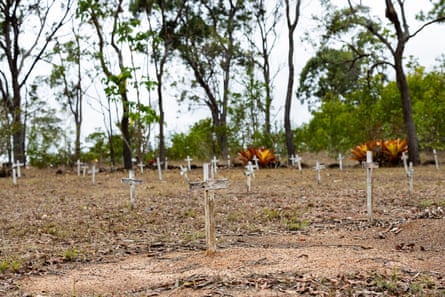
Until 1941, South Sea Islanders were banned from burial within the main grounds of Bundaberg cemetery, relegated to a separate plot in the back.
Adjacent to that plot stands the South Sea Islander church and hall complex. The timber buildings were saved from demolition at Fairymead plantation in the 1990s after a community-led legal fight.
Pastor Bruce Little leads the way behind the hall to a shaded plot dotted with white timber crosses and a memorial stone.
Like many in the ASSI community, Little carries dual heritage: his mother was a South Sea Islander from Joskeleigh, Queensland, with ancestors taken from a Vanuatu island, while his father was Aboriginal.
His Aboriginal grandmother, a Wakka Wakka woman, was forcibly removed from her country with her children and sent to Cherbourg mission while her husband was out working.
“Growing up in Emerald, we had to walk on the opposite side of the street from white folks,” he says. “At the pictures, blacks sat on one side, whites on the other.”
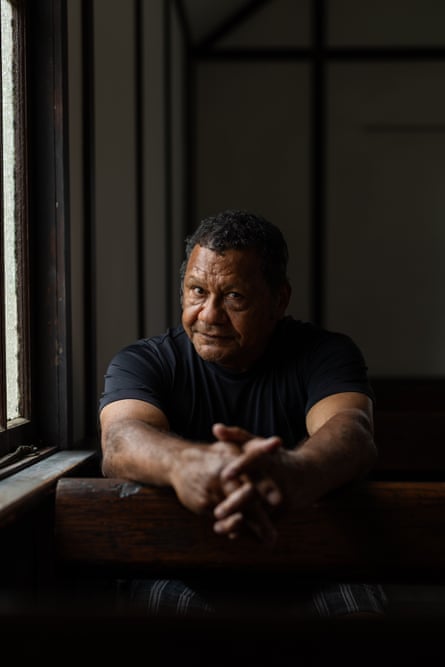
This segregation continues today in the telling of history, Tanner says.
“What we want is for this nation to understand that the multibillion-dollar agricultural wealth of this state was built on our ancestors’ backs,” he says. “Fly our flag on the national register. Teach the truth in the schools so our kids don’t get told their history never happened.
“We don’t want pity,” he adds. “Our elders survived kidnapping, starvation and exile, and they passed on strength and dignity to us.”
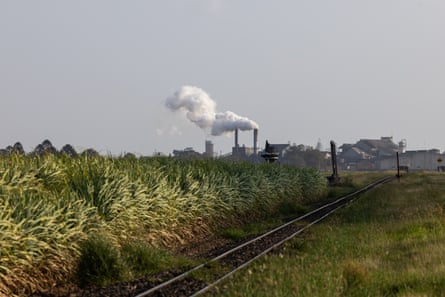
In 2021, the Bundaberg regional council issued an official apology for the district’s role in blackbirding. Mayor Helen Blackburn says the physical imprint of that era remains visible in the volcanic rock groynes, built by South Sea Islanders to protect the coast.
“They’re part of our fabric,” she says.
Courtice and others are also pushing for an apology to South Sea Islanders from the Australian high commission.
At Sunnyside, the morning sunlight filters through the branches of the poinciana trees that Courtice planted to shelter the dead, casting long shadows across gravesite.
“These 29 South Sea Islanders are buried in the red soil of Sunnyside, my parents and my sister are buried in the red soil of Sunnyside,” Courtice says, gesturing to three headstones on the other side of the house. “And my wife and I are going to be buried here in the same red soil just over there.
“These 29 people died thousands of miles from home, with no family to mourn them.
“As long as my family owns this ground, they will never be forgotten again.”
KioskNews shows a cleaned-up reading view extracted from the publisher’s page — the original always lives on their site, not ours.