‘I do not know if the doctor survived’: young mothers recall ‘living hell’ of Nepal’s floods
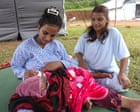
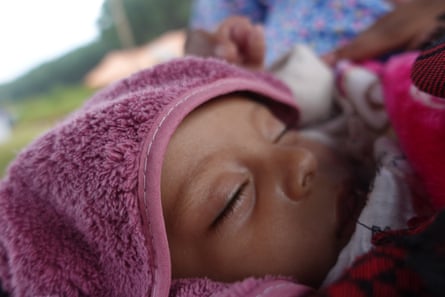
For three days, Pooja Pariyal waited on the roof of Trishuli hospital with her three-month-old daughter, Ridhika. On the ground below and around the building, most of her town had been destroyed and churned into a sea of mud in the catastrophic flash floods that surged through the Himayalan border region of Nepal and Tibet in August.
“Those three days were living hell for me, with no food, no working toilet and no one to help with the baby,” she says. “I had nothing to clean my baby’s soiled clothes. My milk supply had reduced because I was hungry and this poor little thing would cry her lungs out.
“I am so sorry you had to go through all of this,” she adds, breaking down in tears looking down at her baby.
Pariyal, 21, was one of about 50 patients – including five newborn babies – and medical staff stranded at the hospital. At night, the group went down into the hospital wards to rest – although Pariyal got little sleep – but come daylight they all climbed to the top of the building and spent the hours scanning the sky for helicopters.
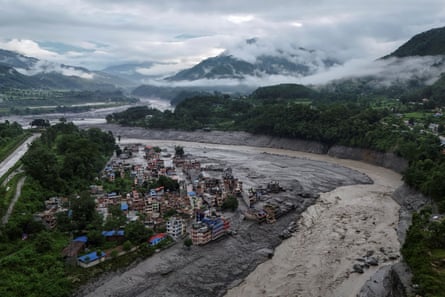
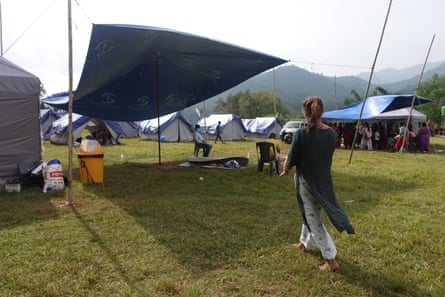
On the fourth day, an army helicopter arrived to evacuate the stranded group. Now Pariyal and her baby, who was diagnosed with pneumonia shortly after their rescue, are living with about 125 other people, sharing 25 tents at Lamibagaichha holding centre, a temporary site in the town of Bidur, a couple of miles south of Trishuli.
In the weeks since a glacier high in the Himalayas collapsed on 26 August, plunging into the river below and triggering the floods that swept away dozens of villages, communities, roads and bridges, there have been landslips and further localised flooding adding to the misery of the people of the region.
More than 1,400 people have died, more than 5,700 are missing and more than 80,000 are still in need of humanitarian assistance, according to the latest Unicef assessment.
At 7.30am on the morning of the disaster, Pariyal left her house in Trishuli bazaar to get the bus to the hospital for a routine postnatal appointment. An hour and a half later a deluge of water, mud and debris tore along the Bhotekoshi River engulfing everything in its path, including a cluster of shops, hotels and houses where Pariyal lived. As she sat in the hospital waiting room, sirens and loudspeakers alerted people to the unfolding disaster.
“My baby’s third-month vaccination was due on 26 August, which is why I left for the hospital at 7.30 in the morning and was there when the chaos happened,” she says.
“It is only because of my baby that I am alive today.”
At the time, Pariyal had no idea of the scale of the flood. She worried that clothes she had left out to dry on the terrace at home might get washed away. It did not cross her mind that she would lose everything. Her now-destroyed house was rented, so she is not entitled to government compensation. “Maybe I will go back to my parents’ house when they get rehoused,” she says.
Aditi Aryal, a communications analyst at the UN Population Fund in Nepal, says 5,030 pregnant women are among those affected by the floods, with an estimated 750 of those having complications, and 550 due to to give birth next month in their nearest hospitals.
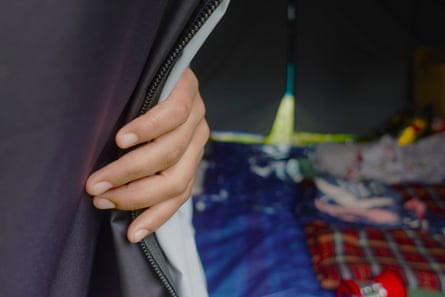
Kalpana Nepali, 23, from Rasuwa district, is living in another temporary shelter in Nuwakot, where men, women and children of all ages sleep together on the floor. There are mats and bedding for everyone. Nepali, who is seven months pregnant, was making soup in her kitchen when she had a phone call just after 8.30am from her husband who was on duty at the hydropower tunnel in Rasuwa district. He told her to get away from the house and reach higher ground. “God knows how I managed to walk uphill in my nightdress. Maybe because I had a life to save before mine.”
She does not remember being rescued. “I had fainted and my first memory is feeling water on my face and realising I was in a helicopter with 10 other people. Later, I ate a whole packet of bread. I was stressed about the life inside me. My doctor had strictly advised me to eat every four hours. I do not know if the doctor survived the flood or not.”
after newsletter promotion
Nepali’s husband was near the entrance of the tunnel so was able to escape. The pair are now living in a hall with about 80 other displaced people. “The toilet is not designated by sex, and there’s always a queue outside it,” she says.
Pregnant women staying in the shelters are being assigned to the nearest functioning health centre based on their estimated dates of delivery. Those with complicated or high-risk pregnancies will be airlifted to the maternity hospital in Kathmandu a week before they are due to give birth.
Nepali sits on a mat in the dormitory hall, a packet of biscuits in her hand. The disaster has taken away the luxury of eating to satisfy her pregnancy cravings, along with any sense of excitement about having her first baby. She is due in November and will give birth at Nuwakot health centre, before returning to the hall.
Lila Pieters Yahia, the United Nations resident coordinator in Nepal, warns: “Pregnant and lactating women might have a higher chance of experiencing trauma, shock and postpartum depression due to what they have experienced during pregnancy.”
Renuka Nepali is in the same shelter as Pariyal. The 27-year-old had just seconds to escape the flood with her two children, a 12-year-old son and an eight-month-old daughter in her arms. “I heard crying and shouting of ‘Daudanu-daudanu [run-run]!’ from my window while I was getting my son ready for school. When I opened the door, people were actually running. Without thinking, I held my daughter in my left arm, and grabbed my son with my right. I ran so fast my boy got a lot of bruises but these bruises are a sign of survival.”
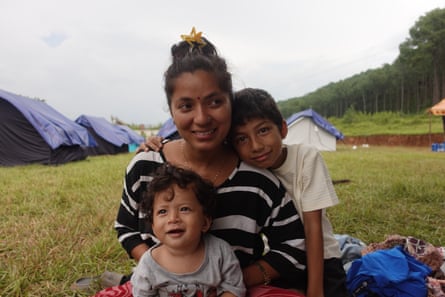
Her relief at escaping is mixed with grief at the memory of her heavily pregnant friend and neighbour who could not outrun the flood. “She was trying to escape with me but she couldn’t keep up. She was swallowed by the flood while trying to grab a branch or something to hold on to.
“We have been through hell,” she says as she folds her clothes, which had been donated to the shelter. “This is what mother nature can do to you when you upset her. She doesn’t even spare the mothers.”
KioskNews shows a cleaned-up reading view extracted from the publisher’s page — the original always lives on their site, not ours.