The 10 Best Video Game Character Arcs, Ranked

Diego Pineda has been a devout storyteller his whole life. He has self-published a fantasy novel and a book of short stories, and is actively working on publishing his second novel.
A lifelong fan of watching movies and talking about them endlessly, he writes reviews and analyses on his Instagram page dedicated to cinema, and occasionally on his blog. His favorite filmmakers are Andrei Tarkovsky and Charlie Chaplin. He loves modern Mexican cinema and thinks it's tragically underappreciated.
Other interests of Diego's include reading, gaming, roller coasters, writing reviews on his Letterboxd account (username: DPP_reviews), and going down rabbit holes of whatever topic he's interested in at any given point.
Video game developers were using the emerging medium of video games to tell stories as far back as the 1970s, but it wasn't until the '90s and early 2000s that narrative-driven games started to become one of the true major pillars of the gaming medium. And while the nature of video games makes it so that not even narrative games require character arcs, the medium has nonetheless offered some of the most compelling character arcs that fiction as a whole has seen in modern times.
We're talking about classics as foundational as Grand Theft Auto IV, whose Niko Bellic is one of the most compelling antiheroes in gaming history; and modern masterpieces like The Last of Us Part II, whose Abby Anderson is hugely divisive precisely because she has such a riveting arc. In order to qualify for this list, however, the character arc in question must be generally pre-set and not exaggeratedly subject to player choice. While the arcs of characters like Harry Du Bois from Disco Elysium and Commander Shepard from the Mass Effect trilogy can be great, they're so hugely dependent on players' choices that no two players may get the exact same character arc.
There are spoilers ahead!
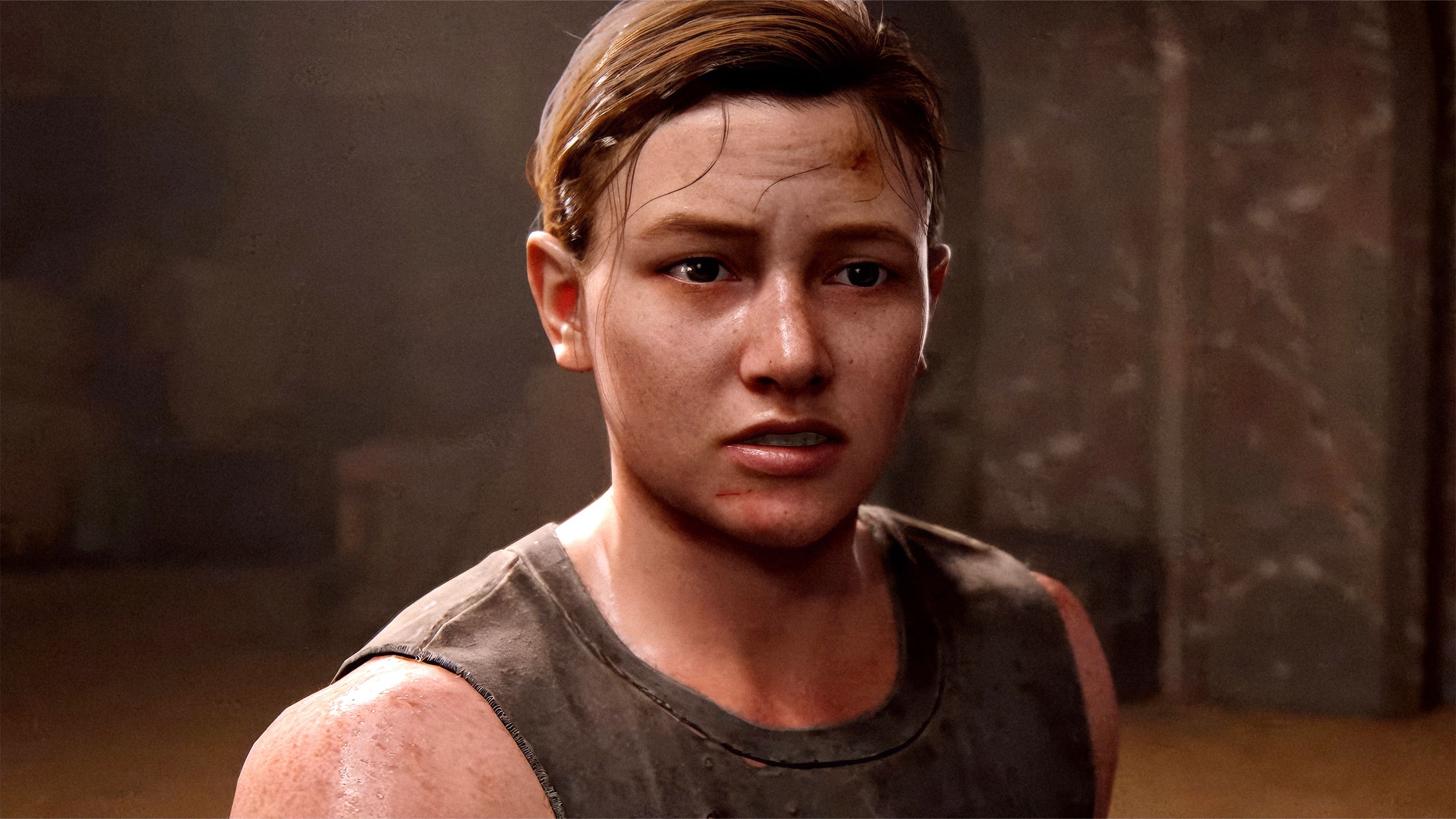
10 Abby Anderson — 'The Last of Us Part II' (2020)

Since 2013's The Last of Us was not only an unprecedented smash hit for Naughty Dog, but all in all one of the most groundbreaking action-adventure video games of all time, expectations for its sequel were through the roof. In the end, The Last of Us Part II ended up being one of the most divisive AAA titles in gaming history, the sort of game that people either passionately love or hate with a burning passion. One of the major reasons for that divisiveness, as it happens, is Abby Anderson and her character arc.
The game forces the player to walk in Abby's shoes and go through a journey of growth.
Introduced as a ruthless antagonist driven by her blinding thirst for revenge, the game then forces the player to walk in Abby's shoes and go through a journey of growth, empathy, and getting past the cycle of revenge alongside her. It's the kind of deeply thought-provoking, radically subversive character arc that only the specific medium of gaming could have possibly conveyed this well.
9 Jin Sakai — 'Ghost of Tsushima' (2020)

Ghost of Tsushima is one of the most perfect PS4 games of all time, an action-adventure game that's perfect for those who love samurai stories and the films of Akira Kurosawa. Fluid, highly cinematic samurai combat is perfectly paired with a breathtaking open world and one of the most emotionally engrossing stories of any game from the 2020s. It's led by Jin Sakai, a samurai seeking to protect Tsushima Island during the first Mongol invasion of Japan.
Jin's arc is one driven by the agonizing sacrifice of his own soul in order to save his people, a morally complex and wonderfully layered subversion of the Hero's Journey trope that forces both Jin and the player to grapple with the clash between dogma and reality's cruelty. A ton of moral nuances, including Jin's ultimate view on the core philosophical conflict of honor vs. humanism, depend on the player's choices; but ultimately, the core of the journey remains the same.
8 Lee Everett — 'The Walking Dead: Season One' (2012)

Set in the same universe as Robert Kirkman's comic book series The Walking Dead, The Walking Dead: Season One was the game that really put Telltale Games on the map. This episodic survival horror game, like all of Telltale's titles, is a narrative-driven title where mostly dialogue trees and quick-time events allow the player to make decisions on where the highly cinematic story is going to go next. In the case of Walking Dead: Season One, the narrative follows Lee, a convicted criminal who becomes the guardian of a young girl amid the onset of a zombie apocalypse.
Lee's arc is an absolute masterclass in how to write a redemption arc that's devastatingly emotional yet never trite or clichéd. It's Lee's dynamic with Clementine as a surrogate father figure that serves as the emotional core of the whole game, and it makes it so that his growth into a self-sacrificing protector makes his eventual death one of the saddest in any video game.
7 Vaas Montenegro — 'Far Cry 3' (2012)

The entire Far Cry franchise is a major pillar of the modern open-world first-person-shooter genre, one which helped establish the Ubisoft formula for game design and popularize systemic sandbox gameplay. Far Cry 3 kept that success going and created one of the most accessible FPSs of its generation, following an American tourist on a tropical vacation who is captured by pirates led by the psychotic Vaas Montenegro.
Fueled by Michael Mando's iconic performance, Vaas is one of the most fascinating antagonists in the modern history of gaming. Far Cry 3 as a whole is one of the games with the best character development, with Vaas' arc in particular being a terrifying study in psychological unraveling and identity destruction. Proof that villains deserve great arcs, too, Vaas is a spotlight-stealing force of nature with a compelling backstory and an even more compelling personality.
6 Niko Bellic — 'Grand Theft Auto IV' (2008)

The Grand Theft Auto franchise started out as a relatively modest 2D top-down indie-style game franchise, before Grand Theft Auto III's release in 2001 allowed the series to explode onto the mainstream pop-cultural scene. The jaw-dropping technical and narrative milestone that was Grand Theft Auto IV further cemented the GTA franchise as a pop culture juggernaut, telling the story of Niko Bellic, an Eastern European war veteran who attempts to escape his past by moving to the US.
A gritty tale of crime that deconstructs the myth of the American Dream à la The Godfather or Goodfellas, Grand Theft Auto IV sees Niko slowly realize that the violence he was trying to flee from was actually always a trap from which he can never truly break free. It's a bleak arc, that's for sure, and its conclusion is always tainted with a tinge of tragedy regardless of what routes the player takes.
5 Senua — 'Hellblade: Senua's Sacrifice' (2017)

Ninja Theory's Hellblade: Senua's Sacrifice was pitched as an independent AAA game, and though it was always an ambitious premise, the title does indeed feel like exactly that. Thanks to its incredible graphics, its fantastic voice performances, its fascinating elements of psychological horror, and its deeply emotional story, it's a title that's often brought up when talking about why video games deserve to be considered an art form. It follows Senua, a Pict warrior making her way to Helheim in order to rescue the soul of her dead lover from Hela.
Senua's entire journey takes place inside her own mind as she struggles against severe psychosis.
Senua's Sacrifice is one of the most cinematic video games ever created, fueled by a character arc that's entirely internal. Indeed, Senua's entire journey takes place inside her own mind as she struggles against severe psychosis. Developers worked closely with actual neuroscientists and mental health specialists in order to properly represent the condition, and it shows. Realistic, complex, and ultimately quite beautiful, Senua's arc is all about finding peace in learning to live with a mental health condition.

Japanese video game designer and writer Hideo Kojima is one of the most important and influential voices in the history of modern gaming, a creative who has proven just how auteur-driven of an art form video games can be. A big factor in that was the Metal Gear franchise, whose Metal Gear Solid 3: Snake Eater helped revitalize and re-define the stealth-action genre. It's one of the best video game prequels of all time, following FOX operative Naked Snake as he's tasked with assassinating his legendary mentor and surrogate mother, The Boss, after she defects to the Soviet Union during the Cold War.
The Boss and her arc are still widely remembered as one of the biggest selling points of Metal Gear Solid 3, and for good reason. A representation of the burden of patriotism, The Boss' arc sees her transform from a towering, quasi-mythical figure into a deeply human character willing to die to prevent a global catastrophe. After Snake Eater, her absence ends up casting a larger shadow over the series than the presence of almost any living character.
3 Kratos — 'God of War' (2018)

The God of War series has been a major flagship series for PlayStation since the launch of the first game on the PlayStation 2 in 2005. After the huge success of the original trilogy, Sony opted for a 2018 fourquel that almost completely reimagined the world of the series. But though 2018's God of War definitely feels vastly different to its predecessors in a lot of ways, those differences play in its favor remarkably often. In it, Kratos embarks on a journey with his son, Atreus, to scatter the ashes of Atreus' mother.
Kratos has been one of gaming's most iconic characters since his inception. His arc in the original trilogy is absolutely riveting, and the way 2022's God of War Ragnarök continues the arc begun in 2018 is excellent, but Kratos has never had a more complete or compelling arc than in this game. Watching a character who was an embodiment of fury and rage in the original trilogy learn to bring his guard down, be vulnerable, and serve as a strong yet gentle father to his son is as touching as it is triumphantly cathartic.
2 Joel Miller — 'The Last of Us' (2013)

Naughty Dog were already seen as an elite developer going into the 21st century, but it can't be overstated just how much The Last of Us pushed the studio's reputation. After all, 13 years after its release, this is still regarded by many as the single greatest narrative game in the history of the medium, and it's easily one of the most universally loved video games released since 2000. In it, a smuggler named Joel is tasked with escorting a teenage girl, Ellie, across a post-apocalyptic United States.
Ellie arguably has an arc almost as compelling as Joel's in The Last of Us, and the dynamics between the two are the very core of the game's narrative, but Last of Us wouldn't be the absolute masterpiece that it is without mainly Joel's arc. Whereas Part II mostly uses Joel as a kind of plot device (for better or worse), the original game offers one of the most masterfully written characters in gaming history. Joel isn't a villain, nor is he exactly a hero, nor is he even easy enough to categorize that he could be called an anti-hero. He's simply a deeply human, morally complex, absolutely engrossing man learning to become a loving father figure again in a broken world.
1 Arthur Morgan — 'Red Dead Redemption 2' (2018)

The original Red Dead Redemption remains one of Rockstar Games' best titles to date, but it was such a perfectly self-contained story that fans were originally skeptical about Red Dead Redemption 2 and its bringing on a new protagonist, Arthur Morgan, an outlaw from the Van der Linde gang struggling to survive in a dying American frontier in 1899. In the end, not only did Red Dead Redemption 2 become one of the most universally acclaimed video games of all time, it also made Arthur one of the most universally beloved characters in the history of narrative-driven games.
There can be substantial variations in how the player experiences Arthur's arc depending on where they sit on the honor system at certain points during the story, but overall, it's a single pre-set character arc that's arguably the most compelling, well-written, and emotional in the history of gaming. Red Dead Redemption 2 as a whole is one of the most essential adventure video games in history, and that's largely because Arthur's arc is such a potently intimate exploration of a brutal man searching for grace and forgiveness in a world that's slowly running out of time, just like him.
KioskNews shows a cleaned-up reading view extracted from the publisher’s page — the original always lives on their site, not ours.