Compost your cutlery and avoid campsite ‘Armageddon’: how music festivals are going sustainable

Most fans heading to Strawberry Fields next weekend won’t need to drive.
The multi-day music, arts and wellbeing festival on the banks of the Murray River, near Tocumwal in New South Wales, is a three-hour drive from Melbourne and seven from Sydney. But instead of 16,500 people descending in their private vehicles, participants can catch one of more than 118 charter buses across New South Wales and Victoria, or travel via a combination of public transport and shuttle.
“We’re really proud to have so many thousands of people take the bus to Strawberry,” says festival manager Vicky Keeler. The initiative cuts transport emissions, is safer and eases pressure on the local community, she says.
It’s also easy for ticket holders. As soon as they hop off the bus, festivalgoers can pick up camping rentals, or go into pre-pitched tents or glamping. “It just means that they get to bring less to the festival, which means they have to pack up less when they’re leaving and they’re a bit tired after a long weekend.”
Shared transport and equipment hire are just some of the ways the event is reducing its environmental footprint. The stage, sound system and lighting are renewable-powered; there’s a rewash system for reusable plates and cups, composting toilets and rewards for eco-friendly behaviour.
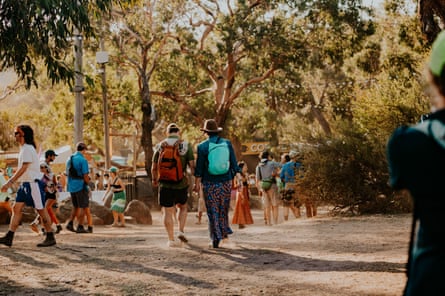
More than 530 live music festivals are held across Australia each year, ranging in size from large commercial ventures to smaller, not-for-profit events. Organisers provide the systems and services, but reducing a festival’s footprint also relies on fans playing their part.
Transport, waste and energy – three big ticket items
Berish Bilander, chief executive of Green Music Australia, says for greenfield festivals, audience transport and waste are the main issues. For urban events and live music venues, energy use – diesel generators, or electricity – becomes a bigger factor, alongside waste.
The organisation’s research finds that at regional festivals with camping, about 50% to 80% of festival waste comes directly from campsites. Bilander says that borrowing or hiring equipment, or investing in quality gear, are the best ways to avoid “campsite Armageddon” as people leave behind discarded and broken tents, marquees, chairs and eskies.
Many festivalgoers aren’t seasoned campers, he says. “It’s often their first experience in the outdoors camping … As soon as people go to Kmart last minute and buy cheap [camping gear], that tends to be treated like it’s disposable and is more prone to breaking. If something breaks on site it is very likely to be left behind.”
Platforms like Camping Buddy can help people plan, pack lighter and avoid leaving behind landfill and litter.
“We really encourage people to utilise what they can, to minimise what they’re bringing on to site and make sure that they’ve just got the essentials,” says Keeler. Strawberry Fields has a dedicated app to help people connect with friends, organise lifts and plan their campground to “make sure there’s no double-ups” with things like gazebos or camping chairs.
She says there are plenty of reminders on stage and signs encouraging people to do the right thing, but attenders also contribute to a culture of respect for country and the environment. “It’s really about making those green choices, and taking lots of small actions that then result in having a bigger impact.”
after newsletter promotion
In urban areas, organisers and fans can work together to dramatically reduce single-use plastics. Many events already encourage people to bring refillable water bottles. WOMADelaide in Adelaide’s Botanic Park diverts 99.5% of event waste from landfill by mandating compostable and reusable food packaging, cups and utensils, helped by dedicated volunteers who make sure people use the right bins.
At permanent live music venues, renewable energy and efficiency measures, such as improving insulation or installing solar, can save thousands of dollars. Some bring added benefits, like reducing noise pollution and neighbour complaints. “Better soundproofing often goes hand in glove with better insulation,” he says. Green Music Australia offers a sustainability certification program, and a directory of participating venues.
Music fans can help support sustainability initiatives, including solar-powered stages, electric tour buses or forest restoration, through programs such as Solar Slice, which adds a small surcharge to ticket prices.
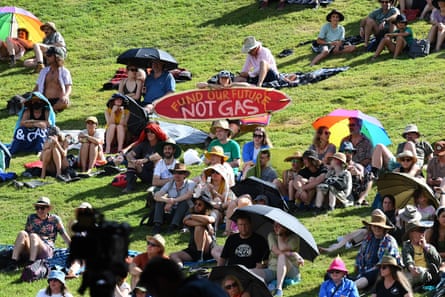
Some festivals encourage people to contribute in other ways. Bilander says the Woodford folk festival runs a sister event in the off-season known as The Planting, a working bee centred around revegetating and restoring the land, with talks, workshops and music. “They’re bringing some of the really devout lovers of Woodford folk festival to the site and planting trees. Over time the greenery and the shading increased enormously, which was such a benefit to everyone.”
Be a broken record on climate action
Catherine Strong, an associate professor in the music industry program at RMIT University, says while there’s a lot that organisers can do to reduce their footprint, music festivals are increasingly at the mercy of extreme weather fuelled by global heating.
Since 2015, more than 50 events across Australia have been cancelled due to dangerous conditions such as heatwaves, bushfire, heavy rain, extreme winds and flooding, she says, and the cost of insurance has been rising.
“A lot of festivals are putting in the hard work in terms of being more sustainable. It’s the adaptation stuff that is trickier, and harder to work out what’s going to be the most effective. You can have all of the reusable water bottles and cutlery in the world, but if you get hit by one of those extreme events, you’re still going to cop the outcome of that.”
That’s why climate advocacy by music fans matters. “Advocate to government, advocate to decision makers,” Strong says. “Just get the message out: I love going to festivals and I understand that my festivals might not be able to go ahead any more because we are failing to take action to stop what is happening with the climate.”
KioskNews shows a cleaned-up reading view extracted from the publisher’s page — the original always lives on their site, not ours.