9 alleged CJNG members arrested in Michoacán security operation
Federal security forces on Wednesday arrested nine alleged members of the Jalisco New Generation Cartel (CJNG) in Michoacán. Among those detained was one woman identified as the daughter of a CJNG regional boss and another woman identified as the partner of the same man.
The CJNG responded to the federal operation by blocking highways in Michoacán at more than 20 points, including by setting vehicles on fire, but most, if not all, of the narco-blockades had been cleared by early Wednesday afternoon.
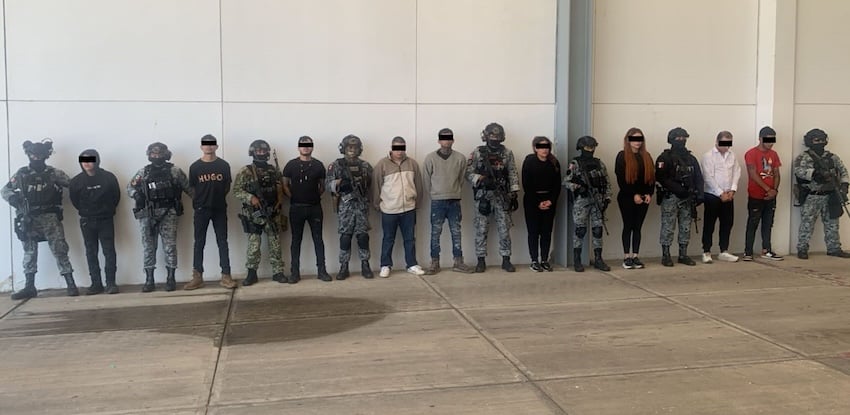
The Ministry of National Defense (Defensa) said in a statement that “nine members of the Jalisco New Generation Cartel” were arrested in Tinaja de Vargas and Colesio, towns in the municipalities of Tanhuato and Ecuandureo, respectively. Those municipalities are located in northwestern Michoacán near the state’s border with Jalisco.
Defensa said that Mexican Army special forces and the National Guard carried out the operation in Michoacán “in coordination with” the federal Security Ministry, the Federal Attorney General’s Office and the Mexican Navy. Military intelligence work facilitated the location of the suspects.

Defensa said that Marisol “N” and Lourdes “N” were among the nine people arrested. The ministry said that the former has been identified as a daughter of Heraclio “N” (Heraclio Guerrero Martínez) while the latter has been identified as his “romantic partner.”
Defensa said that Guerrero, known as “Tío Lako,” is a CJNG “regional boss” in Michoacán and Jalisco. It also said he is “responsible for ordering attacks on National Guard troops” on Feb. 22, 2026, after the arrest of former CJNG leader Rubén “El Mencho” Oseguera Cervantes, who was fatally wounded by military personnel during the operation to capture him.
Wednesday morning’s operation apparently targeted Guerrero, but the alleged cartel boss managed to avoid arrest.

Defensa said that two properties were secured during the operation and authorities seized 64 vehicles, one of which was armored; five machine guns; nine long guns; a handgun; two grenade launcher attachments; ammunition and magazines; drugs; eight improvised explosive devices; seven motorcycles; a drone; and tactical equipment.

The ministry said that the nine detained suspects were flown by a Mexican Air Force helicopter to Mexico City, where they were handed over to the Federal Attorney General’s Office.
Narco-blockades in Michoacán
Defensa noted that there were “various interruptions” to highways in Michoacán after the nine alleged CJNG members were arrested. Civilian and military authorities consequently activated “the Anti-blockade Plan” in order to “guarantee freedom of movement” in the state, the ministry said.
Presumed cartel members set up narco-blockades on highways in various municipalities of Michoacán, including Morelia, Zamora, La Piedad, Chilchota and Ecuandureo. Vehicles, including trucks and buses, were set on fire to create the blockades. Criminal groups in Mexico often create narco-blockades to impede security forces. The setting alight of vehicles is also a show of force for cartels as well as a demonstration of their anger over the arrest of one or more of their members.
⭕️ Al menos 12 bloqueos carreteros con vehículos incendiados fueron reportados en diez municipios de #Michoacán, informaron fuentes policiacas. Los cierres iniciaron alrededor de las 6:00 horas, tras un operativo de fuerzas federales contra un presunto líder del cártel Jalisco… pic.twitter.com/DQMz6bpZB2
— La Jornada (@lajornadaonline) August 19, 2026
Michoacán’s C5 security command center reported on social media that 26 blockades set up in Michoacán on Wednesday morning had been cleared by 12:30 p.m.
Earlier in the day, Michoacán Governor Alfredo Ramírez noted that blockades at nine different locations had been cleared.
“We’re maintaining a permanent presence on the highways to guarantee your safety and to keep traffic moving smoothly,” he wrote on X.
“I ask that you drive carefully, follow the instructions of authorities, and consult only official sources,” Ramírez said.
KioskNews shows a cleaned-up reading view extracted from the publisher’s page — the original always lives on their site, not ours.