The Most Perfect Movie of Every Genre in the 1970s

Diego Pineda has been a devout storyteller his whole life. He has self-published a fantasy novel and a book of short stories, and is actively working on publishing his second novel.
A lifelong fan of watching movies and talking about them endlessly, he writes reviews and analyses on his Instagram page dedicated to cinema, and occasionally on his blog. His favorite filmmakers are Andrei Tarkovsky and Charlie Chaplin. He loves modern Mexican cinema and thinks it's tragically underappreciated.
Other interests of Diego's include reading, gaming, roller coasters, writing reviews on his Letterboxd account (username: DPP_reviews), and going down rabbit holes of whatever topic he's interested in at any given point.
Sign in to your Collider account
There are many who would confidently say that the 1970s were the best decade for cinema in the art form's history, and it would be difficult to argue against them. From action blockbusters like Star Wars to international indie dramas like Scenes from a Marriage, the decade saw the release of several of the greatest films the big screen has ever seen.
Indeed, across all the major genres that dominated cinema throughout the '70s, there were several masterpieces produced. Big Oscar-winning crime dramas, hilarious comedies with a tender emotional heart, unforgettable family films that have aged like fine wine; whatever genre one can think of, it undoubtedly produced a generation-defining masterwork. These are the best movies of each major '70s genre, with the genres presented in alphabetical order.
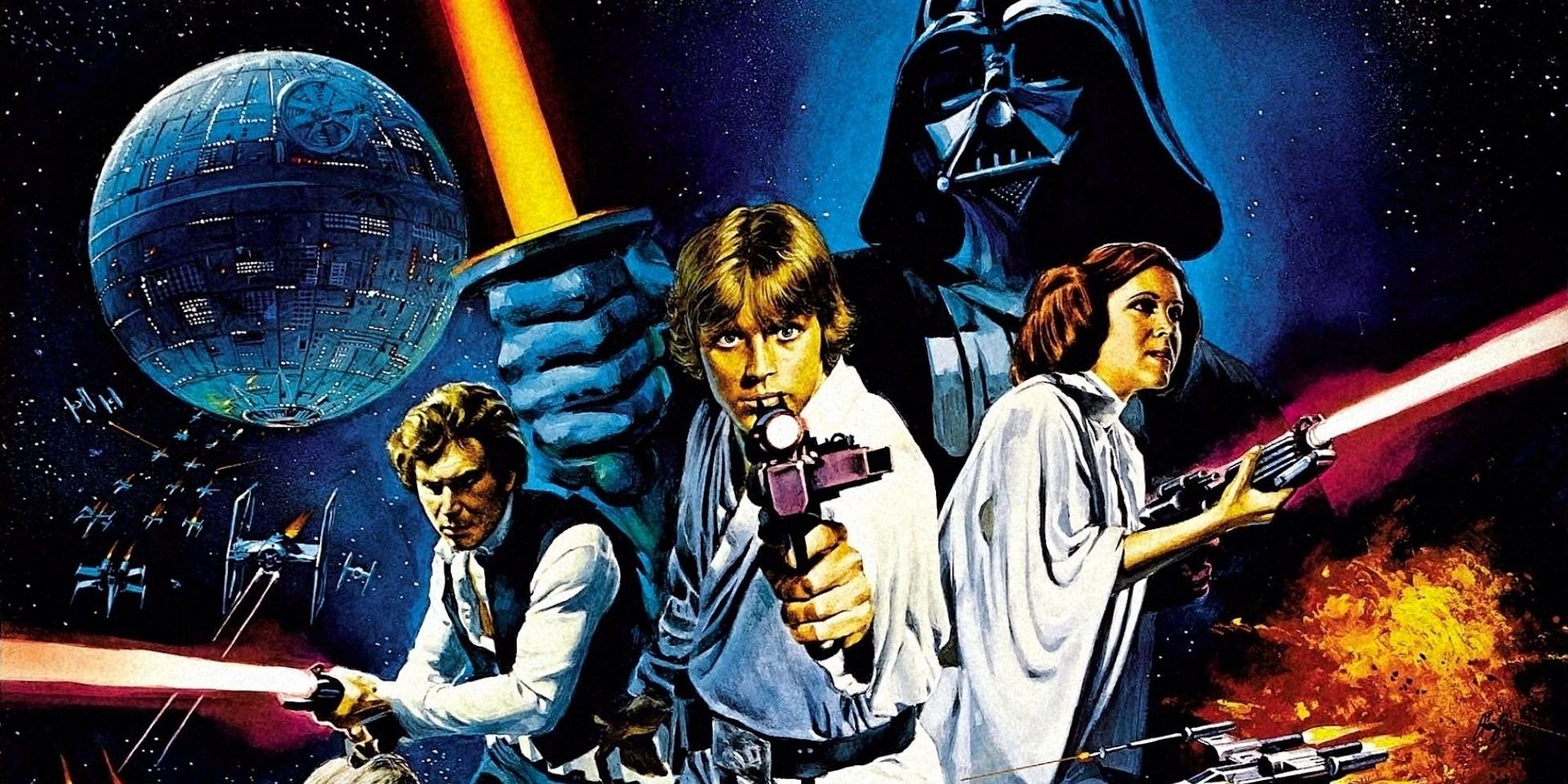
1 Action: 'Star Wars' (1977)
Within the span of just under six months, George Lucas' Star Wars (now retroactively known as Episode IV — A New Hope) overtook Steven Spielberg's Jaws as the highest-grossing movie of its time, a record it would hold until the arrival of Spielberg's E.T. in 1982. All these many years later, this is still widely considered the definitive Hero's Journey action-adventure masterpiece.
With its sequels, Star Wars produced one of the most consistent movie trilogies in history. Never before had audiences seen a science fantasy movie quite like this one; with production values so stunning, a score so unforgettable, and mythic storytelling so effective. Inspired by the likes of Flash Gordon serials and Akira Kurosawa's filmography, Star Wars is a must-see for anyone who loves action movies.
2 Comedy: 'Paper Moon' (1973)

The '70s saw the release of many a hilarious comedy, but few comedy movies from the 20th century as a whole were ever as witty, warm, masterfully subversive as Peter Bogdanovich's Paper Moon. It's one of the best crime caper movies of all time, based on the equally incredible 1971 novel Addie Pray by Joe David Brown.
Paced like an entirely fluff-free classic screwball comedy and shot in crisp black-and-white, Paper Moon is a period piece that feels like it was lifted straight out of '30s Hollywood—which is absolutely meant as a huge compliment. Bolstered by real-life father and daughter Ryan and Tatum O'Neal, it further benefits from the off-the-charts chemistry shared between its stars.
3 Crime: 'The Godfather' (1972)

For what now amounts to over half a century, Francis Ford Coppola's The Godfather has been widely praised by many as the single greatest film in history. From Chinatown to The Godfather's own masterful sequel, the crime genre was arguably the genre that produced most of the '70s' biggest masterpieces, but nothing really compares to this incredible adaptation of Mario Puzo's eponymous novel.
What really makes The Godfather one of the best crime movies in film history is that, far from just being a crime drama and nothing more, it's a sweeping family saga and a hyper-ambitious epic, slowly yet scathingly dissecting the idea of the American Dream. It's visually perfect, flawlessly written, and packed with top-tier performances by '70s stars like Al Pacino and Marlon Brando.
4 Drama: 'Autumn Sonata' (1978)

The '70s produced many underrated drama movie masterpieces, but at least as far as dramas go, none of them as great as Autumn Sonata. Ingmar Bergman, the greatest auteur ever to have come out of Swedish cinema, was on a hell of a roll throughout the '70s; but one could argue that his work that decade reached its peak with Autumn Sonata, starring Ingrid Bergman and frequent Ingmar collaborator Liv Ullmann.
Both Bergman and Ullmann deliver what may very well be the best work of their respective career in Autumn Sonata, and those performances alone are more than worth the price of admission; but there's so much more that this film has to offer, too. Full of emotion and butter-smooth dialogue, it's a deeply powerful story of generational trauma and the struggle to communicate love.
5 Family: 'Willy Wonka and the Chocolate Factory' (1971)

Roald Dahl was never a fan of film adaptations of his work, and though Willy Wonka and the Chocolate Factory was no exception, audiences couldn't have possibly disagreed with him more. Now widely remembered as one of the greatest fantasy family films ever made, this Mel Stuart classic is the kind of movie that all families should check out at least once.
Willy Wonka is one of those perfect fantasy movies that get better with every rewatch, anchored by its infectiously catchy songs, its gorgeously vibrant and colorful sets and costumes, and Gene Wilder's career-defining performance. Dahl may not have loved it, but 55 years after its release, this is still remembered as the greatest family film of the '70s.
Collider Exclusive · 8 Questions · 2 Minutes What Fantasy World Do You Belong To? Middle-earth · Grand Line · The Continent · Camp Half-Blood
Pick your magic, your crew, where you want to wake up and who you would rather be fighting, and we will tell you which world you actually belong in. Four are open to you: an ancient kingdom living through its last good age, an endless sea full of pirates, a continent that pays people to kill monsters, and a summer camp where the Greek gods are extremely real and mostly a nuisance.
💍Middle-earth(Rings of Power)
👒Grand Line(One Piece)
🐺The Continent(The Witcher)
🔱Camp Half-Blood(Percy Jackson)
01
What kind of power do you want? Every one of these worlds runs on a completely different sort of magic.
02
Who is travelling with you? Nobody gets through any of these stories entirely on their own.
03
Where do you want to wake up tomorrow? The best fantasy is usually just somewhere you would genuinely like to live.
04
How are you making a living out there? Even in fantasy somebody has to pay for the horse.
05
There is something in the woods. What do you do about it? All four of these worlds keep something unpleasant out there in the dark.
06
Who is the villain of your story? The enemy tells you far more about a world than the hero ever does.
07
What do you actually believe in out there? Every world hands its heroes one rule and asks them to hold onto it.
08
A thousand years from now, how are you remembered? Eight questions in, this is the one that decides your world.
The Map Is Drawn Your World Is…
Four worlds and four completely different ideas of what a good life looks like. This is where you belong, what it would ask of you, and what you would get back in return.
Middle-earth
You belong somewhere old enough that the mountains have names and somebody can still tell you who gave them. Middle-earth is for people who think the right thing is worth doing even when it will not be finished in their lifetime.
- This is the only world on the list where doing good is understood as a very long defeat, fought anyway, by people who will never see how it ends.
- You are drawn to grandeur, to white cities and deep forges and the sense that almost everything you touch is older than your entire family line.
- The Rings of Power is set in the last good age before it all goes wrong, which gives every quiet scene in it a slightly unbearable weight.
- You would take the hard road, and you would take it on foot.
The Grand Line
You want the sea, a crew, and absolutely nobody telling you where you are allowed to go. The Grand Line is the world for people whose main ambition in life is finding out what is over there.
- One Piece has run for decades on one very simple engine, which is a group of people who each want something impossible and have decided to go and get it together.
- You collect people. Your ideal crew is a set of misfits who were each written off somewhere else before you turned up and offered them a better idea.
- The world is enormous and deliberately ridiculous, and the emotional gut punches land harder because of that rather than in spite of it.
- You would set sail knowing the map runs out, which is more or less the entire point of it.
The Continent
You would rather be feared and useful than liked and useless. The Continent is a world where the monsters are the straightforward part of the job and the people are where it all gets complicated.
- Witchers get paid to do what nobody else will and resented for existing at all, which is a trade most people would refuse and you would probably accept.
- You have no real illusions about which side is the good one, largely because on the Continent that question tends to have a disappointing answer.
- The best of these stories are not about the fighting. They are about somebody with a rigid code being repeatedly cornered into caring about people.
- You would take the coin, finish the job properly, and be out of town before the story got told wrong.
Camp Half-Blood
You want the myths to be real and loose in the actual world, and you want to find out at about thirteen that you were never anywhere near as ordinary as everybody kept telling you.
- Percy Jackson takes the oldest stories we have and drops them into car parks and diners, which makes the gods considerably funnier and a great deal worse.
- You would be the kid every school gave up on, who turns out to have been built for something nobody thought to test for.
- The series is genuinely about friendship rather than destiny, and it says so out loud every time a prophecy tries to get in the way.
- Camp Half-Blood is the real fantasy here: a place where the thing that made you difficult everywhere else is the thing that makes you belong.
6 Fantasy: 'Monty Python and the Holy Grail' (1975)
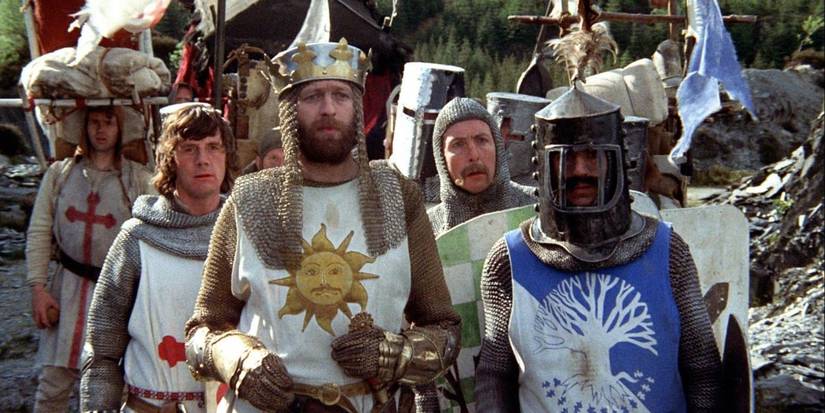
After the conclusion of their sketch comedy show Monty Python's Flying Circus, the iconic British comedy troupe was thirsty for a new challenge. That challenge came in the form of a feature film they made on a shoestring budget: Monty Python and the Holy Grail, which has since kept aging as one of the most fun fantasy movies of all time.
Never has film history seen a comedy film more brilliantly use its low budget in its favor. From the fourth-wall-breaking acknowledgment of its own cheapness to using coconut shells to imitate horses' galloping, Monty Python and the Holy Grail constantly works around its budget to deliver the most hilarious experience that a fantasy movie has ever delivered.
7 Horror: 'Alien' (1979)
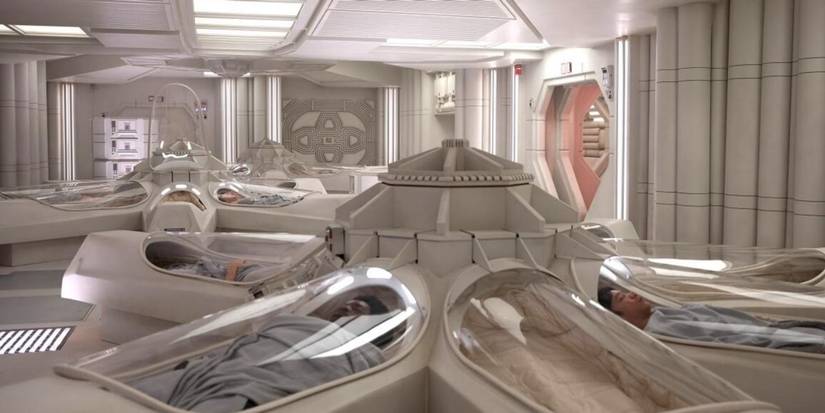
With Alien, Ridley Scott completely revolutionized sci-fi horror, delivering a sort of haunted house film set in outer space that only keeps getting better with age. It's a true landmark achievement in the history of horror, a genre-defying work of subversive art which proves just how potent slow-burning and atmospheric horror can be in generating tension and suspense.
It's one of the best monster movies in film history, and that's not only because its Facehugger, Chestburster, and Xenomorph are among the most iconic and effectively terrifying monsters that cinema has ever produced. From the exceptional cast to the way the movie taps into primal fears of threatened bodily autonomy, Alien is a downright flawless horror masterpiece.
8 Musical: 'All That Jazz' (1979)

Musical films had already begun to fall out of fashion in mainstream Hollywood by the time the New Hollywood film movement kicked in, and were already mostly a thing of the past by the time Bob Fosse made All That Jazz. But by making one of the best American musicals of all time, Fosse proved that the genre still had plenty of gas left in the tank.
Largely semi-autobiographical, this surreal gem plays out much like an escapist fever dream, making the musical elements feel like a natural extension of its deep study of artistic obsession and mortality. It's structurally audacious and radical in its approach to the musical genre, largely bolstered by Roy Scheider's against-type tour-de-force performance.
9 Romance: 'Scenes from a Marriage' (1974)

Inspired by the marriage of his parents, his own dissolved marriages, and his relationship with Liv Ullmann, Ingmar Bergman wrote the teleplay for the masterpiece miniseries Scenes from a Marriage over the course of three months. In response to international distributors' demands, a shortened version of the miniseries was made to be exhibited as a theatrical feature film.
Both the miniseries and the film are must-see masterworks, the film in particular being one of the most anxiety-inducing romance movies ever made. Led by Ullmann and Erland Josephson at their absolute strongest, it's a nearly three-hour-long character drama that strips away any comforting trope of fairy-tale love, instead delivering an incredibly intimate and honest portrait of marriage.
10 Science Fiction: 'Stalker' (1979)

From the campy and pulpy to the prestigious and serious, the '70s gave the world many incredible sci-fi movies, but none better than Stalker. Based on Arkady and Boris Strugatsky's philosophical novel Roadside Picnic, this is the work of Soviet auteur Andrei Tarkovsky, and it's one of the best soft sci-fi masterpieces ever made.
Arguably even superior to masterpieces like Alien and Star Wars, Stalker is the peak of slow-burning sci-fi cinema, a work of art as philosophically profound and deeply existential as anyone familiar with Tarkovsky's work might expect. It's hypnotically paced and devoid of any trace of genre clichés, crafted with an unrivaled sense of atmosphere and visual poetry.
KioskNews shows a cleaned-up reading view extracted from the publisher’s page — the original always lives on their site, not ours.