These Australian ‘forest fairies’ have all but disappeared from the wild – now they have a new neighbourhood

With just 13 animals left, time was running out for the Leadbeater’s possums at Yellingbo conservation area.
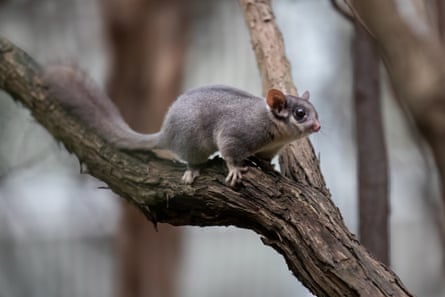
The critically endangered forest sprites have exacting habitat needs. They prefer cool, wet and dark forest, with large old trees to nest in and a dense thicket of paperbarks and tea trees to dart and hide in.
That type of habitat is vanishing thanks to the legacy of state logging and bushfires.
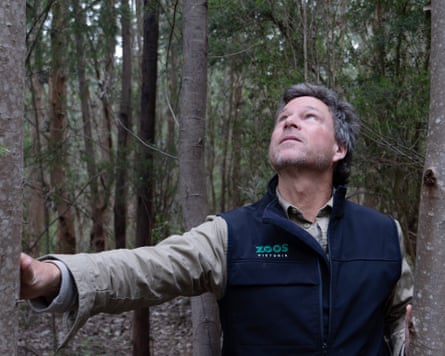
“These are not your garden variety possums,” says Dr Dan Harley, a senior ecologist at Zoos Victoria, who has worked with the species for decades.
Gecko-toed and acrobatic, they’re sometimes called “forest fairies” for the enchanting way they silently spring between branches at night, dancing in and out view.
“You can imagine them in Tolkien’s Middle-earth,” he says.
The small, soft and nimble creatures are Victoria’s animal emblem, and exist almost entirely within the state, apart from a recent detection over the NSW border in Kosciuszko national park. The species is made up of two genetic groups: a feistier highland subspecies, and the smaller, more docile lowland possums, found only at Yellingbo.
The conservation area, located about 50km east of Melbourne, represents the last tiny remnant of a threatened ecological community known as sedge-rich eucalyptus camphora swamp – a forest type that was once widespread in Victoria, but is now nearly gone. Along with the possums, this patch of swampy forest is core habitat for the state’s bird emblem, the critically endangered helmeted honeyeater.
But at Yellingbo, the last lowland possums have been in steep and ongoing decline. From more than 110 individuals recorded in 2003, numbers dived to 20 to 30 individuals over the past decade. This year, ecologists have been devastated as nearly half of the remaining possums disappeared between October and June – thought to have been taken by predators.
As the situation unravelled, Zoos Victoria ecologists made the painful decision to intervene, evacuating the remaining possums to Healesville Sanctuary.
“We made the decision to extract all of the wild possums out of Yellingbo. So there was a few weeks where effectively they were extinct in the wild,” Harley says.
Their time in captivity was only ever meant to be temporary, while finishing touches were put on new digs at Haining Farm designed to keep the possums safer. In late October, nine possums (six lowland, two highland and one hybrid) were released into the specially developed refuge, withmore set to move in during 2027.
after newsletter promotion
Eight years ago – but not a moment too soon – Parks Victoria began growing a bespoke forest for Leadbeater’s on cleared farmland, situated at the confluence of the Yarra and Don rivers. Parks, together with Greening Australia, government and community partners, hand-planted 900,000 trees, shrubs and grasses, restoring the floodplain and recreating the cool and wet conditions required for possums to thrive.
Crucially, a 3.6km fence was installed, designed to allow bushwalkers and picnickers in but keep foxes and feral cats out.
The possums have been released in pairs and trios. Leadbeater’s possums are serial monogamists and fiercely territorial. “Every group is a household and we’re trying to build a neighbourhood,” Harley says.
In the wild, the possums are “trunk lickers”, he says. They feed off honeydew and sap from smooth-barked eucalypts and acacias, like lollipops, leaving behind their signature mark, a super sticky, bubbly saliva. A steady diet of beetles, spiders and crickets provide protein.
But Haining Farm is still a young forest, with unknown food resources and without the ancient tree hollows needed for possum dens. So the zoo has installed supplementary feeding platforms, nest boxes, and fashioned branches into possum runways, turning each release site into a miniature treetop village.
On its own, the conservation area will not be enough to save the subspecies. Harley estimates at least 220 hectares of suitable habitat is required to support the lowland subpopulation.
“We’re searching for solutions in altered landscapes where threats remain,” Harley says. “The pathways are not straightforward.”
Until its rediscovery in the 1960s, Leadbeater’s possums were thought extinct. Today the species teeters on a precipice due to the historic and ongoing loss of large, hollow-bearing trees, which is also driving declines in the highland population.
Prof David Lindenmayer, from the Australian National University, who has studied Leadbeater’s possums for more than 40 years, says the dire situation at Yellingbo was foreseeable and preventable.
He singles out the state government’s failure to create the Great Forest national park – a proposed national park in the tall, wet ash forests of the central highlands, the leadbeater’s stronghold – for criticism. It is the most important action to protect the species, he says.
Despite promising to “deliver the largest expansion to our public forests in our state’s history”, Lindenmayer says the Labor government has “done absolutely nothing in terms of increasing the amount of national parks in a substantive way”. But, heading into the state election, the approach of the other parties is no better, he says.
“This is the state’s faunal emblem, and if you can’t support one of the most important species for the state, then what hope have you got?”
KioskNews shows a cleaned-up reading view extracted from the publisher’s page — the original always lives on their site, not ours.