How Singapore’s only offshore marine station has made waves
SINGAPORE – From discovering new creatures to climate-proofing corals, The Straits Times dives into the work at the St John’s Island National Marine Laboratory and its vision for driving impactful ocean research at home and beyond.
Journey
2002: National University of Singapore opens the Tropical Marine Science Institute’s marine laboratory.
2016: The facility is launched as the St John’s Island National Marine Laboratory to serve as national research infrastructure that local marine scientists can tap.
2026: Renamed the National Marine Research Station to reflect its expanded role, which includes spearheading a new regional network.
Supporting research and partnerships
Coral reef restoration
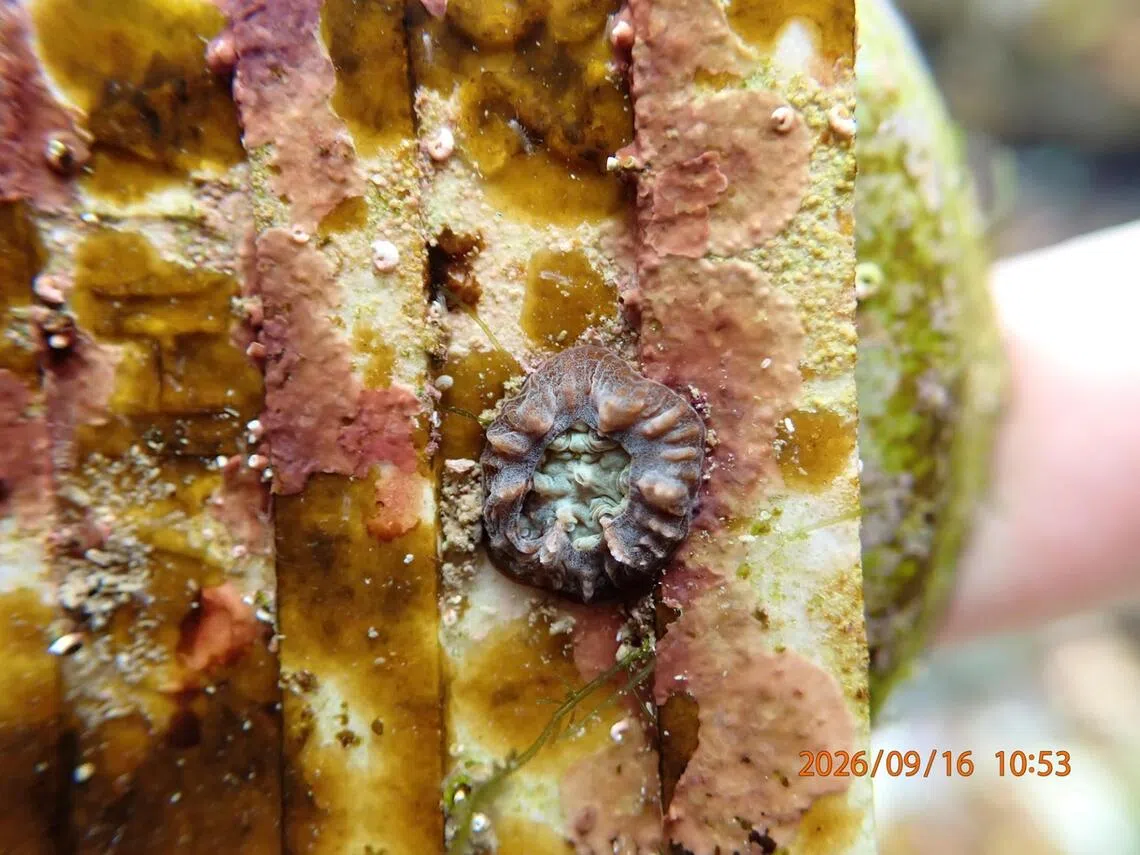
Techniques for coral reproduction are being refined to obtain genetically diverse offspring.
PHOTO: SJI 100K CORALS TEAM
The station’s aquarium facilities support Singapore’s most ambitious coral restoration programme, the 100K Corals Initiative. By April 2026, about 1,200 corals across 16 species had been transplanted. The public can see these efforts on St John’s Island.
Engineering corals
Deepened understanding of how much light corals need, expanding the possibility of restoration in degraded reefs in deeper waters.
Rescued dislodged coral fragments to grow new corals, reducing the need to harvest from healthy adult colonies.
Screened corals for heat tolerance and improved their ability to withstand warmer ocean temperatures by exposing them to heat and beneficial microbes
Building stronger reefs
Deployed artificial reef structures that have helped many species of hard corals reach sexual maturity.
Improved transplantation techniques and site selection, boosting coral survival rates from less than 15% in the 1990s to as high as 90% today.
Supercharging growth
Developed sheltered nurseries to cultivate corals in their natural environment.
Refined techniques for harvesting and fertilising corals to obtain genetically diverse offspring and improve larval rearing practices.
Advanced coral cultivation in nurseries outside their natural habitats with temperature-controlled settings and vertical rearing methods to maximise coral production.
Seagrass restoration
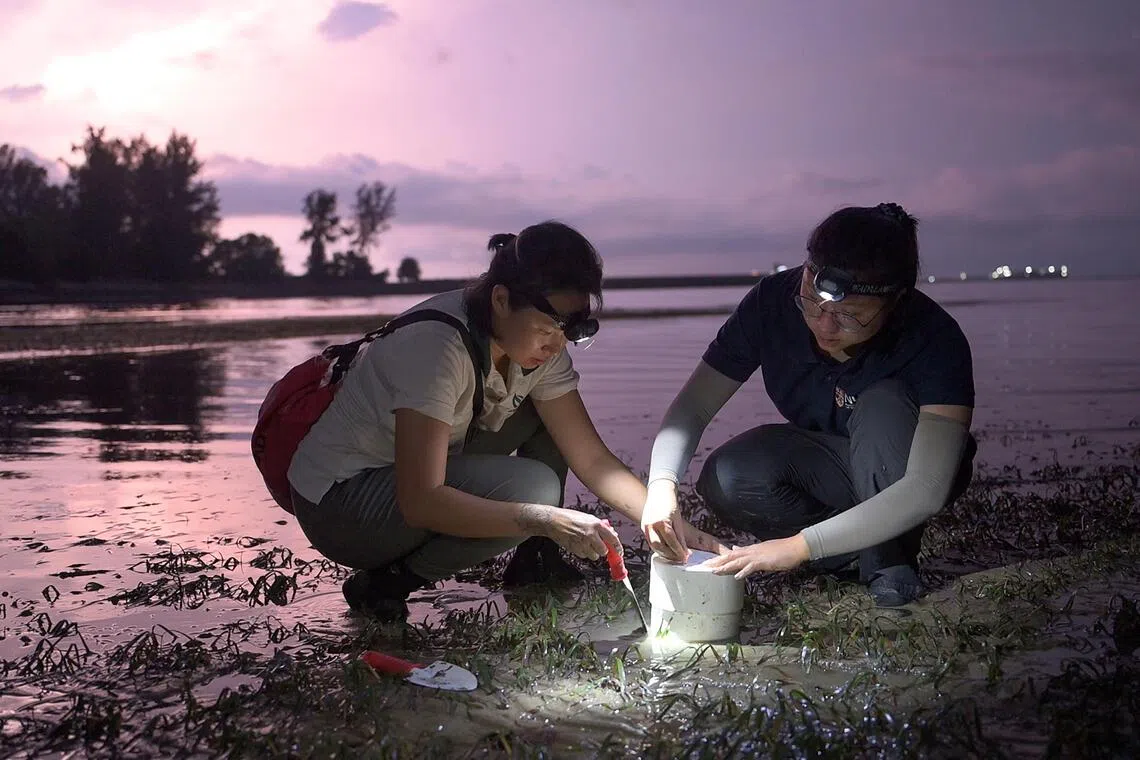
Researchers collecting seagrass at East Coast Park.
ST PHOTO: SHINTARO TAY
Since 2024, the marine station has been involved in Singapore’s first seagrass restoration project. The three-year programme aims to understand how the plants reproduce and tolerate environmental changes while also improving transplantation techniques in coastal waters.
Under the right conditions, seagrass meadows can capture and store carbon far more efficiently than land-based ecosystems, helping to mitigate global warming.
Marine environment sensing network
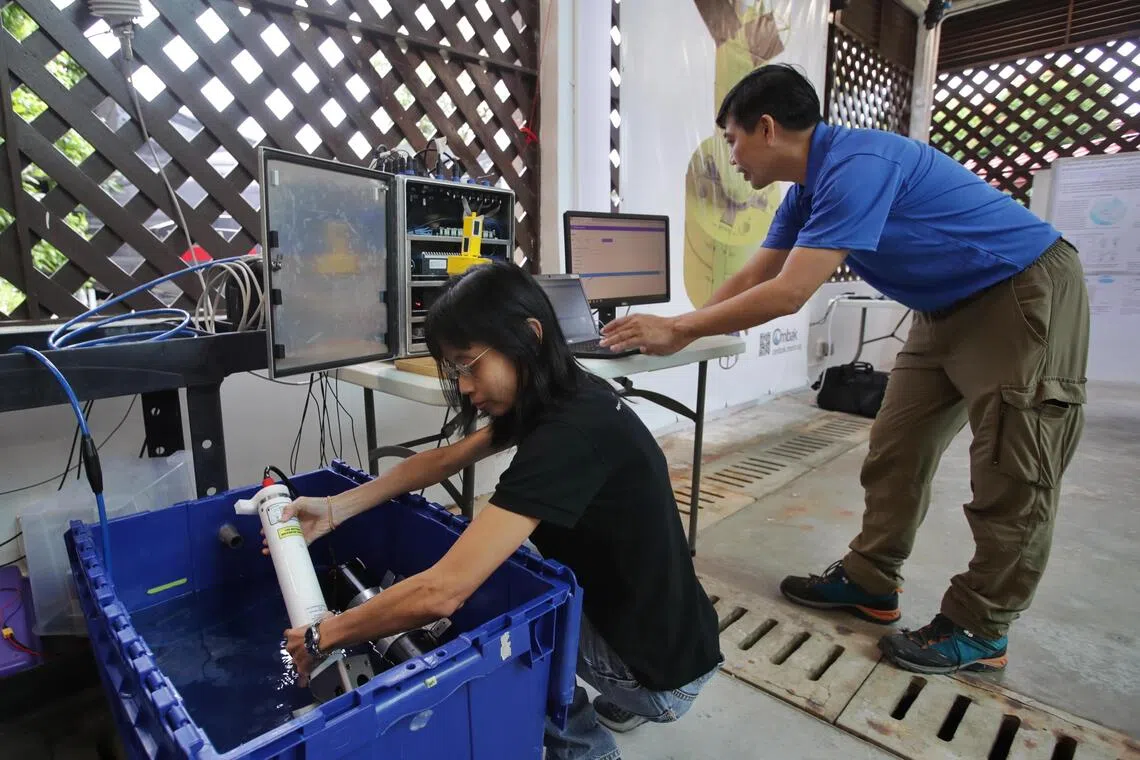
Technology used in the Marine Environment Sensing Network being demonstrated.
ST PHOTO: GIN TAY
Deployed three research monitoring buoys that provide near-real-time information, including weather and salinity metrics. They also enable the testing of novel marine technologies.
The system generates high-resolution datasets, helping researchers tackle challenges like sea-space management, biodiversity loss and climate change.
It has advanced research into marine carbon dynamics and the tracing of organic matter flows from land to coastal seas.
Marine biodiversity and oceanography
Discovering new species in Singapore
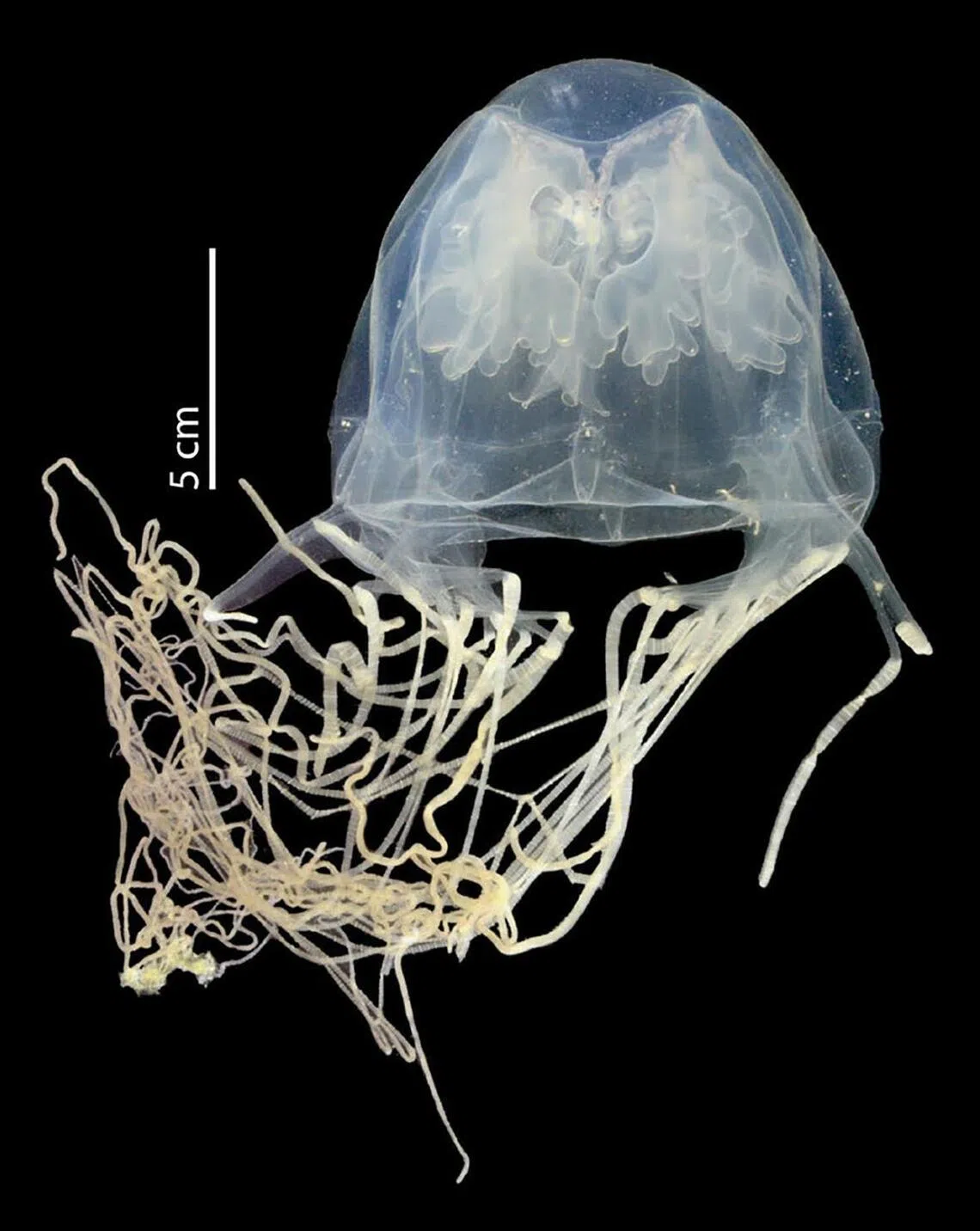
The box jellyfish Chironex blakangmati was found on the beaches of Sentosa.
PHOTO: IFFAH IESA
Scientists based at the marine station have formally documented more than 20 new species uncovered during deep-sea expeditions and surveys, with a focus on understudied animals. These include a box jellyfish found on Sentosa’s beaches and a strawberry-like anemone off Changi Beach.
Investigating deep-water seamounts
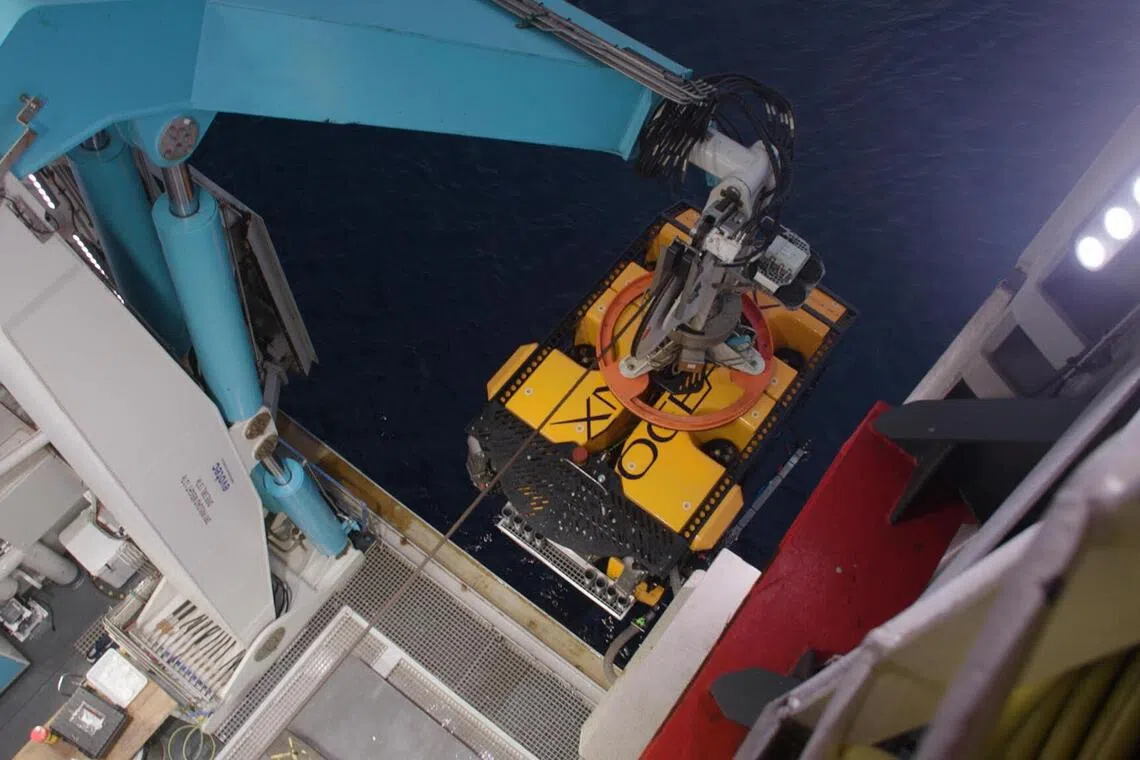
Deployment of a Remotely Operated Vehicle by the NUS-OceanX team.
PHOTO: NUS-OCEANX TEAM
In 2025, a team of Singapore scientists partnered with OceanX to visit the Christmas Island Seamount Province. Seamounts are underwater mountains known as oases of biodiversity.
They found microplastics as small as the width of a human hair, even at depths reaching the seafloor.
They also mapped previously unstudied marine life inhabiting the Monsoon Rise seamount complex.
The future
Expand the marine station’s operations to include the Marine Environment Sensing Network as its marine observatory, alongside a new research vessel to support a wider range of oceanographic research and the deployment of marine technologies.
Connect marine stations and research facilities across the region through a network to advance marine science and strengthen the resilience and sustainability of interconnected South-east Asian seas.
Study how a marine biobank can help preserve species of economic and ecological importance for the future.
SOURCES: NATIONAL UNIVERSITY OF SINGAPORE, TROPICAL MARINE SCIENCE INSTITUTE, NATIONAL PARKS BOARD, ST JOHN’S ISLAND NATIONAL MARINE LABORATORY, SINGAPORE CENTRE FOR ENVIRONMENTAL LIFE SCIENCES ENGINEERING, NANYANG TECHNOLOGICAL UNIVERSITY
Ang Qing is a journalist covering local and international breaking news at The Straits Times, with a focus on the environment, crime, technology and social issues.
KioskNews shows a cleaned-up reading view extracted from the publisher’s page — the original always lives on their site, not ours.