Sam wanted a baby. This diagnosis cost him $90,000 and his relationship
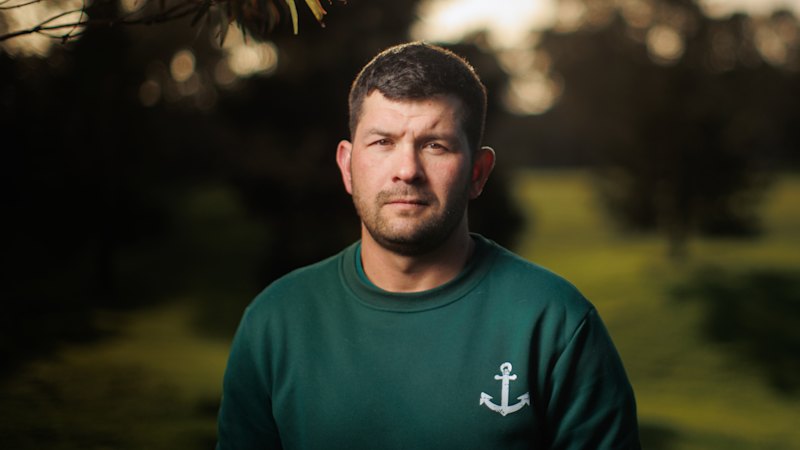
As a healthy 26-year-old, Samuel Goodwin-Dorning never had reason to doubt his fertility.
Wanting to start their family young, he and his wife began trying to conceive. After eight months passed with no luck, they went to get checked out.
When his doctor delivered the news that Goodwin-Dorning had Klinefelter syndrome, he felt numb.
Klinefelter syndrome is a genetic condition where a male is born with two or more X chromosomes and which often renders him infertile. It affects one or two in 1000 males born in Australia, yet because symptoms are so mild (they can include smaller genitals, larger breasts and less facial and body hair), it often goes undiagnosed until he tries to have a baby.
For Goodwin-Dorning, now 42 and based in Brighton in Victoria, his numbness soon curdled to rage as he processed his diagnosis and thought of all the appointments and check-ups where nothing was deemed amiss.
“I was angry that I’d slipped through the cracks all this time. I’ve been to the doctors over the years,” he says. “But no one ever picked up on it.”
Goodwin-Dorning is one of thousands of men who might be walking around without knowing they’re infertile, says Associate Professor Tim Moss, a biomedical researcher and expert with men’s health organisation Healthy Male.
Talk to any researcher, doctor, specialist or advocate, and they’ll tell you the same thing: male infertility is “a black box”.
Roughly one in six couples is affected by infertility, and despite male factors contributing to up to 50 per cent of them, remarkably little is known about male infertility. It’s only in the last decade that researchers have concluded men have biological clocks of their own.
It’s only in the last decade that researchers have concluded men have biological clocks of their own.
This knowledge gap has far-reaching consequences for society. But the repercussions are also deeply personal for men like Goodwin-Dorning who were never warned their fertility might be compromised. “The only thing I wanted was to have my own children. And that never happened.”
The ‘black box’ of male infertility
According to the most recent data, of the IVF cycles done in Australia and New Zealand in 2024 that were due to male-factor infertility, 75 per cent had unexplained causes.
“And that’s only for assisted reproductive technology cycles too, so there’s a lot of people out there who are infertile who don’t seek help,” adds Moss, who puts it down to the “legacy” of medical research largely performed by men.
“The expectation is that women are the vessels for babies and therefore reproduction is still sort of synonymous with women’s health, but of course, it’s a false belief.”
When assessing a man’s fertility, clinicians will categorise him based on three main sperm symptoms: count, shape and motility. But from there, it often becomes a guessing game.
“Most men will never receive a diagnosis on what is actually causing those issues,” explains Dr Jessica Dunleavy, a research fellow at the Male Infertility and Germ Cell Biology Lab in the University of Melbourne.
“This means the only way to treat male infertility is to place the treatment burden on women with IVF. There is this misconception that we have solved male infertility with IVF, but we haven’t – we’ve just ignored the problem.”
The knowledge gap works to further entrench gender inequality in medical treatment, agrees Moss. “There are very few health problems where you treat somebody other than the one who has the disease, and that’s what we do with male infertility.”
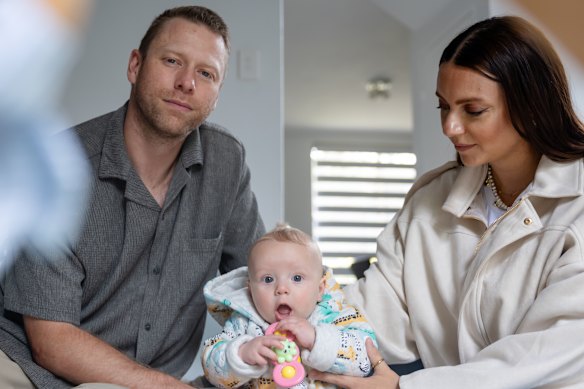
This fact weighed heavily on Rowan Moon when he and wife Marcela began IVF in 2021. The couple had been trying to conceive naturally for eight months when Marcela decided to call a fertility clinic.
“When we went in, both Marcela and I were expecting to hear that there was some sort of issue with Marcela,” the 37-year-old sales manager recalls. “Then we did the test, and they told us, ‘no, Marcela’s perfectly OK, but Rowan, there are no sperm in your semen sample’.”
Rowan was diagnosed with azoospermia, a condition where the testes produce little to no sperm. He underwent surgical sperm retrieval and began IVF immediately.
“The whole IVF journey is a lot harsher on the women, in terms of their body and all the injections they need to do and all the testing, so it was really difficult to see Marcela go through that, especially because I was the issue.”
The couple, from the Sutherland Shire south of Sydney, had a successful embryo transfer, resulting in their first child, Leo, born in 2022. But when they went back to try for another in 2025, they struggled, experiencing a miscarriage in the process.
“I don’t think many people realise how likely it is that they will struggle to conceive.”
Narelle Dickinson, clinical psychologist
“We definitely felt the bitterness of the IVF process when we tried the second time,” says Marcela, who gave birth to their second son, Tommy, seven months ago.
Not all couples are so lucky. Goodwin-Dorning and his wife went through 13 years of gruelling IVF treatments, including surgical sperm retrieval for unsuccessful embryo transfers, a miscarriage and multiple rounds using donated sperm from a family member. He estimates they spent $90,000 on the process that has now left him traumatised.
Last year, the couple separated.
The invisibility of the problem fed intense isolation. “The one thing we noticed through all of it was we had nobody,” he says. “No one to relate to or even just understand what we were going through.”
This is a common experience of people navigating male infertility. “I don’t think many people realise how likely it is that they will struggle to conceive,” says clinical psychologist and reproductive counsellor Narelle Dickinson, who notes the psychosocial effects of infertility can be profound on individuals and couples, who often delay seeking support, if they do at all.
“Whether it’s initially, or secondary infertility where you’ve had a child and then subsequently struggle to conceive, people don’t think about the possibility of those things happening or if they do, it’s something that happens to other people.”
Increased awareness and early detection
The government is slowly becoming aware of the issue and last year introduced the first national guidelines for the management of male fertility, requiring GPs and specialists to assess both man and woman from the outset.
If those guidelines had been implemented earlier, Reece Conca, 34, might have been diagnosed much sooner.
After more than 12 months of trying and only cursory questions like “do you smoke?” from doctors, Conca was urged by an acupuncturist to get a semen analysis. It revealed he had azoospermia.
An AFL player at the time, Conca was in peak physical fitness and felt devastated: “I spent most of that night crying with my wife, Belle. Just starting to feel really hopeless and overwhelmed and guilty.”

Through surgical sperm retrieval and IVF, the couple conceived their son, Giovanni, born in December 2024.
Now retired from AFL, Conca has become a passionate advocate for male infertility awareness.
“It’s important for men to hear they’re not alone,” he says.
“I wrestled a lot with how it impacts your feelings of masculinity as well, and that’s a big part of it: you’re no less of a man because you’re going through infertility.”
The canary in the coal mine
Our lack of information surrounding male infertility also has serious implications for men’s overall health, with Dunleavy explaining male infertility is a “canary in the coal mine” for a man’s general health.
“Infertile men as a cohort have an increased risk of other health problems like cancer and metabolic diseases, and they also have a shorter average lifespan,” she says.
“So if we can give them a precise diagnosis of their infertility causes, it means we could better predict potential additional health risks.”
Meaningful diagnosis might also prevent some couples from unnecessarily draining thousands of dollars and being put through the ringer of IVF when they don’t need to, says Moss.
“If there is a male infertility problem that is due to something anatomical that can be fixed by surgery, or [something] metabolic that can be fixed by medication or changes in behaviours, then you could restore fertility in that man and avoid the need for assisted reproduction.”
One of the silver linings of male fertility is that for many men, they’ll be able to actively improve it through lifestyle interventions, says Dr Shadi Khashaba, a fertility specialist at IVFAustralia.
“We know smoking affects sperm,” he says. “Excessive alcohol will cause hormonal imbalances and of course, healthy diet will improve their weight, the insulin sensitivity, and also their reproductive health.”
Other things like avoiding prolonged and excessive heat on testicles, minimising contact with endocrine-disrupting chemicals (don’t microwave food in plastic), and ceasing any testosterone use (it halts sperm production) will also help.
Conca’s advice for aspiring fathers is simple: “Be as proactive as you can with the conceiving process. Make sure you’re putting everything you can in place, including your physical, mental, emotional health. Obviously make sure you’re supporting your partner through it all.
“Don’t assume anything.”
Make the most of your health, relationships, fitness and nutrition with our Live Well newsletter. Get it in your inbox every Monday.
KioskNews shows a cleaned-up reading view extracted from the publisher’s page — the original always lives on their site, not ours.