Michigan basketball gets a massive win: Roddy Gayle awarded a fifth year by judge in critical court case
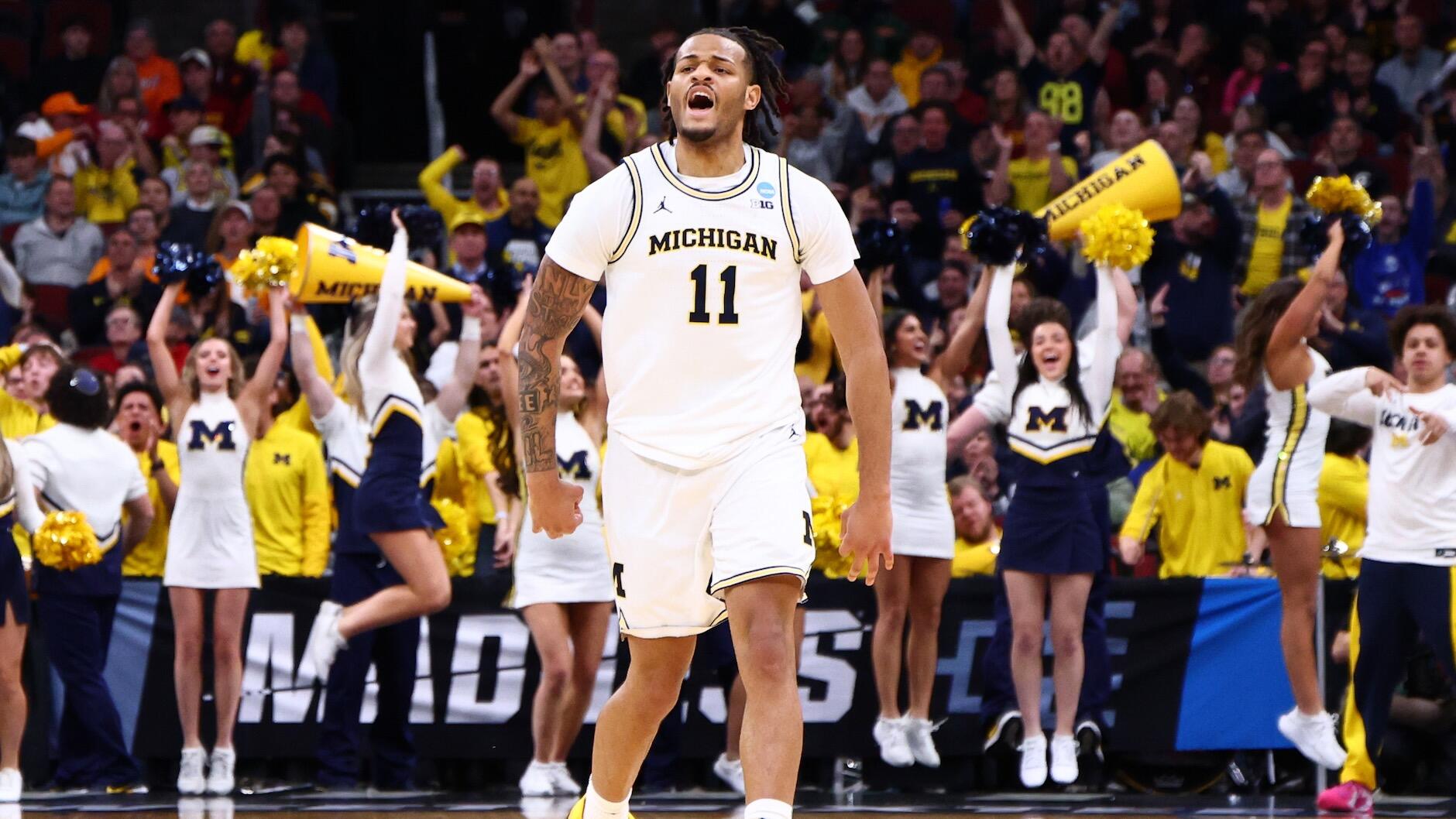
Gayle winning his singular case is both huge for the Wolverines and, perhaps, a sign of things to come next month in other cases

• 5 min read
Michigan's first big win of the 2026-27 college basketball season just landed more than a month before its first game and more than 240 miles from campus.
On Thursday afternoon inside a Niagara Falls, N.Y. courtroom, state supreme court judge Frank A. Sedita III ruled in Roddy Gayle's favor to give the Michigan guard a fifth year of eligibility. This was no temporary restraining order or preliminary injunction decision: Sedita's ruling for Gayle and against the NCAA means that the 22-year-old is immediately eligible for competition.
The NCAA still has the avenue to appeal, and is expected to do so. The timeline for that process is unclear in the immediate wake of the ruling.
Gayle, a 6-5 guard who averaged 7.3 points in 21 minutes per game off the bench last season, is now expected to be a starter for the reigning national champions. The case moved relatively swiftly; on Sept. 2, Sedita awarded Gayle a temporary restraining order against the NCAA, which paved the road for Gayle's win on Thursday. (The case was heard in Niagara Falls because that is Gayle's hometown.) Unlike other ongoing lawsuits across the country that have multiple plaintiffs across multiple sports who are suing the NCAA, Gayle's case was singular in nature. He was the only plaintiff seeking relief in this case, an approach that may well have helped his cause in gaining an extra year.
The NCAA continues to be embroiled in multiple state-based lawsuits after the organization made a rule change in late June that allowed college athletes five years to compete. When it made that change, college graduates in the class of 2026 were not grandfathered in; the rule is intended only to apply to the class of 2027 and beyond. Predictably, hundreds of college athletes hired attorneys to fight the battle.
Gayle is one of the first clear winners (if his case holds up on appeal).
When Gayle first brought the case to the court in early September, he released a statement that said, in part, "I have never played in a professional regular-season game. I am not currently in the NCAA Transfer Portal; the entry window closed in April 2026, before the NCAA adopted its new eligibility rule. I did not leave college for professional basketball. I completed four seasons, I graduated, and the NCAA's new carve-out told me I could not play a fifth. Only then did I turn to professional basketball."
Gayle played in two games in NBA Summer League with the Detroit Pistons before injuring his ankle. He never signed a professional contract. He returned to Michigan immediately after his injury to receive treatment. As coincidence would have it, the day after he returned to Ann Arbor, a federal class-action suit in Colorado made national headlines because it — temporarily — granted eligibility to every 2026 college graduate seeking a fifth year. (In a short-term win for the NCAA, that order has since been stayed, deeming those players ineligible, prompting them to seek relief at the state level elsewhere.)
But it was in late July, amid the Wisne v. NCAA case in Colorado making huge waves across the country, when Gayle (and Michigan) decided to move forward and pursue his path back to a fifth and final year of college eligibility
The 22-year-old Gayle is a surefire starter for the reigning champions next season.
Michigan gets a major boost
The news is massive for Michigan and new head coach Mike Boynton because the program has undergone significant changeover since it cut down the nets in early April after one of the most dominant seasons of the past 25 years.
First, Michigan unexpectedly lost its star coach, Dusty May, who accepted the Dallas Mavericks job 11 weeks after the end of the college basketball season and with the roster almost entirely intact after the crunch of portal season. With May off to the NBA, Michigan kept the job in-house and promoted Boynton on a two-year contract. But a change in head coach also opened up the transfer portal, per NCAA's rules, which led to one defection less than a month later: LJ Cason's move to Miami. (Cason suffered an ACL tear last season and isn't expected to play in 2026-27.)
Then, the big blow came on Michigan's overseas trip in August: Five-star freshman Brandon McCoy Jr. tore his right ACL in a game against KK Mega SUPERBET while playing in Montenegro, sidelining him for the upcoming season. McCoy was expected to be one of the more valuable freshman guards in the country. Without him, Michigan's ceiling lowered.
Getting Gayle not only brings Michigan back up a notch, it can be argued that Gayle's experience will be crucial for the Wolverines to maintain a top-three status in the Big Ten. If you can't have both, a 22-year-old Gayle may well be more valuable than an 19-year-old McCoy. Michigan will likely vie with Illinois (a lock preseason top-five team) and Michigan State (with potential preseason NPOY Jeremy Fears Jr.) atop the league ledger.
With Gayle now on track to play another season with Michigan (so long as the NCAA's appeal doesn't overturn the decision in the weeks/months to come), Michigan's starting five will consist of Final Four MOP Elliot Cadeau at point guard, sophomore guard Trey McKenney at the 2, Gayle playing off-ball 3, Tennessee transfer JP Estrella at power forward and Cincinnati big man transfer Moustapha Thiam starting at the 5.
The Wolverines will have some really good frontcourt depth and size (former LSU power forward Jalen Reed, who's been injured but expected to be ready at the start of the season; promising New Zealand native Oscar Goodman; and 6-10 freshman Quinn Costello will all get significant minutes).
Rare is the reigning champ that undergoes so much change after a litany of twists between winning the title and opening night. Michigan will look markedly different in November than the team we saw strut to a national championship, but Gayle's presence on the roster will provide a veteran presence and some sorely needed reinforcements that, theoretically, will keep the champs nationally relevant and competitive.
Had Gayle lost his case, Michigan could've faced a steep drop-off from last season's all-time-dominant squad.
Thursday's news also prompts a very big question off the hardwood: By winning in court, will Roddy Gayle's case shift the eligibility winds of other state-based lawsuits across the country? Those answers aren't that far off, as cases in Indiana, Ohio, Tennessee and elsewhere are expected to have their hearings resolved as college basketball's preseason plays out over the next five weeks. The NCAA has fought every day of the way since it changed its age-based eligibility rule in late June. No sport will challenge the shift more than college basketball, and Gayle's day in court could be a harbinger of a very volatile October.
KioskNews shows a cleaned-up reading view extracted from the publisher’s page — the original always lives on their site, not ours.