Your nature strip could be a haven for native plants and insects: new research
Whether they are winning popular garden shows or gracing living art galleries, these colourful and quirky plants have captured our attention.
Now that spring has sprung, our native plants are showcasing a dizzying array of colours, shapes and textures. These plants are also uniquely adaptable, able to thrive with little water or maintenance. And they provide much-needed food and habitat for local wildlife.
Our new research investigated how native plants could help bridge the gap between our natural and urban environments – starting with the humble nature strip.
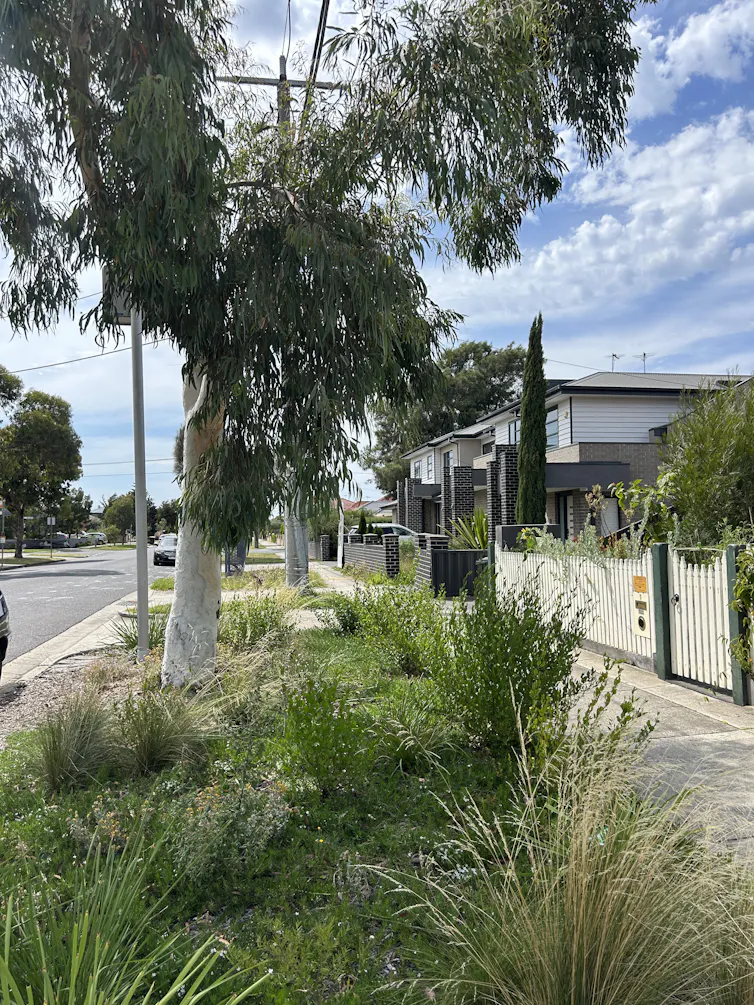
Not enough natives
Native plants are those that naturally occur in Australia and were here before European settlement.
Over millions of years, these plants have evolved alongside our native animals. Some native plants depend entirely on a handful of native animals to complete their lifecycle, and vice versa. For example, native orchids typically rely on one species of wasp for pollination and mimic the look and smell of female wasps to trick males into visiting their flowers.
Worryingly, our native plants and animals are under threat. This biodiversity crisis is driven by various factors including climate change, the spread of invasive species and land clearing for agriculture and urbanisation.
In general, the world’s cities have not been built to support nature. But that’s not to say nature doesn’t belong in the city. Many cities act as havens for threatened species, providing novel spaces for plants and animals to thrive.
Growing native plants as a form of habitat restoration is one way we can support our native animals. Yet, current housing and development trends mean private gardens are increasingly hard to find. While house sizes have increased in the past 20 years, the average block size in Melbourne has decreased by 22%.
That’s where nature-strip gardens come in.
Read more: Thousands of our native plants have no public photographs available. Here’s why that matters
Remind me, what are nature strips?
Nature strips are areas of public land between a private property and the kerb. While owned by the government, nature strips are privately maintained. This means the homeowner or renter is responsible for keeping their nature strip tidy.
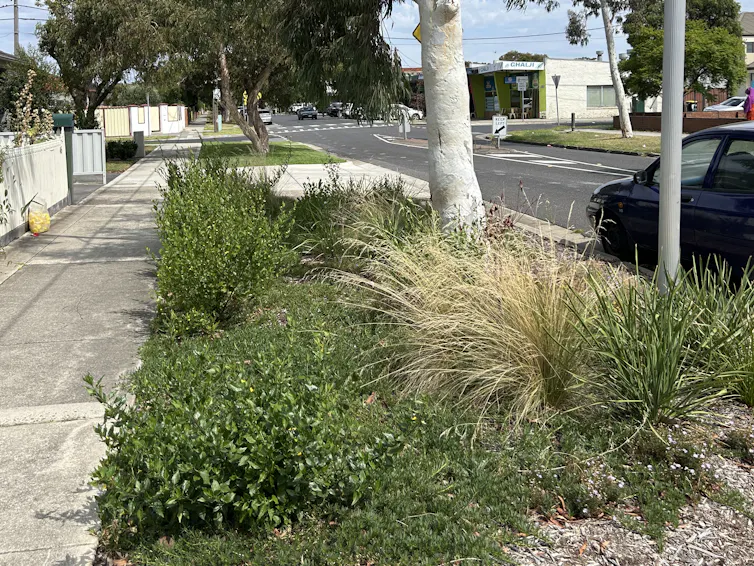
These strips of land are typically composed of lawn and a street tree. This traditional set-up offers few resources to animals that rely on the nutrients and shelter provided by native plants.
Fortunately, most councils across Greater Melbourne allow residents to turn nature strips into gardens as a way to boost biodiversity. The same is true across Australia, though the specifics can vary between councils.
But no research has investigated whether this approach actually works. Until now.
Read more: Our land abounds in nature strips – surely we can do more than mow a third of urban green space
What we did and found
Our new study investigated whether native nature-strip gardens could become habitat for insect pollinators.
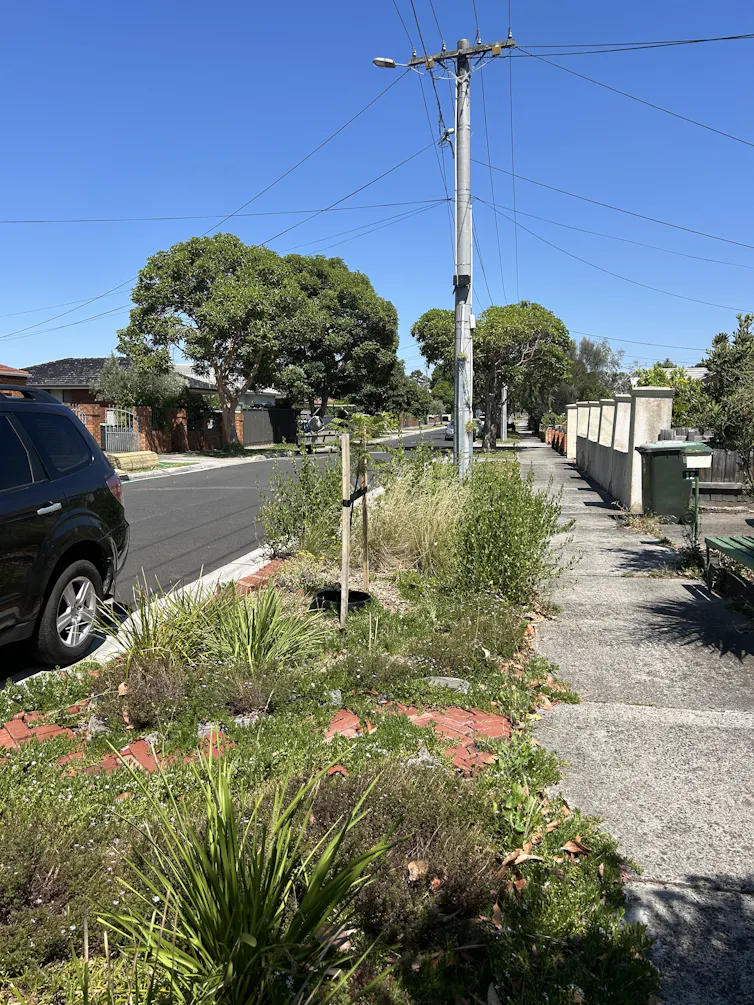
We planted native gardens in nature strips across the City of Merri-bek in Melbourne’s inner north. We monitored which insects visited the gardens both before and after this transformation.
We found seven times more insect pollinators buzzing around the nature-strip gardens, compared to only-lawn nature strips. There were also double the number of species in the planted nature strips.
These results were mainly driven by native bees, which forage for nectar and pollen in flowers of Wahlenbergia, Goodenia ovata and Brachyscome multifida.
In Melbourne, nature strips and other kinds of road verges make up more than one third of public green space. They represent a crucial opportunity to revegetate our cities and protect the native species living alongside us.

Read more: Are Australia’s native bees thriving or declining? We don’t know but can find out
How can I get involved?
If you’re keen to plant a nature-strip garden, start by searching “nature strip guidelines” on your local council website, checking if you need a permit to alter your nature strip. From there, you can contact local nurseries or communities to learn what native plants and animals live in your area. The Gardens for Wildlife website is another handy resource.
Next comes the actual gardening. Perhaps the hardest part of creating a nature-strip garden is removing the existing lawn. Lawn grasses are designed to be tough. Be ready to solarise – which involves placing a clear plastic tarp over grass to kill weeds – or apply sheet mulch to prepare a lawn for planting.
This process takes time, so be patient. But get this done over summer, and you’ll be planting in autumn. This lets your garden settle in through the cooler, wetter months and come up looking its best by spring.
When planting, aim to grow a wide variety of native plants. Having flowering plants of different colours, shapes and sizes allows an array of animals to forage in your nature-strip garden. Resources like the City of Melbourne’s Urban Nature Planting Guide can help you choose plants that suit the streetscape environment.
While planting one or a few nature-strip gardens is a good start, collective action is key. So once you transform your nature strip, spread the word. It may even help you and your neighbours reconnect with nature, with all the health and wellbeing benefits that brings.
It’s time to put the nature back into nature strips.
Read more: How do we keep gardening in the face of a changing climate?
KioskNews shows a cleaned-up reading view extracted from the publisher’s page — the original always lives on their site, not ours.