‘Doctor Who’ Star Is About To Make One of BritBox’s Best Dramas Even Better

Chelsea Adelaine Hassler is an award-winning editorial, social, and creative director with two decades of media and entertainment experience and an all-consuming obsession with TV. A native New Yorker, she always completes the Sunday crossword, reads at least 100 books per year, and has Knicks season tickets.
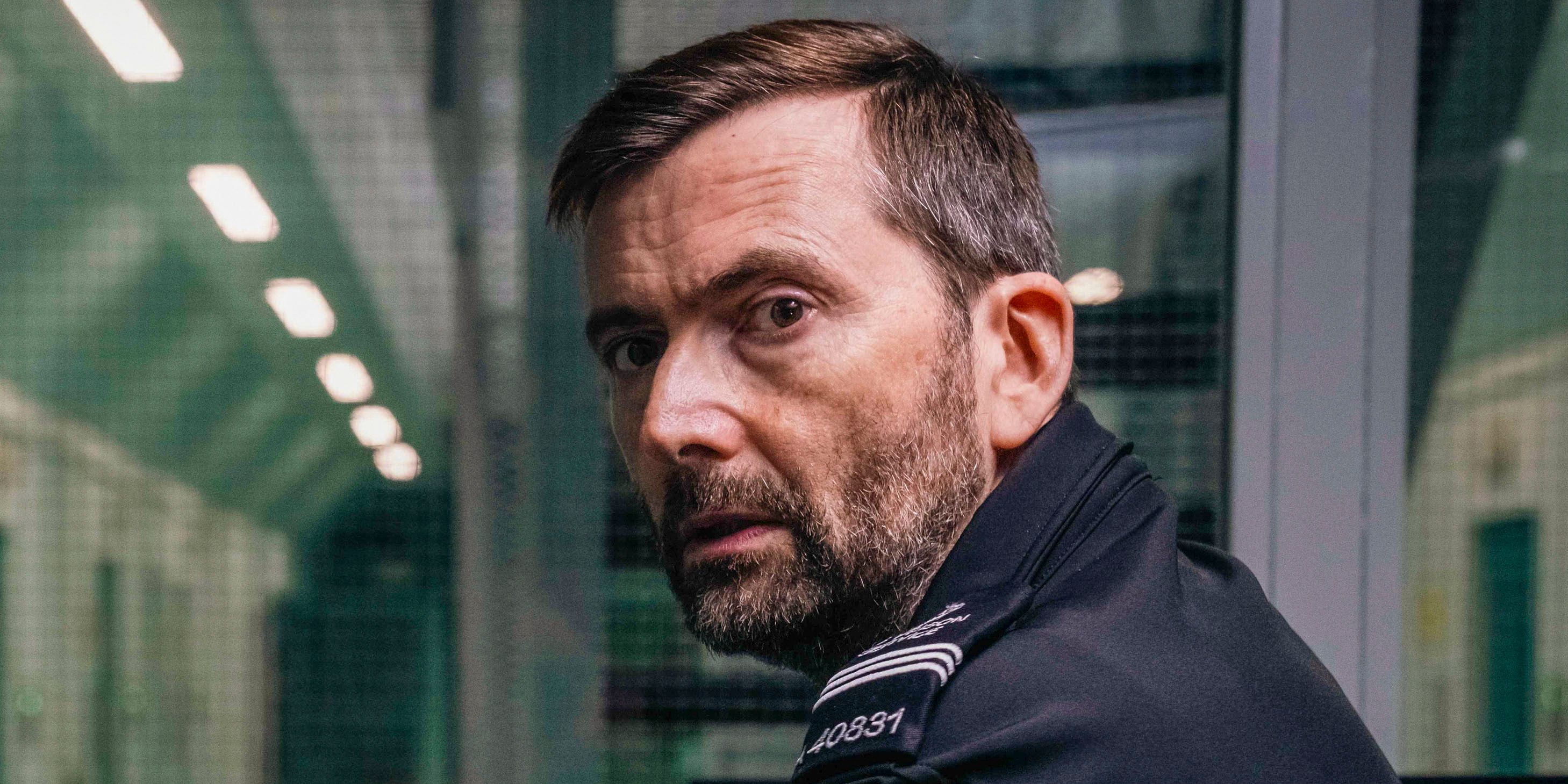
The Tenth Doctor is set to return to the British small screen later this year, in a role that could result in his most compelling dramatic performance to date. David Tennant will lead the third installment of the BAFTA-winning anthology series Time as Bobby Bailey, a custodial manager at a youth offenders' institution, alongside Siobhan Finneran as chaplain Mary-Louise O'Dell, the prison drama's sole recurring character. It's a series that pulls no punches, and places an actor best known for his eccentricity, charisma, and larger-than-life qualities inside a far more restrained and morally fraught story about institutional failure, individual accountability, and human resilience.
Created by Jimmy McGovern, Time explores the reality of life in the modern British prison system, with each season focusing on a new group of inmates and staff as they navigate guilt, punishment, and survival. The first unfolded in a men's prison, as a former teacher (Sean Bean) reckoned with his accidental murder of an innocent man, and a keenly moral prison guard (Stephen Graham) faced an impossible choice to protect his family; the second in a women's prison, where a devoted mother (Jodie Whittaker) was separated from her children, a teenage heroin addict (Bella Ramsey) was revealed to be pregnant, and a woman began a life sentence (Tamara Lawrence) after killing her baby amid post-partum depression. The new season will take place in a youth facility, as two teenagers grapple with their life-altering crimes and the chaplain and veteran officer struggle with their own crises, until tragedy strikes in the prison, leading to a clash within its walls.
David Tennant Takes On an Entirely Different Kind of Darkness in ‘Time’

As an actor, Tennant is often at his best when his charm gives way to something darker. Arguably the very best lead in Doctor Who's NuWho era, his signature energetic, witty warmth hides a terrifying, vengeful cruelty lurking below the surface; whether it's the sheer egomaniacal madness of Time Lord Victorious in "The Waters of Mars" or the calculated coldness displayed in "The Family of Blood" or "The Runaway Bride," part of what makes him so incredible in the role is his ability to seamlessly portray the two inherent sides of a beloved, quirky character that is, ultimately, an ancient and truly emotional alien. A similar argument can be made for his turn as Crowley in Good Omens, where the sarcastic swagger of his fallen angel-turned-demon was made all the more poignant by the way he met genuine evil with a sense of isolation and existential dread, his charm on full display in subversion of darkness by sheer reluctance.
Time is virtually the opposite of the two aforementioned shows, and not just because it's a gritty prison drama as opposed to a sci-fi or fantasy romp. It's a deep-dive into the raw emotional toll a deeply flawed system takes on equally flawed individuals, exposing the immense psychological and physical pressures it adds to a day-to-day existence of quiet desperation. In the world of Time, absolutely nobody emerges unscathed; instead, it's a question of what you do with the impossible choices you're given, the extent to which you enable yourself to morally or mentally compromise, and how you move on from the past that has defined who and where you are. Tennant steps into a world in which he will be cast as morally good, bad, or gray; and if the show has taught us anything over the past two seasons, the complex character he will likely inhabit will deliver a performance shaded with a level of darkness we haven't seen from him yet.
Moral Conflict Is a Staple for David Tennant, but ‘Time’ Presents Something New

It's worth noting that the opposite is also true, that some of Tennant's best roles have seen charm emerge from something darker, his acting style when dealing with moral conflict making it a trait that goes both ways. In Broadchurch, he portrayed the hardened, grumpy detective Alec Hardy who, as it turned out, possessed one of the kindest and most protective cores; ultimately winning over hearts with his hidden vulnerability, and minds with his relentless pursuit of justice that frequently found him operating in the gray area and confronting the limitations of the law. Kilgrave was the baddest of the bad in Jessica Jones, with absolutely no empathy and a life spent eliminating the free will that enables others to choose moral good, yet there was something terrifyingly charming about him that led you to have a glimmer of hope for someone who could never – and ultimately would never, despite a brief attempt at the end of the first season – be capable of any sort of redemption.
The setting of Time's third season, a prison for youth offenders, comes with inherently moral questions in and of itself. By focusing on not only the impact of teenage incarceration, but also the effects it has on those who look after juvenile offenders, it'll be shifting its spotlight from people who made a mistake to people who are young enough to live an entire life after their sentence, but because of the unstable environment they spend time in, may never be able to change. While the specific details of the plot are likely to be under wraps until the show premieres later this year, it's a fair assumption to say we're going to see David Tennant undertake a moral conflict unlike anything he's faced before, and if his track record is anything to go by, expect an epic performance from one of the most charismatic actors of our time.
KioskNews shows a cleaned-up reading view extracted from the publisher’s page — the original always lives on their site, not ours.