Is Beijing’s 2027 military milestone now a US readiness deadline over Taiwan?
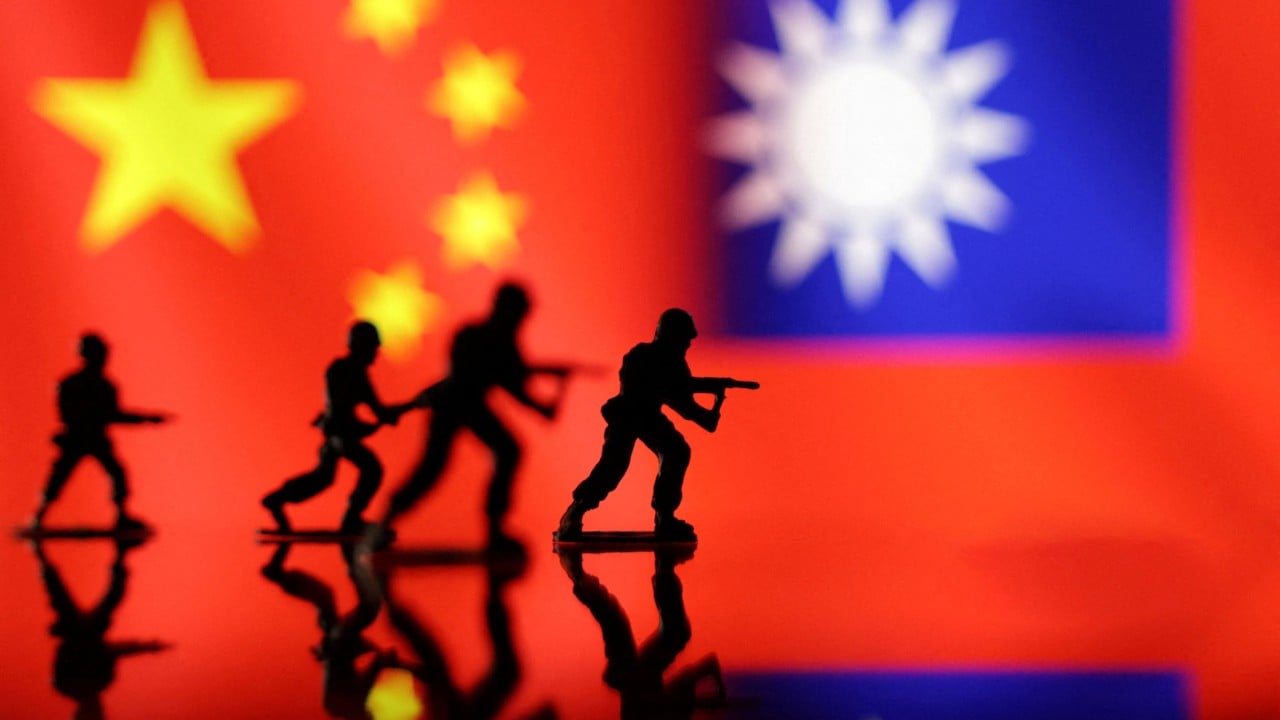
America’s push for 2027 combat readiness in the Indo-Pacific is raising questions over whether a year that US military officials linked to a possible People’s Liberation Army attack on Taiwan has instead become a planning benchmark.
The preparations come despite a US intelligence assessment published in March that mainland Chinese leaders “do not currently plan” to attack Taiwan in 2027, “nor do they have a fixed timeline for achieving unification”.
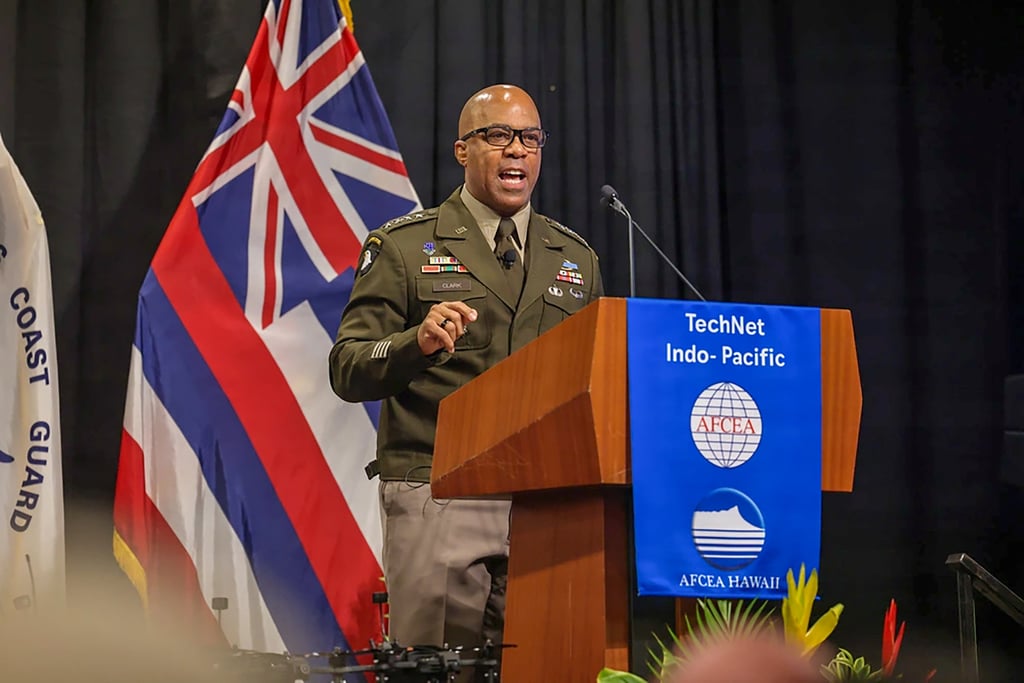
General Ronald Clark, commander of US Army Pacific, said on Tuesday that 2027 remained a year by which “we need to be ready”, according to American military newspaper Stars and Stripes.
The US Navy has also adopted readiness targets for that year, with Admiral Samuel Paparo, head of US Pacific Command, stressing the need to prepare for a possible confrontation with Beijing.
The emphasis extends to the Marine Corps. At an October 2024 defence technology conference in Honolulu, Colonel Lawrence Hussey, then assistant chief of staff for communications at US Marine Forces Pacific, told a panel: “We have 799 days until 1 January 2027.”
The Annual Threat Assessment report, published in March by the US Office of the Director of National Intelligence, nevertheless warned that the PLA was continuing to develop military plans and capabilities for a potential operation against Taiwan.
Timothy Heath, founder of the defence consultancy Perceptum, said the continued emphasis on 2027 appeared to reflect American military planning priorities rather than any identifiable plan by Beijing to attack Taiwan that year.
“It is not connected to anything [mainland] China is actually planning against Taiwan as far as we can tell,” he said.
Heath suggested the benchmark also reflected concerns about American readiness after years of war in Afghanistan and Iraq, helping focus military modernisation efforts against the PLA’s expanding capabilities.
Michael Bosack, director of the Australia-based Parley Policy Institute, pointed to another factor that he viewed as important.
“When considering a foreign government’s potential moves, commanders will consider the ‘most likely course of action’ and the ‘most dangerous course of action’,” Bosack said.
“As much as possible, military commanders prepare for the most dangerous course of action.”
At the heart of the issue is a mismatch between how Beijing and Washington have framed the year 2027.
02:20
US accuses mainland China of targeting Taiwan leader’s family in surveillance case
2027 marks the 100th anniversary of the founding of the PLA, a milestone Beijing designated in 2020 as a target for military modernisation but never publicly identified as a deadline for attacking Taiwan.
In March 2021, then US Indo-Pacific commander Admiral Philip Davidson warned Congress that Beijing could take military action against Taiwan within six years, giving rise to the term “Davidson window”.
Subsequent American officials went further.
In 2023, then CIA director William Burns said US intelligence indicated President Xi Jinping had instructed the PLA to be ready to conduct a successful invasion of Taiwan by 2027, though he stressed this did not mean Xi had decided to launch one that year or at any other time.
But mainland Chinese analysts offered a different interpretation of the continued emphasis on 2027, arguing that Clark’s recent remarks reflected the US military’s institutional and budgetary interests in highlighting potential security risks.
“The Davidson window itself … came from the [US] military. The [US] military seeks to exaggerate threats in order to secure more funding from Congress,” said Shao Yuqun, director of the Institute for Taiwan, Hong Kong and Macau Studies at the Shanghai Institutes for International Studies.
Xin Qiang, professor and deputy director of the Centre for American Studies at Fudan University, similarly argued that highlighting the possibility of conflict across the Taiwan Strait could help individual branches of the US military “secure a bigger slice of the pie” during budget negotiations.
He cautioned against interpreting Clark’s remarks as evidence of a broader consensus in Washington, particularly given the US intelligence community’s March assessment.
“[Clark’s] remarks do not necessarily mean that a consensus has emerged within the US strategic community or that Washington will make major changes to its military policy or deployments based on such an assessment,” Xin said.
Beijing sees Taiwan as part of China to be reunited by force if necessary.
Most countries, including the United States, do not recognise Taiwan as an independent state, but Washington is opposed to any attempt to take the self-ruled island by force and is committed to supplying it with weapons.
Beijing has said it seeks peaceful reunification with Taiwan but reserves the right to use force, while promoting closer cross-strait exchanges and economic integration.
The number of PLA fighter jet sorties near the island fell to a three-year low in the first half of 2026, according to a South China Morning Post tally based on Taiwan’s defence ministry data.
Maritime activity around the island, however, has increased in recent years.
Amid the uncertainty over Beijing’s intentions, the US military continues preparing for a possible conflict.
Clark described ongoing efforts under an initiative known as Army Ready Forward to rotate personnel, equipment and supplies along island chains closer to mainland China, while the US Navy aims to have 80 per cent of its ships and aircraft ready for short-notice deployment by 2027.
The Pentagon’s emphasis on what Beijing was capable of doing rather than what it intended to do, Heath said, could help explain why 2027 remained central to US military planning.
“The attention given to 2027 is almost completely driven by a focus on China’s military capabilities and not on its political intentions,” he added.
KioskNews shows a cleaned-up reading view extracted from the publisher’s page — the original always lives on their site, not ours.