Javed Akhtar's jibe at CJP protest critics: ‘Same intensity’ for political jalsas?
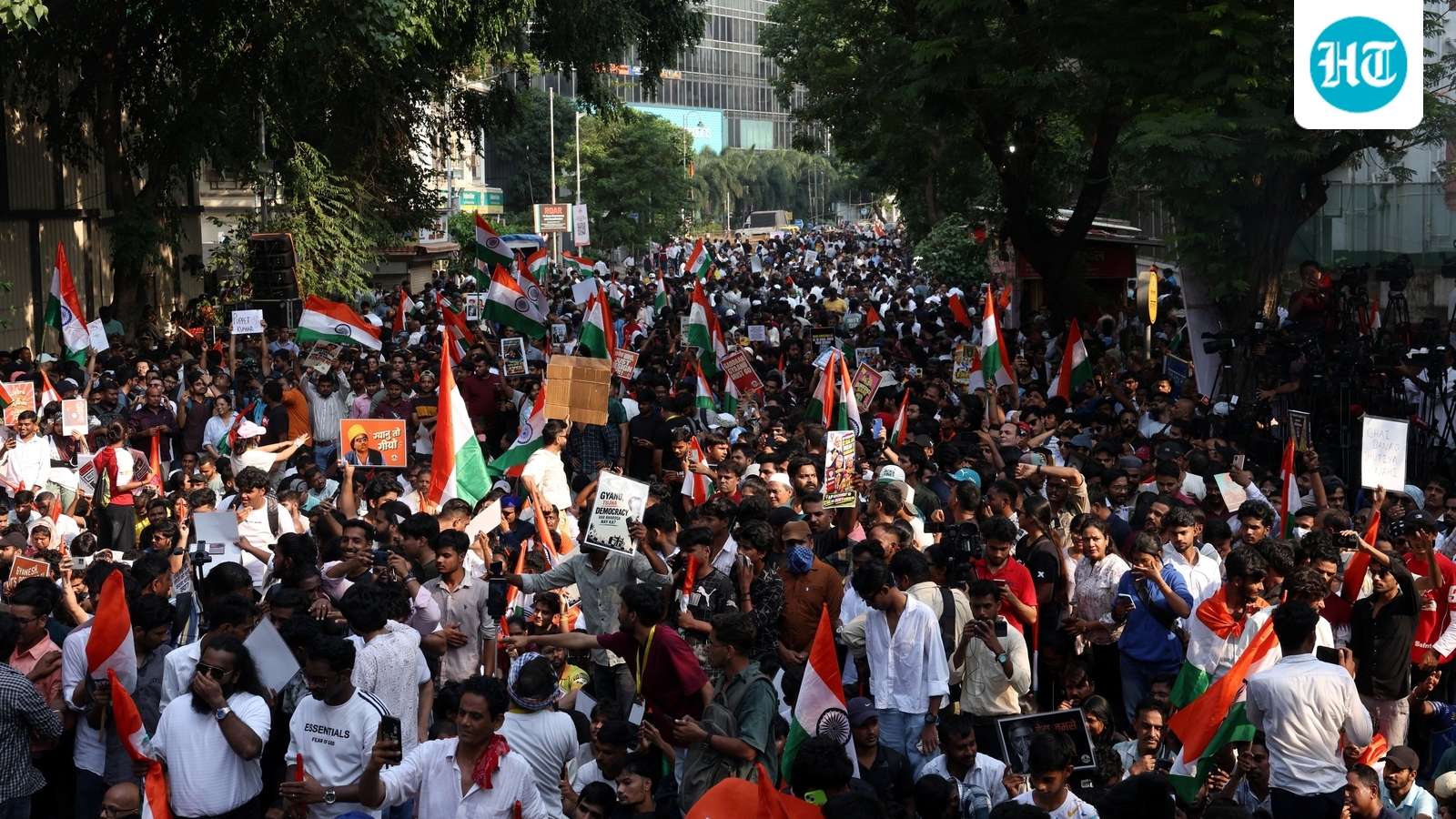
Lyricist Javed Akhtar on Friday questioned whether residents of Mumbai's Shivaji Park who objected to the Cockroach Janta Party’s (CJP) protest over noise pollution would raise similar objections when a political party holds a jalsa at the venue.
Akhtar welcomed the residents’ concerns and their demand that authorities cancel the CJP protest, but suggested that the objections should be applied consistently to political gatherings as well.
“I am so happy that some residences of Shivaji park are getting sensitive about the noise pollution and asking the authorities to cancel the protest of CJP today at Shivaji park. I am hundred percent sure that they will raise the same objection with the same intensity if not more when ever there is any jalsa of any political party of Maharashtra is planned at Shivaji park,” he said in a post on X.
CJP holds protest against Gyanesh Kumar in Mumbai
Dipke had announced the Mumbai protest as the first leg of a nationwide agitation, alleging irregularities in electoral rolls and demanding greater accountability in the functioning of the Election Commission.
The protest comes days after Mumbai Police denied permission for the gathering at Shivaji Park, citing, among other issues, concerns over noise pollution, traffic congestion and disruption to movement in the area. Dipke subsequently announced the ‘Jail Bharo Andolan’ at the venue.
Separately, student activists and AAP leaders are holding a protest at Delhi’s Jantar Mantar, also demanding Kumar’s resignation.
More than 500 protesters have reportedly been detained in Delhi, including AAP leaders Atishi and Sanjay Singh. Several attempts have also been made to detain All India Students' Association (AISA) president Neha Bora.
Why is CJP demanding Gyanesh Kumar’s resignation?
An Indian Express report alleged that Sandhu and Joshi had recorded objections to several decisions of the poll panel over a 10-month period, including matters relating to electoral rolls and the Special Intensive Revision (SIR) exercise. The reported objections included concerns over changes to Form 6, the centralisation of access to the electoral-roll database and decisions concerning voter additions, deletions and restoration.
The report triggered a political controversy, with opposition parties calling for Kumar’s resignation and seeking the Supreme Court’s intervention, while raising questions about the functioning of the poll panel.
The Election Commission, however, rejected the suggestion that the reported objections reflected a breakdown or lack of consensus within the poll panel. It said individual views, observations and suggestions are part of deliberations in a multi-member constitutional body, and maintained that final decisions, including those related to SIR, were taken unanimously.
In a subsequent statement, the ECI also sought to present a united front, saying decisions on SIR had the approval of all three commissioners.
KioskNews shows a cleaned-up reading view extracted from the publisher’s page — the original always lives on their site, not ours.