9 Funniest Discworld Quotes

Tom is a Senior Staff Writer at Screen Rant, with expertise covering everything from hilarious sitcoms to jaw-dropping sci-fi epics.
Initially he was an Updates writer, though before long he found his way to the TV and movies team. He now spends his days keeping Screen Rant readers informed about the TV shows of yesteryear, whether it's recommending hidden gems that may have been missed by genre fans or deep diving into ways your favorite shows have (or haven't) stood the test of time.
Tom is based in the UK and when he's not writing about TV shows, he's watching them. He's also an avid horror fiction writer, gamer, and has a Dungeons and Dragons habit that he tries (and fails) to keep in check.
While there are countless reasons fans fall in love with the Discworld novels, one of the most common is the uniquely sharp humor of the late Terry Pratchett. His comedy could be absurd, cynical, surprisingly dark, or quietly philosophical, and was often some or all of the above simultaneously. Pratchett didn't simply put jokes into fantasy stories, he made humor absolutely fundamental to them.
Few, if any, fantasy book series are as consistently funny as Discworld. Each of its 41 novels seems to contain a laugh-out-loud observation on every other page. Every reader will inevitably have their personal favorites, but the funniest Discworld quotes are often those that capture Pratchett's inimitable comedy in just a sentence or two. From brutally dismantling inspirational clichés to contemplating the culinary usefulness of pets, the most hilarious Discworld lines encapsulate what made Pratchett such a uniquely funny writer.
"The entire universe has been neatly divided into things to (a) mate with, (b) eat, (c) run away from, and (d) rocks." - Equal Rites (1987)
The Complexity Of The Universe Reduced To Four Wonderfully Simple Categories.
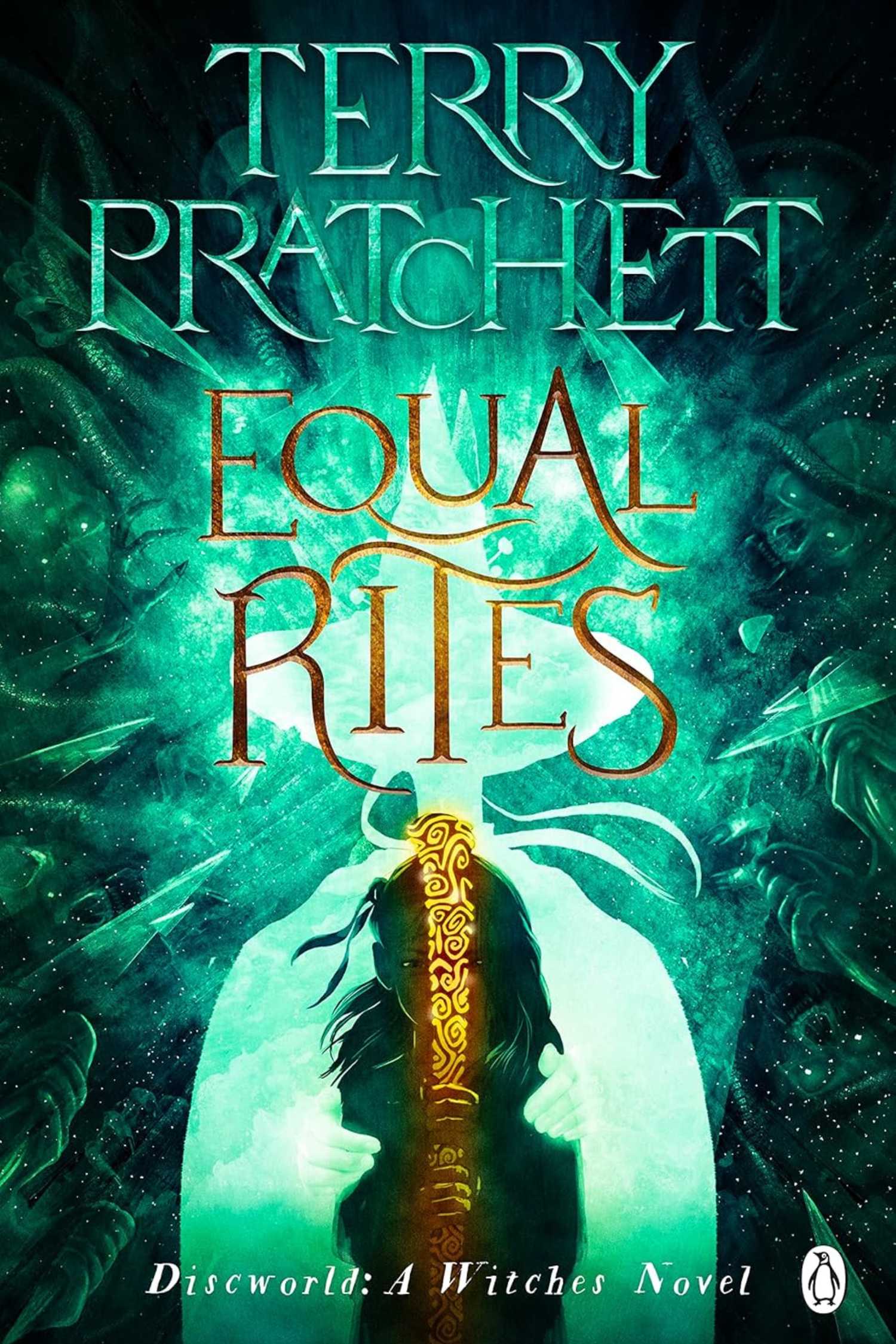
Terry Pratchett was brilliant at making supposedly complicated ideas sound hilariously simple, and 1987's Equal Rites contains one of his finest examples. The observation concerns the relatively uncomplicated way animals perceive existence, reducing everything in the universe to potential mates, food, threats, and rocks. It's a beautifully blunt piece of categorization that becomes funnier the longer the reader considers just how comprehensive it actually is.
This Discworld quote also demonstrates how Pratchett could use comedy to shift perspective. Humans invent elaborate systems for classifying the world, while the animal version cuts through everything with four categories dictated almost entirely by survival. However, it’s the final inclusion of "rocks" is what makes the joke work so well. After three categories defined by urgent biological necessities, there is apparently nothing left except all the useless stuff. It's classic Discworld: an absurd observation that initially sounds ridiculous but has a surprising amount of logic when pondered on for more than a moment.
“Coffee is a way of stealing time that should by rights belong to your older self.” - Thud (2005)
The Perfect Description Of What Caffeine Actually Does.

Most jokes about coffee focus on exhaustion or caffeine addiction, but 2005’s Thud! approaches the subject from a timelessly Pratchettesque direction. Describing the way coffee gives energy as an almost supernatural act of temporal theft is nothing short of comedy genius. What’s more, like so many hilarious Discworld lines, it’s remarkably true to lie. The extra energy caffeine releases isn't free. It's merely being borrowed from the exhausted person the drinker is destined to become later.
It’s one of several Discworld jokes that works because the concept feels instantly recognizable despite being completely ridiculous. Anyone who has used coffee to push through tiredness only to crash afterward understands precisely what Terry Pratchett means here. However, phrasing it as stealing time from one's "older self" transforms the everyday experience into something that sounds like a minor violation of the laws of physics. Discworld frequently finds its biggest laughs in describing ordinary human behavior as though an outsider were documenting it, and this line makes drinking coffee sound both wonderfully sinister and painfully accurate.
“The enemy wasn't men, or women, or the old, or even the dead. It was just bleedin' stupid people, who came in all varieties. And no one had the right to be stupid.” - Polly in Monstrous Regiment (2003)
A Wonderfully Blunt Conclusion About Human Morality.

Much of 2003's Monstrous Regiment revolves around assumptions about gender and societal expectations, especially when it comes to war. This single quote from the internal thoughts of Polly, the book’s Mulan-like hero who masquerades as a man to take her brother’s place in a military conscription, sums it up both perfectly and hilariously. By the time she reaches this conclusion, she’s realized that the real enemy is always the ignorant rather than any specific group, and this kind of dangerous stupidity is remarkably inclusive.
It's funny partly because of how aggressively uncomplicated Polly's philosophy becomes. Terry Pratchett spends Monstrous Regiment dismantling social assumptions only for his protagonist to conclude that the real dividing line is between people behaving sensibly and "bleedin' stupid people." Yet the gag carries a typically Pratchettian seriousness beneath it. Stupidity isn't presented as lack of intelligence so much as the refusal to question destructive ideas. It’s a Discworld joke that lands twice: first as an exasperated insult aimed at humanity in general, then as a world-weary observation that foolishness isn’t limited to any particular group.
“His age was indeterminate. But in cynicism and general world weariness, which is a sort of carbon dating of the personality, he was about seven thousand years old.” - Guards! Guards! (1989)
A Hilarious Method For Calculating Age.

There are plenty of ways to establish that someone is cynical, but Terry Pratchett chose to explain a character being distrustful of the world using archaeology in Guards! Guards!, the first City Watch novel. The quote describes Corporal Nobby Nobbs, whose age is famously difficult to determine due to his many malformities. Pratchett gets around this by suggesting that accumulated cynicism and exhaustion can function as "carbon dating of the personality." By that measurement, Nobby isn't merely old. He's approximately seven millennia old.
"Carbon dating of the personality" would already be a great joke by itself, but assigning an absurdly specific age takes it further. Terry Pratchett frequently treated personality traits as though they were physical properties that could be measured scientifically, but rarely is it as funny as making world-weariness sound like something deposited in geological layers. It's also an excellent example of how distinctive his writing style could be. The line appears in the narration itself, which in the Discworld novel is just as distinctive a voice as any of the characters.
“Real stupidity beats artificial intelligence every time.” - Mustrum Ridcully In Hogfather (1996)
Machines Will Never Outgrow The Flaws Of Their Creators.

Long before AI became an everyday subject of mainstream discussion, 1996’s Hogfather had Mustrum Ridcully deliver an exceptionally Pratchett-like verdict on it. The Archchancellor of the Unseen University isn't particularly concerned that artificial intelligence might surpass humanity when presented with Hex, the Disc’s first computer. His reason for not being alarmed is simple. No matter how intelligent machines get, they face an insurmountable obstacle: humans have already perfected stupidity. If it were to come down to a conflict, the buffoonery of humanity would overwhelm any AI system that tried to understand our behavior with logic and reason.
From a prose standpoint, the construction is wonderfully economical. "Artificial intelligence" is contrasted not with natural intelligence, as expected, but "real stupidity," completely reversing the usual comparison. It also fits Ridcully perfectly. The Archchancellor regularly bulldozes through complicated magical and philosophical problems with bullish confidence, and this blunt assessment of a technological marvel is his personality at its most hilarious. Like many of Pratchett's funniest lines, this Discworld quote has only become easier to appreciate with time, especially given how prevalent AI has become in recent years.
"If you trust yourself... and believe in your dreams... and follow your star... you'll still get beaten by people who spent their time working hard and learning things and weren't so lazy." Miss Tick In Wee Free Men (2003)
A Witch Destroys An Entire Genre Of Inspirational Advice.

The opening half of Miss Tick's statement in 2003’s The Wee Free Men sounds like something destined for an inspirational poster. Trust yourself, believe in your dreams, and follow your star: every familiar ingredient is present. Then Terry Pratchett abruptly demolishes the sentiment by pointing out that none of those things substitute for actually becoming good at something. Dreamers can follow as many stars as they like, but the person who worked hard to reach the same destination will probably still beat them.
It's particularly appropriate advice for Tiffany Aching, whose journey toward becoming a witch is never really about discovering effortless magical greatness. The witches in Discworld value observation, knowledge, and hard work far more than theatrical displays of magic. Miss Tick's wonderfully unsentimental advice captures that philosophy while also skewering fantasy's fondness for chosen heroes who triumph because they simply believe hard enough. It's harsh, practical, and deeply funny because almost every reader has heard a much less useful version (usually on a poster with a cat on it).
“Pets are always a great help in times of stress. And in times of starvation too.” - Small Gods (1992)
A Comforting Observation That's Immediately Made Horrifying.

Few Discworld jokes demonstrate Terry Pratchett's ability to weaponize a follow-on sentence better than this one from 1992’s Small Gods. "Pets are always a great help in times of stress" is perfectly wholesome. As every pet owner will attest to, animals provide reassurance and comfort when things are going badly. Then comes the clarification about starvation, and the reader is forced to reconsider exactly what kind of "help" the narrator had in mind. The brilliance is in how little Terry Pratchett needs to say for this Discworld quote to be hilarious.
There is no explanation of the darker implications, because there doesn't need to be one. The reader reaches it immediately, turning an affectionate observation about pets into an unexpectedly grim survival joke. That tonal reversal is especially at home in Small Gods, a novel capable of moving between the philosophy of faith and religious cruelty and absurd comedy with remarkable ease. It may be one of the darkest Discworld jokes, but it doesn’t feel gratuitous, either. It works because human morality can become alarmingly flexible once circumstances get sufficiently desperate. It may be touching on an uncomfortable truth, but it’s a truth nonetheless.
“If you put a large switch in some cave somewhere, with a sign on it saying 'End-of-the-World Switch. PLEASE DO NOT TOUCH', the paint wouldn't even have time to dry." - Susan Sto Helit In Thief of Time (2001)
Death’s Granddaughter Understands Humanity's Fascination With Forbidden Things.

Susan Sto Helit has inherited plenty from her grandfather Death (the Disc's Grim Reaper), including an unusually detached perspective on humanity's stranger tendencies. This has led to some hilarious Discworld moments, but 2001’s Thief of Time gives her one of the funniest observations on human curiosity in the entire series. When reflecting on why people do what they know they’re not supposed to, Susan reaches the conclusion that it’s the fact that forbidden acts are forbidden that makes them so enticing.
With this Discworld Quote, Terry Pratchett takes the familiar concept of forbidden temptation and hilariously illustrates it using a hypothetical large switch in a cave. The detail about the paint not having time to dry elevates the joke, suggesting humanity wouldn't merely fail this test eventually but almost instantaneously. As usual with Pratchett’s comedy, there's something painfully recognizable underneath the exaggeration. Telling people not to do something makes it irresistible. Like her grandfather, Susan is more exasperated by this fact than anything else, because she understands humans far too well to expect differently.
“Give a man a fire and he's warm for a day, but set fire to him and he's warm for the rest of his life.” - Solid Jackson In Jingo (1997)
A Famous Proverb Gets A Spectacularly Dark Discworld Makeover.

"Give a man a fish and you feed him for a day; teach a man to fish and you feed him for a lifetime" has been repeated in countless variations. However, in 1997’s Jingo, Terry Pratchett finds a much more efficient alternative. Giving someone a fire provides temporary warmth. Setting that person on fire technically keeps them warm for the remainder of their life. The fact that said remainder becomes considerably shorter is merely an unfortunate detail.
It's one of the best examples in Discworld of Pratchett taking language completely literally until a familiar piece of wisdom becomes horrifying. The sentence preserves the rhythm and structure of inspirational advice while reaching precisely the opposite kind of conclusion. There is no uplifting lesson, just ruthless semantic correctness. That combination of wordplay and unexpectedly morbid humor is quintessential Discworld. Pratchett understood that sometimes the funniest way to dismantle a cliché isn't to contradict it at all, but to follow its wording with such unreasonable precision that it destroys itself.
Discworld
- TV Show(s)
- Soul Music, Wyrd Sisters, Hogfather, The Color of Magic, Going Postal, The Watch
- Video Game(s)
- Discworld MUD
- First Film
- Hogfather
- First TV Show
- Soul Music
- Cast
- David Jason, Charles Dance, Michelle Dockery, Marc Warren, Anna Chancellor, Richard Coyle, Ingrid Bolsø Berdal, Adam Hugill, Jo Eaton-Kent, Wendell Pierce, Ralph Ineson, James Fleet, Terry Pratchett
- Created by
- Terry Pratchett
KioskNews shows a cleaned-up reading view extracted from the publisher’s page — the original always lives on their site, not ours.