10 Brilliant Sci-Fi Books You Can Finish in One Day

Jeremy has more than 2900 published articles on Collider to his name, and has been writing for the site since February 2022. He's an omnivore when it comes to his movie-watching diet, so will gladly watch and write about almost anything, from old Godzilla films to gangster flicks to samurai movies to classic musicals to the French New Wave to the MCU... well, maybe not the Disney+ shows.
His favorite directors include Martin Scorsese, Sergio Leone, Akira Kurosawa, Quentin Tarantino, Werner Herzog, John Woo, Bob Fosse, Fritz Lang, Guillermo del Toro, and Yoji Yamada. He's also very proud of the fact that he's seen every single Nicolas Cage movie released before 2022, even though doing so often felt like a tremendous waste of time. He's plagued by the question of whether or not The Room is genuinely terrible or some kind of accidental masterpiece, and has been for more than 12 years (and a similar number of viewings).
When he's not writing lists - and the occasional feature article - for Collider, he also likes to upload film reviews to his Letterboxd profile (username: Jeremy Urquhart) and Instagram account.
He has achieved his 2025 goal of reading all 13,467 novels written by Stephen King, and plans to spend the next year or two getting through the author's 82,756 short stories and 105,433 novellas.
Sign in to your Collider account
Time is finite, and reading takes it. Further, reading takes up more time than certain other forms of entertainment, because if you're sufficiently dedicated (and not being employed helps), a couple of movies a day, on average, is doable. Depending on what games you like, maybe you can get through those within a day or two (not all games), and then… okay, TV shows take a while, but again, not all shows. Getting through a miniseries might not be that much more of a time commitment than your average epic film.
With books, though, unless you're skim-reading, or maybe listening to audiobooks with the speed way up, you're generally not going to be able to get through as many. Of course, one other strategy is targeting shorter books, especially if you want to keep reading but don’t feel like you have a great deal of free time. These are all sci-fi books that can be read in a day, generally not topping 200 pages and therefore being completable within a matter of hours, rather than a matter of days or weeks. They're also high-quality books, so that helps make them easy to digest rather speedily, too.
10 'The Running Man' (1982)

The Running Man was written by Richard Bachman, at least according to the cover, but Richard Bachman is Stephen King, and The Running Man wasn’t released too far back in time from the point that the truth came out. Anyway, it is worth reading if you’ve generally liked all the “official” Stephen King books, but The Running Man stands out for being particularly fast-paced, even compared to some of King’s slimmer and speedier novels.
The Running Man does not take very much time to read at all, and then, according to King, it also took very little time to write.
It definitely earns its title, with the main character being on the run the whole time, taking part in a dangerous high-risk/high-reward game show, and it’s all done in a way to make you feel like you're there alongside him, needing to sprint much of the time as well. The Running Man does not take very much time to read at all, and then, according to King, it also took very little time to write, as he wrote the first draft in about a week. Truly breathless writing and reading here, nice and in-sync and all.
9 'Burning Chrome' (1986)

So you “can” finish Burning Chrome in a day, but whether you “should” finish Burning Chrome in a day… maybe not. It’s quite dense, because it’s written by William Gibson, and that is his style, more or less. It’s just that it’s a bit more digestible than most of his novels, since this short story collection is slimmer in terms of pages, and then the stories don’t really unravel (or Sprawl, ha) as much as his longer works, so you ultimately don’t get as lost.
If you don’t read it in one day, you'll probably burn through Burning Chrome in maybe a couple of days. Most of the stories here are pretty strong, and if you're a big cyberpunk fan who’s somehow not read this particular collection yet, then it feels logical to make doing that a priority.
8 'Slaughterhouse-Five' (1969)
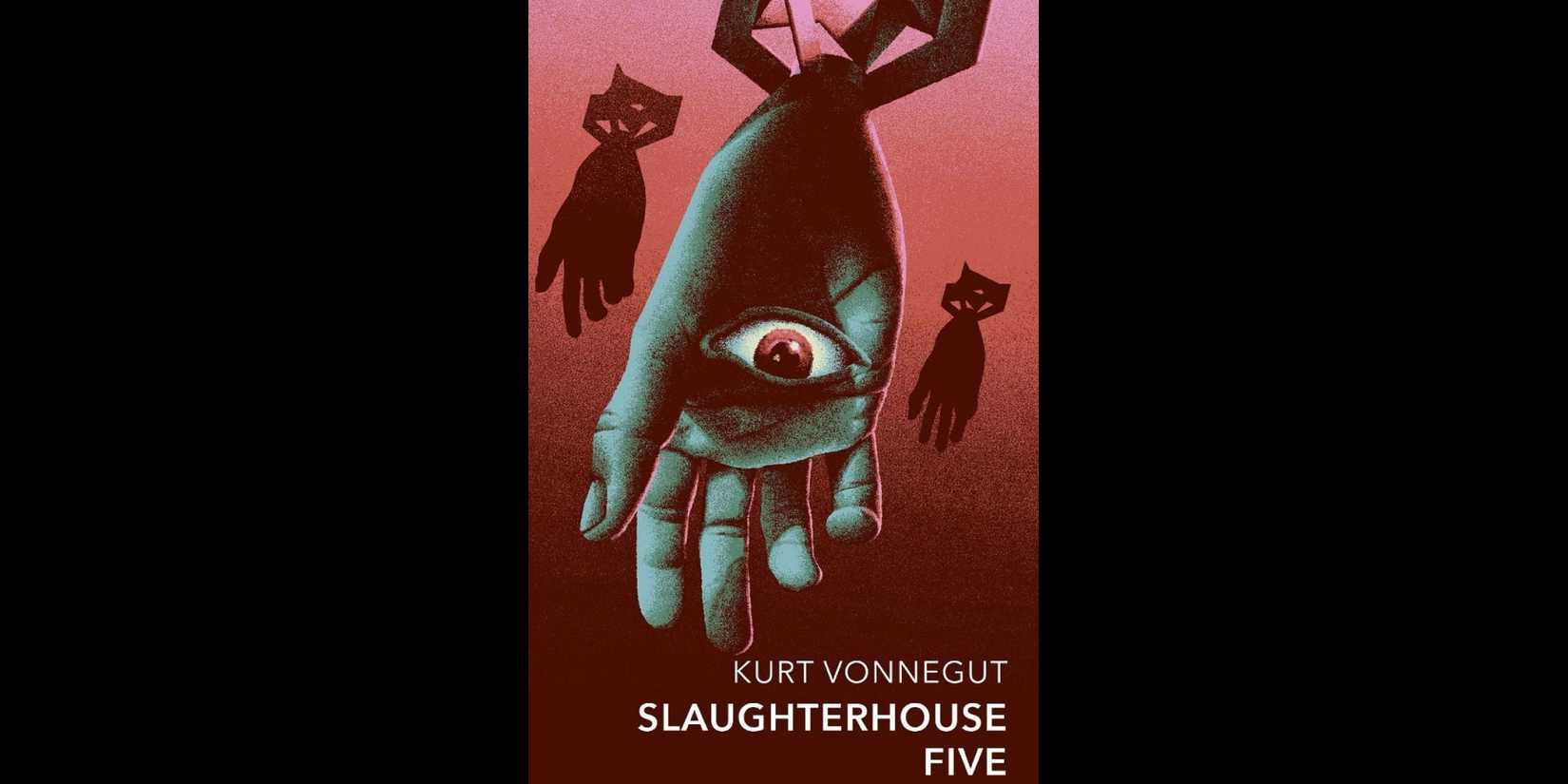
Don’t enter into Slaughterhouse-Five expecting a ton of science fiction elements, since this is a slim book and it only has so much room to operate within all the different genres it chooses to tackle. And there are a lot, since this takes place during World War II, kind of, and also after the war (again, kind of), with it being dramatic, sometimes satirical, and also generally quite confounding.
It’s equal parts effective and unique as an anti-war novel, and it’s also interesting in how it chooses to (once more, kind of) incorporate a sort of time travel into the whole mind-bending nightmare that it is. Emotionally, it’s not an easy read, though Slaughterhouse-Five is always quite gripping and engaging, and then if you have an afternoon or evening free, you will likely be able to (and probably even want to) get through it in a single sitting.
7 'Akira Vol. 1' (1982)
Graphic novels or volumes of an ongoing manga series are usually comparable to “ordinary” novels if you just look at the number of pages, but when the story’s being told with images alongside text, it’s inevitably only going to be particularly text-heavy graphic novels (or comic/manga-like works) that take a similar amount of time to read as novels that are just text.
With Akira, it’s an especially visual manga series, so if you just tackled all 2000-ish pages of it, spread out across six main volumes, it might take about a week, or even a little less. And so take Vol. 1, for instance, which is the one to start with for hopefully very, very obvious reasons, and you can blast through it in probably an hour or two, though if you want to spend a bit more time with it marveling at the impressive and seriously detailed artwork, then honestly, fair enough!
6 'A Clockwork Orange' (1962)

The movie version of A Clockwork Orange is probably more famous than the book, but it’s worth mentioning because you could probably get through the book in only a little more time than it would take to watch the film. It’s a 136-minute-long movie made from a book that’s under 200 pages, and sure, reading speeds vary, but four or five hours at the most is probably enough for most readers to digest this one.
Oh, unless you're struggling with the slang, wanting to understand every word, perhaps by checking a guide or something. That would slow you down. Otherwise, A Clockwork Orange is not a huge time commitment, and it’s packed with stuff to think about (and feel unsettled by), so it certainly lingers in the mind for a great deal longer than it takes to actually read.
5 'I, Robot' (1950)

This one’s here for similar reasons to Burning Chrome, because I, Robot is a collection of short stories by a legendary sci-fi author (if that’s not underselling him), Isaac Asimov. So, it being split up like that makes chomping through all those stories a little like getting really into a TV show and potentially watching an entire season of it in one day.
Sure, it takes time, but when you can break things up like that, it feels more manageable from a psychological perspective than taking in one whole work of similar length that doesn’t really have breaks or some kind of episodic structure. As for the content of I, Robot, it’s nine fairly short stories written by Asimov largely in the 1940s, and when you take them all together, it makes for an important and undeniably influential piece of sci-fi literature.
4 'Fahrenheit 451' (1953)

Imagine not putting Fahrenheit 451 here? Admittedly, apologies are in order if you’ve been going over a fair few rankings concerning books in recent days/weeks/months and have seen Fahrenheit 451 mentioned a great many times, but it is pretty fantastic. It’s aged extremely well and much of what it has to say still feels relevant, but then beyond that, the entertainment it offers also feels quite timeless.
You can be a bit lukewarm on the whole activity of reading and still likely get through Fahrenheit 451 quite easily, and in a fairly short amount of time, too. If it were much shorter, it’d probably be a novella rather than a novel, and the entire thing is paced incredibly well, with a whole lot packed into a little over 150 pages (even with the brief length, it has proven difficult to adapt into a film, but maybe it’s best that the book about books remains, like, a book).
3 'The Hitchhiker's Guide to the Galaxy' (1979)
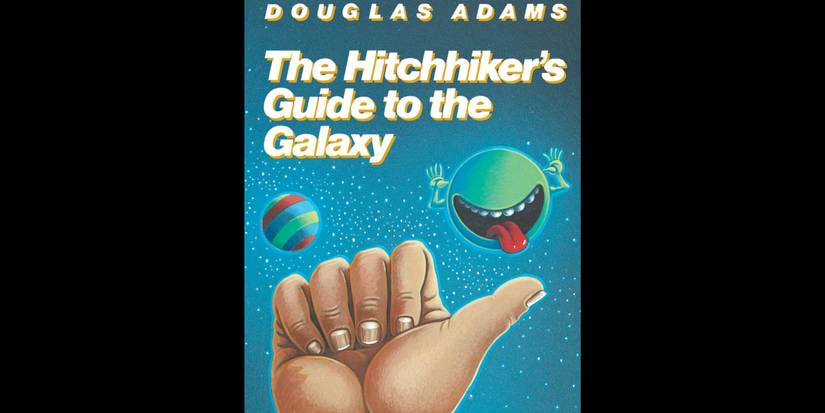
While it is part of a series of the same name, it’s 1979’s The Hitchhiker’s Guide to the Galaxy that feels like the most important and worth reading of the bunch, and it’s also probably the most entertaining. It could well be one of the funniest books of all time, and its status in such a category is helped by the fact that it’s comedic throughout, with there being something laugh-worthy on almost every page.
With the science fiction stuff, The Hitchhiker’s Guide to the Galaxy is also interesting and sometimes even thought-provoking, not to mention undoubtedly unique, just with the way it works some big philosophical ideas in with all the weirdness and absurdity. It’s a fairly effortless book to get through in a short amount of time, thanks to not being all that long and being one of the more broadly enjoyable books not just of its era/genre, but maybe even of all time, and of any genre, really.
2 'I Who Have Never Known Men' (1995)

Entirely on the other end of things to The Hitchhiker’s Guide to the Galaxy if you're talking about tone, here’s I Who Have Never Known Men, which is harrowing enough to feel like something of a horror novel while also being a piece of science fiction. Oh, and regarding it being sci-fi, it’s not entirely. Like, maybe it’s a bit easier to describe as dystopian or post-apocalyptic, with the horror coming in because of how little is explained, and just how few things the narrator really seems to know.
So, maybe call it a mystery novel as well, albeit one without answers. But I Who Have Never Known Men is skillfully written enough that this doesn’t feel frustrating, and it also doesn’t stop the novel as a whole from feeling compelling. The unease and uncertainty are the point, and that point is conveyed artfully, with the whole thing being undeniably haunting to let linger in your mind and look back on.
1 'The Dark Tower: The Gunslinger' (1982)
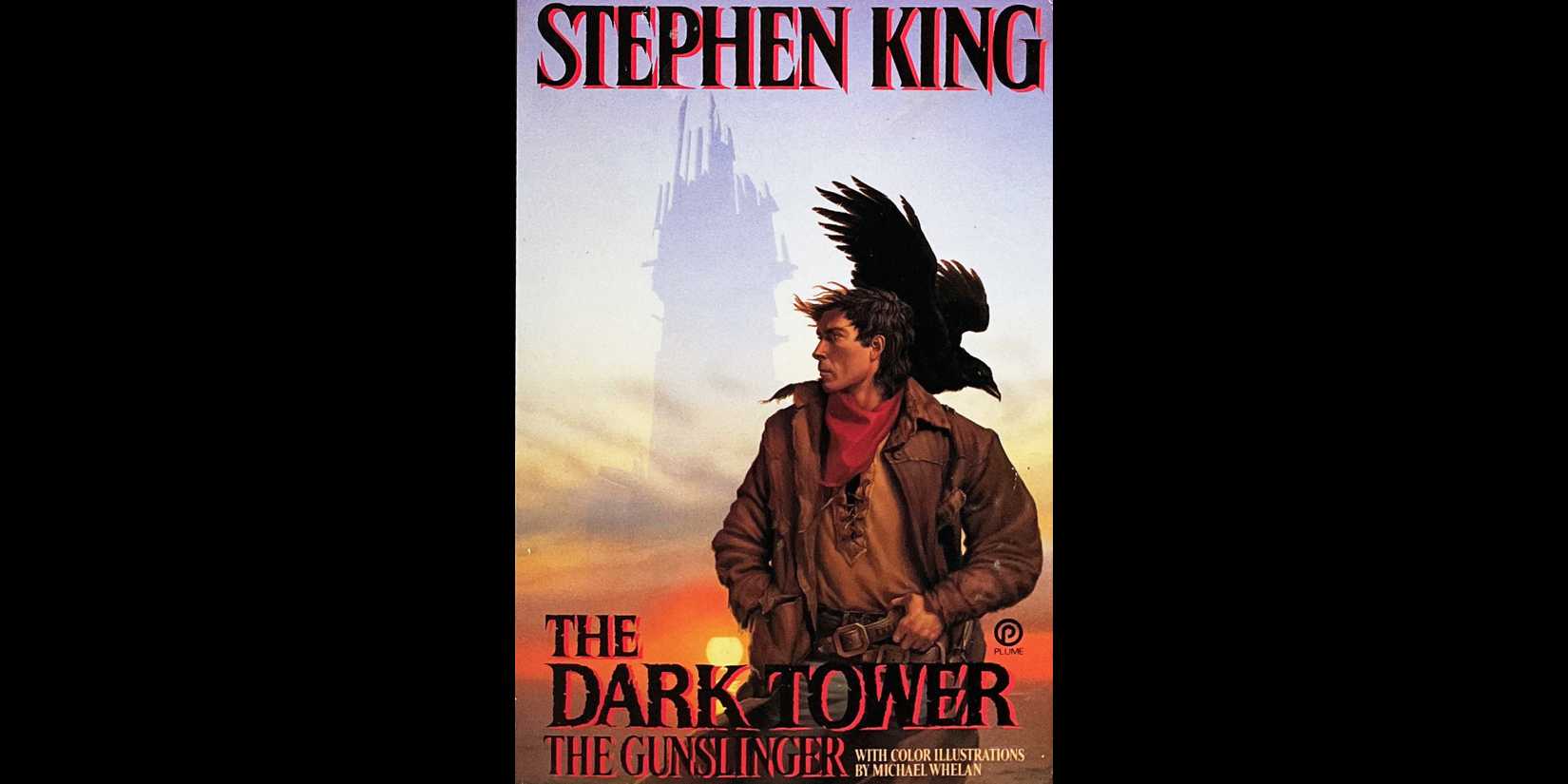
It’s hard to truly emphasize how important the whole The Dark Tower series is within the Stephen King multiverse, but it would be even harder to suggest anyone try reading most of the books within a single day. The second is about twice as long as the first, and then from three onwards, they don’t necessarily get bigger in a linear way, but they all get pretty chunky, and a few on their own can be counted among King’s longest books overall.
So, back to book #1: The Gunslinger. The first one. This is a dense read, but it is very short for a Stephen King book, and you could technically digest all those pages in just a sitting or two. It’s a strange yet intriguing prologue for the larger series, and its relative brevity and that sense of it being a taste of things to come is why it’s here. For the record, though, it’s more than “just” sci-fi, since The Dark Tower is very much a dark fantasy/adventure/Western series at the same time, and since it’s Stephen King, it does get a little horror-heavy at times as well.

The Dark Tower
- Release Date
- August 3, 2017
- Runtime
- 95 minutes
- Director
- Nikolaj Arcel
- Writers
- Anders Thomas Jensen, Akiva Goldsman, Jeff Pinkner, Nikolaj Arcel
KioskNews shows a cleaned-up reading view extracted from the publisher’s page — the original always lives on their site, not ours.