Explainer: How much leeway do emergency vehicles have on Malaysian roads, and what traffic rules are non-negotiable?
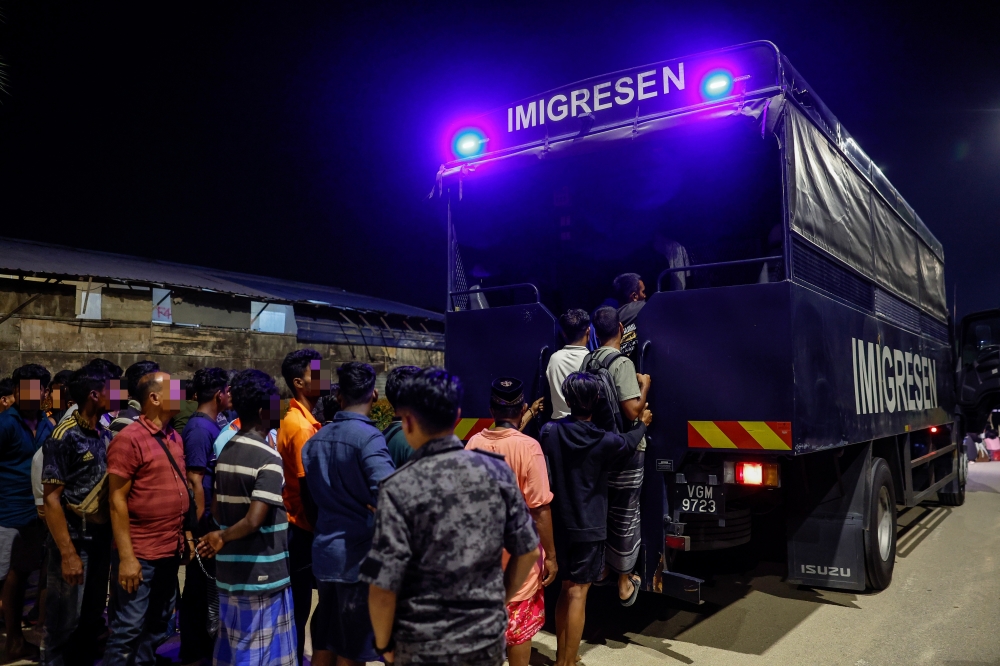

File picture of foreign nationals detained by Selangor Immigration Department officers during an Integrated Operation around Setia Alam on April 4, 2026. — Bernama pic
By Dhesegaan Bala Krishnan
First Published: Friday, 28 Aug 2026 7:00 AM MYT
KUALA LUMPUR, Aug 28 — Giving way to emergency vehicles is one of the first traffic rules we learn, long before we get behind the wheel.
But while sirens and flashing beacons signal that other road users should make way, they do not mean these vehicles are automatically exempt from traffic laws.
A fatal crash on Jalan Sultan Ismail on August 19 brings the issue under renewed scrutiny after an Immigration Department truck allegedly went through a red light, collided with a Proton Saga and then struck four pedestrians, killing three.
The 43-year-old driver was reportedly on his way to pick up undocumented migrants detained in a raid, with the truck’s siren and beacon light activated at the time.
He has since been charged under Sections 41(1), 43(1) and 79(2) of the Road Transport Act 1987, while the Immigration Department has launched an internal investigation into safety measures and standard operating procedures for its vehicles.
So, what leeway do emergency vehicles actually have on Malaysian roads?
Malay Mail breaks it down:
What are classified as emergency vehicles in Malaysia?
Only six categories of vehicles are legally recognised as emergency vehicles and given priority over other traffic when carrying out emergency duties under Rule 9 of the Road Traffic Rules 1959.
They are ambulances, police vehicles and vehicles belonging to the Fire and Rescue Department, Customs Department, Prisons Department and Road Traffic Department.
The Sixth Schedule of Rule 24B of the Motor Vehicles (Construction and Use) Rules 1959 also permits these vehicles to use sirens and beacon lights when seeking a clear passage while performing emergency duties.
Other government agencies seeking similar privileges must obtain a recommendation from the Road Transport Department director-general and formal approval from the Transport Minister under Rule 24B-2.
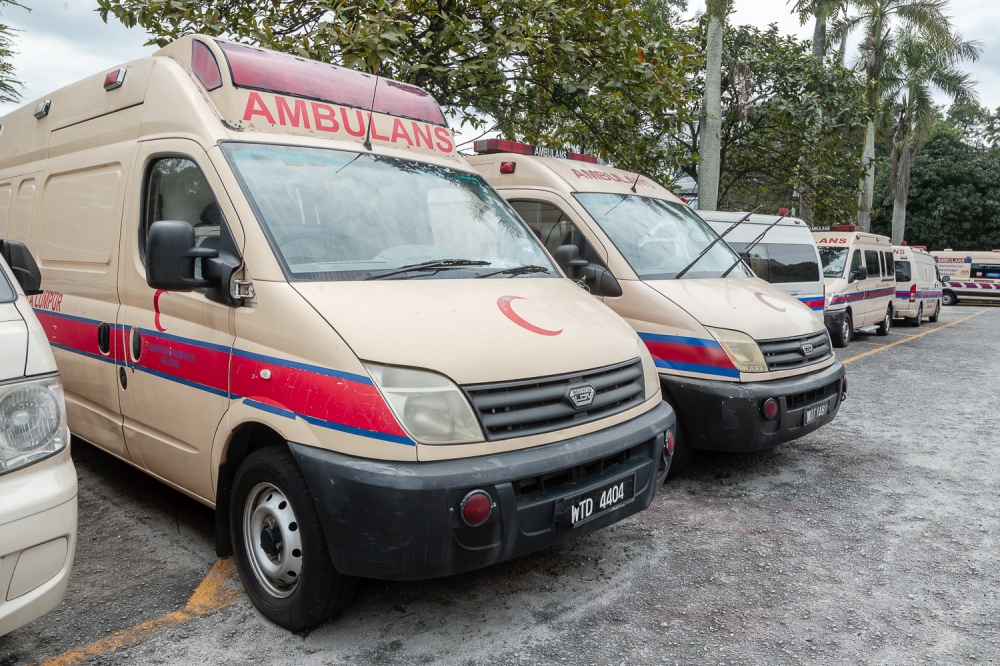
A file picture of ambulances parked at Hospital Kuala Lumpur on January 22, 2025. — Picture by Raymond Manuel
Road users who deliberately block or tailgate emergency vehicles may be charged under Section 186 of the Penal Code for obstructing a public servant in the discharge of their duties.
Those convicted can face up to two years in jail or a fine of up to RM10,000, or both.
So, do emergency vehicles get a free pass?
No.
Bukit Aman Traffic Investigation and Enforcement Department director Commissioner Datuk Seri Muhammed Hasbullah Ali said sirens and warning lights are intended to alert other road users and do not give emergency vehicles carte blanche to ignore traffic signals.
He said such vehicles must still ensure other road users have sufficient time and space to react before proceeding through intersections or traffic lights, regardless of the urgency of the situation.
What happens when emergency vehicles break the rules?
There have been cases in which emergency or escort vehicles were held accountable for accidents despite being involved in official duties.
In September 2017, the Magistrates’ Court in Bukit Mertajam fined an ambulance driver RM6,000, with a 10-month jail term in default, after the driver ran a red light and collided with two cars and several motorcycles.
In December 2025, the Court of Appeal ruled that ambulance drivers responding to emergencies do not have legal immunity from negligence claims.
The case involved a food delivery rider who suffered a shoulder fracture when his motorcycle collided with the front side of an ambulance that had turned against the flow of traffic.
The court ordered the government to pay the rider RM42,327.50 in damages and RM30,000 in legal costs.
More recently, the Magistrates’ Court in Kota Tinggi ruled on August 24 that police escort riders have a heightened duty of care and that Sections 19 and 20 of the Police Act do not exempt them from taking reasonable steps to prevent accidents.
The case involved a police escort rider and a motorcyclist in Bandar Penawar, Johor, during a ministerial convoy, with the court finding the policeman 80 per cent liable for the accident.
The cases underline a basic principle: emergency duties may give authorised vehicles certain privileges on the road, but they do not amount to blanket immunity from traffic rules or responsibility for road safety.
KioskNews shows a cleaned-up reading view extracted from the publisher’s page — the original always lives on their site, not ours.