26 Years Ago, The Legend Of Zelda Delivered Gaming’s Greatest Quote On Grief

Ewan is Deputy Editor for ScreenRant's gaming section. He still quite hasn’t gotten out of his mid 00’s emo phase, and knows more about The Legend of Zelda and Doctor Who than is probably healthy.
Ewan oversees the content operation of ScreenRant's gaming output, working with a talented team of writers and editors to cover everything from the latest GTA 6 news to the indie games you need on your radar.
Former Editor of GAMINGbible, Ewan also has words at Kotaku, Den of Geek, NME, and UNILAD. He's appeared on various podcasts, including VGC's and BBC's Let's Talk About Tech.
When you think about The Legend of Zelda, you probably think about epic adventures and silly green hats. You picture dark dungeons filled with twisting corridors and bright, colorful worlds packed with secrets and strange characters to meet. The Legend of Zelda isn't ever afraid to get serious, but it's rare that it allows itself to get real. Except, of course, back in 2000, when the sequel to one of the most celebrated adventure games of all-time delivered an unexpectedly devastating examination of loss and grief.
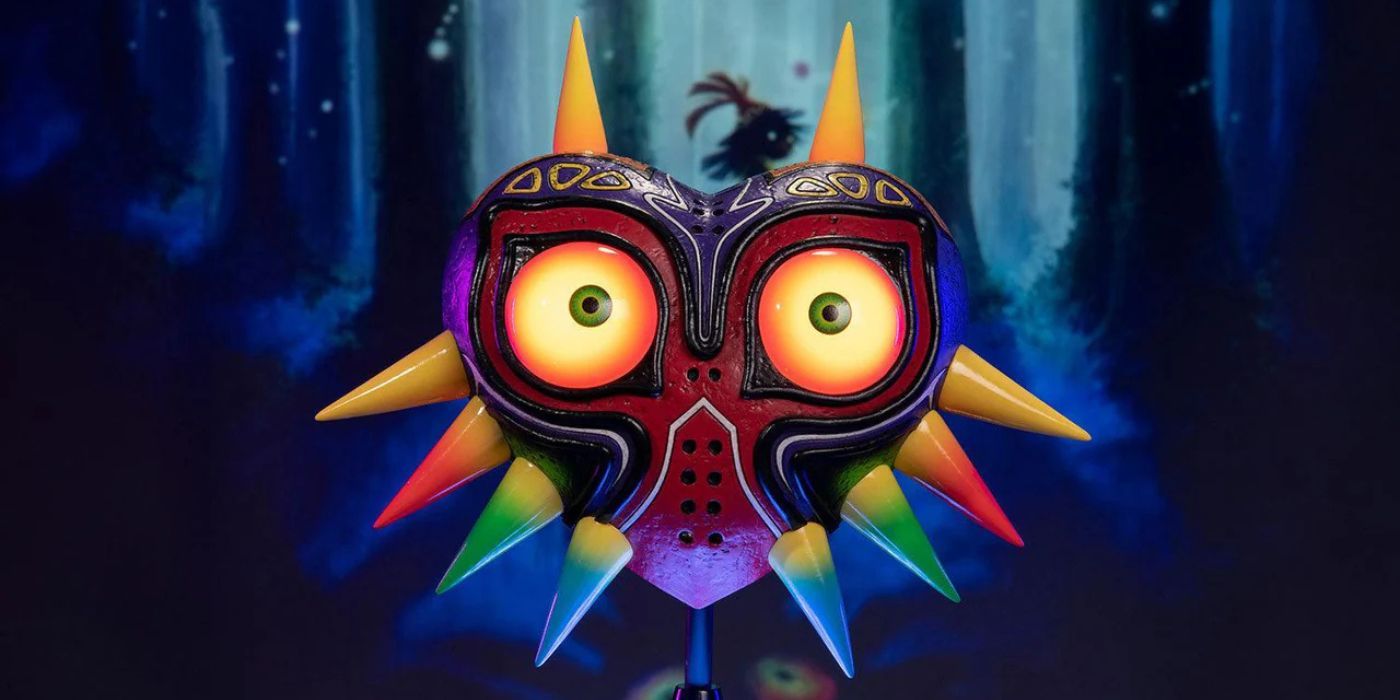
The Legend of Zelda: Majora's Mask is about death. This isn't a new or surprising take. Gamers everywhere can agree that the sequel to Ocarina of Time is an exploration of death, loss, existential dread, and the grief that comes from the trauma of losing a loved one. The world of Termina is filled with characters living with unresolved regrets and staring up to the sky at their own impending doom as a sneering moon inches ever closer to wiping out all life.
Link, the Hero of Time, is grappling with a sudden parting himself, having lost Navi at the end of Ocarina of Time. His fairy companion is not dead, of course — Nintendo would never have done anything quite so dark — but having been robbed of his childhood and his best friend, Link is clearly grieving. I mean, just look at him at the start of Majora's Mask: he looks exhausted. Burnt out.
Link is hardly the only character in Majora's Mask going through it, either. Skull Kid is crushingly alone. Multiple families have been torn about. Lulu, the Zora singer loses her partner. The Deku Butler's son was murdered by Skull Kid. Darmani III the Goron dies trying to save his tribe. Okay, so actually it wouldn't have been that much darker for Nintendo to just kill Navi now I think about it.
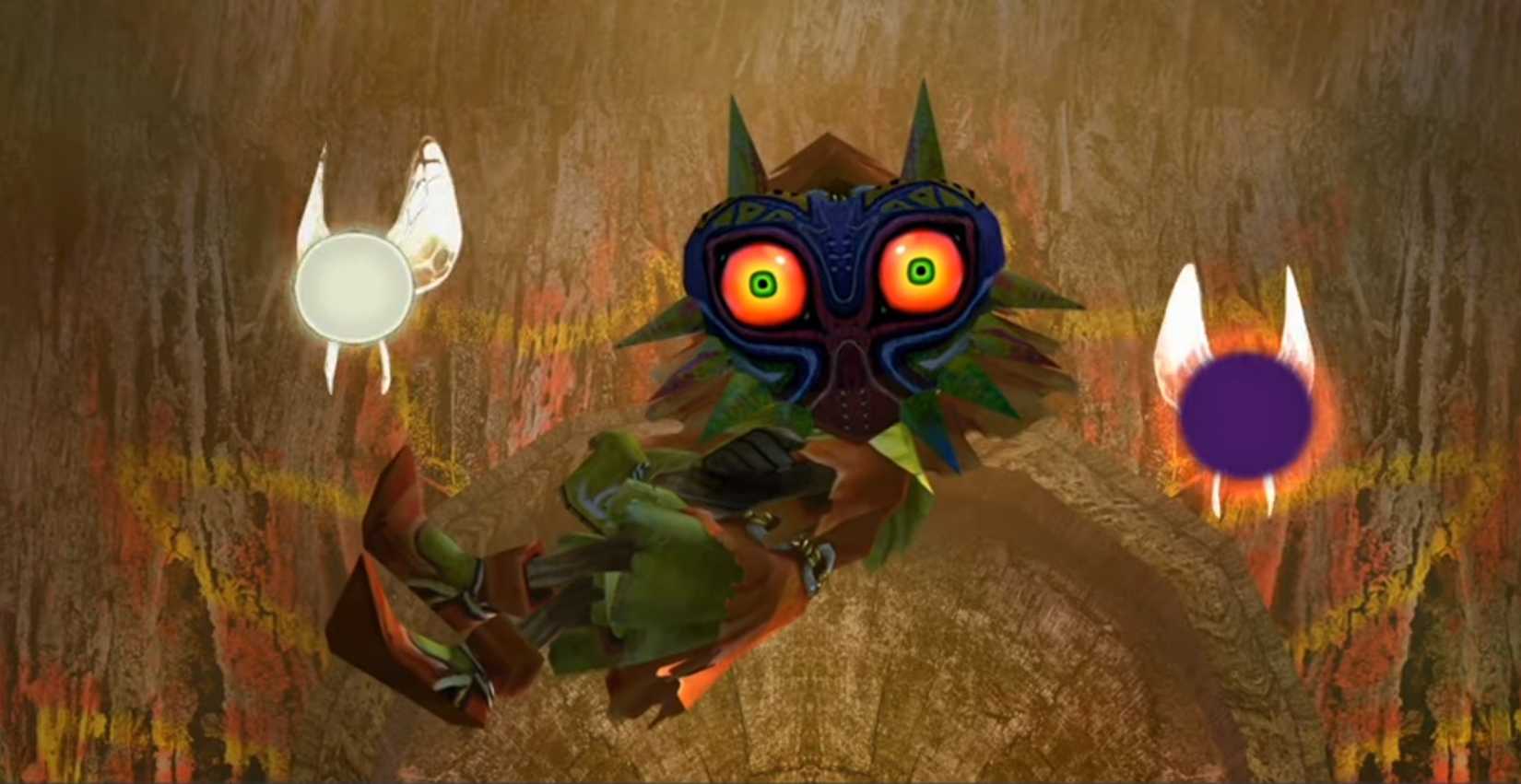
In a game rife with tragedy, there's one line that always cuts through to me. It's delivered by the Happy Mask Salesman, the mysterious traveler who entrusts Link with retrieving the titular Majora's Mask and preventing its destructive power from being unleashed. During the game's final cutscene, the Salesman tells Link:
Whenever there is a meeting, a parting is sure to follow. However, that parting need not last forever . . . Whether a parting be forever or merely for a short time . . . That is up to you.
While there are countless quotes about grief in video games, this is the one that has always stuck with me. Admittedly, it's probably largely because it comes at the very end of a game about grief, but the Happy Mask Salesman's closing remarks serve as a reminder that loss is an inevitable part of life, which is perhaps one of the hardest but most necessary lessons we all have to learn. What does anyone gain, pretending that we don't ever have to say goodbye? Indeed, Majora's Mask doesn't end with Link magically finding Navi, and as far as official Zelda lore goes, as sparse as it is, there's nothing to indicate the Hero of Time ever found his old friend. That's life.
The quote isn't just a sharp reminder of mortality, though. It goes on to redefine forever, and point out that just because someone might have physically gone from your life, it doesn't mean they're completely erased. Anyone who has ever lost a loved one will know that you carry that person with you forever. Their laugh, their smile, a memory of something stupid they did . . . it all stays with you. These memories are a reunion in themselves.
Finally, I know from experience that grief can make a person feel truly powerless. The Happy Mask Salesman, of all people, confirms that we still have agency during this difficult period. By saying, "that is up to you," he's telling us that through our own memories we can keep our loved ones alive. We can continue to hold onto the values they taught us, and try to live by the ideals they lived by. Not at all bad for a game that also introduced the world to Tingle.
- Released
- October 26, 2000
- ESRB
- E10+ For Everyone 10+ due to Animated Blood, Fantasy Violence, Suggestive Themes
- Developer(s)
- Nintendo EAD
- Publisher(s)
- Nintendo
- Engine
- Proprietary Engine
- Franchise
- The Legend of Zelda
KioskNews shows a cleaned-up reading view extracted from the publisher’s page — the original always lives on their site, not ours.