This film was supposed to expose the truth. Instead, it leaves us in a hall of mirrors
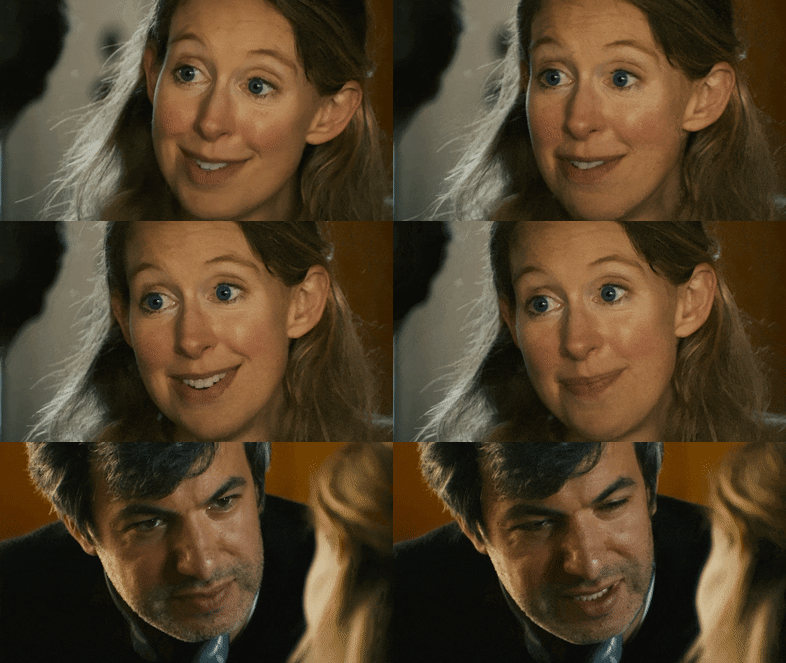
I spent the first third of Lance Oppenheim and Nathan Fielder’s documentary about convicted con woman Elizabeth Holmes consumed with boredom and frustration, knowing I still had almost two hours to go.
I must admit that Nathan Fielder’s chat show appearances have never inspired me to watch The Rehearsal, his satirical analysis of reality TV. Nor have I seen much of his other forays into the off-kilter art of awkward comedy and I quickly tired of watching him stare searchingly into Holmes’ glazed blue eyes in a wordless effort to guess what she was thinking.
It was all starting to look like a battle of the brands – his desire to embarrass her into slipping up, versus her determination to ward him off by maintaining her innocence no matter what. Despite her conviction for fraud, she is still claiming that she did not lie about the capacities of her company, Theranos’ blood testing device, even though its flaws cost its shareholders millions of dollars as well as endangering the health of patients given false results.
But Fielder was making progress with her husband, Billy Evans. Evans’ close-ups were beginning to display a rising note of agitation. In stark contrast to the blandness of his wife’s expression, his eyes clearly reflected his fear that things were moving beyond his control.
Evans and Holmes initiated the film, approaching the production company A24 shortly after her trial. Fielder, Oppenheim and their camera crew then began filming Evan and Holmes at the couple’s rented beach house 34 days before Holmes was due to begin her 11-year prison sentence.
The hope was that this state of intimacy would bring out the truth. It doesn’t. In the end, Fielder’s perseverance produces another hall of mirrors in the style of those which made The Rehearsal a success. But the film does succeed in presenting us with a range of possibilities.
It’s a slow burn, but Oppenheim’s tight camera angles and Fielder’s bumbling, yet relentless, technique are in such perfect synch that they finally get results. Even Holmes’ seemingly unshakeable air of serenity evaporates when Fielder and Oppenheim persuade their hosts to watch Amanda Seyfried portraying Holmes in an episode of the dramatised TV series, The Dropout. Holmes lasts no more than a few minutes before demanding the show be turned off, saying she can see nothing of herself in the hard-driving go-getter whom Seyfried depicts on screen.
But it’s Evans who really reveals himself as he begins to realise that the film may not be such a great idea after all. No matter what he is saying, his hostility is read in his eyes. At times, he looks like a caricature of himself.
The film has been thoroughly dissected since its premiere at the Telluride Festival this year, followed by its impressive performance at the box office. Former New York Times reporter Amy Chozick has recalled the time she spent with Holmes and family at the Californian beach house just before Fielder and Oppenheim arrived. She, too, had been surprised by Holmes’ transformation. The supremely confident boss remembered by people at Theranos had vanished, replaced by a wearily devoted nursing mother. Chozick also wondered why the film showed no sign of the couple’s Salvadoran nanny.
In the end, I found the film as involving as the hype has suggested. The intimacy of its atmosphere is remarkable, but I never lost my irritation at Fielder’s compulsion to make himself a large part of the story.
Find out the next TV, streaming series and movies to add to your must-sees. Get The Watchlist delivered every Thursday.

KioskNews shows a cleaned-up reading view extracted from the publisher’s page — the original always lives on their site, not ours.