Spanish elections: 'Right-wing voters extremely mobilised, left-wing voters not mobilised enough'
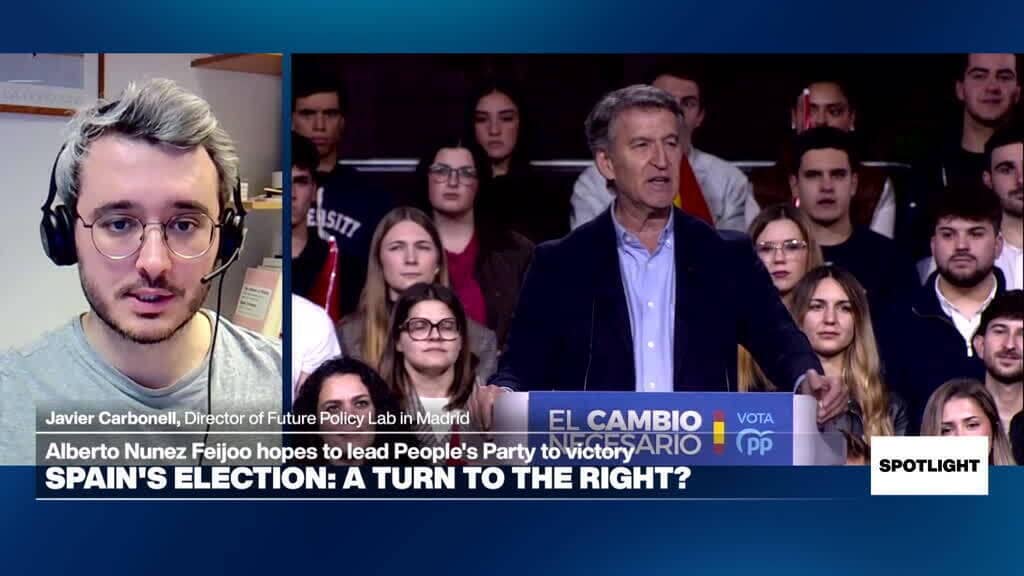
“His main political platform is to say, I am not Sánchez, I am the opposite of Sánchez.” As Spain heads to the polls, what do Alberto Núñez Feijóo's campaign and political career tell us about the kind of prime minister he might become? Javier Carbonell, Policy Analyst at the European Politics and Institutions Programme and lecturer at Sciences Po in Paris, joins Gavin Lee to break down the Popular Party leader's efforts to avoid the mistakes of 2023 and keep right-wing voters mobilised without galvanising the left.
Carbonell explains the apparent paradox of Spain's strong macroeconomic performance and the difficulties many Spaniards face in their daily lives. “People still feel that their salaries are not enough to cover the cost of living.” Addressing the housing crisis, he acknowledges a problem he knows personally: “As young people, we are really, really struggling to find a house. I include myself in there.” Yet he believes pensions and pensioners will ultimately carry greater electoral weight.
What about Feijóo himself? Carbonell describes a traditional party politician whose lack of charisma is, in his view, part of his appeal. He discusses the controversy surrounding Feijóo's “calladita” remark to Ada Colau, his lack of engagement in international affairs and the significance of his inability to speak English. The conversation also explores the PP's use of AI and social media to reach young voters, many of whom support Vox, and Santiago Abascal's decision to cancel his interview with Jordi Wild, a decision Carbonell describes as “a massive mistake”.
KioskNews shows a cleaned-up reading view extracted from the publisher’s page — the original always lives on their site, not ours.