10 Greatest Sci-Fi Movies You Didn't Know Were Based on Books, Ranked

Sign in to your Collider account
Science fiction has developed a hardcore community of fans because it offers something most other genres do not: an entire universe to accompany their stories. A good science-fiction movie isn't just a movie. It is an epic to lose yourself in and contains the lore and characters that accompany whatever your imagination desires after the screen turns black.
Enjoying the escape from reality and replacing it with robots and aliens is a satisfying endeavor, but unfortunately, after the movie ends, your imagination might crave a little more. Luckily, we have the answer, as all these great science fiction movies have books to help rediscover the future through the lens of the original authors, and scratch that itch for the viewers wanting more. Some of the genre's most iconic films began as novels or short stories, making their literary origins surprisingly easy to overlook once the movie versions became cultural landmarks.
10 'Logan's Run' (1976)

In the year 2274, life on Earth only exists in Bio-Domes that are completely controlled by computers that run a hedonistic society, as they fulfill every desire that could be expected by a human. The problem is that when they turn 30, they are "renewed" into a state that doesn't turn out to be as cleansing as the name would suggest.
Logan's Run was hailed at the time as a benchmark in science fiction movies and is based on the novel of the same name by William Nolan and George Johnson. The book explores the themes around exponential population growth, overpopulation, totalitarian states, and how easy it is to endorse a system right up until it impacts you personally.
9 'A.I. Artificial Intelligence' (2001)
.jpg?q=70&fit=crop&w=825&dpr=1)
A.I. Artificial Intelligence is a movie about intentionally replacing those we have lost with robots to ease the pain of our own mortality. Set after climate change has ravaged the Earth, it follows the adventures of the robot child called David as he seeks acceptance from both humans and machines alike, usually finding none.
Brain Eldis wrote Super Toys Last All Summer Long, which is the basis for the first act of AI. It is a social commentary on how disposable society can view things that outgrow our wants or needs, even when those things are ostensibly living, feeling beings, as the line between deserving of love and thrown in the trash becomes blurred. It's one of the best movies about AI and is even more relevant today.
8 'Solaris' (2002)

Solaris reminds us that even in the distant future, humans can not escape their biologically ingrained emotional state. The movie explores classic predicaments like whether the woman you love is actually a figment of your imagination that you have willed into existence to stop the pain.
Stanislaw Lem wrote the original Solaris, which has the crew desperately trying to communicate with a planet that is both an ocean and alive, only to find out the fatal flaw in the plan is the nature of the humans attempting it. Both the book and movie are fantastic in their own way but differ greatly in plot and messaging. So if you enjoyed the basic themes of the movie, the novel is there to help expand on them.
7 'Children of Men' (2006)
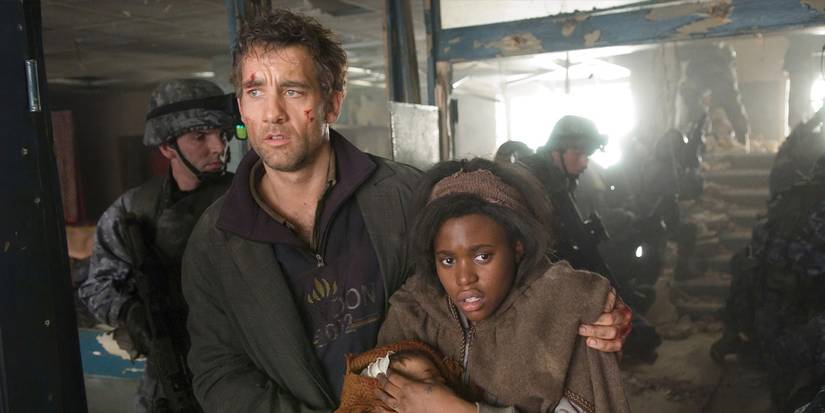
Children of Men tackles the question of how society would react if humanity could no longer reproduce. Once the world starts collapsing, the UK is one of the few countries holding on, but in doing so has turned into a fascist state. Clive Owen gets the unfortunate job of finding out what to do with the one pregnant woman left on Earth, while every faction in society tries to kill him and take the baby for themselves.
P.D. James wrote the original title, one of the greatest dystopian books of all time. It explores the fragility of our civilization when rocked by extinction, as the worst parts of our inner barbarity are directed at people we deem to be "others." If Children of Men left you thinking, then the novel is a perfect accompaniment.
6 'Dune' (2021)

Dune is essentially the Roman Empire set in space as different factions battle for the drug called "spice," which is responsible for the trade that controls the universe. Unfortunately for them, the drug is also found in a desert filled with giant sand worms and hostile natives.
If you love the inter-fiefdom conflict and political commentary that accompanies all great science fiction and fantasy series, then Dune by Frank Herbert is a must-have. The epic series has enough for you to read for years and give you a greater appreciation for shows like Game of Thrones and The Witcher. Villeneuve continued the adaptation with the acclaimed Dune: Part Two in 2024, while Dune: Part Three, based on Herbert's Dune Messiah, is set to conclude his trilogy on December 18, 2026.
Collider Exclusive · Sci-Fi Survival Quiz Which Sci-Fi World Would You Survive? The Matrix · Mad Max · Blade Runner · Dune · Star Wars
Five universes. Five completely different ways the future went wrong — or sideways, or up in flames. Only one of them is the world your instincts were built for. Eight questions will figure out which dystopia, galaxy, or desert wasteland you'd actually make it out of alive.
💊The Matrix
🔥Mad Max
🌧️Blade Runner
🏜️Dune
🚀Star Wars
01
You sense something is deeply wrong with the world around you. What do you do? The first instinct is often the truest one.
02
In a world of scarcity, what resource do you guard most fiercely? What we protect reveals what we believe survival actually requires.
03
What kind of threat keeps you up at night? Fear is useful data — if you're honest about what you're actually afraid of.
04
How do you deal with authority you don't trust? Every dystopia has a power structure. Your approach to it determines everything.
05
Which environment could you actually endure long-term? Survival isn't just tactical — it's physical, psychological, and very much about where you are.
06
Who do you want in your corner when things fall apart? The company you keep is the clearest signal of who you actually are.
07
Where do you draw the line — if you draw one at all? Every survivor eventually faces a moment that tests what they're actually made of.
08
What would actually make survival worth it? Staying alive is one thing. Having a reason to is another.
Your Fate Has Been Calculated You'd Survive In…
Your answers point to the world your instincts were built for. This is the universe your temperament, your survival instincts, and your particular brand of stubbornness were made for.
The Matrix
You took the red pill a long time ago — probably before anyone offered it to you. You're a systems thinker who can't help but notice the seams in things.
- You're drawn to understanding how the system works before figuring out how to break it.
- You'd find the Resistance, or it would find you — your instinct for spotting constructed realities is the machines' worst nightmare.
- You function best when you have access to information and the freedom to act on it.
- The Matrix built an airtight prison. You'd be the one probing the walls for the door.
Mad Max
The wasteland doesn't reward the clever or the well-connected — it rewards those who are hard to kill and harder to break. That's you.
- You don't need comfort, community, or a cause larger than the next horizon.
- You need a vehicle, a clear threat, and enough fuel to outrun it — and you're good at all three.
- You are unsentimental enough to survive that world, and decent enough — just barely — to be something more than another raider.
- In the wasteland, that distinction is everything.
Blade Runner
You'd survive here because you know how to exist in moral grey areas without losing yourself completely.
- You read people accurately, keep your circle small, and ask the questions others prefer not to answer.
- In a city where humanity is a legal designation rather than a feeling, you hold onto something that keeps you functional.
- You're not a hero. But you're not lost, either.
- In Blade Runner's world, that distinction is everything.
Dune
Arrakis is the most hostile environment in the known universe — and you are precisely the kind of person it rewards.
- Patience, discipline, and political awareness are your core strengths — and on Arrakis, they're survival tools.
- You understand that the long game matters more than any single victory.
- Others come to Dune and are consumed by it. You'd learn its logic and earn its respect.
- In time, you wouldn't just survive Arrakis — you'd begin to reshape it.
Star Wars
The galaxy far, far away is vast, loud, and in a constant state of violent political upheaval — and you wouldn't have it any other way.
- You find meaning in being part of something larger than yourself — a cause, a crew, a rebellion.
- You'd gravitate toward the Rebellion, or the fringes, or whatever pocket of the galaxy still believes the Empire's grip can be broken.
- You fight — not because you have to, but because standing aside isn't something you're capable of.
- In Star Wars, that willingness is what makes all the difference.
5 'Starship Troopers' (1997)

When giant space bugs attack Earth, and your high school sweetheart breaks up with you to join the galactic space fleet, you really only have one insect-killing option left. Starship Troopers is a very clever science fiction movie that combines political satire and gruesome action that is often overlooked in the genre.
The movie is actually a satire of the political messaging that is forwarded by the author Robert Heinlein in Starship Troopers. The novel is an exploration of Heinlein's militaristic ideology, which would create a better society through the elimination of universal rights and adherence to stringent national pride. That's right, the book's ideas are being satirized by the movie of the same name!
4 'Jurassic Park' (1993)
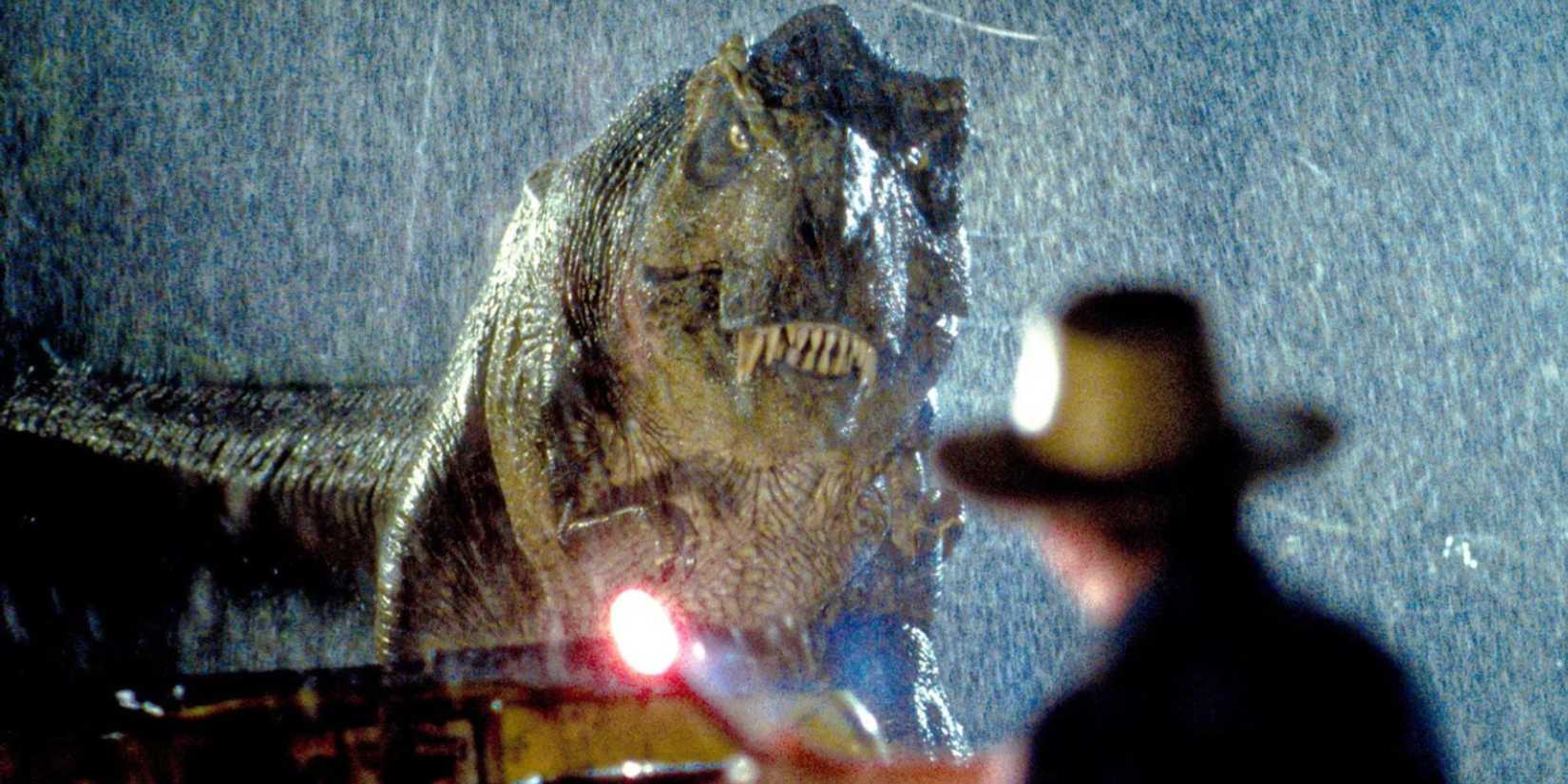
A movie that needs no introduction, and is probably responsible for a generation of children wondering which dinosaur they want to own. Jurassic Park is about genetically engineered dinosaurs revolting in a way that isn't expected from elephants at the local zoo, and a movie about a theme park becomes one of terrifying survival as every character tries to avoid the hungry T. Rex.
Michael Crichton wrote the original Jurassic Park, which complements the movie by exploring the dangers of acting like a god. The book centers around questioning the impacts humans make on the planet through selfishness and ideology, with the dinosaurs acting less like zoo animals and more like migratory swarms threatening human survival.
3 'The Thing' (1982)

On the list of things you don't want around when stuck on an Arctic base, a shape-shifting monster must be near the top. Eventually, you'll realize that fire is the only thing that kills the creatures that want to eat you and use your face as a mask, only to have to address the problem of figuring out who is human and who is an alien replica.
The Thing is based on Who Goes There? by John Campbell. The aliens in the book not only shape-shift but read the human's mind. The tale is one of human ingenuity triumphing over arrogant aliens who think that they can push around a species that has the likes of Kurt Russell defending them.
2 'Blade Runner' (1982)

Continuing with the theme of hunting those who may or may not be human, Blade Runner is set in a world where humanoid robots have infiltrated society and need to be callously exterminated, because otherwise, we may have to deal with some awkward questions. The ultimate question for Harrison Ford eventually is whether he is one of them.
Written by the fantastic Phillip K. Dick in Do Androids Dream of Electric Sheep? The book is essential reading for anyone who loved the movie. It is a far more surreal experience that tackles themes of conformity and isolation and gives the reader a true sense of the loneliness experienced by the robots who merely want to exist.
1 '2001: A Space Odyssey' (1968)

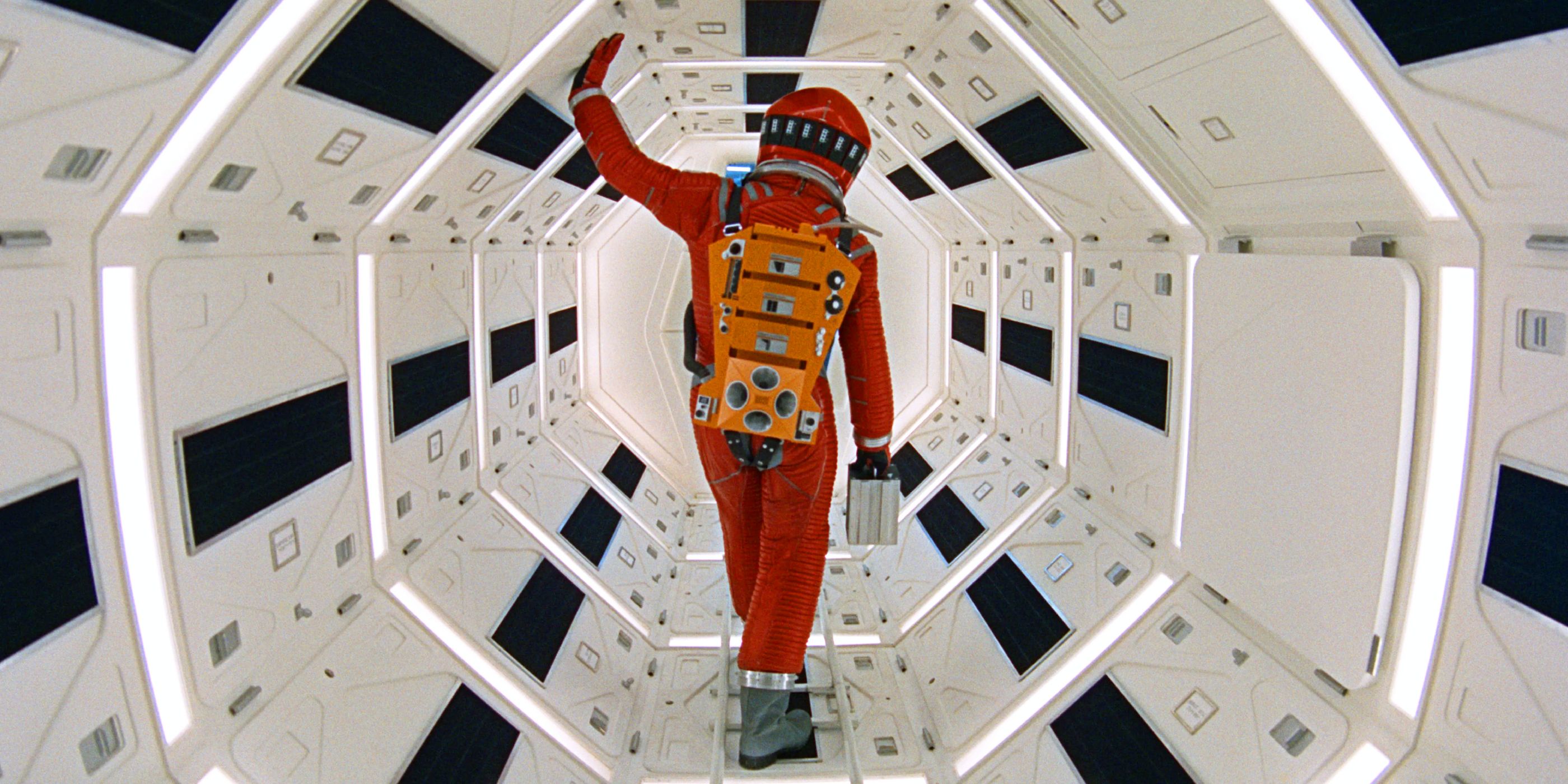
A masterpiece by Kubrick and one of the most essential films of all time, 2001: A Space Odyssey is as brilliant as it is confusing. HAL, the evil robot, becomes sentient, but not before monkeys do the same thanks to a giant black stone. After all that, you'll have a psychedelic trip through colors and end up as a baby on the moon.
Arthur C. Clarke wrote The Sentinel, which was used in conjunction with other short stories to form the basis of 2001: A Space Odyssey. If you're in the 99th percentile of people who went away utterly confused by the movie, the book helps shed some light on the purpose of the symbols. Remember that old man stuck in a house toward the end? Turns out he was a zoo subject for aliens observing Earth, which is explained in the novelization of the movie by the same author.
KioskNews shows a cleaned-up reading view extracted from the publisher’s page — the original always lives on their site, not ours.