Only 4 Fantasy Epic Books Are Better Than The Lord of the Rings


Diego Pineda has been a devout storyteller his whole life. He has self-published a fantasy novel and a book of short stories, and is actively working on publishing his second novel.
A lifelong fan of watching movies and talking about them endlessly, he writes reviews and analyses on his Instagram page dedicated to cinema, and occasionally on his blog. His favorite filmmakers are Andrei Tarkovsky and Charlie Chaplin. He loves modern Mexican cinema and thinks it's tragically underappreciated.
Other interests of Diego's include reading, gaming, roller coasters, writing reviews on his Letterboxd account (username: DPP_reviews), and going down rabbit holes of whatever topic he's interested in at any given point.
Sign in to your Collider account
J. R. R. Tolkien's first steps in laying the foundations of Middle-earth—what would essentially come to be known as his Legendarium—can be traced as far back as 1914, when he started working on a set of narratives in a process he described as mythopoeia, where a fictionalized mythology is created by an author like himself. After the unprecedented critical and financial success of The Hobbit, the first book published in Tolkien's Legendarium, the publishers desperately wanted a sequel. The Lord of the Rings came to Tolkien slowly, but that only allowed him to flesh out the world, characters, and stories of Middle-earth in a way that fantasy literature had never seen before. Upon publication, the massive three-volume novel achieved only moderate success, and it wouldn't be until the '60s and '70s that paperback and unauthorized editions would allow its reputation to take off.
Today, most fans of the fantasy genre would rightfully recognize that The Lord of the Rings is the single most important, groundbreaking, and influential work of fantasy literature of the entire 20th century. After it achieved success, it became increasingly common for every high fantasy book published to either be somehow inspired by Tolkien or outright try to subvert his tropes. But while many would go so far as to call it the best fantasy novel ever written, and while it's always important to keep in mind that enjoyment of any kind of book is always almost entirely a subjective matter, one thing remains true: four particular fantasy novels could very well be even better than The Lord of the Rings. Whether they're replicating or modernizing some of the elements of Tolkien's Legendarium, specifically trying to offer an entirely different kind of experience, or perhaps may even be foundational works that inspired Tolkien himself, these are four of the greatest fantasy novels in the history of literature.
'A Storm of Swords' (2000)
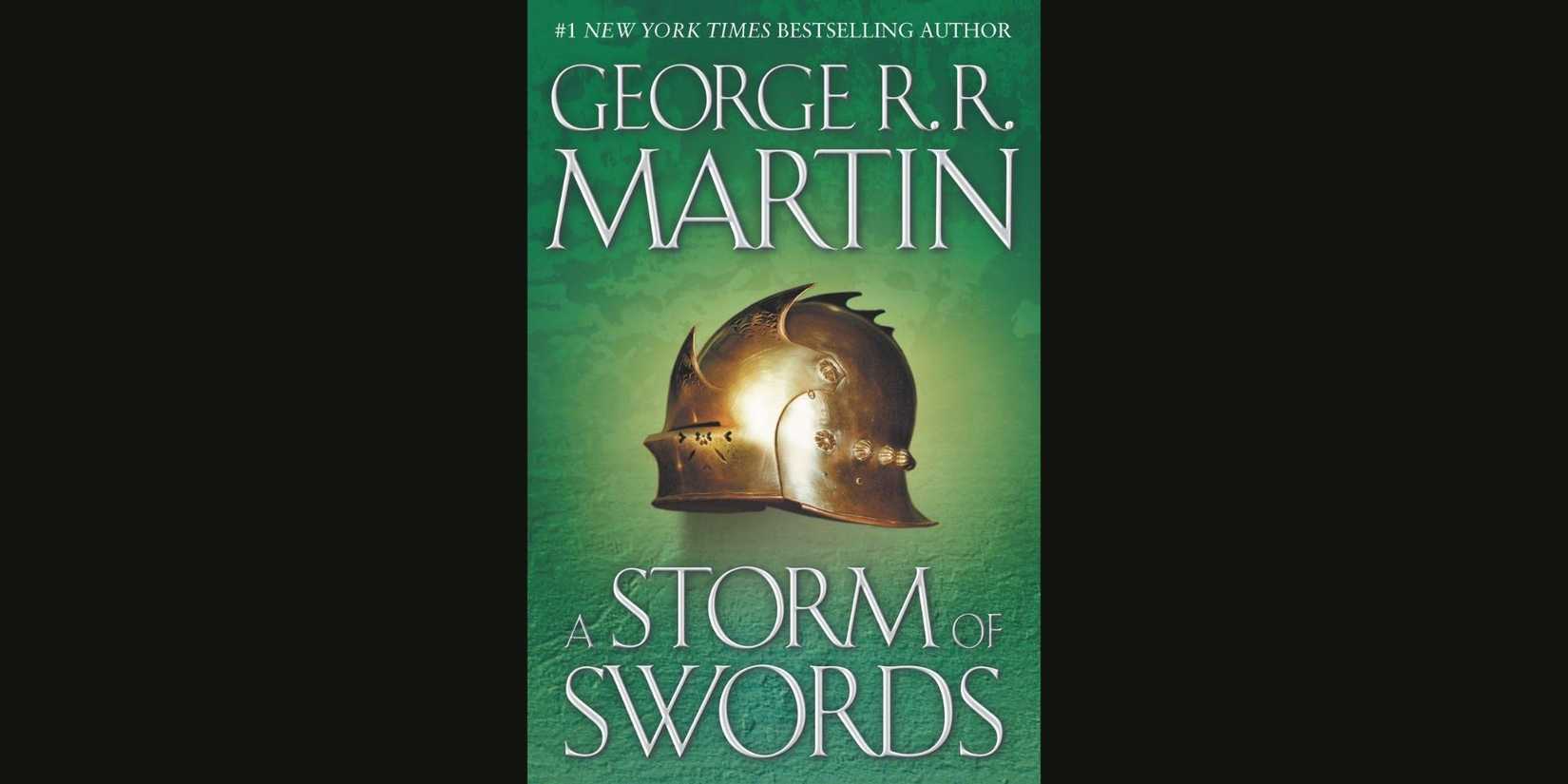
Inspired by a sudden mental image of a boy finding direwolf pups in the snow, George R. R. Martin was inspired to set aside his work in television and science fiction to instead write A Game of Thrones. The rest is history. While the novel was not an instant massive bestseller, it would be the gradual praise of fellow fantasy writers, word-of-mouth, the publication of sequels, and especially the rise of HBO's TV show adaptation that would finally make Martin's source material a true pop-cultural juggernaut. Whether the world will ever get to see the next installment in Martin's A Song of Ice and Fire series remains to be seen after 15 years of waiting, but regardless of the answer to that question, one thing will remain undeniable: A Storm of Swords, the third installment in the series, is one of the best fantasy books published since 2000.
While Tolkien's Lord of the Rings laid the foundations for mythical, heroic high fantasy, Martin aimed to subvert typical Tolkien imitators who usually stripped the genre down to simplistic moral systems and cheap battle scenes. The peak of that work came in A Storm of Swords, which is an absolute masterclass in narrative momentum, psychological realism, and complex human drama. Where some may find the clear lines between good and evil in Tolkien's Legendarium unappealing, the way A Storm of Swords rejects neat moral dualism in favor of deeply complex and human character work is engrossing. Just as engrossing is the story's relentless pacing over nearly 1,000 riveting pages, including one of the most game-changing plot twists in high fantasy literature. Exciting, subversive, subtext-rich, and filled with memorable dialogue and political intrigue, A Storm of Swords really is an absolutely perfect masterpiece.
Collider Exclusive · Game of Thrones Personality Quiz Which Game of Thrones House Do You Belong To? Stark · Lannister · Targaryen · Baratheon · Tyrell
Five great houses. Five completely different answers to the same question: how do you hold power in a world that will take it from you the moment you stop paying attention? Eight questions will determine where your loyalties — and your nature — truly lie.
🐺Stark
🦁Lannister
🐉Targaryen
🦌Baratheon
🌹Tyrell
01
Someone powerful is acting dishonourably and everyone knows it. What do you do? In Westeros, the answer to this question has ended more than one great house.
02
What is the source of your power? Every house endures because of something. What is it for yours?
03
Who do you truly fight for? Strip away the banners and the words. The honest answer tells you everything.
04
How do you deal with your enemies? A house's method reveals its character as clearly as its words ever could.
05
What kind of ruler do you believe in? Westeros is full of answers to this question. Most of them end badly.
06
You suffer a devastating loss. How does your house respond? How a house handles defeat tells you more about it than how it handles victory.
07
Which of these truths about Westeros do you most believe? Every house has a philosophy. This is yours.
08
The Iron Throne is within reach. What do you do? The answer reveals not just your ambition — but your character.
The Maester Has Spoken Your House Is…
Your answers point to the great house whose words, values, and way of surviving in Westeros match your own. Bend the knee — or don't. That's very much up to you.
🐺 House Stark
Winter is Coming — and you have always known it. You prepare not out of fear but out of duty, because the people who depend on you deserve someone who takes the long view.
- You lead with honour even when it costs you, because you understand that a reputation built on integrity is the only one worth having.
- Your loyalty to family and people runs deep — not as sentiment but as a code that doesn't bend when things get difficult.
- The North endures because Starks endure — not by being the cleverest players in the game, but by being the kind of people others are willing to follow into the cold.
- You are that kind of person. The pack survives. The lone wolf dies. You already know which one you are.
🦁 House Lannister
You understand the game — its rules, its exceptions, and exactly when the rules become the exception. You play it without illusions and without apology.
- You are sharper than most people realise, and you have learned to use that gap to your advantage.
- A Lannister always pays their debts — and you always keep your word, because your word is an instrument of power, and instruments must be kept in working order.
- You love your family with a ferocity that sometimes blinds you, and you know it, and you do it anyway.
- The lion doesn't concern itself with the opinion of sheep. Neither, in the end, do you.
🐉 House Targaryen
You carry a sense of destiny that is difficult to explain and impossible to ignore — the feeling that you are not simply participating in the world but meant to reshape it.
- You are capable of extraordinary things, and you know it, and that knowledge is both your greatest strength and your most dangerous quality.
- Fire and blood are not just words to you — they are a philosophy about what change requires and what it costs.
- The Targaryens at their best were transformative rulers who broke chains and defied the limits of what anyone thought possible.
- At your best, so are you. The dragon has three heads. You are one of them.
🦌 House Baratheon
You are a force — direct, powerful, and difficult to ignore when you enter a room or a conflict. You do not negotiate with challenges. You meet them.
- Ours is the fury — and yours is a kind of intensity that commands attention, respect, and occasionally fear from those who underestimate what's behind it.
- You value strength and straight dealing. You'd rather know where you stand in a fight than navigate a web of courtly whispers.
- The Baratheons built their house on the back of one of the greatest military victories in Westerosi history — and then struggled with what came after.
- The lesson of your house is that winning is not the end of the story. Governing is. You are learning that too.
🌹 House Tyrell
You understand that power does not always announce itself — that sometimes it arrives with flowers, good wine, and a smile that doesn't quite reach the eyes.
- Growing strong is your house's motto, and you live it: patiently, strategically, always investing in the relationships and resources that will matter most when it counts.
- You are charming by choice and calculating by nature — a combination that makes you one of the most effective players in any room you enter.
- The Tyrells fed King's Landing and shaped its politics without ever sitting on the Iron Throne — and they were arguably more powerful for it.
- You know that the person who controls the food controls the kingdom. And you always know where the food is.
'The Name of the Wind' (2007)
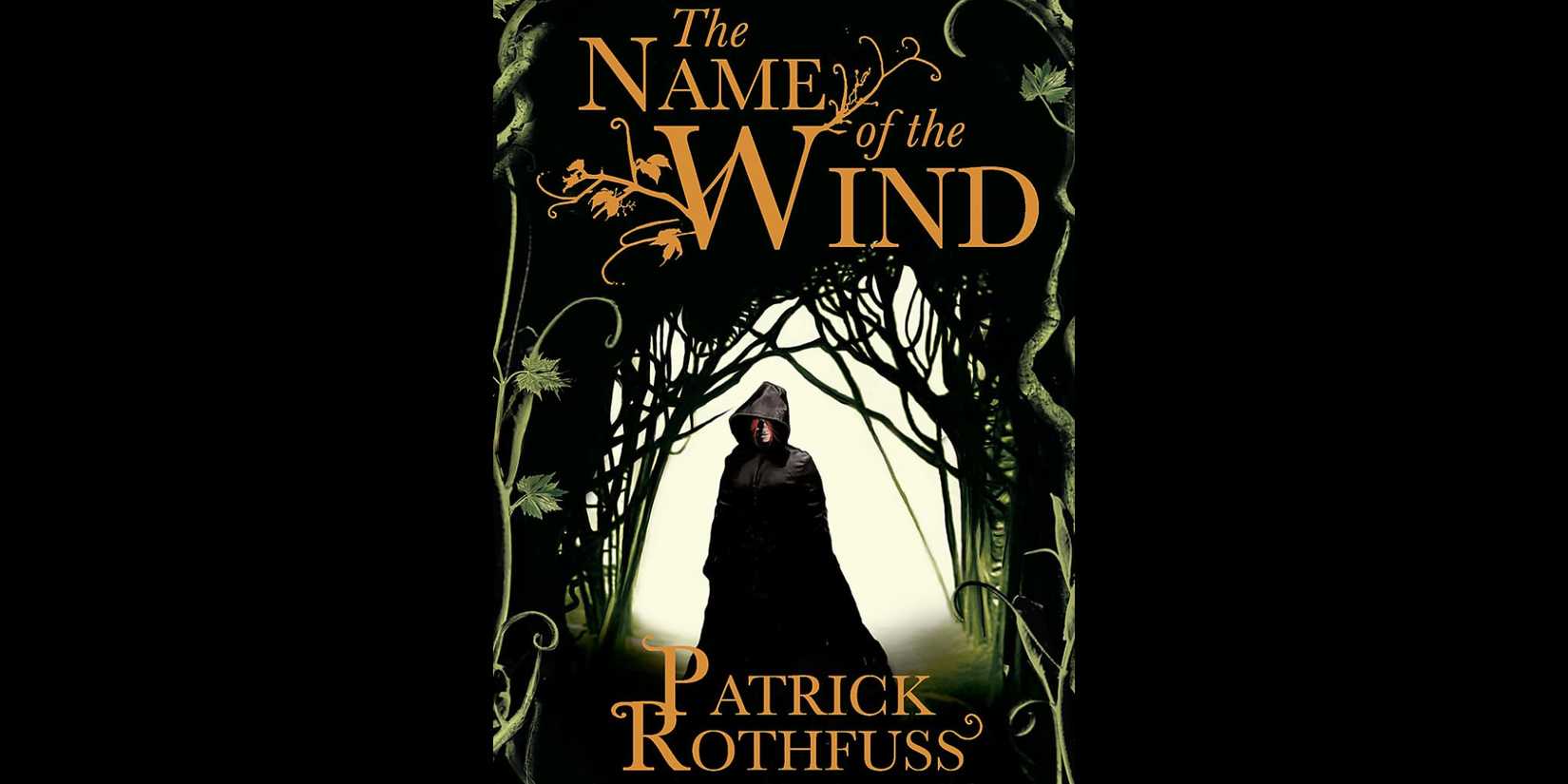
Undecided about his major, Patrick Rothfuss received a strike of inspiration and began working on a story while studying at the University of Wisconsin in the early '90s. For years, he studied disciplines like anthropology, philosophy, and alchemy while continuously adding elements to the novel. What might have begun like a messy hodgepodge of ideas and influences eventually transformed into what we now know as The Name of the Wind, a book which Rothfuss wrote with the specific goal of subverting the usual tropes and characteristics of high fantasy. But while Tolkien undeniably pioneered and redefined the high fantasy space that Rothfuss inhabits, the scale and focus of The Name of the Wind are vastly different than anything Tolkien's Legendarium might have to offer.
More often compared by critics to literary classics like Cyrano de Bergerac and Tom Jones, The Name of the Wind may be epic heroic fantasy, but it's a deeply human and intimate character study through and through. Why do so many people go as far as to say that it's better than The Lord of the Rings? Perhaps it's because of the unparalleled beauty and lyricism of Rothfuss' prose, so poetic and magical in itself that it has been directly praised by creatives of the caliber of Ursula K. Le Guin and Lin-Manuel Miranda. Perhaps it's because of the wonderfully intricate and layered world-building, which includes a hard magic system so intelligently grounded in both science and whimsical wonder that all fans of the genre should find it delightful. Or perhaps it's simply because, thanks to its brilliant meta framing, incredibly engaging character work, and thematic complexity, Name of the Wind is a fascinating story that deconstructs concepts as nuanced as mythmaking and truth itself.
'Words of Radiance' (2014)
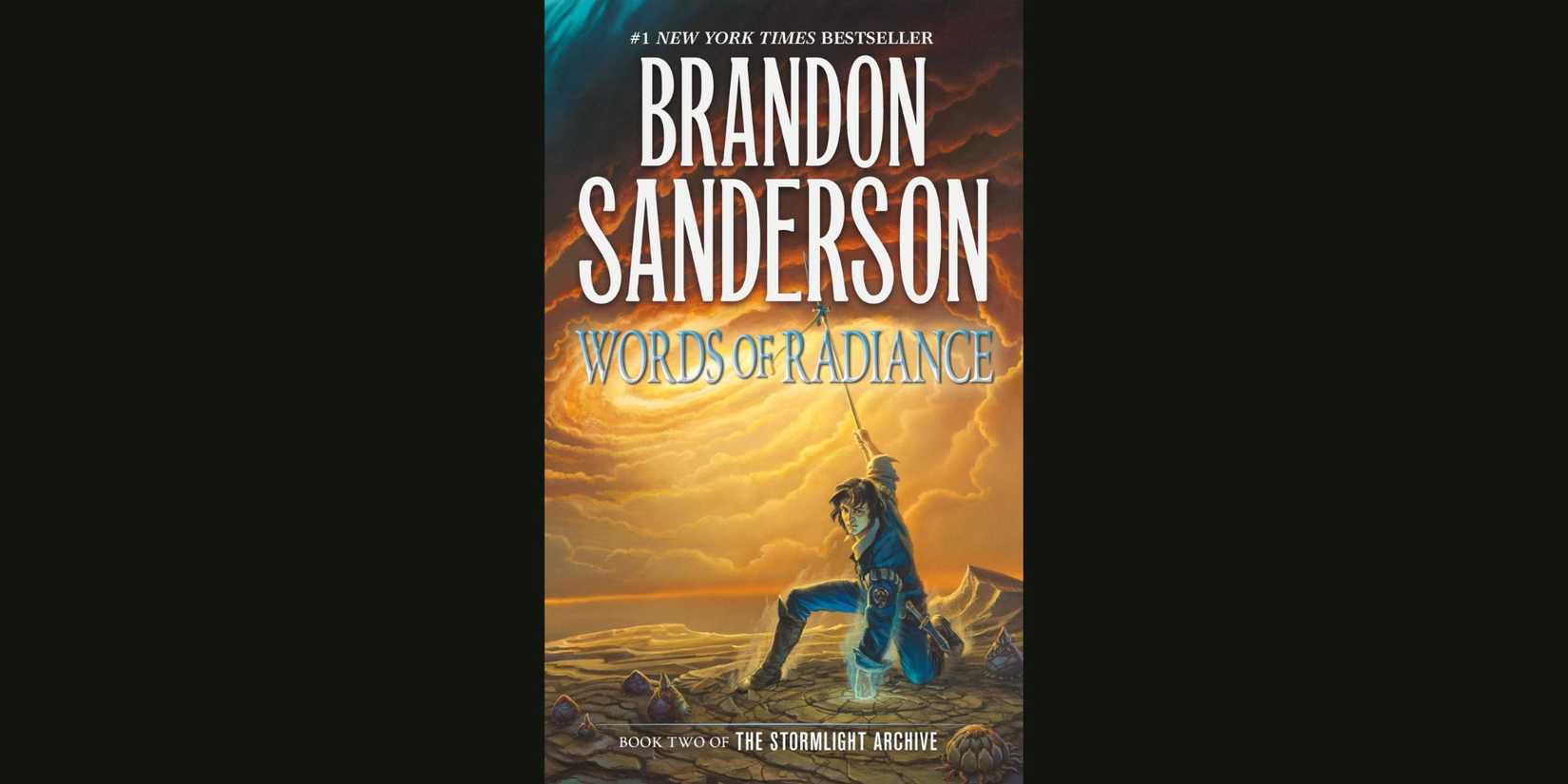
Brandon Sanderson never stopped writing throughout both his undergraduate and graduate studies. By the time he turned 28 in 2003, he had already written twelve novels, though no publishers had expressed interest in them. That would all change with his debut novel, Elantris. Throughout the last 21 years, Sanderson has established himself as one of the most groundbreaking and influential voices in modern fantasy, his shared Cosmere multiverse being particularly acclaimed across the board. Part of this Cosmere universe is the Stormlight Archive series, which Sanderson conceived around the late '90s as an ambitious attempt to subvert traditional high fantasy tropes. Realizing that publishers would likely reject such a massive project, he shelved it to wait until he was a well-established author first. In 2010, the time came for The Way of Kings to be published; but as masterful as that book is, it's its sequel, Words of Radiance, that's among the best epic fantasy books of all time.
Words of Radiance may very well be Sanderson's magnum opus, and it's not even particularly close. If a time traveler came from 1955 and wanted to read a book to get an understanding of how the mechanics, character tropes, and magic system traditions of the literary fantasy genre have evolved over the last 71 years, Words of Radiance would probably be the most perfect title that they could possibly be given to read. For instance, where Lord of the Rings expanded and greatly enriched character archetypes rooted in epic mythology traditions, Words of Radiance focuses on psychological depth in its character work. Where Tolkien favored atmosphere, lore, and immersion over immediate tension and cinematic action, Words of Radiance is famous for its relentless pacing and momentum. Where magic in Lord of the Rings is subtler and more mysterious, magic in Words of Radiance is the pinnacle of hard magic systems. It all depends on preferences, of course, but it isn't the least bit difficult to understand people who prefer Sanderson's magnum opus over Tolkien's.
'The Odyssey' (8th century BC)

All speculative fiction authors stand on the shoulders of giants. The tropes, traditions, and creative ideas of past creators are what have historically provided the foundations for storytelling, which is itself a cumulative tradition. Every writer absorbs earlier myths, stories, and genre conventions in order to craft their masterpieces, and Tolkien was no exception. Though the author's primary inspirations were Arthurian legend and Old English, Norse, and Celtic mythologies, there is one particular work that virtually any and all speculative fiction writers have been influenced by over the last 2,000+ years: Homer's The Odyssey. Regardless of the fact that this epic poem, which began as an oral tradition, wasn't committed to paper for the first time until around the 6th century BC, what's undeniable is that it's among the best heroic fantasy books of all time.
The Odyssey is a must-read for anyone with the ability to read, quite frankly. Though some may find the idea of pitting the most foundational work of fantasy against the ultimate foundational blueprint of Western epic narrative to be somewhat silly, The Odyssey truly may very well be the peak of human storytelling. Every story that has come after owes a debt to Homer, and the basic DNA of The Odyssey can indeed be seen and felt across pretty much all of Western literature, Lord of the Rings included. A multi-dimensional hero, masterful non-linear storytelling, tight pacing, gargantuan scale, and timeless themes are but a few of the reasons why this could be argued to be not only better than The Lord of the Rings, but simply the greatest fantasy book of all time.
KioskNews shows a cleaned-up reading view extracted from the publisher’s page — the original always lives on their site, not ours.