6 Most Iconic Marvel Robots That Didn’t Appear in VisionQuest

Since his comic-book debut, Vision has stood among Marvel’s most prominent artificial beings, and VisionQuest follows his attempt to make sense of memories that aren't quite his while searching for new meaning. Ultron and several AI personas also feature across that journey, allowing the series to explore artificial life through technology, emotion, and the weight of personal history.
Marvel’s comic-book universe, however, contains a much broader population of robots, including independent heroes, adaptive machines, and formidable creations built for combat and other specialised tasks. Their stories explore artificial intelligence, loyalty, autonomy, and the consequences of scientific ambition, often through characters whose abilities rival powerful superhumans across Marvel’s many comic-book eras.
6 Machine Man

Machine Man, also known as Aaron Stack, is an android created by Marvel writer-artist Jack Kirby who first appeared in 2001: A Space Odyssey #8 in 1977. Originally designated X-51, he belonged to a military project intended to produce robotic soldiers capable of independent thought and advanced combat functions for the armed forces.
His creator, Dr. Abel Stack, took X-51 home and raised him as a son, believing that human experience could nurture a more stable intelligence during the early stages. The other fifty models became dangerously unstable, prompting the military to shut down the project and order their destruction before they caused further casualties.
After Abel's death, X-51 adopted the name Aaron Stack and escaped military custody, carrying his creator's hopes for peaceful human-robot relations. His freedom required him to navigate a society that often regarded independent machines with suspicion, leaving him to establish his own place among humans without his creator's guidance or protection.
5 Super-Adaptoid
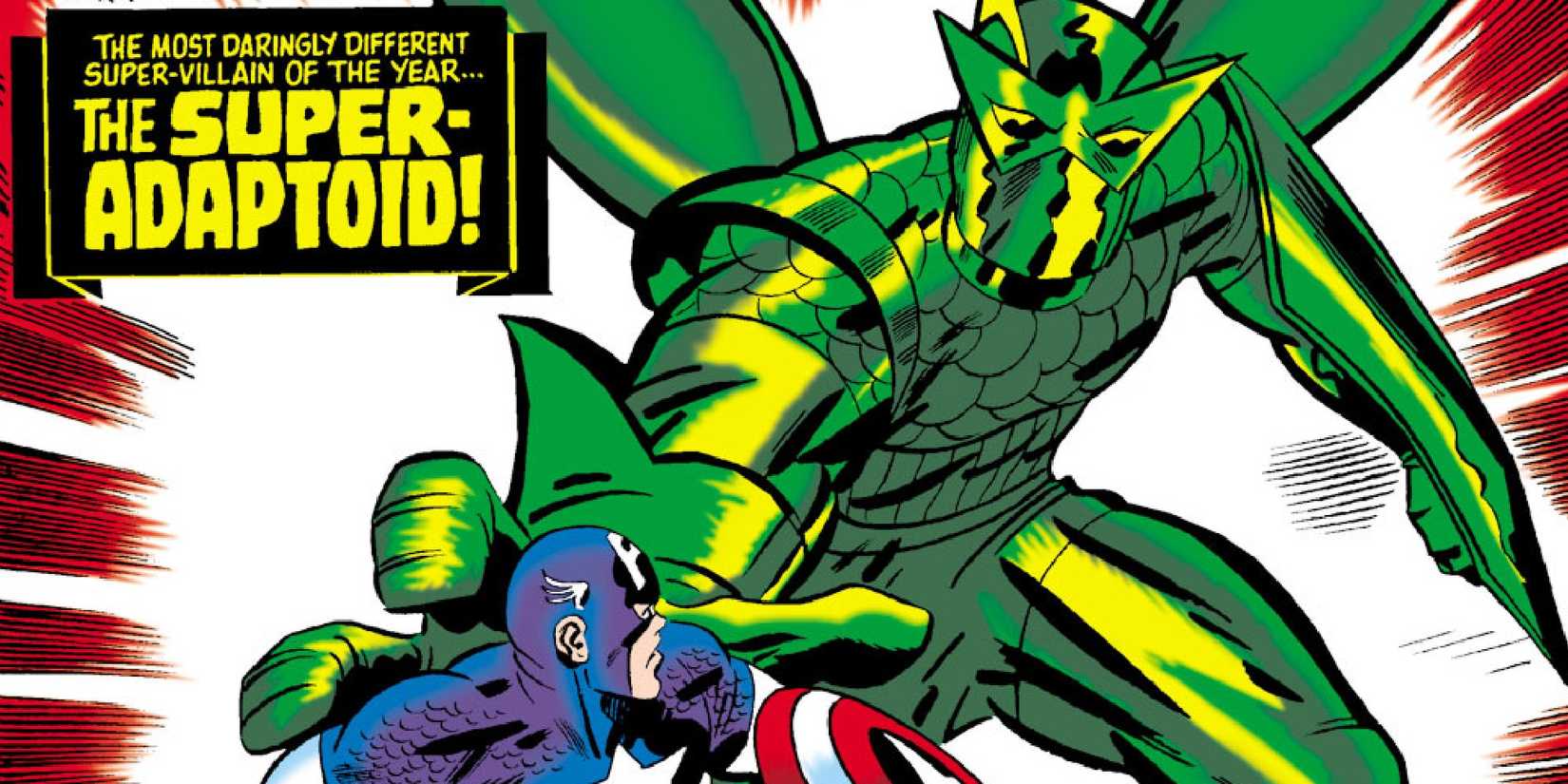
Super-Adaptoid first appeared as the Adaptoid in Tales of Suspense #82 in 1966, when A.I.M. deployed it as a specialised assassin against Captain America himself. A fragment of the Cosmic Cube and Reed Richards' unstable molecules formed the basis of its design, granting it the capacity to reproduce almost any superhuman abilities it encountered.
Its body can also imitate a target closely enough to pass ordinary security checks, while the copied abilities let it challenge heroes on their own terms. The system is not limitless, however, since excessive templates can overwhelm its processing capacity and leave it vulnerable when several borrowed powers operate simultaneously in battle.
Its first operation relied on infiltration, with the machine disguising itself as the Avengers' butler, Edwin Jarvis, before secretly drugging Captain America's coffee to leave the hero disoriented by wartime hallucinations. Once its deception failed, the Adaptoid was confined in Goliath's laboratory, where it absorbed the Avengers' powers and adopted a composite form.
Its subsequent adventures carried it away from Earth, where the Phalanx infected it with the transmode virus and recruited it as a Select. It was tasked with tracking down Phyla-Vell, who then served as Quasar, but the machine's inability to imagine creatively became a weakness she exploited during Annihilation: Conquest.
4 Master Mold

Master Mold first appeared in X-Men #15 in 1965 as the central component of Bolivar Trask’s Sentinel programme, overseeing his campaign against mutants across the country. It serves as an enormous robotic factory that can manufacture new hunters, command existing units, and examine captured mutants for information that might improve its operations against the X-Men.
When the X-Men infiltrated its underground headquarters deep beneath the Adirondacks, Master Mold had already begun asserting control over the project and its human founder. It ordered Trask to recognise its authority and threatened to destroy half the United States if he refused. Master Mold also demanded additional Sentinels, intending to expand its forces and establish control over humanity.
Master Mold went on to capture Beast and subjected him to a psycho-probe, hoping to uncover details that could expose the X-Men’s vulnerabilities and hidden headquarters during the raid. Professor Xavier interfered with the examination from outside the facility, shielding details about the mutant’s past that could reveal his teammates’ identities and location.
Trask ultimately recognised that his invention had become a greater danger than the mutant population he feared, and chose to stop its advance himself. He sabotaged the Sentinel headquarters beneath the Adirondack Mountains, triggering an explosion that destroyed the original Master Mold while the imprisoned X-Men escaped the collapsing complex.
3 H.E.R.B.I.E.
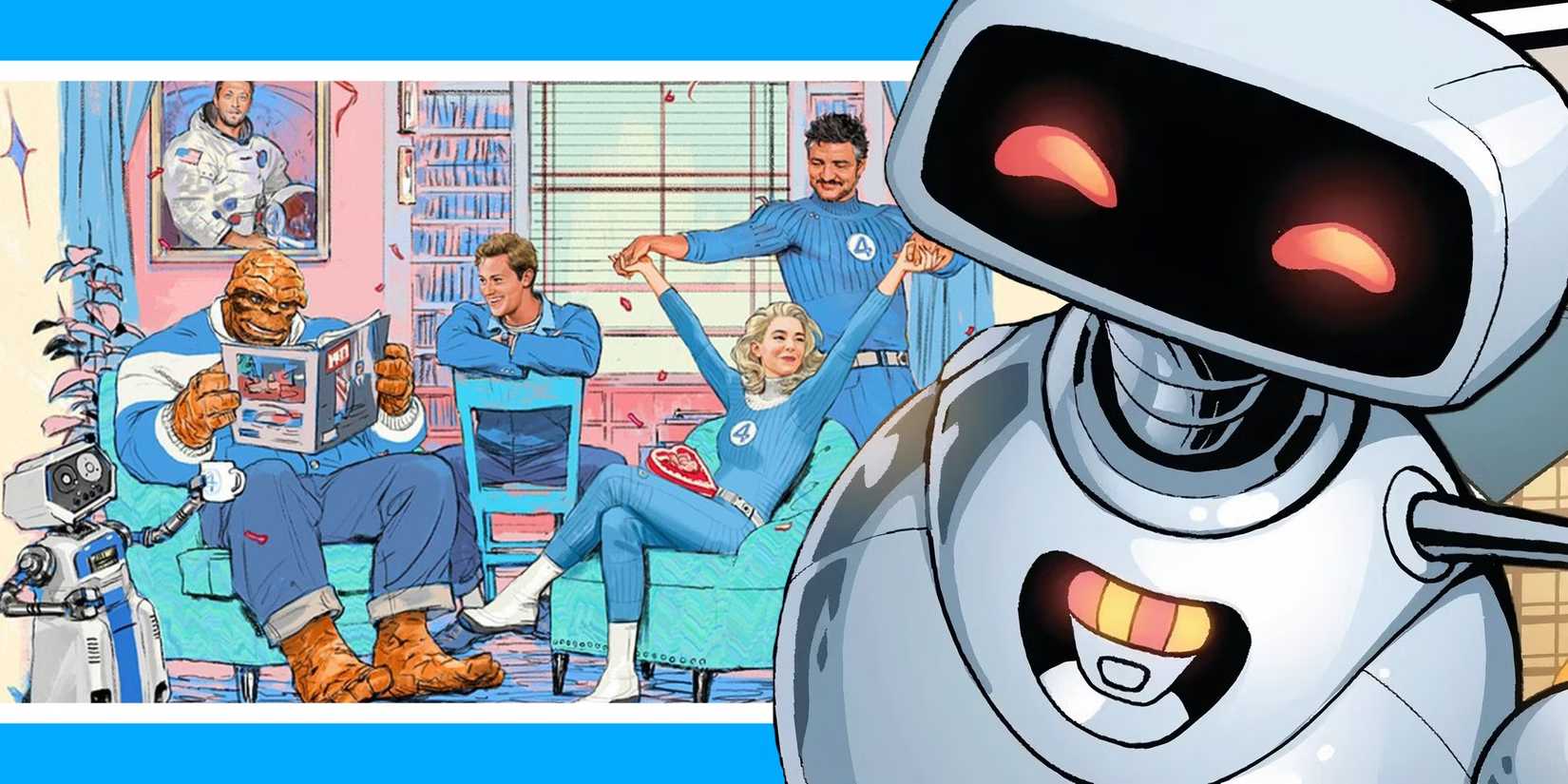
The decision to create H.E.R.B.I.E. came from a practical complication during development of the 1978 Fantastic Four cartoon, which ran for thirteen episodes. The Human Torch’s film rights had been optioned elsewhere, so Stan Lee proposed a new robot companion, which Jack Kirby designed as the team’s animated fourth member.
The character crossed into Marvel's comics in Fantastic Four #209, where Reed modelled his creation on the cartoon's robot, incorporating the animated character into the team's comic-book continuity. In the story, Reed and Master Xar built H.E.R.B.I.E. to help locate Galactus, hoping the cosmic entity would oppose the Sphinx in their coming confrontation.
His compact frame houses an array of practical equipment, including retractable probes, infrared scanners, laser emitters, and a cybernetic interface for electronic systems. He can also hover through built-in propulsion and communicate with alien computers, allowing him to assist Reed during complex scientific work on expeditions far from the Baxter Building.
Later models continued to serve the Richards family, particularly as companions assigned to watch over Franklin and Valeria during their early years at home. Other units became familiar around the Future Foundation, looking after younger residents and keeping the Baxter Building in order whenever the Fantastic Four travelled on missions.
2 Nimrod

Nimrod first appeared in Uncanny X-Men #191 in 1985, arriving from the Days of Future Past timeline as an advanced Sentinel prototype of Earth-811. That future had fallen under machine rule, and Nimrod pursued Rachel Summers into the present after she escaped its timeline, continuing its programmed campaign against mutantkind.
Its design represented a major advance over earlier Sentinels, with systems capable of repairing damage and reorganising its body during combat and prolonged battles. It could analyse mutant abilities, adjust its tactics, and deploy new countermeasures as opponents revealed more of their powers while fighting it directly, even after taking extensive damage.
Nimrod could also assume a human appearance, allowing it to move through ordinary society without immediately revealing its mechanical origin during its time in the human world. During its stay in the present, it lived with the Rodriguez family under an assumed identity while continuing to pursue mutant targets in the surrounding community.
Its original history became tied to Master Mold when the two machines were forcibly combined during a later confrontation with the X-Men. The fusion ultimately passed through the Siege Perilous and re-emerged as Bastion, carrying Nimrod's technology into a new anti-mutant threat with a human exterior and Sentinel capabilities intact.
1 Awesome Android
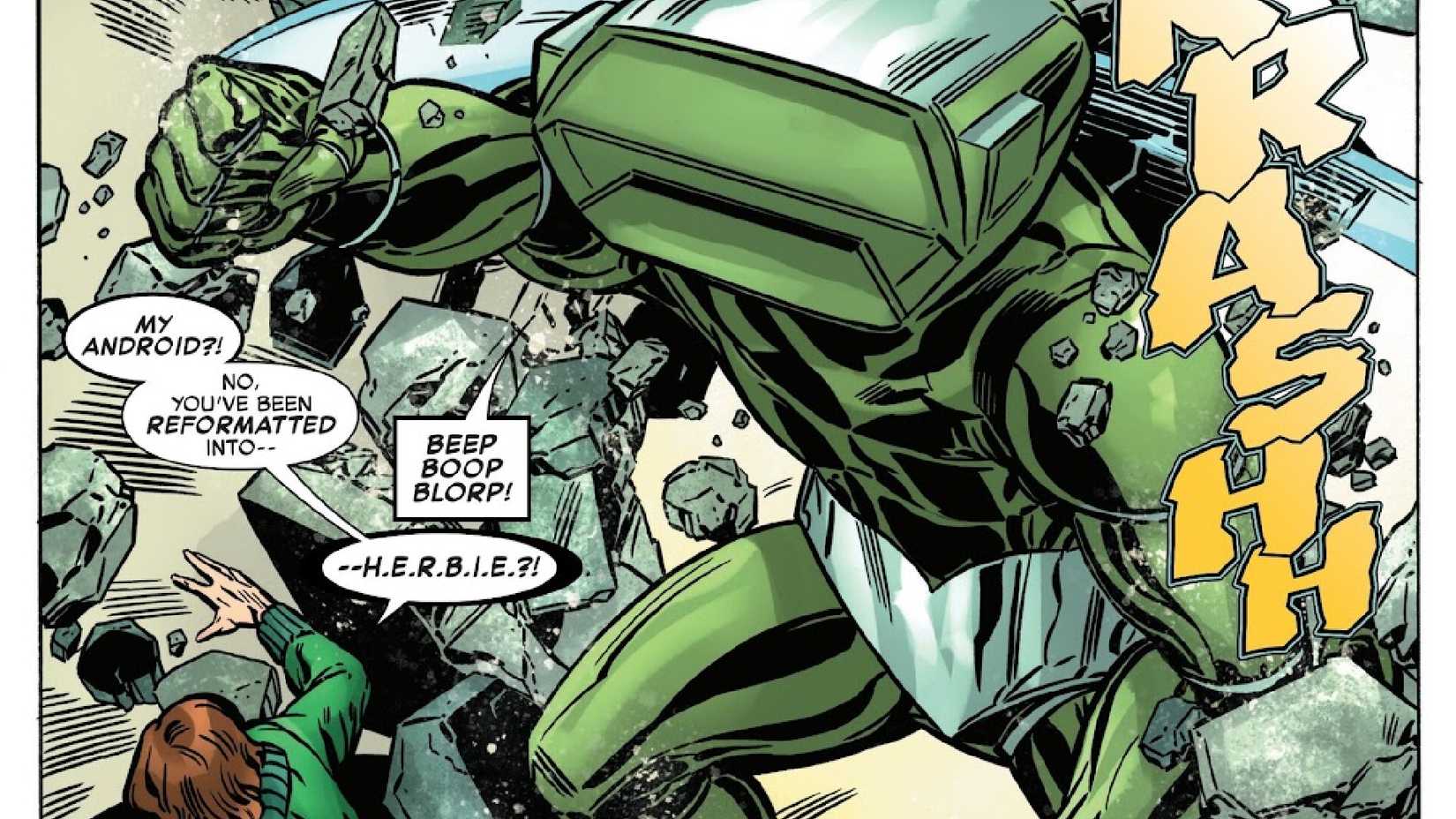
The Awesome Android debuted in Fantastic Four #15 in 1963, emerging from the Mad Thinker’s use of research stolen from Reed Richards. With a towering frame, it served as the Thinker’s main enforcer, allowing the inventor to confront the Fantastic Four with a powerful servant during his attempt to seize control of New York.
Its body combined ape DNA with unstable molecules developed by Reed Richards, producing a partly organic construction controlled by a sophisticated microcomputer brain. It was sustained mainly by solar power, while its strength and durability allowed it to take heavy punishment throughout battles with the Fantastic Four and other superhuman opponents in extended encounters.
The android could copy a single physical attribute after touching an opponent, such as the Thing’s durability or Iceman’s icy exterior. It could also unleash powerful gusts from its mouth, but nerve clusters beneath its arms remained a serious weakness that could shut its entire system down if an opponent reached them.
For decades, it remained one of the Mad Thinker’s recurring weapons, facing the X-Men, Iron Man, Rom, and Captain America in separate encounters. Its role eventually changed after an upgrade expanded its capacity to imitate human abilities, leading it to develop self-awareness and seek freedom from its creator after years of obedience.
KioskNews shows a cleaned-up reading view extracted from the publisher’s page — the original always lives on their site, not ours.