My Word: Political promises and threats - opinion
Election posters and banners are usually removed soon after the ballots have been counted. A few are left to the ravages of the weather to fade and tear. I was surprised, therefore, this week to see new posters going up in my Jerusalem neighborhood.
Neighbors who had previously shown no open political affiliation suddenly, two weeks after the election, placed huge Likud banners outside their windows, boasting the slogan: “Netanyahu does not surrender.”
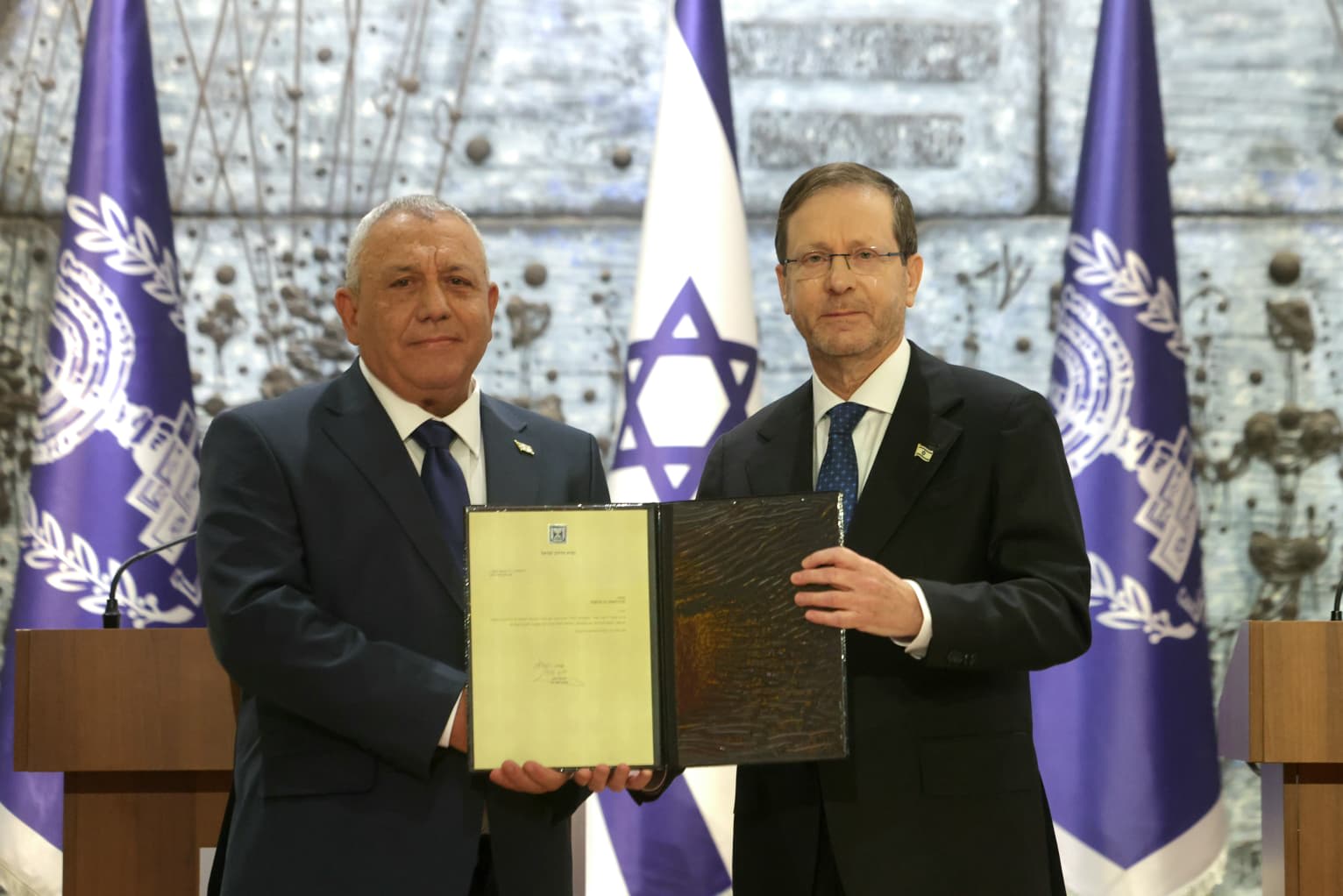
It was a central mantra of the Likud campaign. As the tricky business of creating a new coalition gets underway, the message could be directed at Yashar party head Gadi Eisenkot, tasked by President Isaac Herzog with trying to form a government.
Whether or not Eisenkot achieves his goal of replacing Benjamin Netanyahu as prime minister, it seems the campaign for the next election is already underway.
On Sunday, Eisenkot was given 28 days to form the government, with a possible extension of 14 days at the president’s discretion. If he fails, Netanyahu gets a chance, and if Netanyahu also doesn’t succeed, the country will likely go back to the ballot box. No wonder my neighbors are putting up election posters.
Not every party will be able to recycle their November 2026 slogans. Among the so-called change bloc, many of the central campaign tenets look more battered than election posters after last week’s heavy rains.
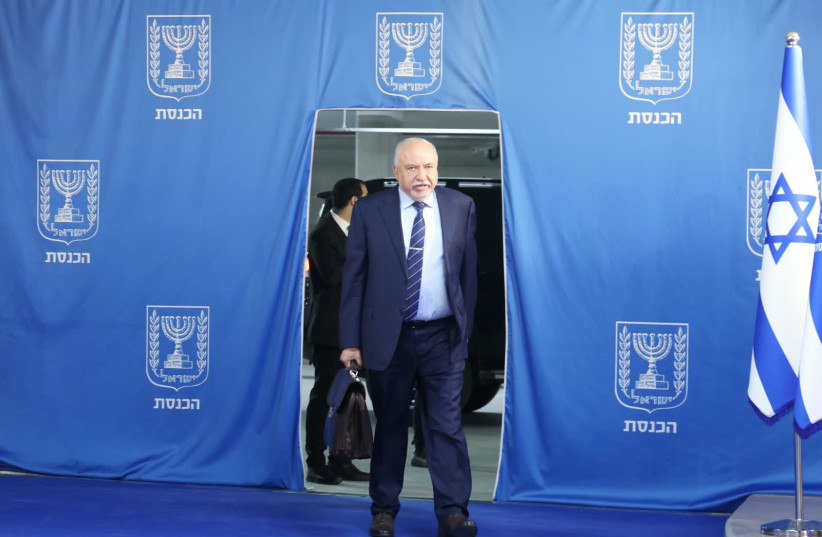
Eisenkot, Yisrael Beytenu head Avigdor Liberman, B’Yachad head Naftali Bennett, and The Democrats party leader Yair Golan all swore not to sit in a government with the haredi (ultra-Orthodox) parties – “the draft dodgers.” And, with the exception of Golan, they promised not to rely on the Arab parties (the Joint List and Ra’am) to form the coalition of 61 out of the 120-member Knesset.
Liberman began softening his tone regarding the haredim almost as soon as the election results were known and it became clear that Eisenkot could not form a government without going back on his word.
In the presidential consultations, 67 MKs recommended Eisenkot – including 48 in the change bloc and 19 from the two Arab parties – while 46 MKs endorsed Netanyahu, including Shas, considered the Sephardi haredi party. United Torah Judaism refrained from announcing support for any candidate.
Liberman was this week appointed interim head of the Knesset Foreign Affairs and Defense Committee, which could be a sign he intends to push through legislation enabling haredi yeshiva students to avoid mass conscription, as the haredi parties demand.
As defense minister, Liberman’s 2018 conscription bill offered a younger exemption age, lower target draft numbers, and fewer sanctions than the legislation drawn up by outgoing committee head Likud MK Boaz Bismuth. It was Liberman’s refusal in 2019 to enter the Netanyahu government without passing legislation on haredi mass conscription that led to the cycle of elections.
While Eisenkot was offered the mandate to form a government, it is Liberman who could be the kingmaker. Liberman’s slogan “0% to draft dodgers, 100% to those who serve” has been thrown out the window – in the metaphorical sense, not as a campaign poster. He clearly prefers relying on haredi support to the support of the Arab parties with Palestinian nationalist platforms.
Yashar’s posters featuring the slogan “This time Eisenkot, for the IDF’s sake,” are also unlikely to outlive the coalition talks. Who thought it was wise or acceptable to invoke the IDF in political battles in the first place?
On election night, Eisenkot, all but calling for a conditional refusal to serve, told IDF and defense establishment leaders: “Netanyahu is the head of a caretaker government without a mandate of public confidence.
"Remember that you serve the state and the interests of Israel’s citizens alone. Stand firm against any attempt to challenge you. You have my unequivocal backing. Netanyahu, don’t you dare use Israel’s security for your political purposes.”
Gaza itself features less in Israeli electioneering than it does in local elections abroad. But Israel changed forever on October 7, 2023, with the Hamas invasion and mega-atrocity and subsequent war on seven fronts. How to deal with the threats – and who should bear the burden of military service and taxes – are central issues affecting all citizens.
Eisenkot is clearly interested in forming a government as soon as possible, both to carry out what’s left of his campaign promises and to prevent Netanyahu from implementing significant policy in a “caretaker government.”
There are precedents: Yair Lapid, in the last days of his six-month term as prime minister in October 2022, reached a deal with Lebanon which in effect handed Israeli maritime territory, including part of a potential gas field, to Hezbollah's control.
Here, the question of the presumed independence and impartiality of the judiciary plays a major role.
Those hoping Eisenkot can help restore Israel’s severely battered image abroad are likely to be disappointed. A former IDF chief of staff is not going to be internationally embraced simply for replacing Netanyahu.
Even if he were charismatic and a brilliant orator, he would find it hard to win over a world where the International Criminal Court in The Hague declared both Netanyahu and former defense minister Yoav Gallant “war criminals.”
The fight is over the existence of the Jewish state, not who heads it.
Tuesday's opening session of the 26th Knesset was festive for the most part. Doomsayers’ predictions of January 6 storming the Capitol-type violence proved to be as unfounded as the dire warnings of right-wing violence on election day and the threats, amid the judicial reform upheaval, that Netanyahu intended to cancel the elections altogether.
As both Herzog and outgoing Speaker Amir Ohana noted, the challenges both domestic and external facing the government are enormous, whoever leads it.
The newly sworn-in Knesset includes several members directly affected by the Israel-Hamas War – bereaved parents (including Eisenkot himself) and other bereaved relatives, and relatives of former hostages.
The sight of war-wounded, double amputee Elisha Medan (Likud) rising on his prosthetic legs to pledge allegiance, and receiving an unusual cross-House standing ovation, was heartwarming.
But National Security Minister and Otzma Yehudit leader MK Itamar Ben-Gvir shouted out during the swearing-in of Arab Joint List leader Yousef Jabareen; Joint List MKs walked out of the plenum while "Hatikvah" was playing, although Ra'am leader Mansour Abbas and his MKs remained; and Naftali Bennett heckled Netanyahu during his speech after the ceremony.
Proposition of a unity government
Netanyahu warned of the growing pressure on Israel to come to terms with a nuclear Iran and proposed a unity government under his leadership as head of the party with the largest number of mandates, 27. This would avoid relying on the Arab parties, he said, asking: “… are you prepared to be dependent on those whose goal is the destruction of the Jewish state?”
Eisenkot later blasted the speech as “delusional, divisive, hate-filled” and reportedly called off a planned meeting between Yashar and Likud representatives.
The willingness of Netanyahu’s political opponents to create some kind of rotation agreement was severely damaged when he backed out of a similar arrangement with Benny Gantz in the 2020 national emergency government during the COVID crisis.
Eisenkot also called for a “national emergency government,” under his leadership, saying: “This will require creative and unconventional political steps.”
Although he briefly entered an emergency government with Netanyahu and Gantz in the aftermath of October 7, the flexibility required now might involve bending over backward. Still, in politics, as we’ve seen, anything goes.
In 2021, Bennett reneged on campaign promises and ousted Netanyahu, becoming prime minister with just seven seats.
Under the circumstances, the calls for “unity” – from both sides – are not worth the paper the campaign posters are printed on. But if you still believe all the campaign promises, I can sell you the bridge on the highway where election posters hung just last week.
KioskNews shows a cleaned-up reading view extracted from the publisher’s page — the original always lives on their site, not ours.