Supreme Court Refuses Stay On UPI Charges Above Rs 2,000. What It Means For You
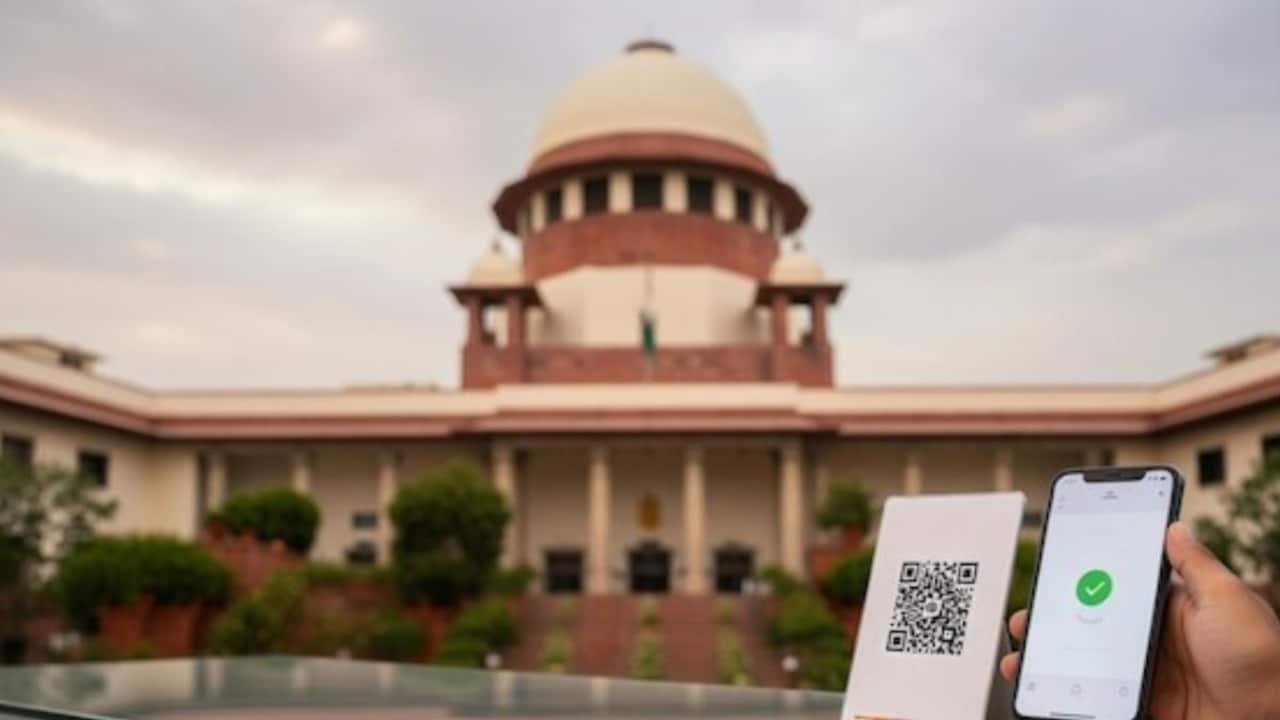
UPI MDR Charges: The Supreme Court on Monday refused to stay the new Merchant Discount Rate (MDR) framework for specified UPI transactions above Rs 2,000. However, the court has sought responses from the Centre, the Reserve Bank of India (RBI) and the National Payments Corporation of India (NPCI) on a plea challenging the new system.
The case has put a spotlight on a question that could affect the way India's biggest digital payment system works: if the government is not collecting the money, what is the legal basis for the charge?
Supreme Court Questions Legal Basis Of UPI Charge
A three-judge bench led by Chief Justice of India Surya Kant, along with Justices Joymalya Bagchi and V Mohana, heard the plea filed by advocate Anjan Datta.
Also Read | Layoffs Are Rising In Tech, But These Skills Are Helping People Unlock Better Pay
During the hearing, the bench sought clarity on the nature of the charge. Additional Solicitor General N Venkataraman, appearing for the Centre, told the court that the MDR is neither a tax nor a fee collected by the government.
The Centre's position is that the charge will remain within the payment ecosystem. It will be shared among entities such as banks, payment service providers and other participants involved in processing UPI transactions.
The court has now asked the Centre, RBI and NPCI to respond. They have been given four weeks to file their responses.
What Changes From October 15?
The new framework does not mean that every UPI payment above Rs 2,000 will suddenly carry a fee for the person making the payment. The MDR applies to specified person-to-merchant (P2M) transactions above Rs 2,000.
For eligible transactions, the standard MDR is 0.4 per cent. It is capped at Rs 300 for transactions of Rs 75,000 and above. So, for example, if a Rs 10,000 payment is covered by the MDR framework, the MDR at 0.4 per cent would be Rs 40.
But this is a charge within the merchant payment ecosystem. The government has said customers should not be charged this amount separately.
The Finance Ministry has also said UPI apps are not permitted to impose platform fees or hidden charges on users because of the new framework.
Your Rs 2,000 UPI Payment Will Still Be Free
UPI payments between two individuals will remain free, regardless of the amount involved. Merchant payments up to Rs 2,000 will also remain outside the MDR framework.
The government has further said small merchants receiving up to Rs 1 lakh a month through UPI QR codes under the specified category will continue to get zero MDR. The government estimates that around 96 per cent of UPI merchant transactions will remain unaffected.
So, a person paying Rs 1,500 to a shopkeeper through UPI will not suddenly have to pay an additional MDR simply because the new system starts.
Some Sectors Will Pay A Flat Rs 5
The framework also has different rates for certain sectors. Payments above Rs 2,000 in sectors such as railways, telecom, insurance, fuel and agricultural inputs will attract a flat MDR of Rs 5.
Capital-market related payments, including those involving mutual funds, securities, stockbrokers and dealers, will attract a lower MDR of 0.02 per cent, subject to a Rs 300 cap.
Aakash Bansal, Co-founder & CEO, MIDASX, told NDTV, "UPI has become critical digital infrastructure for India, and its economics must evolve with its scale. The proposed MDR framework raises an important question: how do we sustain investment in technology, cybersecurity and innovation while keeping digital payments accessible? A balanced approach, where costs are distributed appropriately across the ecosystem, can strengthen UPI's long-term sustainability without burdening consumers or smaller merchants."
KioskNews shows a cleaned-up reading view extracted from the publisher’s page — the original always lives on their site, not ours.