What others can learn from China’s effective governance
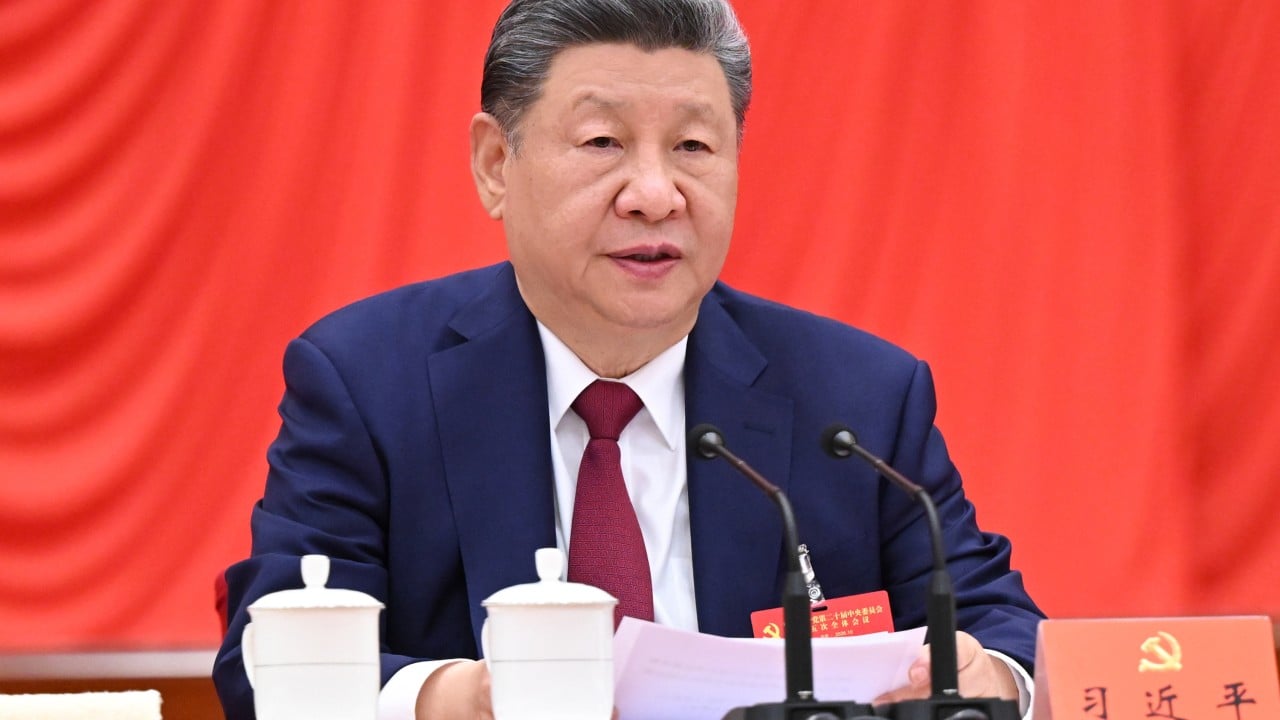
To understand China today, one must understand the Communist Party of China. The close attention the world paid to the fifth plenum of the 20th party congress, held in Beijing last month, underscores the global significance and contemporary relevance of this century-old party’s experience in self-supervision and self-governance.
These are strands of historical DNA running through the entire course of the party. The plenary session noted that the party has achieved one victory after another because it has attached great importance to self-supervision and self-governance while having the courage to uphold truth and correct errors, growing stronger by relying on its efforts and the support of the people to resolve its own problems.
It advanced party building during periods of revolution, development and reform and had made further progress since the 18th national congress in 2012.
During this time, the party found two answers to the question of how to escape the historical cycle of rise and fall: people’s oversight of the government and the party’s self-reform. These are unique discoveries by the Communist Party of China, and they will forever stand out in the history of Marxist parties.
Rigorous supervision and governance of the party are vital safeguards for China’s high-quality development. Governance of the country must begin with governance of the party, and governance of the party must be undertaken rigorously. Only a strong party can make a strong China.
The plenary session spoke highly of the historic achievements made in rigorous party self-governance in the new era. It was agreed that the Central Committee, with President Xi Jinping at its core, has shown tremendous political courage and a strong sense of responsibility, staying committed to party self-governance by introducing stringent measures and making continuous efforts to tackle prominent issues.
03:00
China’s fifth plenum focuses on discipline and loyalty to Xi
As a result, the problem of lax and weak self-supervision and self-governance has been addressed at the root. Unhealthy tendencies that had gone unchecked have been curbed, deep-seated problems that plagued the party for years have been remedied, and serious dangers hidden within the party, the state and the military have been removed.
Endeavours to advance rigorous governance over the party have broken new ground in and brought about historic achievements and transformations in the cause of socialism with Chinese characteristics. The party and the Chinese people have seized the historic initiative in building a great party and a great country.
Self-reform must be pursued over the long term through a holistic governance framework. The most important outcome of the plenary session was the adoption of a resolution laying out arrangements for persevering with full and rigorous party self-governance. The plenary session also pointed out that the party faces major challenges to its governance and leadership capacity, the quality of its membership and its resistance against corruption and moral decline.
05:27
‘Socialism with Chinese characteristics’ explained
To effectively tackle these challenges, the resolution emphasised seven principles: serve the party’s missions and tasks; take strengthening the party politically as the overarching principle; exercise rigorous governance across the board; adopt a problem-oriented approach; uphold fundamental principles while breaking new ground; adhere to a top-down approach; and run the party according to regulations.
The plenary session also underscored seven strategic tasks: strengthening the party spirit of communists; implementing democratic centralism; cultivating high-calibre officials capable of shouldering the mission of national rejuvenation; building a well-knit organisational system characterised by cross-level alignment and effective implementation; improving conduct and tightening discipline on an ongoing basis; taking firm and integrated action against corruption; and running the party through institutions and regulations.
Furthermore, the resolution stressed the importance of improving party and state oversight systems and all party members fulfilling their common political responsibility.
Good governance of the Communist Party offers valuable inspiration for other political parties around the world to explore their own effective governance.
In a changing and turbulent world where some countries are mired in protracted conflicts and disorder, while others are grappling with partisan struggles and social upheaval, many people are looking to China’s approach to discover how the Communist Party is succeeding. The answer lies in its perseverance with rigorous party self-governance. The party’s commitment to self-supervision and self-governance has continuously enriched the governance of China.
The party injects fresh substance into exchanges and mutual learning with other political parties around the world, provides valuable inspiration about self-governance and contributes China’s wisdom and solutions to the development of a political civilisation of humanity.
As a century-old party in its prime and one of the world’s largest governing parties, the Communist Party stands ready to work with other political parties across the globe to deepen exchanges on state governance, promote the interaction of theories, achieve modernisation together and move ahead hand in hand on the path towards building a community with a shared future for humanity.
KioskNews shows a cleaned-up reading view extracted from the publisher’s page — the original always lives on their site, not ours.