In Malaysia, strangers sleep side by side – for art

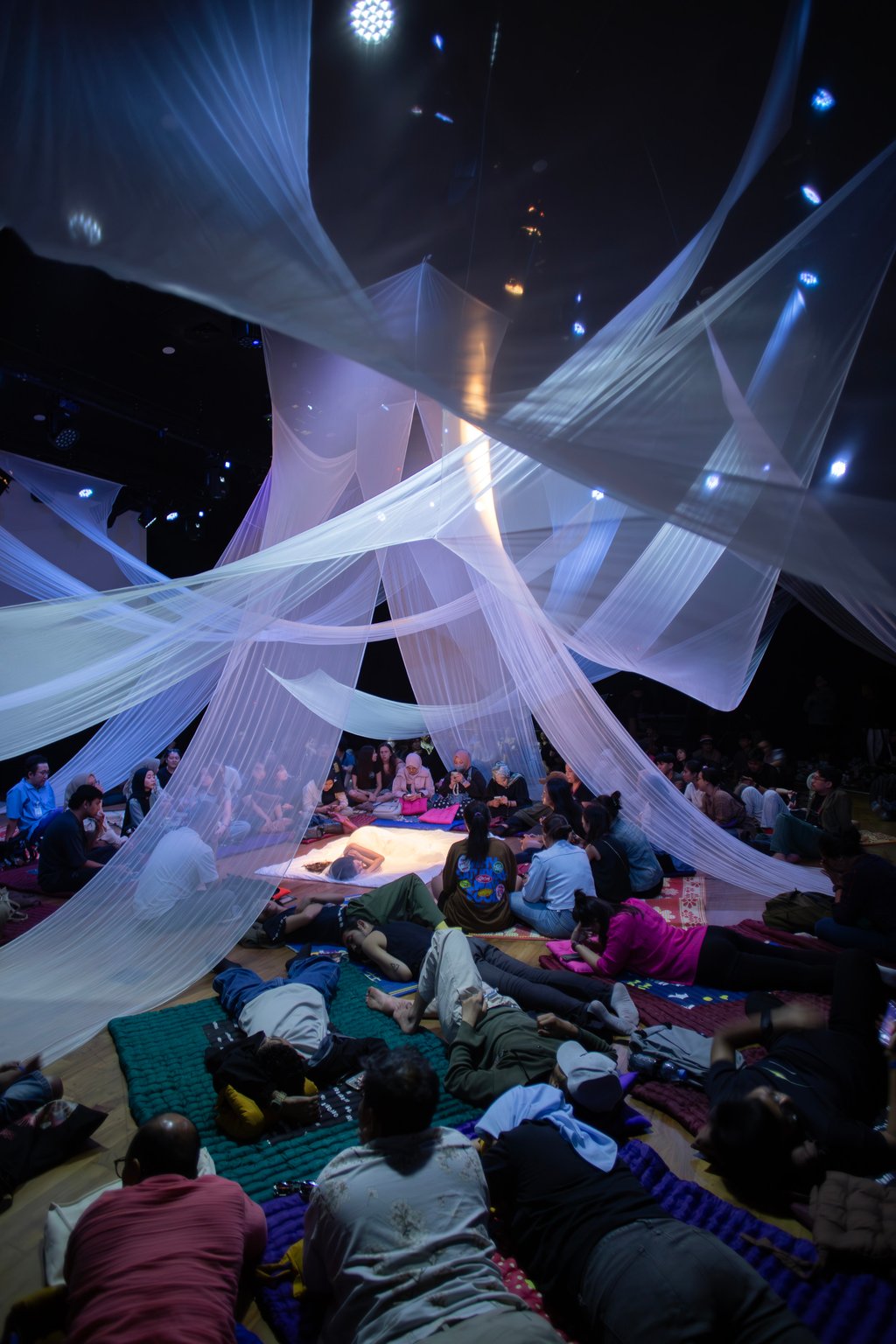
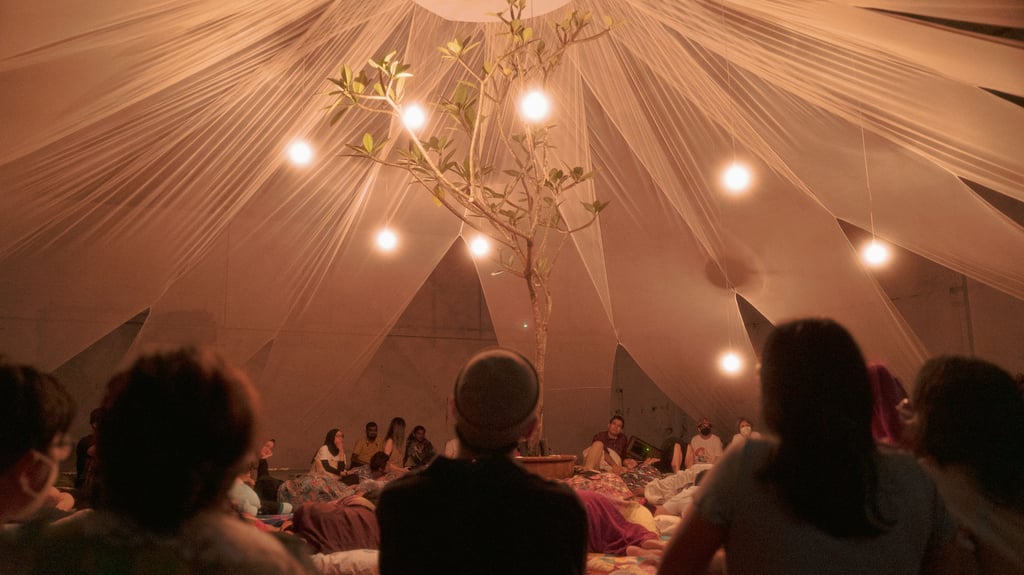
At a former sawmill in the Malaysian city of Ipoh, mats and mattresses were laid out for an art installation that invited visitors to lie down together and, if they could, fall asleep.
The Tidur Lambak installation, which means “communal sleeping” in Malay, aimed to recreate a common Malaysian childhood experience: bedding down on the floor with cousins and other relatives at family gatherings.
It is a custom closely linked to balik kampung, the tradition of returning to one’s home town, especially for the holidays.
At the Ipoh exhibition, visitors were encouraged to lie down and listen to soundscapes. Similar events have emerged elsewhere across Asia.
In Singapore, a sold-out event earlier this month called The Resting Room offered sound-based relaxation sessions in a dimly lit hall.
In South Korea, a listening series called Ceiling Service invited young people in Seoul to lie on mattresses in a communal space to unwind and fall asleep next to strangers.
Social scientists say such events reflect a desire for human connection without the demands of typical social interaction.
Taha Long, co-founder of Tapir Studio and the artist behind its Tidur Lambak installation, said the project drew inspiration from his own childhood memories.
“Growing up, I was always a rather reserved kid, so you can probably imagine that being lumped together with younger cousins, aunts and uncles, and having to sleep in the same space wasn’t always the most comfortable experience,” he said.
“But amidst the chorus of snores, kids engaging in makeshift WWE wrestling and older cousins sharing all too scary ghost stories, I never felt closer to my extended family than during those nights.”
The installation was not first and foremost designed to be comfortable, he said. Instead, it aimed to recreate a sense of intimacy.
“Perhaps there’s something to be said about how closeness doesn’t always come from comfort,” Taha said. “Sometimes, it’s found in the willingness to be uncomfortable together.”
There’s something to be said about how closeness doesn’t always come from comfort
Tidur Lambak, which was last held in March, was not without controversy, drawing criticism from religious authorities in Perak, where Ipoh is the state capital.
The Perak Mufti Department, the state’s Islamic religious authority, said in a statement that it did not oppose such activities in principle, but urged organisers to consider Islamic guidelines and Malay customs and to consult religious authorities before staging similar events.
Its main concern was that unrelated men and women might mix, which it said could lead to conduct that went against Islamic teachings.
“Recreational activities aimed at rekindling memories and nostalgia are not prohibited outright, but must adhere to Islamic guidelines,” the department said, acknowledging that the event aimed to revive a familiar Malaysian cultural experience.
Social synchronisation
Psychologists say the appeal of communal sleeping lies in a fundamental human need to belong.
Mohamad Ibrani Shahrimin Adam Assim, an associate professor of social psychology at the University of Putra Malaysia, said the urge to gather in groups was not necessarily a result of loneliness or social isolation.
“It can be a meaningful experience because we need to be connected,” he told This Week in Asia.
Ibrani called communal sleeping a form of temporary escape rather than a means of healing, as it allowed people to rest while still being “able to connect with others with minimum social interaction”.
“That’s why they can sleep next to each other,” he said.
Ibrani calls this “social synchronisation”: a desire for contact, even with strangers, while limiting how much interaction it involves.
Younger generations were also drawn by the novelty, he said. “They want to experience a slightly different social atmosphere.”
Recalling his own experience of sleeping beside extended family at gatherings in Batu Pahat, in the state of Johor, he said the practice of communal sleeping was a familiar one to many Malaysians.
But such events could have a positive impact on societies all across Southeast Asia, Ibrani said, provided they respected local cultural and religious sensitivities.
“It will be a very good approach in terms of bringing people back together,” he said. “At least you don’t have to do anything for two hours.”
Some visitors had returned for later editions, Taha said, while others had asked about future instalments.
Tapir Studio has held three installations of Tidur Lambak outside Malaysia. The latest, at the Swab Barcelona art fair last month, added shared bolster cushions, known as bantal peluk, fitted with built-in speakers playing different types of white noise.
For Erin Malikhain, 32, who attended the Ipoh installation in March, communal sleeping was a matter of course for nearly two decades.
Perhaps because of this, she said she had not found Tidur Lambak to be as relaxing as she first hoped.
“A lot of people think that it’s supposed to be a restful experience, but it reminded me of a memory that wasn’t really restful,” she said.
“I think a big part of nostalgia … might not be as pleasant as what we think it is.”
KioskNews shows a cleaned-up reading view extracted from the publisher’s page — the original always lives on their site, not ours.