6 Months Of Vijay Government: Hits, Misses And Political Challenges
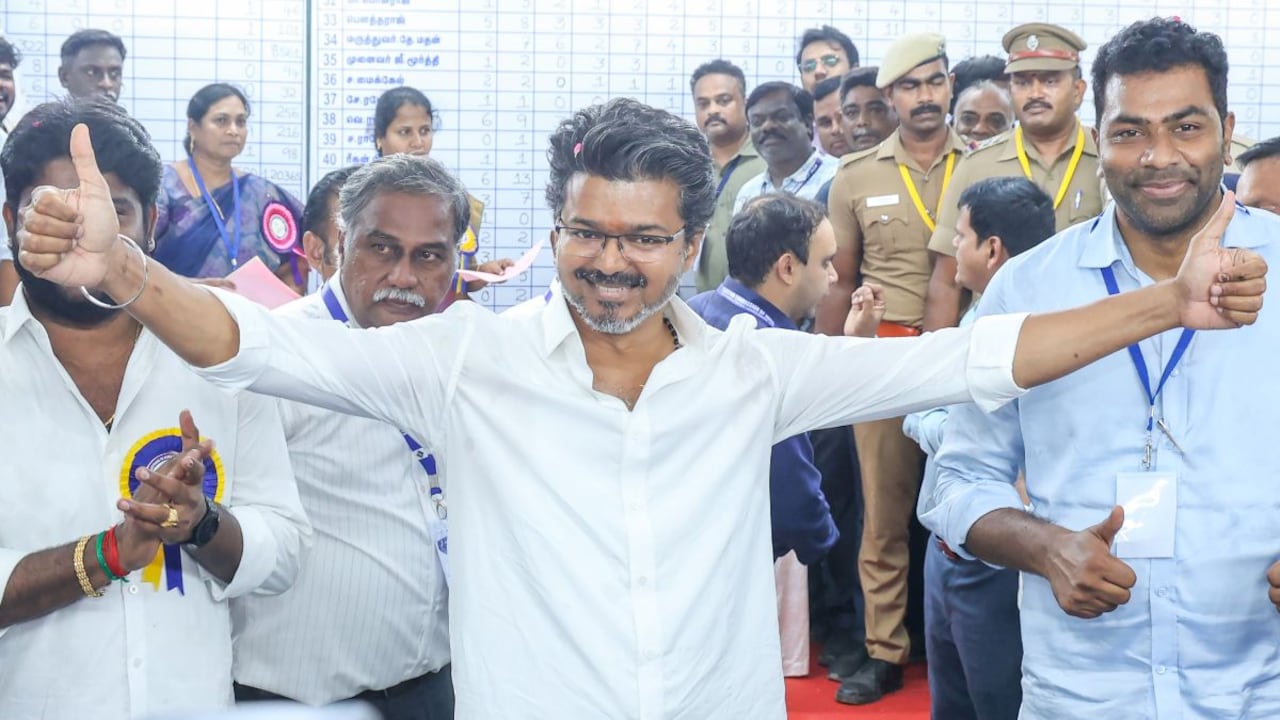
Tamil Nadu Chief Minister Joseph Vijay's government has completed six months in office, with a mixed record of policy initiatives, welfare measures and mounting challenges.
While the TVK government has drawn public attention for its efforts to improve service delivery, introduce transparency in government transactions and fulfil some of its electoral promises, concerns over law and order, rising prices and the state's investment climate have emerged as significant areas of scrutiny.
The six-month milestone also comes at a politically challenging time for the ruling party, which continues to depend on allies for a majority in the Assembly and faces questions over its approach to political defections and clean governance.
Anti-Corruption Measures And Service Delivery
Among the initiatives that have received public appreciation are the online property registration system and faster delivery of government certificates through online services. Applicants seeking community, income and legal heir certificates, among other documents, have reported quicker processing when their paperwork is in order, reducing the need to approach officials repeatedly.
The introduction of online payments for liquor purchases at government-run TASMAC outlets and a refundable Rs 10 deposit on liquor bottles are also aimed at improving transparency and curbing alleged irregularities that had plagued the system.
The closure of around 700 liquor outlets near educational institutions and places of worship has been welcomed as an initial step towards addressing concerns over the availability of alcohol in sensitive areas.
The government has also pursued corruption cases against leaders of the previous DMK regime. Former School Education Minister Anbil Mahesh Poyyamozhi was arrested in an alleged multi-crore bribery case involving approvals for private schools, while former Municipal Administration Minister KN Nehru has come under scrutiny in connection with a cash-for-jobs case. Both have denied the allegations, describing the action as a political vendetta.
Welfare Promises And Political Initiatives
On the welfare front, the government has moved to implement several key electoral promises. The free bus travel scheme for women has been expanded to cover additional categories of government buses, including express and LSS services, extending the benefit beyond ordinary town buses.
The government has introduced the 'Singappen' initiative, an exclusive women police force intended to strengthen women's safety. However, its effectiveness in addressing crimes against women remains a key question.
The distribution of free gold rings to newborns in government hospitals has also begun. The government has initiated steps to implement its promise of providing one sovereign of gold and a silk sari to brides from economically weaker sections.
Another significant initiative is the expansion of the free breakfast scheme from Classes I to V to Classes VI to VIII in government and government-aided schools. The scheme has also been renamed after former Chief Minister K Kamaraj.
The government has also claimed investment commitments worth around Rs 1 lakh crore. However, converting these announcements into actual projects, infrastructure and employment opportunities will be the real test.
The investment climate has emerged as a contentious issue, with the opposition raising concerns over an alleged decline in investments coming to Tamil Nadu and companies choosing neighbouring Andhra Pradesh for expansion. The TVK has alleged that the BJP-led Centre is favouring Andhra Pradesh, which is governed by an NDA ally, at Tamil Nadu's expense. The BJP has denied any bias, while the opposition DMK has accused the Vijay government of incompetence in attracting and retaining investments.
In a relief and a strong counter to the criticism, two South Korean automotive component manufacturers have confirmed fresh investment proposals worth a combined Rs 1,370 crore in Tamil Nadu over the next five years. The latest commitments offer a boost to the state's investment prospects, although the larger challenge of attracting and retaining new investments remains.
Law And Order And Price Rise: Major Areas Of Concern
If the government has made progress on some welfare and administrative fronts, law and order has emerged as one of its biggest challenges.
Amid a series of murders and sexual assaults, a spurt in murders and violent crimes around Diwali across Tamil Nadu marked a significant new high in the state's recent crime concerns. The incidents included brutal attacks in relatively affluent neighbourhoods of Chennai, including areas where ministers and judges reside. The killing of a police Special Sub-Inspector in Theni further intensified concerns over public safety.
The controversy was compounded by remarks from a minister that appeared to suggest such incidents around Diwali were not unusual.
More significantly, some TVK functionaries have been accused in cases involving sexual assault and drug trafficking. A few legislators of the ruling party have also faced allegations of assault, abetting sexual assault, drug abuse and questionable conduct involving a woman bureaucrat. These remain allegations, but they have placed the government's promise of clean and accountable governance under scrutiny.
The question is whether Chief Minister Vijay will act firmly against those within his own party who face serious allegations, as he had promised during the election campaign.
The escape of 17 undertrial prisoners from a sub-jail in Theni district exposed another set of concerns over prison security and administration. All 17 were arrested within 48 hours, while nine prison personnel were suspended.
A price rise is another issue causing concern among households. The increase in the prices of essential commodities, particularly rice, has added to the financial burden on consumers. The government's response to the rising cost of living will be an important measure of its performance in the months ahead.
The decision to abandon the proposed Parandur airport project, following sustained opposition from resident farmers and concerns over the loss of agricultural land, has also triggered a debate over development and environmental protection. While the government has sought to address local concerns, questions remain over the long-term implications for the state's aviation infrastructure and economic growth.
Farmers are also awaiting the full implementation of the promised farm loan waiver. While the government has implemented a waiver, it has not been a complete waiver as promised during the election campaign, leading to disappointment among sections of the farming community.
Political Controversy Over Defections And Clean Governance
The TVK government's approach to political defections has also raised questions about its commitment to clean politics.
Six AIADMK MLAs resigned from the Assembly and joined the TVK. Two of them were fielded as TVK candidates in the Madurantakam and Dharapuram bypolls, both of which the ruling party won. The Madras High Court upheld the Speaker's decision to accept the resignations, while disqualification proceedings against some of the legislators remain a separate issue.
Among those who joined the TVK is former minister C Vijayabaskar, who continues to face allegations in the gutkha scam. The DMK and AIADMK have accused the ruling party of encouraging horse-trading, an allegation the TVK has denied.
The controversy has also raised questions about the party's decision to induct leaders who are facing corruption allegations and the possible implications for ongoing investigations.
Critics argue that the party, which came to power promising clean governance, must explain how its approach to political expansion is consistent with that commitment. Questions have also been raised over alleged irregularities in a few government tenders awarded under the new administration.
A Government Short Of A Majority
Despite winning two bypolls, the TVK continues to face a numbers challenge in the Assembly. With 109 MLAs, it remains short of the 118 required for a simple majority in the 234-member House.
The government depends on the support of the Congress, the VCK and the IUML, besides the outside support of the Left parties. Five more Assembly seats are expected to go for bypolls. Even if the TVK wins all five, it would still fall short of the majority mark, although its dependence on allies would reduce.
The political equation with the Congress has become particularly sensitive following a section of TVK leaders raising the prospect of Vijay as a Prime Ministerial candidate for 2029. This has not gone down well with sections of the Congress, which continues to project Rahul Gandhi as its national leadership face.
A Congress minister has even warned that the party's two ministers in the Tamil Nadu government could resign if the TVK does not endorse Rahul Gandhi's candidature for Prime Minister.
Whether this disagreement will affect the ruling alliance in Tamil Nadu and whether the partnership can withstand the political pressures of the 2029 Lok Sabha election remains to be seen.
Meanwhile, the opposition is expected to intensify its attack on the government. The possibility of a no-confidence motion has also figured in the political debate, amid TVK allegations that opposition parties are attempting to poach its legislators. The DMK and AIADMK have denied such allegations.
The opposition has repeatedly described the administration as a 'reels government', accusing it of focusing more on publicity than governance. The TVK has rejected the criticism.
TVK Responds: Crime And Conduct Of Its Lawmakers
Responding to the criticism over law and order, TVK spokesperson Dr M Sathya Kumar said the government took the opposition's concerns seriously and would review the shortcomings.
"We take the criticism of the opposition seriously and would review where things went wrong. But we can't have a zero-crime society practically, as wherever human beings exist, there will be crime. But we can ensure it is minimal," he said.
The response comes against the backdrop of law and order and crimes against women being among the major issues raised by the TVK during its campaign ahead of the Assembly elections. The party had made these concerns a key political plank while targeting the previous DMK government.
On allegations against some TVK legislators, Sathya Kumar said Chief Minister Vijay would certainly urge them to maintain "discipline and public conduct".
The response places the onus on the Chief Minister to ensure that allegations against members of his own party are addressed and that the party's public conduct measures up to the standards it had promised.
The Bigger Test: Can Vijay Deliver On Clean Governance?
Beyond the immediate political challenges, one of the biggest questions confronting the Vijay government is whether it can institutionalise the promise of corruption-free administration.
It is one thing for a government to tell officials not to demand bribes. It is quite another to put systems in place to prevent contractors, intermediaries and powerful business interests from influencing decisions through inducements.
The challenge could become even more pronounced as the TVK expands its political organisation. Running a full-fledged political party involves substantial expenditure, from maintaining offices and paying electricity bills to funding travel, public meetings, mobilisation and party events.
The larger question is where this money will come from and whether those who fund the party will eventually expect favours in return, including government contracts and other benefits.
Will the TVK retain the relatively lean political model with which it came to power, or will it gradually move towards a more expensive political structure that could create avenues for vested interests?
These are questions the government will have to address if it wants its anti-corruption promise to translate into lasting institutional reforms.
Six Months On, The Honeymoon Is Over
The Vijay government has several more electoral promises to fulfil. It is also a relatively new administration, with many first-time legislators and ministers, including the Chief Minister himself, still learning the demands of governance.
The government can point to its welfare initiatives, administrative changes and action in corruption cases. But the coming months will also demand answers on law and order, the cost of living, investment generation, political stability and the credibility of its clean governance agenda.
With its six-month honeymoon period over, the TVK government is set to face greater scrutiny from the opposition and the public. For Vijay, the challenge will be to move beyond the popularity he brought into office and demonstrate that it can translate into effective administration and delivery on promises.
KioskNews shows a cleaned-up reading view extracted from the publisher’s page — the original always lives on their site, not ours.