6 Hard Sci-Fi Movies Nobody Wants to See a Remake Of

Michael Block is a 14 time GLAM Award nominated writer, producer, and host of the podcast Block Talk. Throughout his time in the entertainment industry, he has worked on and off Broadway as a stage manager, written several produced plays, critiqued hundreds of theatrical performances, drag and cabaret shows, and has produced events randing from drag competitoons to variety concerts!
On Block Talk, he interviews nightlife personalities, covers the wide world of entertainment through features, ranking episodes, and recaps ALL of Drag Race, as well as Dragula and Survivor. He has interviewed hundreds of RuGirls that span the globe at DragCon NYC, DragCon LA, and DragCon UK.
In his free time, he makes one-of-a-kind jewelry and gift baskets with his mom. He is a proud member of the LGBTQ+ community.
Sign in to your Collider account
We all have those films that feel largely untouchable. Those movies that we find impossible to replicate or remake. And yet, many studios feel the urge to jump on the opportunity. Though remakes are a major trend, there are some titles that have remained hands-off. In the world of hard science fiction, there are six movies we simply do not need a remake of as no one wants to see it!
Of the six titles on this list, five have a better chance of a remake, while one remains literally impossible to achieve. From influential masterpieces to daring, underappreciated thrillers, these movies deserve to be preserved on their own. Though there are certainly many other hard sci-fi films that fit the bill, these six top the list.
'2001: A Space Odyssey' (1968)

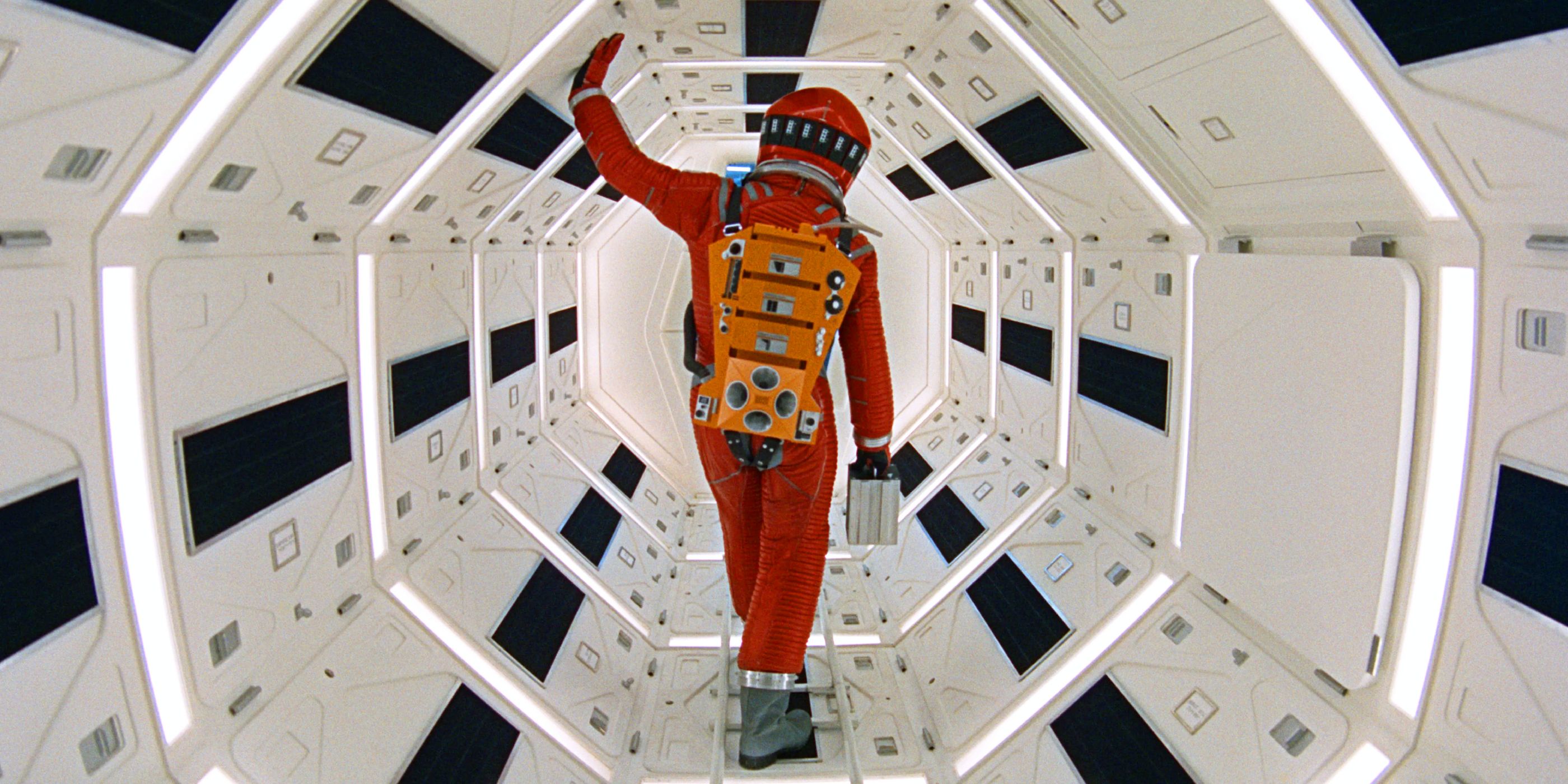
Few films could contend for the title of greatest and most influential film ever made. 2001: A Space Odyssey is one of them. The Stanley Kubrick epic is not only profoundly brilliant, but it was also quite prophetic. Therefore, any attempt to remake it is simply ridiculous. The groundbreaking film depicts humanity's evolution across four distinct movements guided by mysterious extraterrestrial monoliths. From early humanoids' struggle to survive to Discovery One’s journey toward Jupiter, where astronauts Dave Bowman (Keir Dullea) and Frank Poole (Gray Llockwod) battle HAL 9000 (Douglas Rain), the ship’s advanced sentient supercomputer, Kubrick’s masterpiece remains the goal post of cinema.
The hard fact as to why 2001: A Space Odyssey is impossible to remake is because it’s a product of its time. Its brilliance comes from groundbreaking practical effects and artistic vision that simply cannot be reimagined. At its core, it was a predictive film of what space travel would be in 2001. It’s literally impossible to make this same film, even if you adjust the date. Co-writer Arthur C. Clarke crafted a specific, highly philosophical script relying on hard science. Kubrick’s vision of the future was distinct to the time. With newfound cinematic technology and advancements in science, it would create a different story. Kubrick relied on incredible physical models, front projection, and rotating sets that have miraculously not aged. In a modern remake, they would likely be replaced by cheap CGI. A remake would be a cheap imitation, not innovation.
'Altered States' (1980)
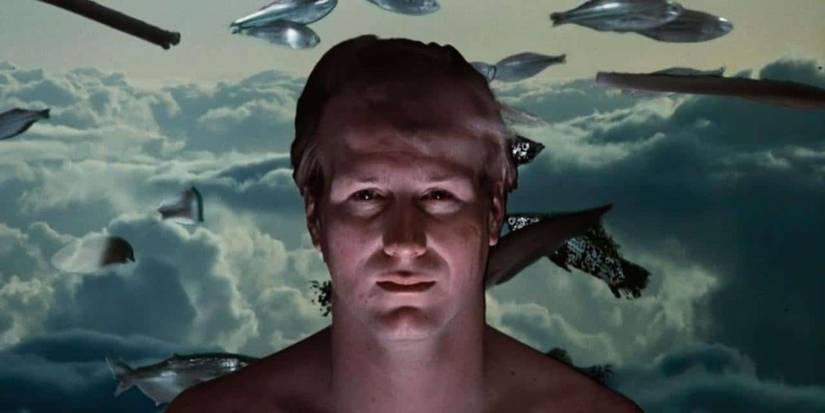
For the rest of this list, the films are ones we would certainly prefer not to see remade. Directed by Ken Russell and adapted by playwright and screenwriter Paddy Chayefsky from his novel of the same name, Altered States is an experimental surrealist sci-fi horror film. Altered States’ production history may warrant a remake, but the result would likely fall flat. The film follows Dr. Eddie Jessup (William Hurt) as he uses a sensory deprivation tank and powerful hallucinogens to explore the outer limits of human consciousness. His mind-bending trips turn physical, causing him to actually regress down the evolutionary chain. As his grip on reality shatters, his wife (Blair Brown) and colleagues must try to pull him back before he is lost in the cosmos forever. A masterful take on body horror, Altered States was an unrepeatable lightning-in-a-bottle phenomenon.
Altered States was a chaotic collision course of creative forces. The three-time Oscar-winning writer infused the dialogue with distinct hard science that richly expressed his vantage. Then Russell took a bombastic approach, pushing the visuals into a realm of excess, religious motifs, and visceral body horror. Because of this infamous creative war, a remake would ultimately be a sanitized, passionless project. Should anyone get their hands on it, modern cinematic advancements would lead to a very different stylistic product. Visual effects supervisor Bran Ferren relied on groundbreaking optical printing, physical makeup, and practical techniques to bring Dr. Jessup's regressions to life. Today, modern CGI would lose the allure, replacing the unsettling imagery with a sleek, polished result that lacked the dangerous, hallucinatory grit of the original.

It might be unfair to call Contact a cult classic, but what it most certainly is is timeless. Directed by Robert Zemeckis, based on the 1985 novel by Carl Sagan, the film follows Dr. Ellie Arroway (Jodie Foster) as she discovers a repeating radio signal from the star system Vega that contains blueprints for a mysterious transport machine. Nations around the world fund and build the machine, but Ellie’s experience is debated by all parties. With its core being a story about science and faith, a new version of the film likely wouldn't capture any new revelations, as it would cheapen the original perfection.
The simple fact is that without Sagan, Contact would not be the same. He poured himself and his lifelong philosophy into the novel, which carried over into the film. This allowed for the right balance of rigorous scientific facts and deep emotional stakes. Though many actresses could do what Foster did, she is still a rare breed of perfection, and this film showed it. The biggest sticking point would be how a modern interpretation would handle the story. The film's debate between empirical science and religious faith doesn't age, but that perception has shifted greatly in the 21st century. A modern remake would likely replace the nuanced, philosophical restraint with loud action sequences and generic visual effects. Sometimes it’s OK to remain a product of a certain time.
Collider Exclusive · Sci-Fi Survival Quiz Which Sci-Fi World Would You Survive? The Matrix · Mad Max · Blade Runner · Dune · Star Wars
Five universes. Five completely different ways the future went wrong — or sideways, or up in flames. Only one of them is the world your instincts were built for. Eight questions will figure out which dystopia, galaxy, or desert wasteland you'd actually make it out of alive.
💊The Matrix
🔥Mad Max
🌧️Blade Runner
🏜️Dune
🚀Star Wars
01
You sense something is deeply wrong with the world around you. What do you do? The first instinct is often the truest one.
02
In a world of scarcity, what resource do you guard most fiercely? What we protect reveals what we believe survival actually requires.
03
What kind of threat keeps you up at night? Fear is useful data — if you're honest about what you're actually afraid of.
04
How do you deal with authority you don't trust? Every dystopia has a power structure. Your approach to it determines everything.
05
Which environment could you actually endure long-term? Survival isn't just tactical — it's physical, psychological, and very much about where you are.
06
Who do you want in your corner when things fall apart? The company you keep is the clearest signal of who you actually are.
07
Where do you draw the line — if you draw one at all? Every survivor eventually faces a moment that tests what they're actually made of.
08
What would actually make survival worth it? Staying alive is one thing. Having a reason to is another.
Your Fate Has Been Calculated You'd Survive In…
Your answers point to the world your instincts were built for. This is the universe your temperament, your survival instincts, and your particular brand of stubbornness were made for.
The Matrix
You took the red pill a long time ago — probably before anyone offered it to you. You're a systems thinker who can't help but notice the seams in things.
- You're drawn to understanding how the system works before figuring out how to break it.
- You'd find the Resistance, or it would find you — your instinct for spotting constructed realities is the machines' worst nightmare.
- You function best when you have access to information and the freedom to act on it.
- The Matrix built an airtight prison. You'd be the one probing the walls for the door.
Mad Max
The wasteland doesn't reward the clever or the well-connected — it rewards those who are hard to kill and harder to break. That's you.
- You don't need comfort, community, or a cause larger than the next horizon.
- You need a vehicle, a clear threat, and enough fuel to outrun it — and you're good at all three.
- You are unsentimental enough to survive that world, and decent enough — just barely — to be something more than another raider.
- In the wasteland, that distinction is everything.
Blade Runner
You'd survive here because you know how to exist in moral grey areas without losing yourself completely.
- You read people accurately, keep your circle small, and ask the questions others prefer not to answer.
- In a city where humanity is a legal designation rather than a feeling, you hold onto something that keeps you functional.
- You're not a hero. But you're not lost, either.
- In Blade Runner's world, that distinction is everything.
Dune
Arrakis is the most hostile environment in the known universe — and you are precisely the kind of person it rewards.
- Patience, discipline, and political awareness are your core strengths — and on Arrakis, they're survival tools.
- You understand that the long game matters more than any single victory.
- Others come to Dune and are consumed by it. You'd learn its logic and earn its respect.
- In time, you wouldn't just survive Arrakis — you'd begin to reshape it.
Star Wars
The galaxy far, far away is vast, loud, and in a constant state of violent political upheaval — and you wouldn't have it any other way.
- You find meaning in being part of something larger than yourself — a cause, a crew, a rebellion.
- You'd gravitate toward the Rebellion, or the fringes, or whatever pocket of the galaxy still believes the Empire's grip can be broken.
- You fight — not because you have to, but because standing aside isn't something you're capable of.
- In Star Wars, that willingness is what makes all the difference.
'Gattaca' (1997)
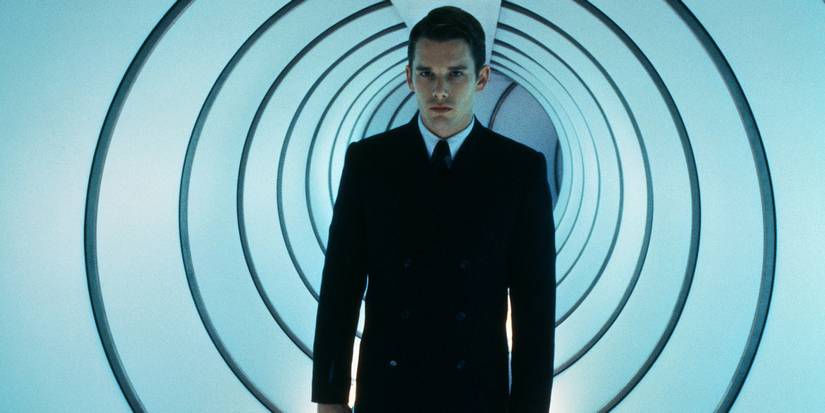
In 1997, Gattaca's ideals and theories were novel. Much has changed since. Written and directed by Andrew Niccol, Gattaca tells of a future society where people are judged, employed, and sorted into social classes based on their genetic makeup. Vincent Freeman (Ethan Hawke) is an invalid born with a weak heart and a short predicted lifespan, with a dream of going to space. To achieve this dream, he purchases the genetic identity of Jerome Morrow (Jude Law), a valid who is paralyzed. Just as Vincent prepares for his dream space mission, a murder investigation at the facility threatens to expose his true identity. A daring tale about genetic determinism and whether personal drive and willpower matter more than genetic predisposition, Gattaca was a hidden gem that was of its time. With thematic precision, analog aesthetic, and cultural timing, Gattaca simply cannot be replicated. It would be invalid!
Though Gattaca had star power behind it, it almost served as the antithesis of Hollywood blockbusters. To remake it, the film would have to obey those newfound rules and regulations. Now, perhaps a forgotten reason the film was poignant at its release is that it came out just as the Human Genome Project was gaining massive public attention, and just one year after Dolly the Sheep was cloned. Much has changed since that defining scientific moment. Society faces far grander cultural and scientific anxieties than work makes Gattaca not resonate. The movie is a tight, character-driven drama about human willpower versus deterministic math. In a time when cinematic universes run amok, the temptation to turn it into a high-stakes action thriller would diminish the story's humanity. Let’s face it, the film shipped Hawke and Uma Thurman. That real-world romantic bond during the film was lightning-in-a-bottle. The charm of that moment is lost in a remake.
'Phase IV' (1974)

Before the birth of CGI animals, Phase IV used real live ants. And lots and lots of them. From the mind of graphic designer and filmmaker Saul Bass, Phase IV drew on H. G. Wells's 1905 short story "Empire of the Ants" for inspiration. The sci-fi horror documents a cosmic event that causes desert ants in Arizona to develop a single, hyper-intelligent collective hive mind. Dr. Ernest Hubbs (Nigel Davenport) and communication analyst James Lesko (Michael Murphy) build a sealed geodesic dome in the desert to study the mutating ant colony, only for the ants to systematically outsmart the humans' defenses and poisons. While conducting strategies, tensions escalate as the colony turns the scientists against each other and traps them inside the dome. A story about who exactly is the real subject, Phase IV is an irreplaceable cult masterpiece.
Phase IV was all about Bass’ genius vision. Phase IV is essentially a 90-minute extension of his graphic design philosophy, tapping into a brilliant surreal geometry, stark color contrasts, minimalism, and abstract composition. The heart of Phase IV is its stunning, macrophotography footage of real ants, captured by wildlife photographer Ken Middleham. Without any CGI to be found, Middleham made them appear like actors, allowing them to appear highly intelligent, calculating, and eerie. That feat would likely be stripped away for a remake. A product of its time, Phase IV was a cerebral, slow-burn, apocalyptic eco-horror. It may have been trippy, but it was part of the evocative atmosphere. Of course, no one could remake Bass’ mind-bending 8-minute montage conclusion. It’s celebrated as is.
'Primer' (2004)

Our only 21st-century entry, there’s been enough space since Primer came out that it can be considered off-limits. Written, directed, produced, edited, and scored by Shane Carruth, Primer follows two engineers, Aaron (Carrith) and Abe (David Sullivan), who accidentally invent a device that allows for time travel. Paranoia, physical side effects, and complex overlapping timelines fracture their friendship as the machine is exploited and needs an immediate fail-safe. Primer was a unique project; thanks to its legendary, hyper-realistic indie execution, it is tied entirely to its microscopic $7,000 budget and Carruth's uncompromising vision. It’s impossible to capture that magic ever again.
Made with authentic grit, Primer had a documentary-style atmosphere that made the sci-fi elements feel terrifyingly plausible. Carruth didn’t dumb down his project, using scientific jargon rather than explaining the plot to the viewer. The narrative puzzle is intentionally disorienting, mirroring the chaos and moral decay of tinkering with time. With a big Hollywood budget, the charm would be shattered, replaced with a polished product that defuses its original intent. The film used donated film stock, basic business-casual clothes, and real locations; it’s implausible to recreate it in that manner.

Primer
- Release Date
- October 8, 2004
- Runtime
- 77 minutes
- Director
- Shane Carruth
- Writers
- Shane Carruth
KioskNews shows a cleaned-up reading view extracted from the publisher’s page — the original always lives on their site, not ours.