Indonesia’s PTDI eyes Kenya as gateway to Africa, offers aircraft and technical skills transfer
BANDUNG, Indonesia, Sep 28 — Indonesia’s state-owned aircraft manufacturer, PT Dirgantara Indonesia (PTDI), is seeking to revive talks with Kenya over the supply of aircraft while offering to establish local maintenance capabilities and transfer technical skills to Kenyan companies.
PTDI says it sees Kenya as a potential gateway to the wider African market, with the company particularly interested in the use of its CN235 and other aircraft for passenger, cargo and humanitarian operations.
The push comes as the Indonesian manufacturer seeks to expand its footprint across Africa, where it says it has already delivered aircraft to several countries.
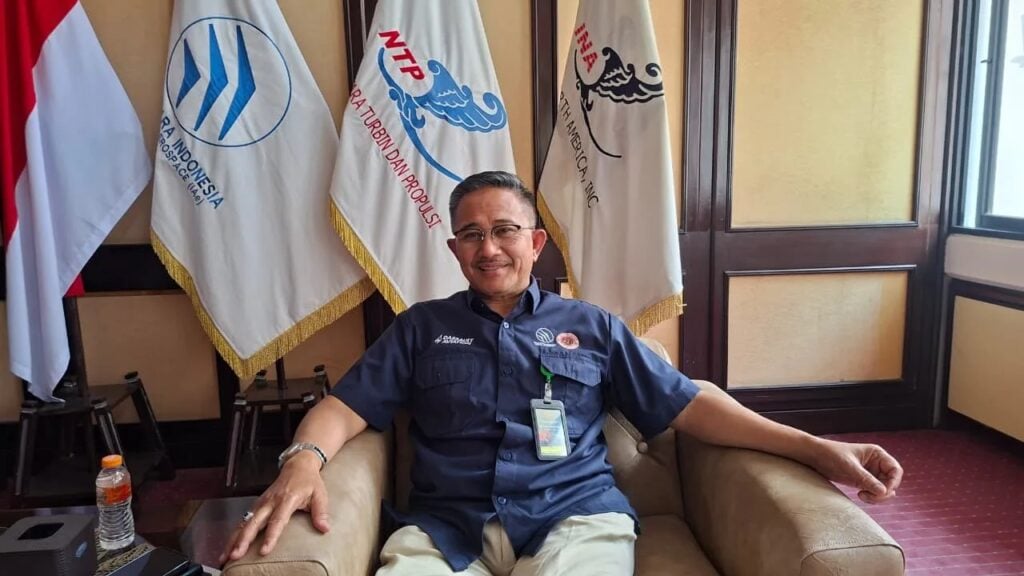
“We hope Kenya will be the next country to operate PTDI product,” PTDI’s Director of Business and Development Mohamad Arif Faisal said during a meeting with Kenyan journalists at the company’s headquarters in Bandung.
PTDI, Indonesia’s only aircraft manufacturer, currently produces the CN235, NC212 and the N219, alongside engineering services and aircraft maintenance support.
PTDI’s earlier discussions in Kenya were with Kasas Limited, an air charter and contract operator based at Wilson Airport in Nairobi.
Founded in 2006, Kasas specialises in mission-critical aviation and short takeoff and landing (STOL) humanitarian operations across Africa, making it a potentially relevant local partner for PTDI’s push into the Kenyan market.
PTDI said its discussions with Kasas had focused on the potential use of its aircraft for passenger charter and cargo operations in Kenya, but acknowledged that the engagement had stalled since December 2025.
However, PTDI acknowledged that the discussions have not progressed since initial contacts in December 2025.
“Maybe we have to follow up on our first communication at that time with KASAS Limited,” Faisal said. “Since last December 2025, we still have not progressed yet.”
Founded in 2006, Kasas Limited, an air charter and contract operator based at Wilson Airport in Nairobi, Kenya, specializes in mission-critical aviation and short takeoff and landing (STOL) humanitarian operations across Africa.
Beyond selling aircraft
PTDI is seeking to differentiate its African expansion by offering countries more than aircraft purchases, including maintenance, repair and overhaul (MRO) capabilities and technical knowledge transfer.
Faisal said the company would prefer to work with local companies so that aircraft would not have to be routinely sent back to Indonesia for maintenance.
“We can also appoint or maybe cooperate with the local MRO in there, so to set up the capability,” he said.
Under the proposed model, Kenyan engineers, mechanics and pilots could be trained to handle routine maintenance, while more complex work could be undertaken through cooperation between PTDI and local companies.
“We are not only selling as before. We have a package,” Faisal said. “We can also teach how to develop capability, how to make it also like for the maintenance MRO company, and of course we always teach the pilot and also the engineer or the mechanics to handle.”
The company said similar arrangements have been pursued in countries including Malaysia, the United Arab Emirates and the Philippines, where PTDI has worked with local MRO companies and transferred knowledge and technical capabilities.
Short-runway aircraft
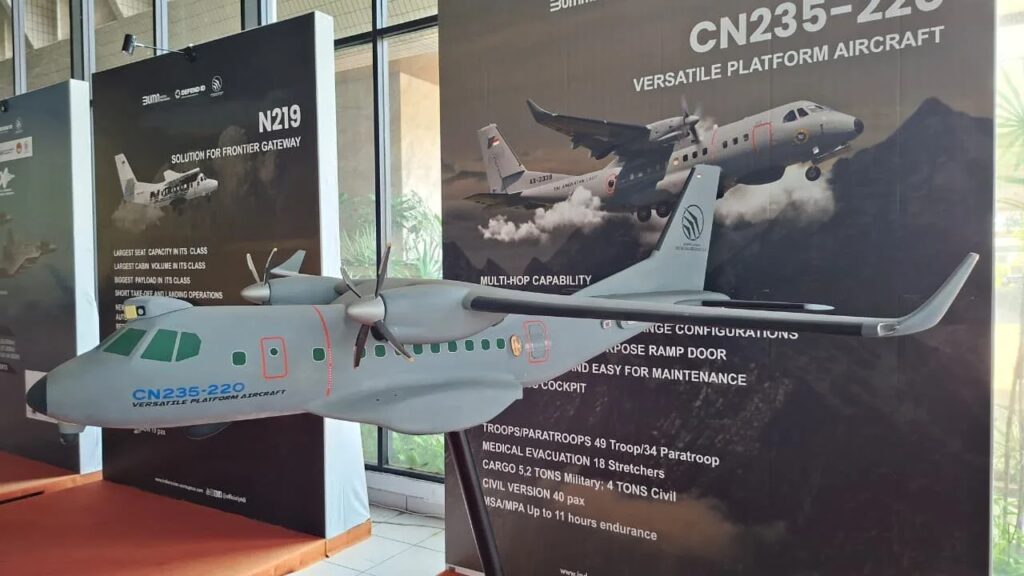
For Kenya, PTDI is pitching its CN235 as particularly suited to operations where airport infrastructure may be limited.
Arif said the aircraft can operate from relatively short runways and has a rear ramp that can support cargo and troop operations.
“The CN235 and NC212 have very unique characteristics because we don’t need the long runway,” he said, adding that the CN235 can take off and land on runways of less than one kilometre.
He said the aircraft could also offer lower operating and maintenance costs while allowing Kenya to develop its own maintenance capabilities.
PTDI says its approach is designed to reduce the cost and logistical burden associated with sending aircraft overseas for maintenance.
“If you send [the CN235 or NC212] to us only for maintenance or minor maintenance, it will be costly,” Arif said.
“That’s why we will give you the transfer of knowledge, transfer of capability, at least for the routine check.”
Kenya talks come as PTDI expands in Africa.
PTDI says it has already supplied about seven aircraft to African countries, including Senegal, Burkina Faso and Tanzania, while it signed an agreement in 2024 with an African company for five aircraft.
The company is now looking to expand beyond existing markets.
Faisal said PTDI’s distance from African markets remains one of the challenges to expansion, making diplomatic support important.
The company also sees Indonesian diplomatic missions as an important bridge in navigating national regulations and the sensitive nature of defence-related business.
“We have to consult also with the embassy on what the policy is, especially for the defence industry there,” Faisal said.
Lessons from Indonesia’s aerospace industry
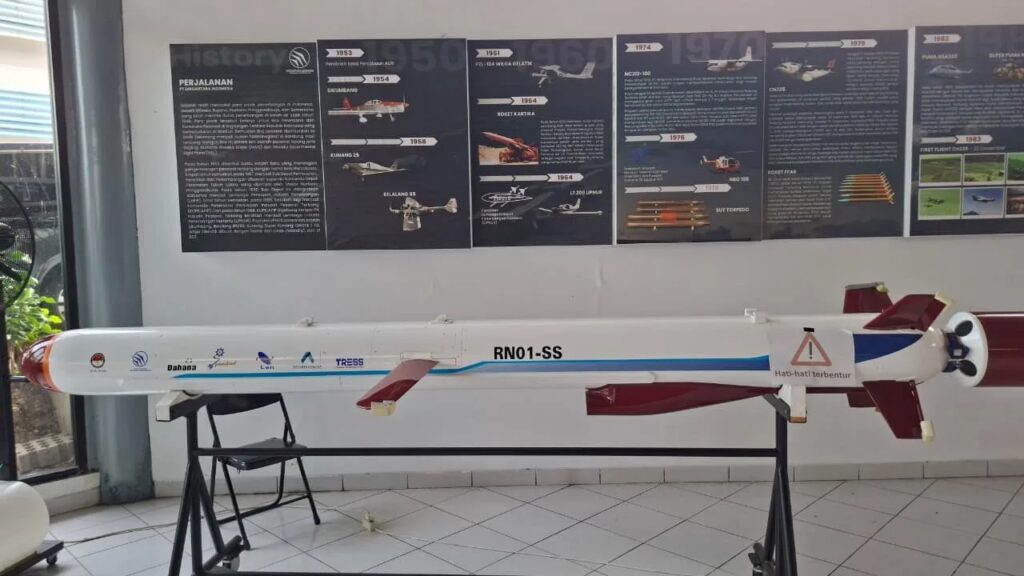
PTDI also pointed to Indonesia’s decades-long effort to build domestic aerospace capabilities as a possible model for countries seeking to reduce dependence on foreign maintenance and manufacturing.
Established in 1976, the company says government support, partnerships with international aerospace companies and technology-transfer requirements helped it gradually develop its capabilities.
Faisal cited Indonesia’s use of offset arrangements when purchasing foreign aircraft and systems, saying these included technology transfer and opportunities for local industry.
“The offset program is not only for the transfer of technology capability but also for some local content in PTDI,” he said.
PTDI now participates in global aerospace supply chains and has collaborations with major international manufacturers.
The company said its N219 aircraft has about 44.69 per cent local content, with plans to increase that share.
Aircraft, drones and wider aerospace cooperation
PTDI’s ambitions in Africa extend beyond conventional passenger and cargo aircraft.
The company is also developing drones, including a medium-altitude, long-endurance platform, and produces rockets.
Its Medium-Altitude Long-Endurance(MALE) drone has an endurance of up to 24 hours and can operate at altitudes of up to 24,000 feet, according to the company.
Faisal said the company’s latest drone development had progressed beyond surveillance applications, while PTDI is also developing other defence-related systems.
However, PTDI stressed that its wider African strategy is built around industrial cooperation rather than simply exporting finished products.
The company wants to assess existing capabilities in prospective markets and identify areas where local companies can participate in the aerospace supply chain.
“If I think that in the country there is also a company to produce in the industry, of course we can,” Faisal said.
For Kenya, that could open discussions beyond aircraft procurement to include MRO, engineering, component manufacturing and skills development.
PTDI’s immediate challenge, however, is turning earlier conversations into a concrete commercial partnership.
The company says it is ready to resume discussions with Kenyan partners as it seeks to make Kenya the next African operator of its aircraft.
KioskNews shows a cleaned-up reading view extracted from the publisher’s page — the original always lives on their site, not ours.