What will the US midterms mean for trade policy on China?
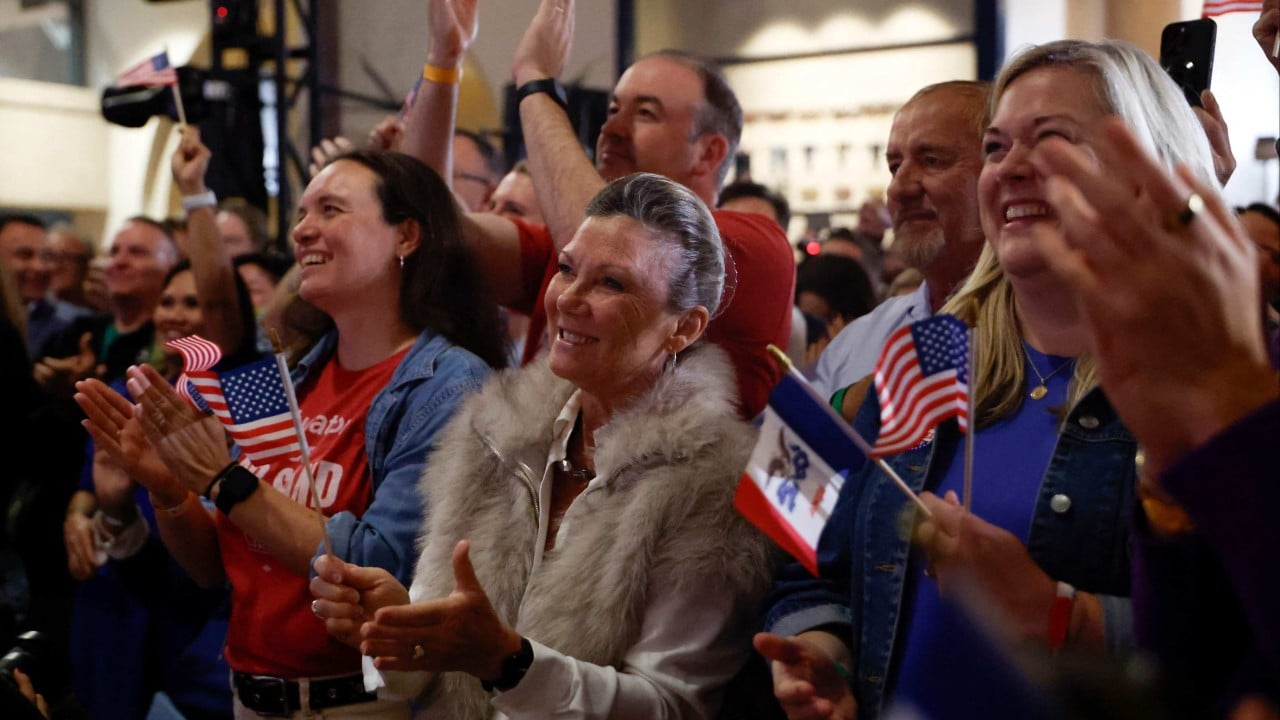
The Democrats’ comprehensive victory in the US midterm elections could embolden Congress to assert greater authority over trade policy and scrutinise the deals President Donald Trump made with China, analysts say, though a dramatic shift in Washington’s trade policy is unlikely.
“Congress, including pro-free trade Republicans who have been intimidated into standing down, might be inclined to reassert some degree of congressional authority on trade,” said Stephen Olson, a former US trade negotiator.
As Trump retained broad executive discretion over tariffs, a major shift in trade policy was improbable, added Olson, who is also a visiting senior fellow at the ISEAS-Yusof Ishak Institute in Singapore.
“But on the margins, you might see Congress pushing for more tariff carve-outs and exceptions in categories that affect their constituents’ pocketbooks,” he said.
Democrats gained control of the House of Representatives and the Senate in the elections on Wednesday, giving them a majority in both legislative chambers of the US Congress for the first time since the first two years of the Joe Biden administration.
The stinging defeats for the Republicans came amid broad voter frustration over the high cost of living, the war in Iran and trade conflicts with traditional allies such as Canada.
Deborah Elms, head of trade policy at the Hinrich Foundation think tank, similarly noted that Congress could step up administrative scrutiny over trade policy, though radical changes were unlikely given the president’s veto power.
“Where I think we will see change is the volume of investigations and hearings into some aspects of trade policy,” Elms said, noting that lawmakers were likely to question how the US Trade Representative and Department of Commerce justified tariffs and decided which companies received exemptions.
But she cautioned that China hawks in Washington – which Trump had largely prevented from influencing policy up to this point – were likely to view China more sceptically.
Washington and Beijing have maintained a fragile truce in their trading relationship this year following months of tit-for-tat tariff rises, export controls and threats in 2025.
Chinese President Xi Jinping met with Trump in the United States in September, where the two sides agreed to modest measures including extending the trade truce and launching a board of trade to oversee some reciprocal tariff reductions.
“While Trump has shown strong interest in keeping the relationship [with China] from escalating, most of Washington is less conciliatory,” Elms said.
Trump could emerge from the midterms unshackled by political constraints and the need to avoid tariffs
Chen Fengying, a Beijing-based expert on US-China relations, said the election results were unlikely to spell major changes in trade relations with China.
SCMP Plus is a new premium news platform that gives you an
all-inclusive edge to stay ahead on China news.
To access our exclusive content you’ll need to subscribe.
Already a subscriber?
LOG IN
“We must not pin our hopes on the Democrats to ease tensions or foster friendship with China,” Chen said, arguing that while Democrats avoided the direct approach favoured by Republicans, they were equally committed to containing China.
“It is impossible for two major powers to avoid friction entirely,” Chen said. She added that even if China’s trade with the US declined, its rapidly growing trade with other countries could make up for it.
The Democrats’ victory in the Senate was bolstered by flips in several agricultural and industrial states such as Iowa and North Carolina, where farm exports and manufacturing supply chains bore the brunt of the trade war launched by Trump last year.
Chen said those swing states were key sources of products that China imported in large volumes – such as aircraft and agricultural products including soybeans – and the midterm results could open the door to an increase in trade flows.
Olson, however, noted that the Republicans’ losses in these states could leave Trump with fewer political incentives to avoid aggressive trade actions.
“Trump could emerge from the midterms unshackled by political constraints and the need to avoid tariffs or other trade actions that could damage Republican electoral prospects in critical states,” he said.
“In that case, the section 301 tariffs on excess capacity could be forthcoming shortly and new trade actions against key partners could also be opened,” Olson said. “That obviously would be bad news, especially in the Indo-Pacific.”
KioskNews shows a cleaned-up reading view extracted from the publisher’s page — the original always lives on their site, not ours.