‘We are human too’: the Roma film-makers striking back at stereotypes
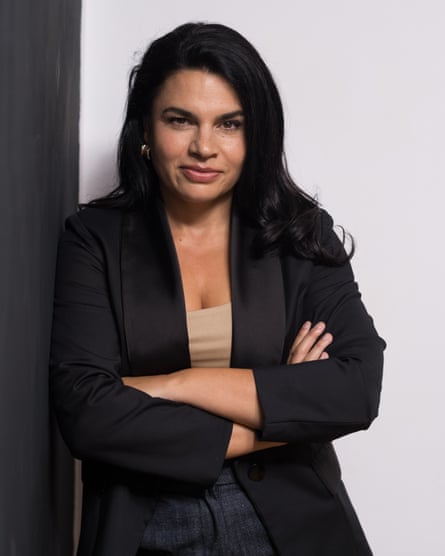
Growing up in Romania, whenever Alina Șerban spotted Roma people on television or in movies, they were usually cast as villains or depicted as somehow exotic.
But this week the Romany actor and film-maker is part of a cohort pushing back against this stereotyping, joining forces with Romany film-makers from across Europe in a landmark screening of seven films during the Seville European film festival.
“It’s work made by us, not just about us,” said Șerban. “I was raised in a world where everything I heard about my community came from the exterior … The perspective is finally being centred.”
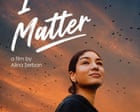
Her film, I Matter, which tells the story of a young woman who reckons with her Romany identity as she comes of age, was screened earlier this year as part of the Venice film festival’s spotlight section, where it won the audience award.
It was a triumph for a film that Șerban had envisioned as a way to build bridges towards “a different understanding” of Romany people, who rank among Europe’s most marginalised communities, with longstanding discrimination leading to challenges in accessing decent housing and the segregation of children in schools.
“I wanted to show, in a very simple but complex manner, that we are human too,” she said. “I’m claiming Roma humanity.”
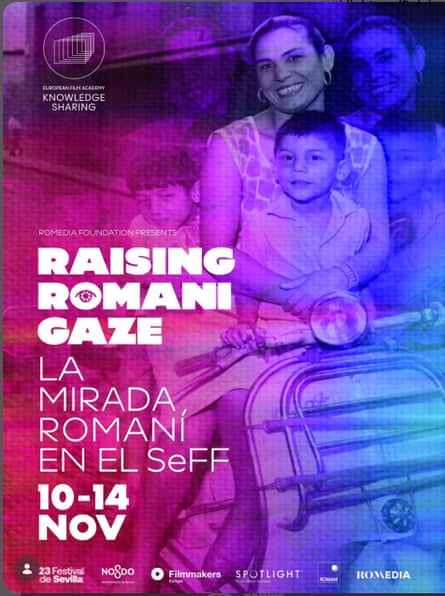
Organisers described this week’s showcase, titled Raising Romani Gaze and housed within the wider Seville festival, as the first of its kind. “This is something that we have been building up to for around 10 years,” said Katalin Bársony, a Romany film-maker from Hungary and one of the curators of the programme.
The wide range of talent in the community as well as a willingness in the industry to recognise their narratives had made it possible now. “Romany people, despite being the biggest minority in Europe, we are one of the most underserved and invisible when it comes to our own art that we create,” said Bársony, who also leads the Romédia Foundation, an NGO which seeks to use storytelling, film and visual archives to strengthen Roma self-representation and challenge prejudices.
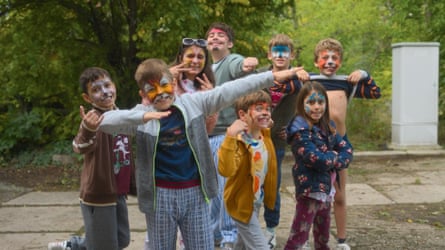
The result was a programme that offered an unprecedented glimpse of Europe’s richness by giving “narrative sovereignty” to some of the estimated 10-12 million Roma who live across Europe, she said. “From the start of the silent film, Romany people have been put in certain roles. And those roles were mostly passive and defined by the outside gaze.”
The films range from a documentary by Bársony that follows a young man born in Germany to Roma parents and who is deported to Kosovo, to a film by the Spanish director Jero de los Santos that delves into queer and Romany perspectives.
The showcase also includes Smooth the Edges, by the Nottingham-based Romany film-maker Charles Newland. “It’s a bit of an outlier,” said Newland, “because it’s the first film funded by the British Film Institute by a Romany director with a Romany producer and a lead Romany cast.”
The short captures a dilemma that Newland described as common in Britain’s Romany community: that of a young woman who wrestles with whether to hide her background in order to avoid workplace discrimination. What emerges is the tension in the trade-off of being able to escape discrimination but at a cost of repressing part of herself. The film also sought to engage with the in-between world that Roma in the UK were often forced to reckon with, said Newland.
after newsletter promotion
“Especially politically, there are a lot of people who can be racist against my group of people, but then on the same token, when it suits their argument, refer to you as white as well,” he said. “Sort of like, ‘oh they’re just Gypsies, they’re scum’ when it suits that agenda, but if it’s an agenda of trying to help out, it’s like, ‘well, why do they need help because they’re just white people?’ So you get stuck between this rock and a hard place.”
By bringing together Roma film-makers from across Europe, this week’s programme also offers a chance to push back against what has unfortunately become a common thread in the lives of many Roma across the continent, said Șerban. “As they say, the last form of acceptable racism is towards Roma people,” she said. “Being Roma for me, at least in the Romanian context, and for my generation, meant that you were somehow inferior.”
Against that backdrop, every decision she took on her film felt like an “act of resistance”, she said. “Hopefully, in some years’ time, there will be 50 or 100 films like mine. But since I was one of the first to bring this perspective, I had all this pressure and all these nuances to think about. You become an ambassador without choosing to be one.”
She saw it as a necessary step, however, in seizing the chance to tell stories that could allow audiences to see Roma living complex human experiences while also allowing Roma to see themselves on screen as more than just stereotypes. “Films bring change,” she said. “Art makes people think of how life is for another person.”
-
The Raising Romani Gaze programme will run at the 23rd Seville European film festival from 10 to 14 November 2026
KioskNews shows a cleaned-up reading view extracted from the publisher’s page — the original always lives on their site, not ours.