Punjab farmer shifts from wheat-paddy to fish farming, earns Rs 2.25 lakh per acre
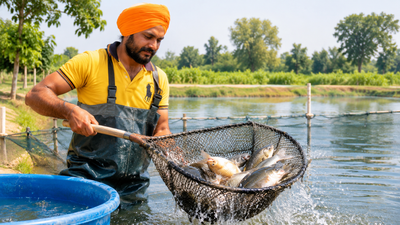
Representational AI image/ChatGPT
For years, Navjotpal Singh had been growing wheat and paddy. He also tried dairy farming and organic vegetable cultivation, but eventually decided to explore another source of income.
In 2019, he started fish farming on six acres of land in Noorpur Sethan village in Punjab’s Ferozepur district.Six years later, the 40-year-old farmer manages a fish farm that produces around 15 tonnes of fish annually. He says the venture brings him returns of up to ₹2.25 lakh per acre every year.According to a report for The Tribune by Shivani Bhakoo, Singh owns 35 acres of land and has spent the past six to seven years building his fish-farming business.
He said he was satisfied with the returns and believed the activity offered better earning potential than conventional farming on limited land.
From wheat and paddy to six acres of fish ponds
Singh's fish farm is spread across six acres, divided into a one-acre nursery pond and five acres of production ponds. The nursery helps ensure a regular supply of fish seed for the farm. According to The Tribune, the farm produces approximately 15 tonnes of fish a year. Singh breeds several varieties, including rohu, catla, mrigal, grass carp and golden fish.
He has also adopted scientific practices in carp culture, with guidance from Guru Angad Dev Veterinary and Animal Sciences University (GADVASU). He has been in regular contact with the university's scientists and follows their recommendations. The farm's sales increase during the peak season, when he sells between 70 and 80 kg of fish a day. Singh said the fish fetch around ₹150 per kg in the wholesale market and up to ₹250 per kg in retail.
Why he chose these fish varieties
Singh has also made decisions about the varieties he breeds based on how quickly they generate returns. Comparing his chosen varieties with sol and malhi, he said that the former begin generating income within seven to eight months, while sol and malhi take about a year. He added that sol and malhi are mostly brought from Andhra Pradesh and that Punjab's ponds are not particularly suitable for producing them in good quantities.The varieties raised at his farm are herbivorous and depend on regular feed. Sol and malhi, by contrast, are carnivorous varieties. The choice of fish, therefore, is linked not just to market demand but also to the time required to raise them and the conditions available in the ponds.Singh is now considering expanding beyond fish cultivation. According to The Tribune, he plans to set up a fish-processing unit and is exploring machinery from China.
However, he does not want to expand without technical advice.
Why fish farming is attracting Punjab farmers
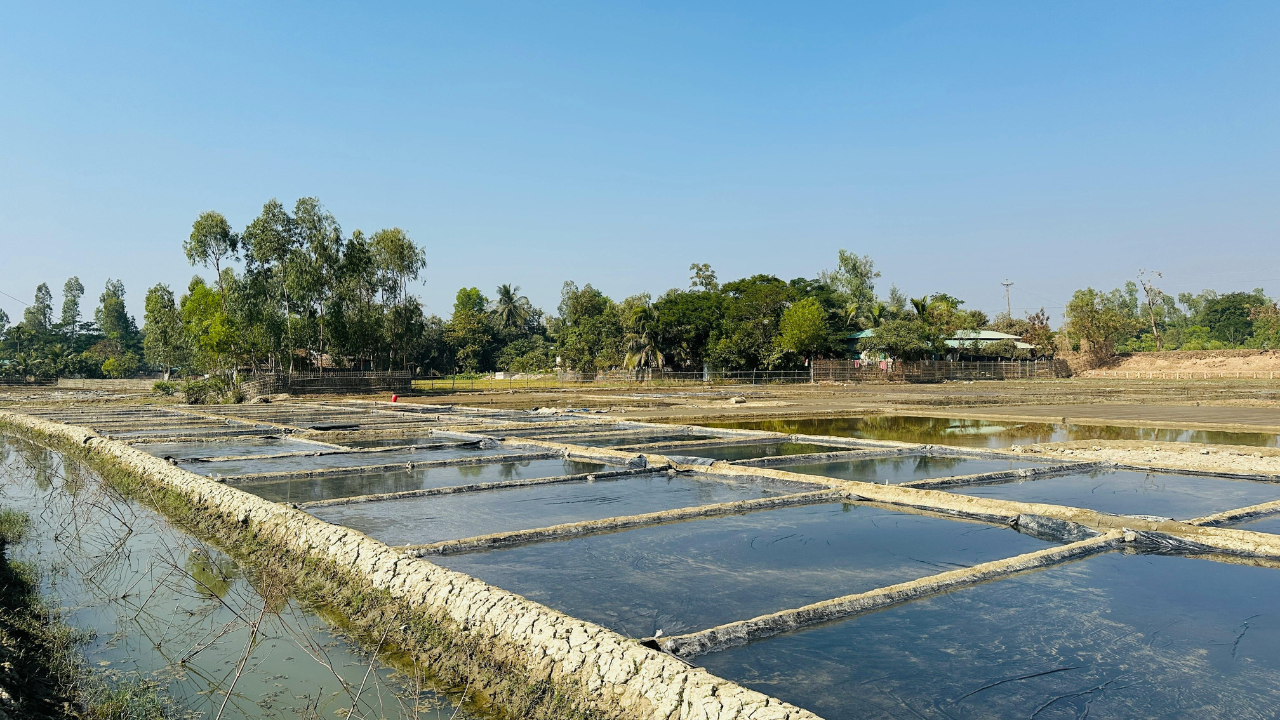
Photo: Canva
Singh's decision to diversify comes amid a wider expansion of fish farming in Punjab. Accordingto an Indian Express report, the area under fish farming in the state increased from 41,093 acres in 2020-21 to 43,683 acres in 2024-25. The number of ponds rose from 12,112 to 12,881 during the same period.The report, citing the Punjab Fisheries Department, said annual fish production increased from 1,64,879 tonnes in 2020-21 to 2,00,003 tonnes in 2024-25.
The trend is also visible in Ferozepur.
How technical guidance can help farmers
Fish farming requires more than digging ponds and stocking them with fish. Water quality, the choice of species, stocking density, feeding and disease management all affect production.GADVASU has been working to develop aquaculture in the salt-affected areas of south-west Punjab, including Ferozepur, Fazilka, Muktsar, Bathinda, Faridkot and Mansa. According to the university's website, it has standardised freshwater carp-culture methods for low-salinity areas and shrimp-farming methods for high-salinity areas.The university has also reported that more than 600 acres of salt-affected wasteland were converted into aquaculture farms over a four-year period covered by its report. It has organised awareness camps and training programmes to familiarise farmers with the technical requirements of fish and shrimp farming.
Its extension work in Tarn Taran provides another example of the training available to farmers. GADVASU says its Krishi Vigyan Kendra trains farmers in site selection, fish species, pond construction, feeding, disease management, marketing and farm economics.
The university recommends a production range of three to four tonnes per acre annually under the practices described in its report.For farmers considering a shift, such guidance can help them assess whether their land and water conditions are suitable before investing in ponds.Singh believes fish farming could offer an alternative for young people willing to learn the technical aspects of the business. His own experience has involved moving through different agricultural activities before settling on fish farming. He previously tried dairy and organic vegetables, but the six-acre fish farm has become his main diversification effort.
KioskNews shows a cleaned-up reading view extracted from the publisher’s page — the original always lives on their site, not ours.