The Last Wave: Peter Weir’s eerie film brings mystical dread to the urban landscape
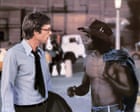
Peter Weir’s films traverse the world – Belize, Bulgaria, Indonesia, Morocco, Turkey, the US, the Australian outback. Only a select few are set in Sydney, the city of his birth. The last of them was his 1977 film, The Last Wave.
After his break-out success, Picnic at Hanging Rock, The Last Wave brings a similarly eerie treatment of Australia’s biggest city, with Weir conveying the nation’s anxieties about displacement and difference to pose fundamental questions about justice and spirituality.
The film follows David Burton (Richard Chamberlain), a white lawyer who forays out of corporate taxation to represent four Aboriginal men accused of murder in a pro bono act of goodwill. David starts grappling with prophetic nightmares of his world being swept away in a devastating flood, as well as being visited in dreams by one of the men he is representing, Chris Lee (David Gulpilil).
Weir opts for a poetic approach over a straight procedural treatment of two contradicting modes of justice: a colonial legal system and a far older tradition of Aboriginal law. The film extends this beyond a conflict of custom into an existential reckoning. Weir uses rain in a spectacular fashion – almost every scene is drenched to the bone – which evokes a now-familiar sense that irregular weather events herald some kind of apocalypse.
From the outside, the killing appears to be manslaughter, a bar fight gone wrong. The group give little more explanation than: “Billy died, that’s all.” But David comes to realise what the audience has known from the outset: this was an execution, in retribution for the theft of sacred objects. The killing is enacted according to Aboriginal law, which seems to manifest as an otherworldly force; when Chris and the men corner Billy (Athol Compton), the torrential rains clear for the first time and the foreboding, dreamlike soundscape rises.
Chamberlain’s excellent performance as a well-heeled lawyer far out of his depth is delivered with dignity and delightful English elocution, and earned him a nomination for best actor at the Australian Film Institute awards that year. As his premonitions of the titular, eventually literal last wave intensify, he delivers a spiral of dread and revelatory awe with gravitas and sincerity.
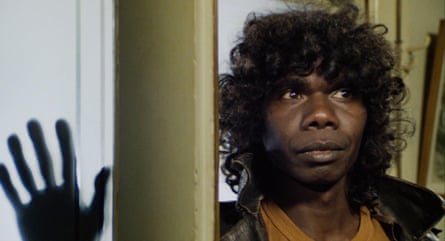
Chamberlain’s performance is only exceeded by Gulpilil. The late Yolngu cinematic icon began acting in Nicolas Roeg’s Walkabout (1971), another film in which his charismatic stoicism suggests another world, something existing beyond the superficial trappings of white society. Weir later credited Gulpilil as being crucial to The Last Wave’s development: “I realised the absurdity of the history books. Talking with David, I realised the [Aboriginal] culture was very much alive, if underground, so to speak.”
The Last Wave remains Weir’s most explicit treatment of Australian colonial violence, and is a notable example of an Australian film that employed First Nations consultants, including a Groote Eylandt elder, Nandjiwarra Amagula, who also acted in the film as Charlie. Amagula rejected Weir’s initial intention to use real Aboriginal artefacts and symbols as it would be culturally inappropriate to have sacred items broadcast; instead, the film’s production team developed an array of fictional cultural symbols with Amagula’s approval.
While Picnic at Hanging Rock represents outback Australia as incompatible with white settler culture, The Last Wave translates this mystical dread to the urban landscape. It is a melancholic film about Australia’s unsettled history, exploring how loss of cultural connection affects both dispossessed traditional owners and white migrants.
“I have no past. I’m nobody,” Weir said of his own feelings of disconnection. “I ask my parents who these people are in the photograph album and they can’t remember … I have no culture. I’m an Australian in a sense but I’ve lost something. And that’s what I made a film about.”
In many ways, The Last Wave represents the challenge of reconciliation that we have not met in the 50 years since the film was released. The great flood proposed here is obliteration – but also, perhaps, a chance for renewal.
-
The Last Wave is available to stream on ABC iview in Australia and the Criterion Channel in the US. Find more recommendations of what to stream in Australia here
KioskNews shows a cleaned-up reading view extracted from the publisher’s page — the original always lives on their site, not ours.