8 Crime Movies Better Than Goodfellas, According To Letterboxd

Sky Blanton is a Movie Contributor at ScreenRant with professional experience covering movies, television, and pop culture. Her published work spans news, interviews, features, and opinion pieces, with a focus on film, franchise storytelling, and the entertainment industry.
She earned her bachelor's degree in Communications with a concentration in Professional Writing and a minor in Business Writing from Southern New Hampshire University.
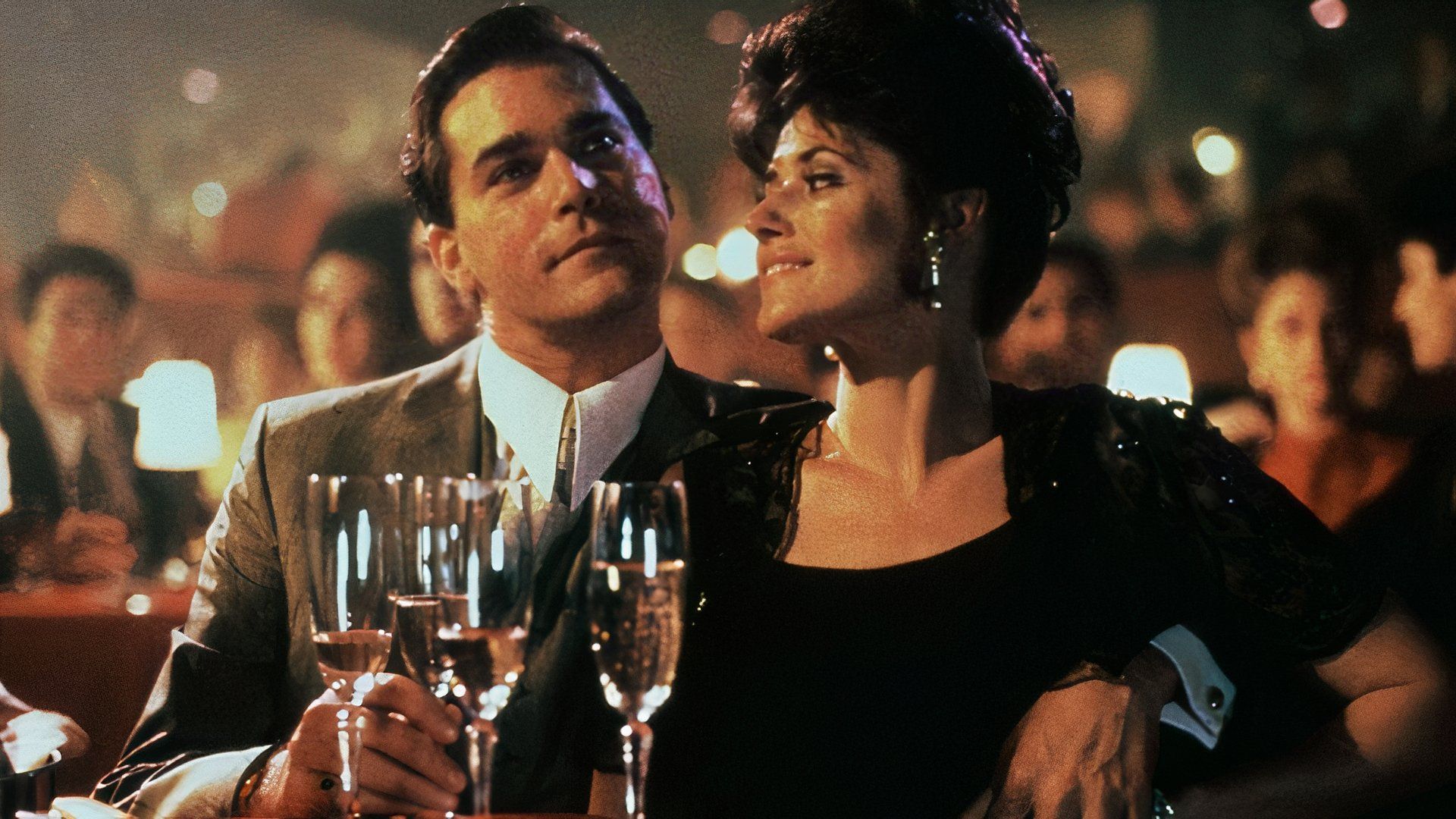
Calling a film better than Goodfellas is a good way to start an argument. Martin Scorsese somehow makes prison food look appetizing when Paulie starts slicing garlic with a razor blade. And who can forget Joe Pesci asking, “Funny how?” and making everyone at the table wonder if they're about to witness a fight? With scenes like these, it's hard to imagine eight films that Letterboxd users enjoyed even more.
How long would you watch prisoners hammer at a concrete floor? When getting through it means escaping prison, and every hit could bring a guard to the door, probably longer than you'd think. Then there's the businessman whose chauffeur's son has been kidnapped. He has enough money to pay the ransom, but doing so would jeopardize a company takeover he's spent years pursuing. You want him to save the boy, but you're also curious how he'll explain his decision to the boy's father.
Not all eight films are about gangsters, and some have very little in common with Goodfellas. But each gives you someone to root for, question, or even hate, often changing how you feel about them along the way. Letterboxd ratings are based on user reviews and can change, so these rankings don't necessarily mean one film is better than another. Still, it's interesting to see which movies audiences have rated higher than Scorsese's classic, especially when Goodfellas has so many unforgettable scenes of its own.
8 High and Low (1963)

In Akira Kurosawa's High and Low, which Spike Lee reimagined decades later in Highest 2 Lowest, wealthy businessman Kingo Gondo learns that kidnappers have mistakenly taken his chauffeur's son instead of his own. They still demand the ransom, leaving Gondo with a terrible choice. He's spent years saving to take control of a shoe company, and paying would wipe out everything he's worked for. At first, it's easy to think he should hand over the money. Then you watch him struggle with the decision while the boy's father stands nearby, desperate for someone to help.
The worst part is that neither man deserves what's happening. Gondo shouldn't have to sacrifice his future, but the chauffeur shouldn't have to beg someone else to save his child. It's easy to say Gondo should pay when you're not the one being asked to give up everything.
7 The Shawshank Redemption (1994)

It's hard to understand how Andy Dufresne stays so hopeful in The Shawshank Redemption when he's facing life in prison for a crime he insists he didn't commit. He spends years building a prison library, helping other inmates earn their diplomas, and even gets himself thrown into solitary confinement for playing Mozart over the loudspeakers. Watching him find little ways to make prison life bearable for everyone else makes you want something good to happen to him, too.
The revelation that Andy spent nearly 20 years digging through his cell wall with a tiny rock hammer makes you look at everything he did in prison differently. Red thought he'd use it to carve chess pieces, never suspecting his friend was planning an escape the entire time. And after seeing how difficult life outside prison is for Red, it's a relief when he finally finds Andy waiting for him on that beach.
6 The Godfather Part II (1974)

Michael Corleone has more money and power than his father ever did, but watching The Godfather Part II, it's hard to see what good any of it does him. He's so worried about protecting the family business that he starts treating his own relatives like enemies. Meanwhile, flashbacks show a young Vito Corleone building his reputation and earning the loyalty of the people around him. The differences between Michael and Vito Corleone become harder to ignore as the film goes on.
The worst part is what happens to Fredo. Michael could forgive his brother for betraying him, but he chooses to have him killed instead. By the time Michael is sitting alone at the end, he's gotten rid of everyone who threatened his position, including the people who loved him.
5 City of God (2002)

The kids in City of God grow up around so much violence that some start carrying guns before they're even teenagers. Fernando Meirelles follows Rocket, a boy who wants to become a photographer rather than join the gangs controlling his neighborhood. His childhood friend Li'l Zé takes a very different path, becoming a feared gang leader who doesn't hesitate to hurt children. One of the hardest scenes to watch involves Li'l Zé forcing a young boy to choose which of his friends gets shot. What's even worse is seeing how the younger children begin copying the leaders they fear. By the end, another group of boys is already planning to take over. They're treating murder like something that comes with growing up, without understanding what it will cost them.
4 Kill Bill: The Whole Bloody Affair (2004)

By the time Beatrix Kiddo fights her way through the Crazy 88 in Kill Bill: The Whole Bloody Affair, it's hard to imagine anything stopping her from reaching Bill. She's already survived being shot, beaten, and left for dead, and later has to punch her way out of a coffin after being buried alive. After everything Bill put her through, you almost look forward to seeing what happens when she finally catches up with him.
But when Beatrix finally reaches Bill, she finds him playing with their daughter, whom she'd believed was gone forever. He's gotten to spend years raising their little girl while Beatrix didn't even know she was alive. Bill still deserves to answer for what he did, but seeing Beatrix finally get her revenge is harder to celebrate when you know their daughter has just lost her father.
3 The Godfather (1972)

At the beginning of The Godfather, Michael Corleone seems like the last person who would take over his father's criminal empire. He tells his girlfriend Kay that he's different from his family, and you believe him. Even when he volunteers to shoot Sollozzo and a corrupt police captain, it's easy to excuse because he's trying to protect his father. Watching him nervously search for the gun in the restaurant bathroom, you almost want him to get away with it.
That's what makes his transformation so upsetting. By the end, Michael has his brother-in-law Carlo killed, even after assuring him he wouldn't be harmed. Kay doesn't know what he's done, but the audience does. When he looks her in the eye and lies about Carlo's murder, it's hard not to remember the young man who promised her he'd never become like his father.
2 Le Trou (1962)

Watching five prisoners hammer away at a concrete floor for several minutes sounds boring, but Le Trou somehow makes you nervous about every swing. Jacques Becker lets the scene go on without cutting away, so there's plenty of time to wonder whether a guard is going to hear them. The men have to take turns breaking through the floor, clearing rubble, and checking that nobody is coming. Even the smallest noise starts to feel like it could ruin everything.
By the time the men are finally close to escaping, you've spent so long watching them work that you want them to make it out almost as badly as they do. That's what makes the betrayal so upsetting. One of them knows exactly how much the others have risked, and he still gives them away. Watching the guards arrive before they can finish is maddening, especially when freedom was almost within reach.
1 The Dark Knight (2008)

The Joker spends much of The Dark Knight proving that even decent people can be pushed into doing terrible things. During their interrogation, Batman beats him while demanding to know where Rachel and Harvey Dent are being held. The Joker just laughs, knowing Batman is getting closer to breaking his own rules. It's frustrating to see Batman lose control when the Joker barely has to lift a finger.
Harvey Dent's downfall is even harder to watch because he genuinely wanted to make Gotham safer. He was willing to risk his life putting criminals behind bars, but after Rachel's death, he's threatening innocent people and deciding whether they live or die with a coin toss. The worst part is that the Joker knew exactly how to push him there. Goodfellas shows what happens when someone chooses a life of crime, but The Dark Knight makes you watch someone who spent his life fighting criminals become one himself.

- Release Date
- September 19, 1990
- Runtime
- 145 minutes
- Director
- Martin Scorsese
- Writers
- Martin Scorsese, Nicholas Pileggi
- Producers
- Barbara De Fina
KioskNews shows a cleaned-up reading view extracted from the publisher’s page — the original always lives on their site, not ours.