US begins probe into EU’s carbon border tax: How India could benefit
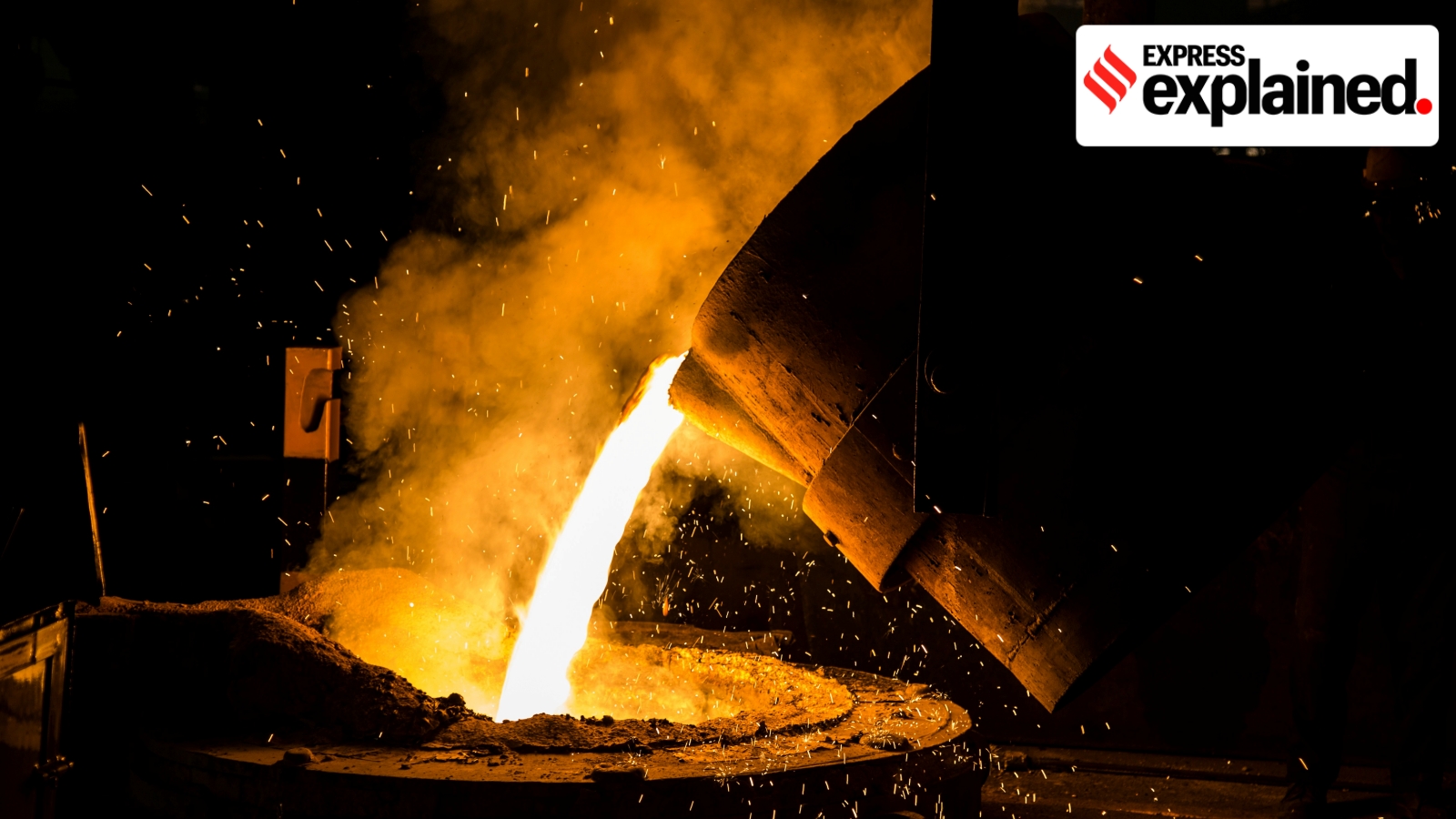
The CBAM bill is, in effect, a steel bill for India. (Unsplash)
The United States Trade Representative (USTR) this week began an investigation into the European Union’s expansion of its Carbon Border Adjustment Mechanism (CBAM) — a move that could ratchet up trade tensions between the two sides.
It has sought public comments from American small businesses till November 9.
The US action
The USTR said that CBAM is a carbon pricing mechanism that requires EU importers of covered products in the aluminium, cement, electricity, fertiliser, hydrogen, and iron and steel sectors to declare the embedded emissions of the imported goods, and the regulation intends to apply to imported goods a carbon price that is equivalent to the carbon price that EU producers pay.
“The EU calculates the default values using country- and sector-level production and energy data to estimate the emissions intensity across countries and sectors. However, the EU adds a punitive mark-up that increases the overall values, in order to encourage the use of company-level data. CBAM requires that any company-level data provided must be verified by an EU-accredited third-party verifier,” the USTR said.
The process of seeking public comments, which is often the first step towards retaliation, comes as India had tough negotiations with the EU on CBAM and the regulation is expected to impact a range of India’s metal exports. However, any US measure to make CBAM more flexible could help Indian exports, as Indian trade negotiators had managed to secure a ‘forward-Most Favoured Nation’ Clause (MFN) CBAM under the India-EU trade deal.
This clause could help the Indian industry receive the same concessions that the European Union has promised the US under their trade agreement signed earlier last year, a senior government official said.
In the EU-US trade deal joint statement released in August last year too, the European Union had said: “Taking note of the US concerns related to treatment of US small and medium-sized businesses under CBAM, the European Commission, in addition to the recently agreed increase of the de minimis exception, commits to work to provide additional flexibilities in the CBAM implementation.”
Story continues below this ad
What CBAM means for India
Think tank Global Trade Research Initiative (GTRI) estimates that CBAM will hurt India’s exports of metals such as iron, steel and aluminium products to the EU and will translate into a 20-35% tax on select imports into the EU.
The Indian industry had told the government that the EU’s move to curb exports of steel scrap, along with CBAM, acts as a non-tariff barrier, as the EU is the world’s largest producer of steel scrap. However, the EU managed to keep CBAM out of the India-EU trade deal.
Steel production emissions are typically highest for blast furnace–basic oxygen furnace (BF–BOF) routes, lower for gas-based direct reduced iron (DRI), and lowest for scrap-based electric arc furnace(EAF) routes.
Indian manufacturers largely use the blast furnace route and are currently underprepared to tackle CBAM. However, the government has plans to ramp up steel production using steel scrap with the arc furnace technology under the ‘green steel initiative’.
Story continues below this ad
An Indian Council for Research on International Economic Relations (ICRIER) report said that despite the environmental and economic benefits, scrap currently constitutes only 20 per cent of India’s steelmaking feedstock, constrained by limited domestic availability of approximately 25 Million Metric tons (MMt) annually.
“In the face of intensifying non-tariff barriers and climate-linked trade instruments such as the Carbon Border Adjustment Mechanism (CBAM), hard-to-abate sectors like steel are under unprecedented pressure to decarbonise. Scrap steel is central to this transition, yet India’s constrained access to quality scrap remains a critical bottleneck,” an ICRIER report in May 2025 by Amrita Goldar, Kumar Abhishek, and Sunishtha Yadav said.

Ravi Dutta Mishra is a Principal Correspondent with The Indian Express, specializing in economic policy and financial regulations. With over five years of experience in business journalism, he provides critical coverage of the frameworks that govern India's commercial landscape. Expertise & Focus Areas: Mishra’s reporting concentrates on the intersection of government policy and market operations. His core beats include: Trade & Commerce: Analysis of India's import-export trends, trade agreements, and commercial policies. Banking & Finance: Covering regulatory changes and policy decisions affecting the banking sector. Professional Experience: Prior to joining The Indian Express, Mishra built a robust portfolio working with some of India's leading financial news organizations. His background includes tenures at: Mint CNBC-TV18 This diverse experience across both print and broadcast media has equipped him with a holistic understanding of financial storytelling and news cycles. Find all stories by Ravi Dutta Mishra here ... Read More
KioskNews shows a cleaned-up reading view extracted from the publisher’s page — the original always lives on their site, not ours.