The 8 Most Fun Thriller Books of All Time, Ranked

Luc Haasbroek is a writer and videographer from Durban, South Africa. He has been writing professionally about pop culture for eight years. Luc's areas of interest are broad: he's just as passionate about psychology and history as he is about movies and TV. He's especially drawn to the places where these topics overlap.
Luc is also an avid producer of video essays and looks forward to expanding his writing career. When not writing, he can be found hiking, playing Dungeons & Dragons, hanging out with his cats, and doing deep dives on whatever topic happens to have captured his interest that week.
Sign in to your Collider account
Thrillers don't need to be pleasant to be fun. Murder, conspiracy, betrayal, deadly viruses, and people being pursued by professional killers aren't exactly relaxing subjects, but in the hands of the right author, they can make for some of the most compulsively entertaining reading imaginable.
With that in mind, this list looks at some of the most absorbing thriller novels ever, the ones that grab you early on and don't let go. Some are psychologically complex; others simply embrace the pleasures of conspiracies, chases, secrets, and enormous twists. The very best manage both.
8 'The Da Vinci Code' (2005)
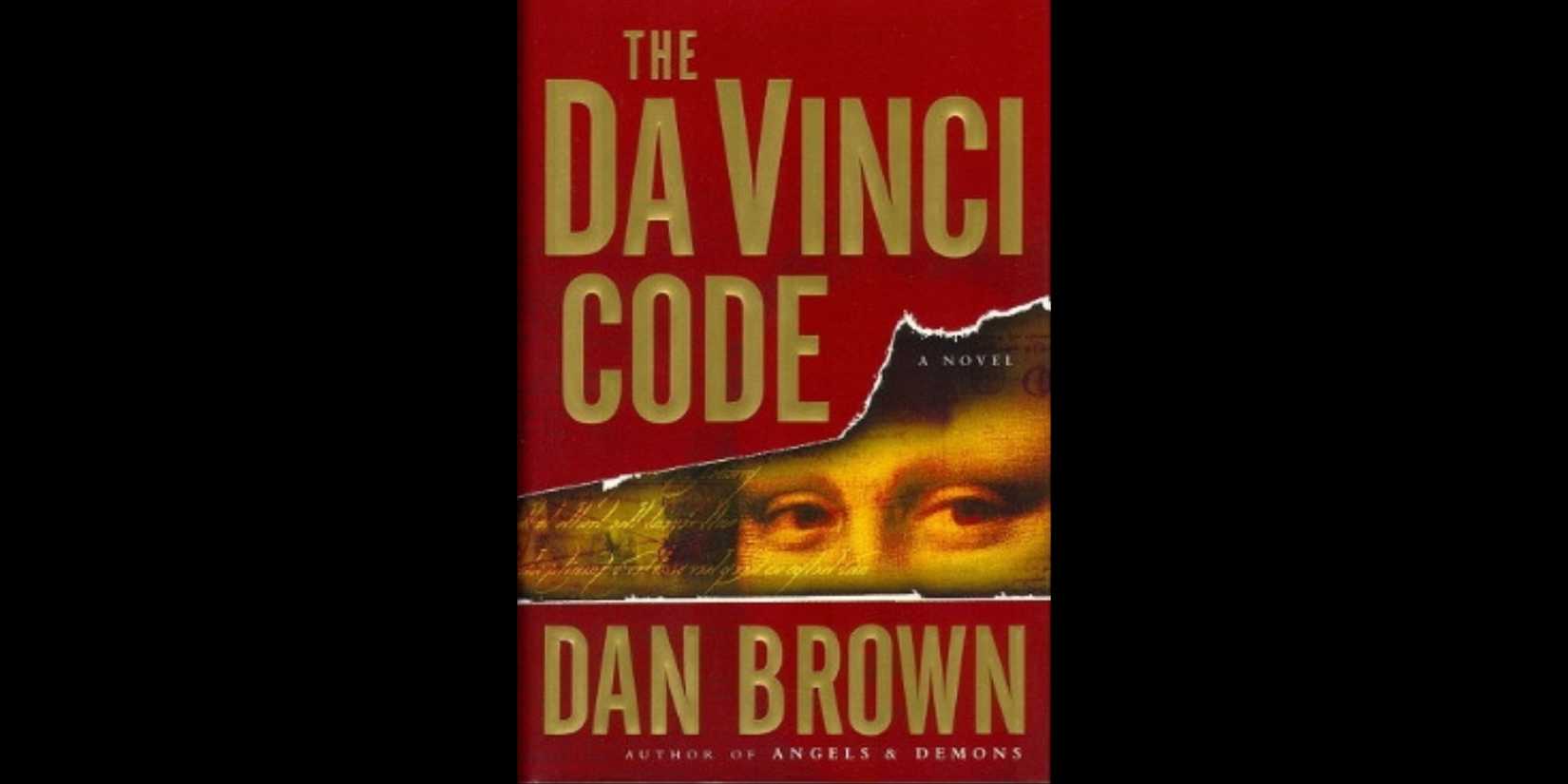
"Thirteen-three-two-one-two-one-eight-five. O, Draconian devil!" Many people love to hate The Da Vinci Code (and it's admittedly far from flawless), but this book became a mega-bestseller for a reason. In it, iconic Harvard symbologist Robert Langdon is summoned to the Louvre after curator Jacques Saunière is found murdered inside the museum, his body positioned alongside a cryptic series of clues. Langdon soon joins forces with cryptologist Sophie Neveu, and their investigation expands into an enormous conspiracy involving secret societies and the Holy Grail.
Author Dan Brown keeps the momentum high the whole way through. Chapters are short, revelations arrive constantly, puzzles produce further puzzles, and scenes have a habit of ending at precisely the moment when putting the book down becomes least appealing. Sure, it's not very historically accurate, but The Da Vinci Code deserves props for the way it alchemizes art, architecture, religious legends, and centuries-old mysteries into a juicy, elaborate treasure hunt.
7 'The Firm' (1991)
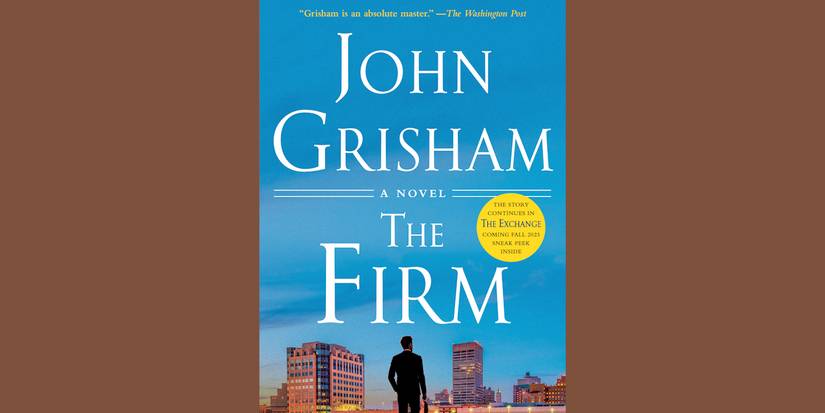
"No lawyer can dictate morals to his client." This book put John Grisham on the map, becoming the biggest literary hit of 1991, and practically spawned an entire subgenre unto itself. The protagonist is Mitch McDeere, an ambitious young lawyer recruited by a seemingly high-end law firm. However, he slowly realizes that his apparently perfect employer has connections to organized crime... and that leaving the company isn't exactly encouraged. It's a terrific thriller setup that Grisham builds on nimbly, drawing on his own legal background for added immersion.
You can tell that the author really enjoys writing about this world. Plus, refreshingly, Mitch isn't a spy, detective, or action hero but a relatively ordinary guy caught in a predicament he never expected. Once the FBI enters the picture, his situation becomes even more complicated: cooperating could get him murdered, while refusing could leave him trapped inside the firm indefinitely.
6 'The Andromeda Strain' (1969)

"The United States government was given forty-eight hours to provide an explanation." The Andromeda Strain begins with a military satellite crashing near the tiny town of Piedmont, Arizona. Almost everybody who lives there is subsequently found dead. Scientists soon suspect that the satellite has brought something back from space, triggering an emergency response designed for precisely the kind of biological catastrophe everyone hoped would never actually happen.
A team of specialists descends into the underground Wildfire laboratory, where they examine the mysterious organism while racing to understand how it spreads and why a tiny number of people survived. Unlike most sci-fi thriller writers of that era, Michael Crichton treats the investigation with almost documentary seriousness. Computers, microscopes, medical jargon, laboratory protocols, and scientific hypotheses occupy an enormous amount of the novel, yet somehow all that procedure becomes part of the excitement.
5 'The Bourne Identity' (1980)

"The success of any trap lies in its fundamental simplicity." Decades before it was a forward-thinking action movie franchise, The Bourne Identity was a killer novel. The setup is world-famous by now: a badly wounded man is pulled from the Mediterranean, unable to remember his name or past. A clue implanted in his body leads him toward a Swiss bank account, where the mystery becomes considerably stranger. He has money, multiple identities, and abilities he can't explain. Whoever he used to be, he clearly wasn't living an ordinary life.
The book's greatest hook is that Jason Bourne effectively investigates himself. Each discovery gives him another fragment of his identity while simultaneously making him more suspicious of the person he may once have been. Robert Ludlum surrounds that central mystery with assassins, intelligence agencies, false identities, international travel, and elaborate deception. The result is a sprawling espionage adventure.
4 'Gone Girl' (2012)
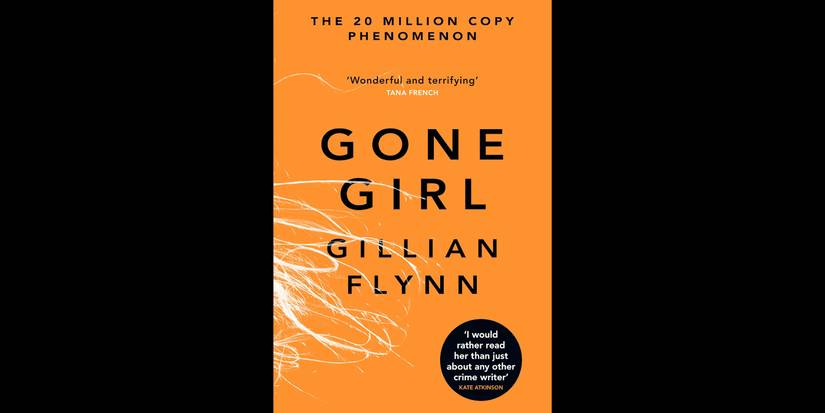
"Love makes you want to be a better man." Perhaps the most influential thriller novel of the 2010s. When Amy Dunne disappears on the morning of her fifth wedding anniversary, suspicion quickly settles on her husband, Nick. He behaves strangely, tells unnecessary lies, and generally fails to resemble the grieving spouse the public expects. Then Amy's diary begins revealing a very different picture of their marriage, and what initially looks like a relatively straightforward missing-person case becomes something considerably more devious.
Gone Girl is constructed around information: who possesses it, who controls it, and how dramatically a story can change when the same events are viewed from another perspective. It's a masterclass in narrative misdirection, repeatedly pulling the rug out from under the viewer. However, it's also simply well-written (the "Cool Girl" monologue rightly became iconic) and boasts more complex characters than you usually find in the genre.
3 'The Secret History' (1992)
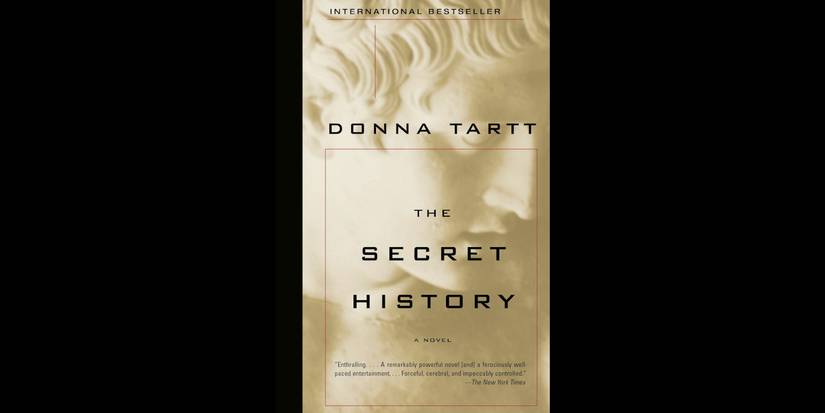
"Does such a thing as 'the fatal flaw,' that showy dark crack running down the middle of a life, exist outside literature?" This is one of the smartest and most atmospheric thriller/dramas ever. From the beginning, we know that Bunny Corcoran is dead, and we know which group of people killed him. The fascinating part of The Secret History is discovering how a collection of intelligent, privileged college students reached the point where murder could begin looking like a solution to their problems.
Author Donna Tartt introduces us to a cast of deeply flawed, three-dimensional characters. Their conversations are sharp, their behavior believable, and the way they respond psychologically to the consequences of their crime is deeply gripping. The prose here is exceptional, too, conjuring up an immersive setting of warm common rooms holding the cold at bay, while moral corruption creeps around the edges.
2 'Strangers on a Train' (1950)

"I think there are plenty of things a man can do that he has never thought of doing before." Two strangers meet on a train. One has a problem with his wife. The other has a problem with his father. Then one of them proposes a horrifying solution: each man could eliminate the other person's problem. Architect Guy Haines has no intention of taking Charles Bruno's proposal seriously. Bruno, however, isn't the sort of person who needs mutual agreement before deciding that an arrangement exists.
Rather than relying upon constant physical action, Strangers on a Train turns guilt and psychological pressure into its engines. In particular, writer Patricia Highsmith (the brains behind the Ripley books) derives tremendous suspense from the imbalance between the two main characters. Guy simply wants normality and freedom. Bruno, by contrast, is fascinated by transgression and increasingly obsessed with what he sees as the bond between them. The more Guy tries to separate himself from Bruno, the harder that becomes.
1 'And Then There Were None' (1939)

"Ten little soldier boys went out to dine." Ten strangers are invited to an isolated island off the English coast. Their mysterious hosts are nowhere to be found, and the guests soon discover that each has been accused of responsibility for another person's death. Then members of the group begin dying, while the number of figurines displayed in the house steadily decreases. And Then There Were None has the structure of a proto-slasher, turning the confined setting into a pressure cooker of lies, secrets, and impending doom.
Here, Agatha Christie takes the classic closed-circle mystery, strips away practically every avenue of escape, and constructs a scenario in which everyone is both potential victim and potential culprit. Indeed, the book keeps rearranging the reader's suspicions. A character can look guilty in one chapter and vulnerable in the next, while apparent explanations create additional problems rather than resolving them. This recipe went on to be hugely influential, and the novel still holds up today.
Collider Exclusive · Villain Personality Quiz Which Criminal Mastermind Would Be Your Nemesis? Lecter · Joker · Moriarty · Chigurh
Four of the finest criminal minds ever put on screen. One of them would look at you and see something worth their time. Eight questions decide which one comes for you, why they picked you, and what they would want when they arrived.
🍷Lecter
🃏Joker
♟️Moriarty
🪙Chigurh
01
What would a criminal mastermind notice about you first? Great villains choose their opponents carefully. Something about you got their attention.
02
How do they make first contact? The introduction tells you everything about what is coming next.
03
What do you actually believe about right and wrong? Every nemesis is really an argument about the thing you believe most.
04
What finally gets under your skin? Everybody has a pressure point. Finding yours is the whole plan.
05
They have made their move. How do you fight back? This is the part of the film where the audience finds out who you are.
06
What would they use against you? A good villain never brings a weapon you have not already handed them.
07
What do they actually want from you? The money is never the point. Something else always is.
08
How does it end between the two of you? Eight questions in, this is the one that decides who comes for you.
The Case File Is Complete Your Nemesis Is…
Four criminal masterminds. One of them was always going to be yours. Here is who comes for you, why they picked you out of everyone available, and what they want from the encounter.
Hannibal Lecter
Your nemesis does not want to beat you. He wants to know you completely, and he is patient enough to wait for it. The frightening part is how good the conversation is.
- Lecter is the most dangerous kind of opponent: the one who finds you interesting. He never raises his voice, because he has never needed to.
- You keep a great deal to yourself and you are careful about what you show. That reserve is exactly the door he would knock on.
- The films understood something other thrillers missed. The horror is not the violence. It is being perfectly understood by the wrong person.
- He would be unfailingly polite about all of it. That is the worst part.
The Joker
Your nemesis is not after money, territory or revenge. He is after a demonstration, and you are the person he has chosen to prove his point on.
- The Joker only picks opponents who believe in something. Your decency is not a defence against him. It is the entire reason he showed up.
- He has no plan you can predict and nothing you can take away, which removes every tool you would normally reach for.
- His whole argument is that you are one bad day away from being him, and you would spend the rest of your life proving him wrong.
- He would call it a magic trick. You would call it the worst night of your life.
Moriarty
Your nemesis respects you, which sounds flattering until you work out what it means. He chose you because nobody else was worth his time.
- Moriarty is the original criminal mastermind, the template every later one borrows from: a mind the equal of the hero's, pointed the wrong way.
- You enjoy being the cleverest person in the room. He is counting on exactly that, and he has already built the room.
- This is the rare nemesis who would be genuinely disappointed if you lost badly. He needs the game to be worth playing.
- It ends the way these things always end. Two people, one problem, and only one way down.
Anton Chigurh
Your nemesis has no personal interest in you whatsoever, and that is precisely what makes him unsurvivable. You are not a rival. You are a stop on the way.
- Chigurh does not negotiate, gloat or explain. He arrives, he asks one question, and the answer was decided long before you opened your mouth.
- You trust yourself to handle things. He is the one problem in the world that has no interest in how capable you are.
- No Country for Old Men rewrote the screen villain by removing the thing audiences quietly rely on: the sense that talking might work.
- Call it. He will wait.
KioskNews shows a cleaned-up reading view extracted from the publisher’s page — the original always lives on their site, not ours.