10 Classic Sci-Fi Shows That Still Feel Like the Future

Diego Pineda has been a devout storyteller his whole life. He has self-published a fantasy novel and a book of short stories, and is actively working on publishing his second novel.
A lifelong fan of watching movies and talking about them endlessly, he writes reviews and analyses on his Instagram page dedicated to cinema, and occasionally on his blog. His favorite filmmakers are Andrei Tarkovsky and Charlie Chaplin. He loves modern Mexican cinema and thinks it's tragically underappreciated.
Other interests of Diego's include reading, gaming, roller coasters, writing reviews on his Letterboxd account (username: DPP_reviews), and going down rabbit holes of whatever topic he's interested in at any given point.
For the purposes of this list, any show released during the 20th century and which had a significant amount of pop-cultural impact can be considered a classic; and as far as science fiction classics go, many throughout the years have offered absolutely fascinating visions of the future. But while the futuristic ideas of many of those classics have either come true or become outdated, many of them still feel like the future today.
From animated masterpieces like Cowboy Bebop to often-underappreciated '90s classics like Space: Above and Beyond, these are shows whose versions of the future still feel plausible enough for audiences today to say "I can see this becoming reality one day." Of course, only time will tell; but for now, it helps make these sci-fi gems all the more entertaining and worthy of binge-watching.
10 'Space: Above and Beyond' (1995–1996)

Tragically, history has seen many a sci-fi show that demonstrated incredible potential but wasn't allowed to fully realize it. Case in point: Fox's Space: Above and Beyond, which was originally planned to run for five seasons but was canceled after only one due to low ratings. It's set in 2063, where a squad of young Space Marines fights an interstellar war against aliens following the destruction of humanity's extra-solar colonies.
All these many years later, it's fair to say that Space: Above and Beyond would have been one of those sci-fi shows that fared better during the streaming era. Regardless, the way it rejects the glossy polish of many '90s space operas makes its vision of the future feel particularly realistic. Anchored in grounded industrial technology and geopolitical realism, it's a version of 2063 with many elements that do still feel plausible.
9 'Total Recall 2070' (1999)
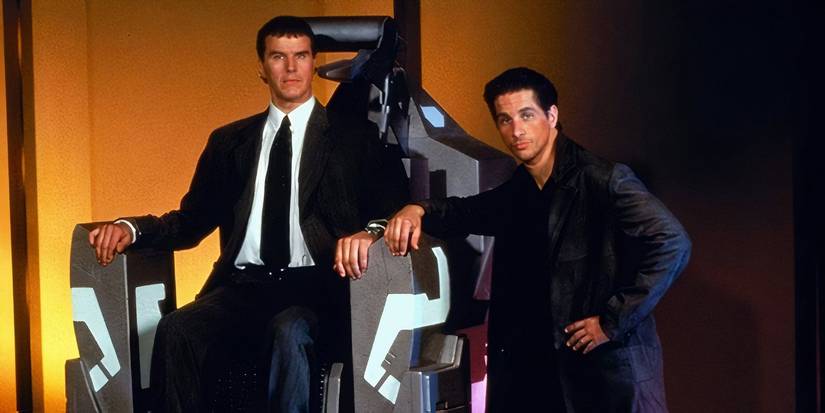
Influenced by the works of Philip K. Dick (We Can Remember It for You Wholesale in particular), the Canadian-German co-production Total Recall 2070 is one of the most criminally underrated sci-fi shows of the '90s. It's set in a corporate-ruled 2070 dystopia, where a human detective and his secret android partner investigate crimes involving synthetic humans and rogue technology.
Paul Verhoeven's 1990 classic Total Recall is itself a must-see whose version of a future world is fascinating, but there's something about Total Recall 2070's that hits particularly close to home. Whether it's the corporate surveillance, the oligopolistic society, or AI threatening humanity's personhood and consciousness, pretty much everything about this dystopia feels eerily urgent.
8 'Batman Beyond' (1999–2001)
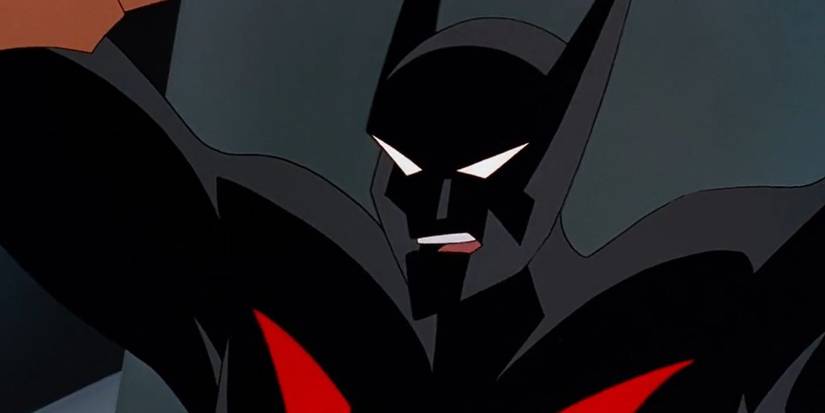
Genre purists don't often like superhero shows being cataloged as proper sci-fi series, but there's nothing that the cyberpunk gem Batman Beyond is if not a full-fledged sci-fi show. It's the sequel to Batman: The Animated Series and The New Batman Adventures, following the Bat-adventures of teenager Terry McGinnis in a near-future Neo-Gotham.
Though it's not quite on the level of its two predecessors, many would still confidently call this one of the best DC Comics TV shows to date, and for good reason. Driven by transhumanist ideas and tech-driven social classes, Batman Beyond's futuristic Gotham feels like a perfectly reasonable extension of the '90s Gotham viewers had seen before.
7 'SeaQuest DSV' (1993–1996)

After writing eight episodes of The Twilight Zone, the first show that Rockne S. O'Bannon ever created was SeaQuest DSV. Where many sci-fi shows find their final frontier in outer space, SeaQuest DSV finds it at the bottom of the ocean. It's set in a near-future where humanity has depleted Earth's natural resources, forcing them to colonize the ocean floor.
It's easily one of the best sci-fi shows of the '90s, and though its future was originally set in 2018 (a time that, obviously, has long passed), watching it today still feels like you're watching a pretty realistic version of the future. The way its narrative treats resources and colonization is quite grounded in reality, and even though the series grows noticeably less realistic as it goes on, its future world is still quite intriguing.
6 'Neon Genesis Evangelion' (1995–1996)

One of the most important shows in proving just how auteur-driven anime television could be was Hideaki Anno's Neon Genesis Evangelion, where a reluctant teenage boy is recruited by his estranged father ti pilot a giant mecha against monsters in a post-cataclysmic 2015. This is yet another instance of a show whose future, though technically in the past for audiences today, nevertheless still feels like the future today.
This also happens to be one of the greatest and most iconic anime series ever made, and even though it's probably not a great introduction to the medium for the uninitiated, it's a must-see nonetheless. Its vision of the future is a bleak one, but it's also one characterized by a level of philosophical and thematic complexity that feels like it speaks to what people today view as a potential future, too.
COLLIDERInteractive
Long-range scan active
Movies/Science Fiction/Survival Assessment
Collider Survival Assessment
Which Sci-Fi World
Would You Survive?
8 questions · 5 worlds · one honest verdict
Five of the great screen futures, and not one of them is built for comfort. Answer eight questions about instinct, loyalty and the line you would cross, and the scan will tell you which one you would still be standing in. Worlds in range
▦︎The Matrix
◈︎Mad Max
◑︎Blade Runner
▲︎Dune
✦︎Star Wars
Signal lock01 / 08
Question 01 of 08INSTINCT
The world as you know it ends overnight. What is your first move? No wrong answer. There is a wrong hesitation.
Keys 1 to 5 or A to E · Enter to advance
Signal lock02 / 08
Question 02 of 08RESOURCE
You can stockpile exactly one thing. What is it? Choose carefully. You are not getting a second run.
Signal lock03 / 08
Question 03 of 08THREAT
Which kind of enemy scares you the most? Be honest about what keeps you up.
Signal lock04 / 08
Question 04 of 08AUTHORITY
How do you handle the people in charge? Every world has them. Even the ones that pretend otherwise.
Signal lock05 / 08
Question 05 of 08ENVIRONMENT
Pick the place you would rather wake up in: You will be there a while.
Signal lock06 / 08
Question 06 of 08ALLIANCE
Who do you want standing next to you? Pick one. You only get one.
Signal lock07 / 08
Question 07 of 08MORALITY
Which line would you cross to survive? Everybody crosses one.
Signal lock08 / 08
Question 08 of 08PURPOSE
What are you really fighting for? Last question. Make it count.
Scan completeYou would survive
▦︎ The Matrix The Resistance, Zion You take the red pill, you stay in Wonderland, and I show you how deep the rabbit hole goes.
You would survive The Matrix because you were never fully sold on the version of reality you were handed. You notice the seams. You ask the second question. In a world built to keep people comfortable and incurious, that instinct is the whole fight, and it is why Morpheus would have found you long before you found him. From the Collider file
- The Wachowskis' 1999 film won four Academy Awards, including Visual Effects and Film Editing.
- Bullet time was shot with a rig of roughly 120 still cameras firing in sequence around the actors.
- Keanu Reeves trained in martial arts for about four months before a frame was shot, recovering from neck surgery the whole time.
- It opened the same year as Fight Club and eXistenZ, in a run of films about not trusting the world in front of you.
Red pill energy Pattern spotter Built to question
◈︎ Mad Max The Wasteland Oh, what a day. What a lovely day.
You would survive the Wasteland because you do not waste energy mourning the world that ended. You move, you improvise, and you are very good with whatever is bolted to the thing in front of you. Furiosa would let you drive. That is not a compliment anybody earns easily. From the Collider file
- Mad Max: Fury Road won six Academy Awards in 2016, more than any other film that year.
- George Miller storyboarded the entire film as roughly 3,500 panels before there was a script.
- The chase was shot almost entirely practical in the Namib Desert, with real vehicles and real stunt performers.
- Anya Taylor-Joy and Chris Hemsworth carried the prequel, Furiosa: A Mad Max Saga, in 2024.
Keeps moving Improviser Good with engines
◑︎ Blade Runner Los Angeles, 2049 All those moments will be lost in time, like tears in rain.
You would survive 2049 because you know how to be small in a very loud city. You keep your head down, you do the job, and you hold onto one private thing that belongs only to you. That quiet stubbornness is exactly what both Deckard and K run on, and it is what keeps either of them going when the case stops making sense. From the Collider file
- Blade Runner 2049 won Roger Deakins his first Oscar for cinematography, on his fourteenth nomination.
- The film also took Best Visual Effects, 35 years after Ridley Scott's 1982 original.
- Villeneuve shot it on large-format film and kept the fog and rain practical on set wherever he could.
- Three short films by Luke Scott and Shinichiro Watanabe bridge the 30-year gap between the two movies.
Keeps her head down Private Noir soul
▲︎ Dune Arrakis Fear is the mind-killer. Fear is the little-death that brings total obliteration.
You would survive Arrakis because you think in decades while everyone around you thinks in weeks. You read the room, you learn the customs, you wait. The desert does not reward speed. It rewards people who understand that patience is a weapon, which is the one lesson the Fremen never had to be taught. From the Collider file
- Denis Villeneuve's Dune won six Academy Awards in 2022, including Cinematography and Original Score.
- Hans Zimmer turned down Christopher Nolan's Tenet so he could score Dune instead.
- Dune: Part Two arrived in 2024 and brought in Austin Butler, Florence Pugh and Christopher Walken.
- David Lynch's 1984 version and Alejandro Jodorowsky's unmade one are both their own legends by now.
Plays the long game Reads the room Patient
✦︎ Star Wars A Galaxy Far, Far Away Rebellions are built on hope.
You would survive the galaxy because you never try to survive it alone. You collect people. You end up in the middle of other folks' problems and you stay anyway. Every version of this story, from the Falcon's crew to the Ghost's, runs on somebody exactly like that holding the group together. From the Collider file
- The 1977 original won six Academy Awards plus a special achievement award for sound effects.
- John Williams' score was recorded by the London Symphony Orchestra and became the best-selling symphonic film soundtrack ever.
- Andor took the galaxy somewhere colder and earned Emmy nominations for drama series in both seasons.
- The saga now runs across eleven feature films and a growing shelf of series on Disney+.
Collects people Shows up Hope merchant
Compatibility readout · top three
Copied to your clipboard
Scan filed byCOLLIDERCollider.com · The Sci-Fi Desk
5 'Futurama' (1999–Present)

An aimless pizza delivery boy named Fry accidentally freezes himself on New Year's Eve 1999, waking up 1,000 years in the future. The wonderful thing about Futurama, and a big reason why it has remained one of the most timeless and consistent animated sitcoms on television for over two decades, is that its future still feels so distant that it's always easy to go along with its high-concept futuristic ideas and premises.
It's a huge factor in making it one of the best animated sci-fi shows of all time, but silly and clearly comedic though its version of the future may often seem, it's still one that usually feels surprisingly plausible. That's largely because throughout its run, Futurama has been driven by a core concept: That no matter how much the world around us changes, human nature, bureaucracy, and capitalism are incapable of ever fundamentally changing.
4 'Space: 1999' (1975–1977)
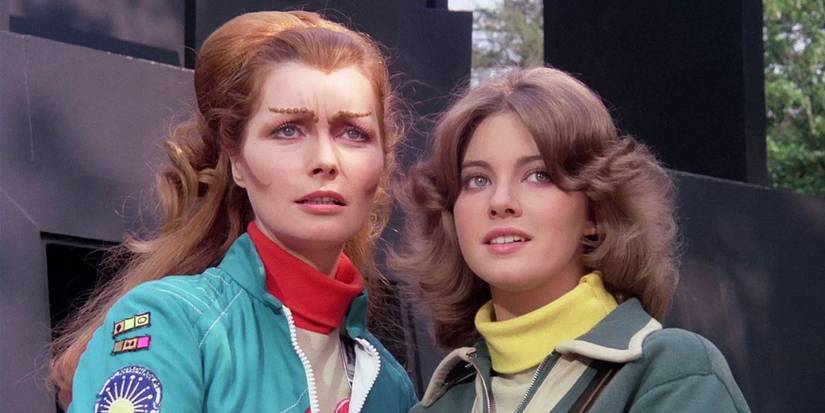
Though the '90s saw the sci-fi television revolution that delivered an admirable number of the 20th century's greatest sci-fi shows, the '70s also gave us several incredible classics. Case in point: the awfully underappreciated Space: 1999. This British series follows the inhabitants of Moonbase Alpha, who travel through deep space in search of a new home after a nuclear disaster blasts the Moon out of Earth's orbit.
This is one of the most extreme examples of a futuristic sci-fi show whose future, 1999, feels almost retro for audiences today. Even still, what makes the show worth watching even today is that even though its premise is based on purely pulpy sci-fi physics, its vision of humanity living and working off-world still rings true today. From the industrial design of the ship to the institutional and social realism of its crew, everything about Space: 1999 makes it feel like exactly what humanity would look like if the Moon did ever get knocked out of orbit.
3 'Babylon 5' (1994–1998)
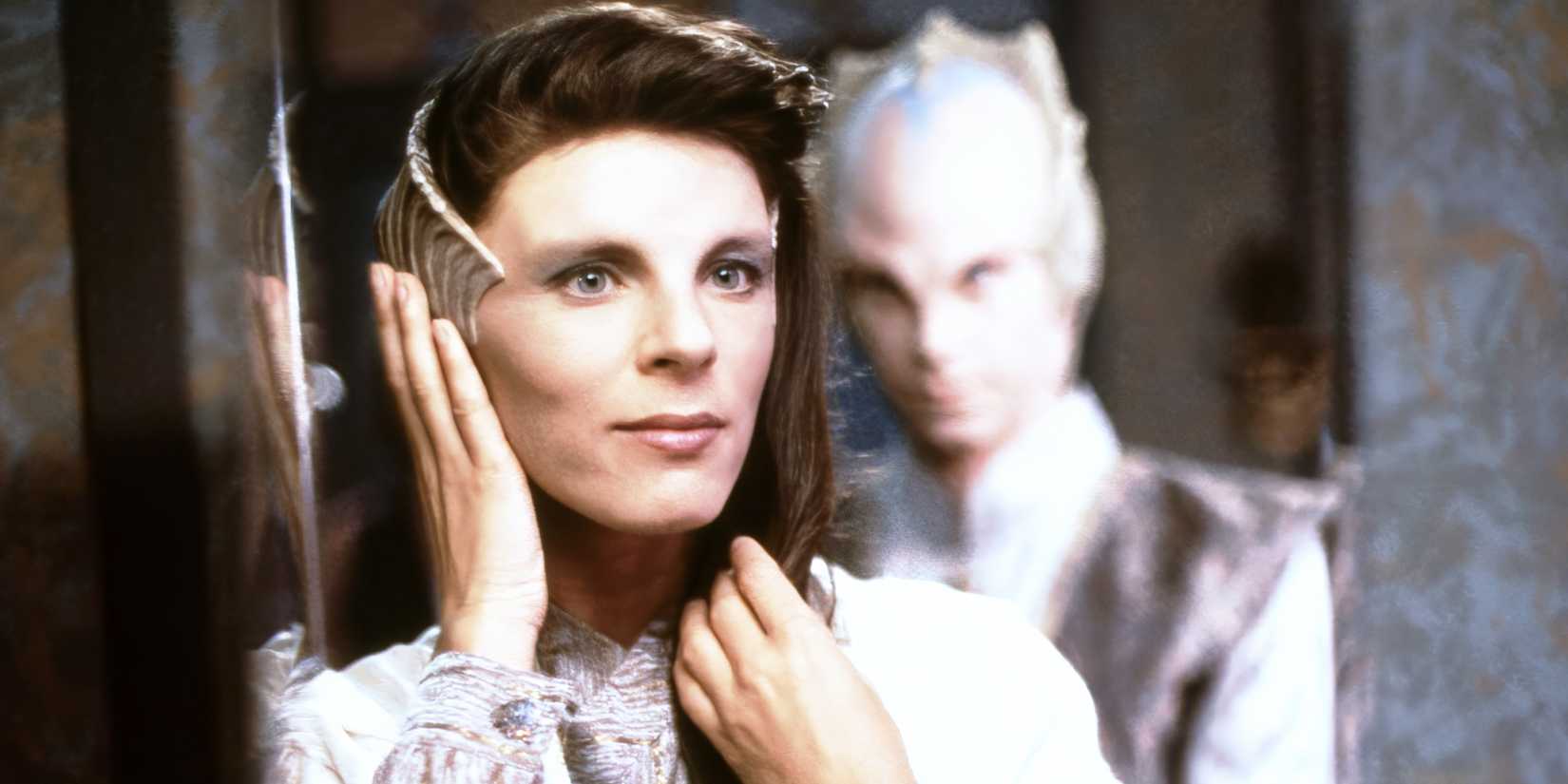
Never before Babylon 5 had the small screen seen a more heavily serialized show. Indeed, this cult classic about a space station built for post-war diplomacy becoming the focal point of galactic politics was written as a sort of novel for television, with every season meant to serve as a new chapter in the story. The result? One of those classic sci-fi shows better than most new series.
For a show so quintessentially '90s-y, and which served to set the gold standard for '90s television space operas without very many predecessors to look back to for inspiration, it's surprising just how relatively plausible Babylon 5's future feels. Its production values show their age, but the underlying skeleton of its sets, its politics, and its world feel quite close to what people today think awaits us in the future.
2 'Cowboy Bebop' (1998–1999)
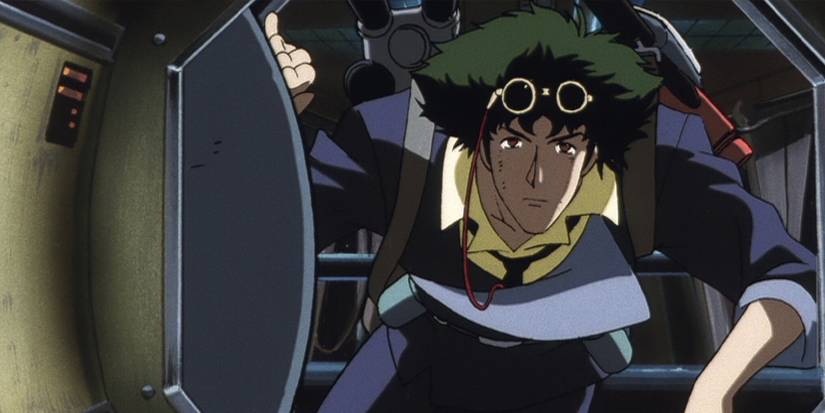
Another one of the most historically important sci-fi shows of the '90s is the space Western neo-noir Cowboy Bebop, one of the shows that played the biggest part in making anime mainstream around the world between the late '90s and early 2000s. It's set in 2071, where a crew of spacefaring bounty hunters chases fugitives across the solar system while confronting their pasts.
Blending serialization with episodic elements in the most perfect ways possible, Cowboy Bebop is one of the truest anime show masterpieces of the '90s. Its version of 2071 feels lived-in and completely married to reality, imagining a solar system that's so sprawling and chaotic that it doesn't feel unified in the slightest. Its world feels gritty and used, making it all the more believable throughout.
1 'Star Trek: The Next Generation' (1987–1994)

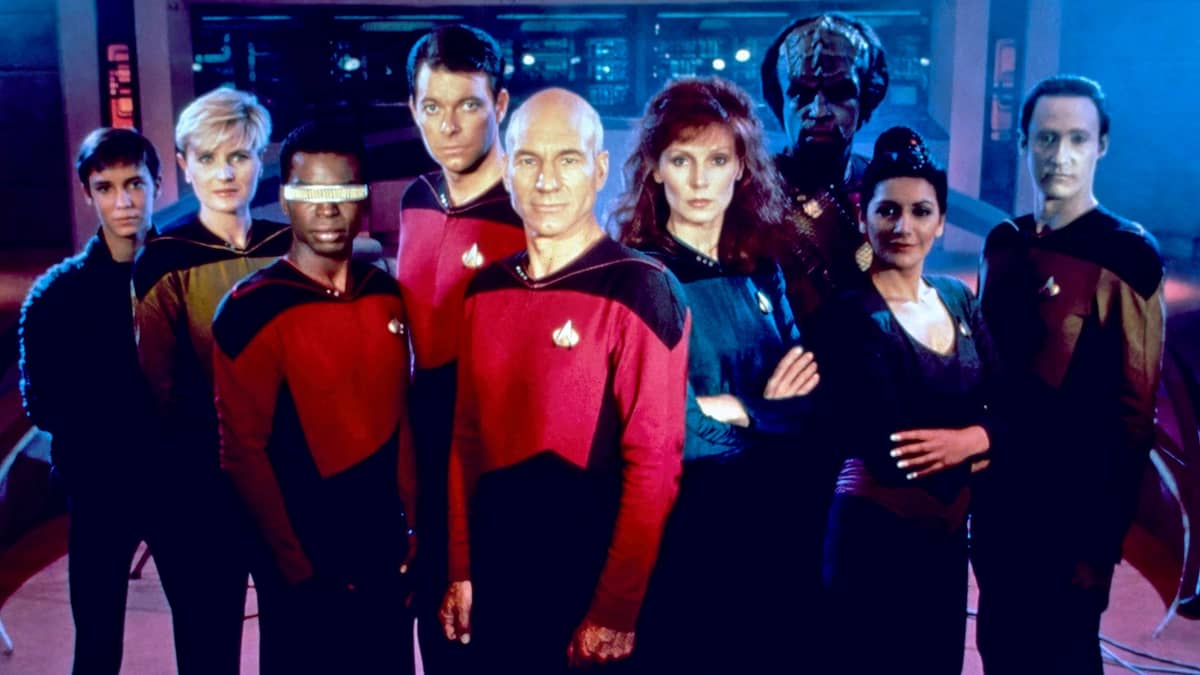
Gene Roddenberry's 1966 classic Star Trek: The Original Series completely revolutionized futuristic science fiction, all thanks to its optimistic and utopian vision of the future. Over two decades later came Star Trek: The Next Generation, set nearly a century after the original series, following the USS Enterprise-D's crew as they explore the 24th-century galaxy.
If The Next Generation is one of the biggest space sci-fi masterpieces television has ever seen, it's largely because its 2360s setting is so unique, so instantly recognizable, and so much like what oh so many of us would like to imagine 2360 will actually look like. Much of The Next Generation's tech feels mostly aspirational, but a lot of how it treats human institutions, technological ethics, and the mechanics of living in space feels quite plausible.
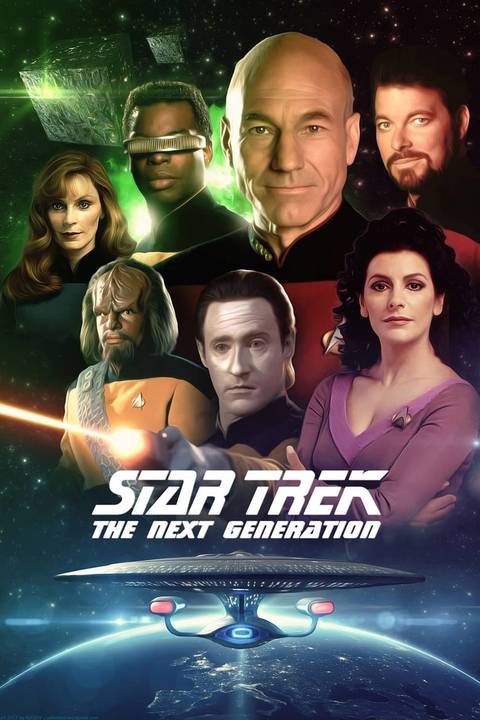
Star Trek: The Next Generation
- Release Date
- 1987 - 1994-00-00
- Network
- Syndication
- Showrunner
- Gene Roddenberry
- Directors
- Cliff Bole, Les Landau, Winrich Kolbe, Rob Bowman, Robert Scheerer, Jonathan Frakes, Robert Wiemer, Gabrielle Beaumont, Alexander Singer, David Carson, Paul Lynch, Corey Allen, Patrick Stewart, Chip Chalmers, Joseph L. Scanlan, James L. Conway, Robert Lederman, Tom Benko, Timothy Bond, Robert Legato, Adam Nimoy, Robert Becker, David Livingston, LeVar Burton
KioskNews shows a cleaned-up reading view extracted from the publisher’s page — the original always lives on their site, not ours.