HDB cuts 1,200 planned homes, retains more greenery at Maju Forest and Gillman Barracks after public feedback

SINGAPORE: Housing plans for Maju Forest and Gillman Barracks have been revised to cut about 1,200 homes and retain more greenery following public feedback, the Housing and Development Board (HDB) said on Wednesday (Oct 28).
The revised plans are expected to yield about 11,000 homes across both sites over the next decade – about 4,000 public housing units at Maju Forest and 7,000 homes at Gillman Barracks, of which about 5,500 will be public housing.
This would mean about 400 fewer flats at Maju Forest and about 800 fewer units at Gillman Barracks when compared with initial plans, said Minister of State for National Development Alvin Tan.
Under the revised plans, the area retained as greenery at Maju Forest will increase from around 8ha to about 10ha.
This accounts for about 45 per cent of the 23ha site, up from about 35 per cent under the original plans.
Retaining more greenery in the southern part of the site will create a wider and more contiguous green area, strengthening ecological connectivity within the site and along the Clementi Nature Corridor, HDB said in a press release.
At Gillman Barracks, the area set aside for greenery will increase from around 8ha to about 12ha. This is about 60 per cent of the 20ha of existing greenery, up from about 40 per cent under the original plans.
"More of the existing forest around the hillock will be retained, providing a greener frontage towards Telok Blangah Street 31, while the north-south ecological corridor along Lock Road and Malan Road will be widened," HDB said in its press release.
"These refinements will enhance the ecological connectivity within the Southern Ridges, as well as towards Berlayar Creek and Labrador Nature Reserve."
HDB said the housing figures are estimates based on broad planning assumptions and will need to be further assessed during the detailed design stage.
Further details, including the housing mix and launch dates, will be announced when ready.
Speaking to reporters, Mr Tan said the government may build taller blocks at the sites.
"So again, it goes down to a very important principle, and that is, we are committed to preserving as much as possible, but at the same time we need to be able to provide homes that are accessible and affordable to Singaporeans who are looking for homes in choice areas, in central areas, areas where they are close to their families," he added.
The revised plans come after public outcry following the announcement of the proposed developments on Jul 10.
Under the initial plans, about 15ha of Maju Forest at Sunset Way and at least 10ha of forest at Gillman Barracks could have been cleared for housing developments.
Nature groups called for stronger environmental safeguards, while residents told CNA they were worried about overdevelopment and the impact of deforestation.
Formal consultations closed on Aug 6. About a week later, Mr Tan said the government would retain more greenery than originally planned at both sites following public feedback.

HOW THE DECISIONS WERE MADE
HDB said that the review was guided by environmental studies for both sites as well as feedback gathered through public consultations and engagement sessions.
It added that agencies weighed the ecological importance of keeping more greenery against housing needs and other land use considerations, while taking into account the conditions at each site.
"The additional greenery areas were identified for retention as they can strengthen the long-term viability of the retained habitats and maintain ecological connectivity," said HDB.
"To enhance nature conservation at these sites, the National Parks Board (NParks) will safeguard a significant portion of the greenery as nature parks."
HDB received about 7,200 feedback submissions for Maju Forest and 2,300 for Gillman Barracks during the public consultation period from Jul 10 to Aug 6.
In addition, authorities engaged about 1,000 stakeholders, including nature groups, youths, academics, planning and built-environment professionals and other members of the public.
Residents living around the sites were also consulted in sessions organised by grassroots advisers, with support from the agencies.

FEEDBACK RECEIVED
HDB said it received a "wide range" of feedback reflecting different perspectives on the development plans for both sites.
These concerns included the loss of habitat and biodiversity, the impact on ecological connectivity and the wider ecosystem services provided by the forests.
Questions were raised about whether more housing was required at the two sites, and suggestions were made to explore other brownfield sites, intensify existing developed areas or reduce the proposed development footprints.
For Gillman Barracks, many respondents highlighted its heritage, cultural and community value. Some also recognised the need for more homes in both areas so families can live closer to one another, said HDB.
"Planning for national needs, including housing, nature and heritage, requires difficult but necessary trade-offs. As part of the planning process, agencies have reviewed vacant and brownfield sites in the surrounding areas, including the locations suggested by members of the public and residents," added HDB.
"Each site was assessed based on its current and future planned uses, when it could be made available for redevelopment, and whether it could meet housing needs within the required timeframe."
The agency said some sites were already planned for housing, while others were still needed for existing uses or would not be available within the timeframe in which homes are needed.
"They form part of the broader housing pipeline together with Maju Forest and Gillman Barracks to meet housing demand from the 2030s," HDB said.
Examples of sites reviewed as part of development studies
Maju Forest and surrounding areas
Site planned for or being developed for residential use:
- Former temporary bus facility and vacated Selective En bloc Redevelopment Scheme (SERS) site at Ghim Moh
- Former Raffles Junior College Campus at Mount Sinai
- Dover-Medway
Currently occupied but safeguarded for residential use:
- Site at Albert Winsemius Lane
- Worksite at former Blocks 321 to 323 Clementi Avenue 5
- Protective Security Command site
- Worksite next to Clementi Crescent
- SkyPark Arena @ Holland
- HHOM @ Ulu Pandan hostel
Still required or safeguarded for existing or other uses:
- Maju Camp
- Singapore Institute of Management and Singapore University of Social Sciences
- Vacant site zoned "educational institution" next to Nan Hua High School
Gillman Barracks and surrounding areas
Site planned for or being developed for residential use:
- Depot Lane industrial estate
- Outram Hill
Currently occupied but safeguarded for residential use:
- Keppel Distripark, Keppel Terminal, Tanjong Pagar Terminal (part of Greater Southern Waterfront)
- Delta Circus Fringe car park and adjacent state land
- Alexandra Park (Existing residential estate)
Still required or safeguarded for existing or other uses:
- Former Central Manpower Base site
- Pasir Panjang Distripark and surrounding parcels
- Alexandra Village industrial estate
- Shelton College International
- Developed areas along Mount Faber Foothills (including Seah Im Food Centre)
- Henderson Industrial Park
Collapse Expand
The authority added that housing demand in recent years remains strong as larger cohorts of Singaporeans born in the late 1980s and 1990s – when fertility rates were higher – are now reaching the age of buying their own flats.
"Housing demand is also driven by decreasing household sizes, as more couples, singles and seniors choose to have their own homes instead of staying with their extended families," HDB said.
Last year, HDB received about 70,000 applications across three Build-to-Order (BTO) exercises for 19,723 flats.
HDB said agencies sought to "strike the balance between developing the sites as sensitively as possible" while meeting Singaporeans' housing needs.
CHANGES TO BOTH SITES
At Maju Forest, retaining a larger contiguous green area will provide a corridor for wildlife movement, including for species of conservation significance such as the straw-headed bulbul and Sunda pangolin, while preserving more plant species of conservation significance.
The enlarged proposed retained area will be safeguarded as a new nature park, with opportunities for the community to participate in habitat enhancement efforts.
The future estate will also integrate nature into its landscaping, and a new nature way along Brookvale Drive will feature multi-tiered planting that mimics the natural forest structure.
HDB said the existing Clementi Neighbourhood Park will continue to serve residents alongside new community and commercial facilities within the future estate.
"When the old Jurong Line nature trail is fully completed, residents will have more options for nature-based recreation within the wider Clementi Nature Corridor, which links the rail corridor to Jurong Lake Gardens," HDB said.
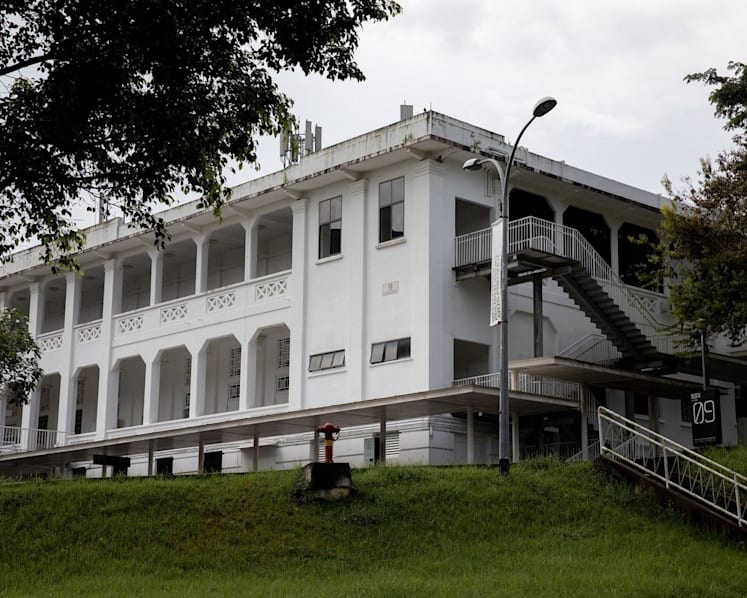
At Gillman Barracks, the larger green area will provide a wider buffer around the existing forest and further enhance the east-west ecological connection along the Southern Ridges, as well as the north-south ecological connection towards Berlayar Creek and Labrador Nature Reserve.
The green areas will be incorporated into the upcoming Alexandra Nature Park, expanding the greenery within the Labrador Nature Park Network.
NParks will enhance the round island route along Alexandra Road to improve north-south connectivity between the Rail Corridor and the Labrador Nature Park network.
Nature ways along Alexandra Road and Telok Blangah Road will also be enhanced, while a new nature way along Telok Blangah Street 31 will feature multi-tiered greenery to facilitate the movement of animals such as butterflies and birds through the area.
The revised plans will retain the same 25 buildings identified for retention under initial plans, which were those assessed to be of "exceptional" and "high" heritage significance.
These buildings will be retained in clusters along Preston Road, Lock Road and Malan Road, and can be repurposed for commercial uses and amenities.
Agencies are also studying the possibility of retaining non-building artefacts, such as the military insignias of the Middlesex and Loyal Regiments.
NEXT STEPS
HDB said the developments will take several years to complete, as infrastructure and site preparation works must be carried out before homes and supporting amenities can be built.
Before development works begin in the vegetated areas at both sites, an environmental management and monitoring plan will be put in place to outline measures to minimise the environmental impact of the works and protect the greenery and ecological features identified for retention.
The authorities may also enter the sites to carry out further studies, such as soil investigation works.
Land preparation works at Maju Forest are expected to begin from the first half of 2028, with public access to the site restricted from then.
At Gillman Barracks, site works are expected to start from the second half of 2027, starting with the demolition of buildings. Land preparation works are expected to begin in 2029.
Environmental mitigation and monitoring measures will continue as the developments are implemented.
Future housing developments will incorporate lush plantings, while environmental modelling will be used to optimise airflow around HDB blocks.
"These climate-friendly designs and extensive precinct greenery, together with cool paint and materials that reduce heat absorption, will enhance thermal comfort for residents and climate resilience of the future housing estate," said HDB.
It added that through long-term planning, the government will continue to conserve and restore important habitats, strengthen ecological connectivity across the island and expand Singapore's network of parks, nature areas, waterways and nature corridors.
"We will also continue to integrate nature into our urban environment, so that our city remains both liveable and sustainable for current and future generations," said HDB.
KioskNews shows a cleaned-up reading view extracted from the publisher’s page — the original always lives on their site, not ours.