UK urged to ban Patriot Platform behind anti-migrant protests
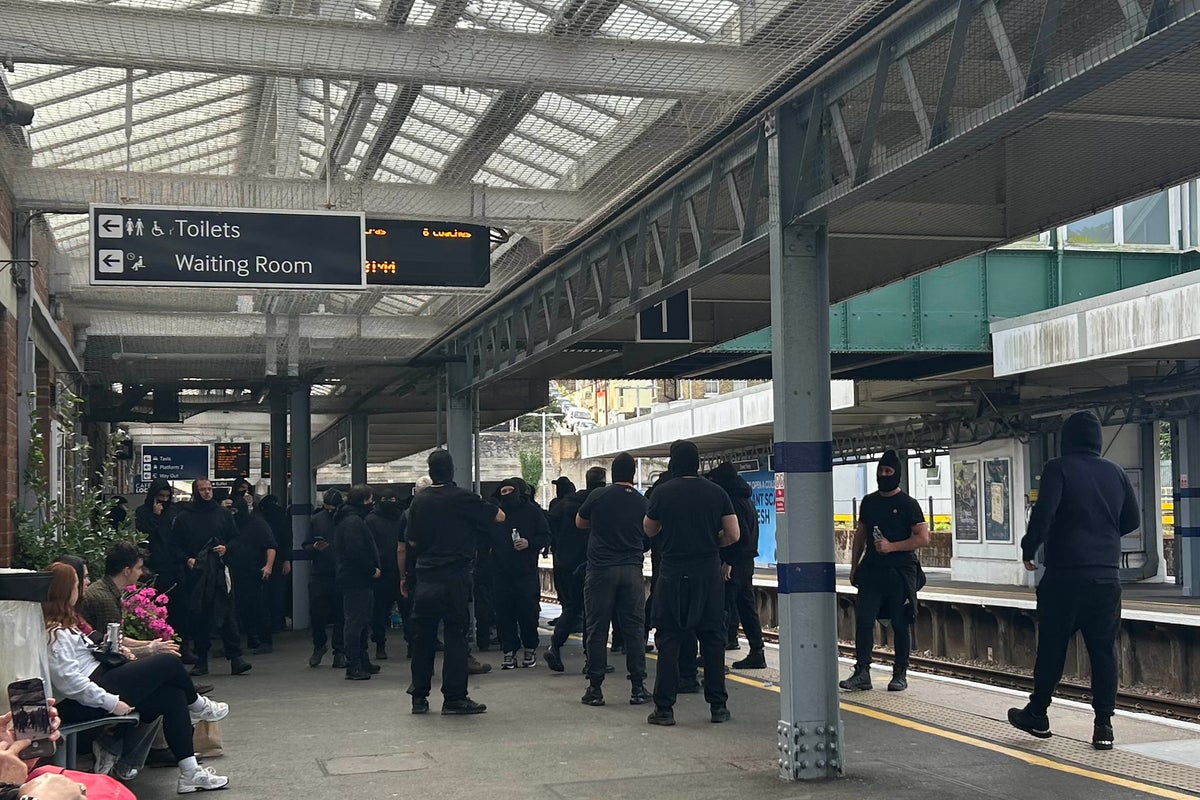
The former boss of civil rights group Liberty has urged the government to consider banning the ‘Patriot Platform’ group behind anti-migrant protests that saw masked and hooded men descend on Dover and Portsmouth.
Shami Chakrabarti, who was Labour’s shadow attorney general between 2016 and 2020, hit out at the group she says “appears explicitly to intend and incite violence and intimidation”, and whose uniforms “signify a private army”.
Ms Chakrabarti was a high-profile critic of ministers' controversial decision to ban Palestine Action under terror legislation, which she suggested had led to the prosecution of many peaceful protesters.
But she said it was time to “at least give consideration” to proscribing Patriot Platform, or lawmakers risk losing the support of the public “over inaction in the face of rising threats, and perceived double standards”.
Under the Terrorism Act 2000, the home secretary may proscribe an organisation if they believe it is concerned in terrorism, and it is proportionate to do so. Once an organisation is proscribed, it is illegal to join or support it.
The group, led by far-right activist Daniel Thomas, known as Danny Tommo, recently coordinated disruptive protests in Dover and Portsmouth, where masked supporters blocked roads and attempted to intercept newly arrived migrants.
Mr Thomas, a former bodyguard for Stephen Yaxley-Lennon, also known as Tommy Robinson, established the anti-immigration movement after previously serving a prison sentence for attempted kidnapping.
On its website is the slogan: “Together, we will take our country back.”
Ms Chakrabarti, a Labour peer, will make the call as she gives the Lord Speaker’s Lecture this evening.
She will say: “To be clear, I have spoken against the blanket banning of face coverings at protests. We must protect the immune compromised and those who reasonably fear repercussions when protesting outside the embassy of a repressive state or office of an abusive employer.
“Nonetheless, political uniforms in public were understandably banned by section 1 of the Public Order Act 1936…
“I maintain my view that the proscription of Palestine Action was a disproportionate and counterproductive mistake, given the breadth of that movement and the possibility of prosecuting the violent few rather than the peaceful many. That issue is of course pending before the Supreme Court.
“Still, I wonder whether it isn’t time to at least give consideration to the proscription of the so-called Patriot Platform after recent events on our south coast. That is if we as legislators, are not to lose the public over inaction in the face of rising threats, and perceived double standards.”
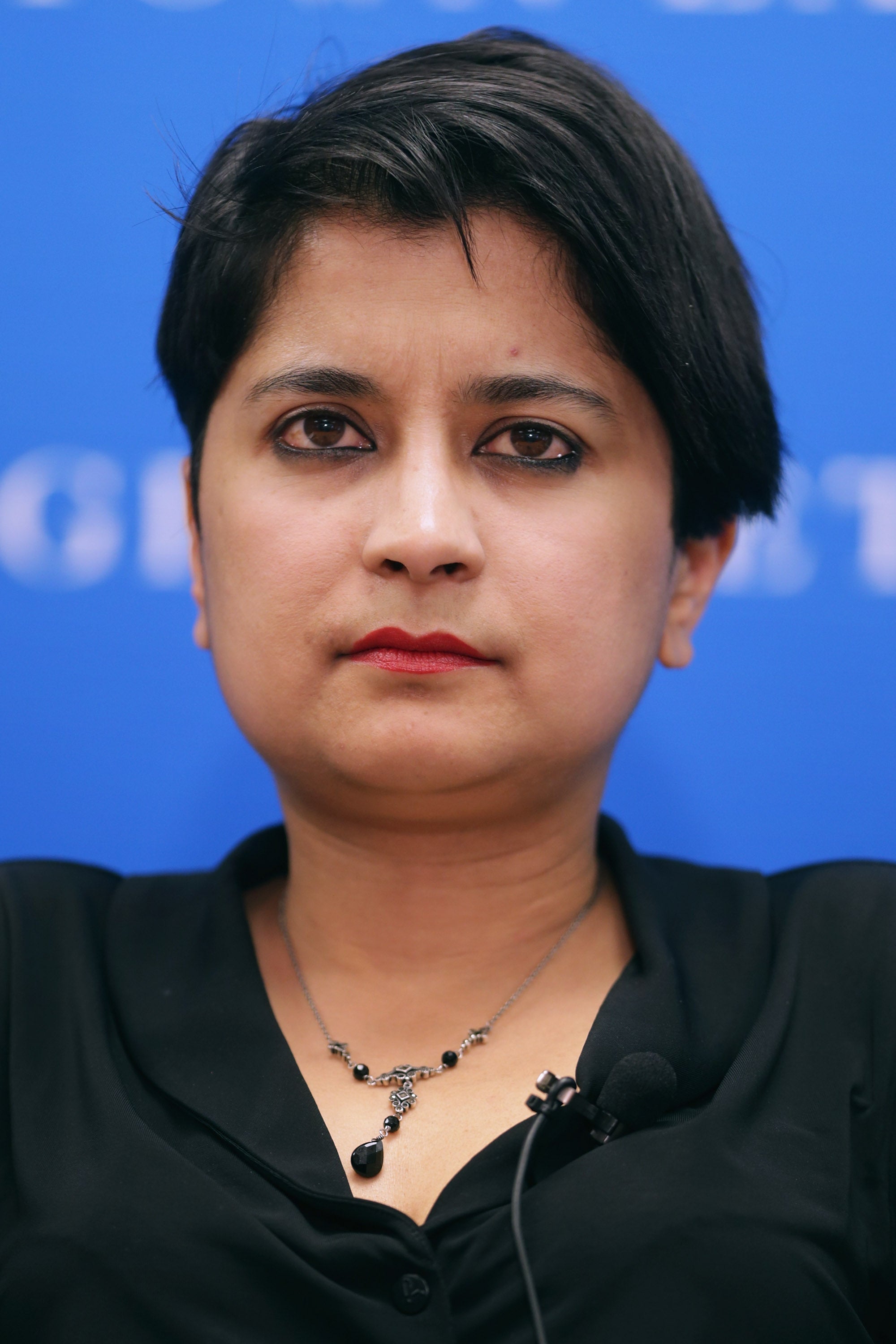
She told The Independent that the distinction between Palestine Action and Patriot Platform is “not whether we agree with one or the other’s politics”.
“The former appears to have thousands of supporters interested in nothing but completely peaceful dissent and a few involved in criminal damage,” she explained. “The latter appears explicitly to intend and incite violence and intimidation and its uniforms signify a private army.”
She added: “It’s perhaps understandable that we choose to forget, but we have been here before in the 1930s with gangs of well-organised black-shirts inciting violence and seeking to intimidate.
“Freedom of expression and association is precious but not without limits. Surely, this is exactly the sort of case that proscription under the Terrorism Act was designed for?”
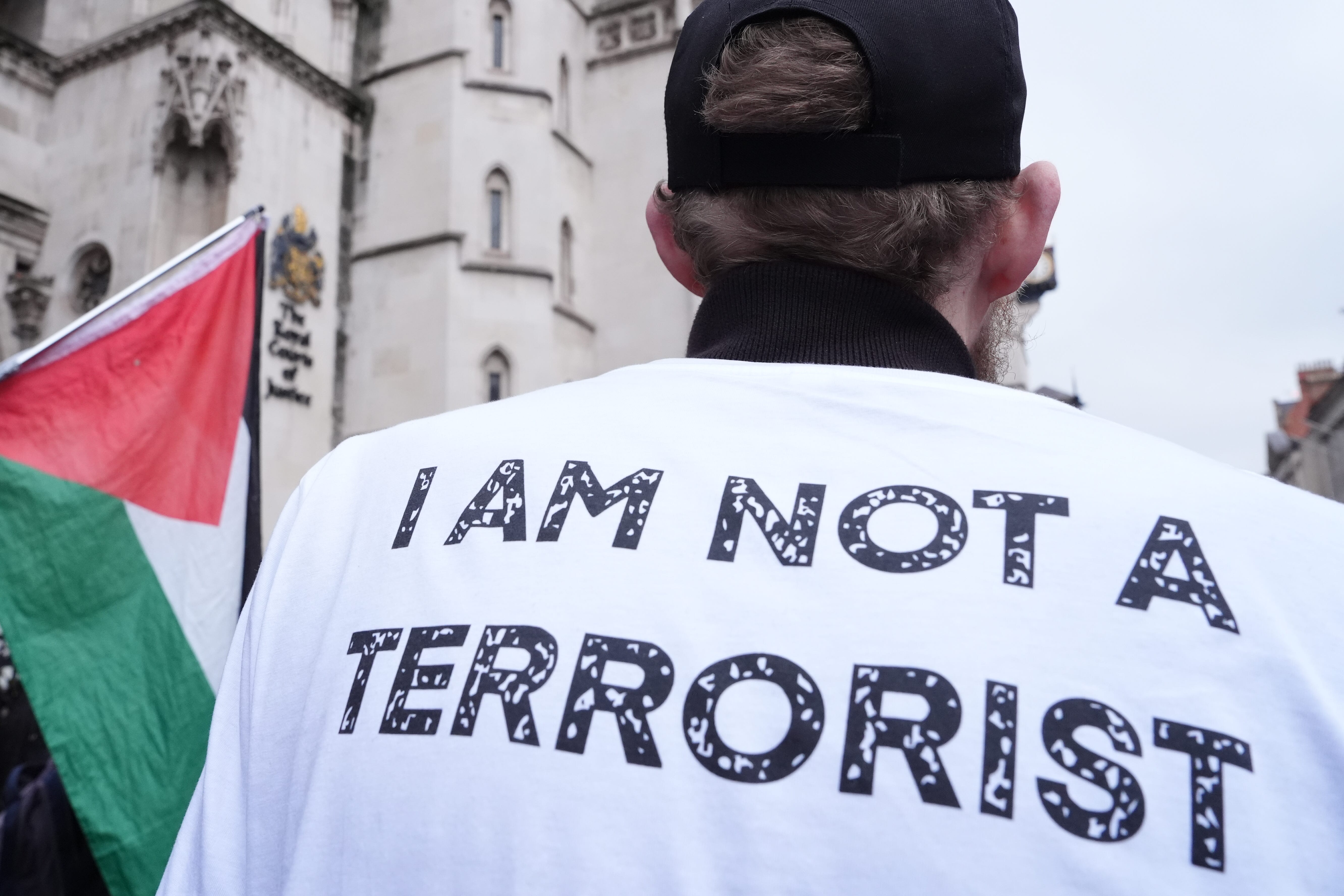
Her remarks come amid heightened tensions triggered by anti-migrant protests, counter-protests and and a series of online rumours that have divided communities across the UK.
Locals in Dover reported feeling unsafe in their own town earlier this month when a large group of “intimidating” masked demonstrators blocked roads and access to the port.
It comes after hundreds of protesters, dressed in black and wearing face coverings, blocked roads and were heard chanting “stop the boats”.
Traffic was stopped from going in and out, while government condemned “the behaviour in Dover and the travel disruption it has caused”.
A group was later seen marching through the town chanting “whose streets? our streets!” and “stop the boats” as dozens of police officers followed.
KioskNews shows a cleaned-up reading view extracted from the publisher’s page — the original always lives on their site, not ours.