Maximum stakes in one-sided rivalry: India face Pakistan in semis
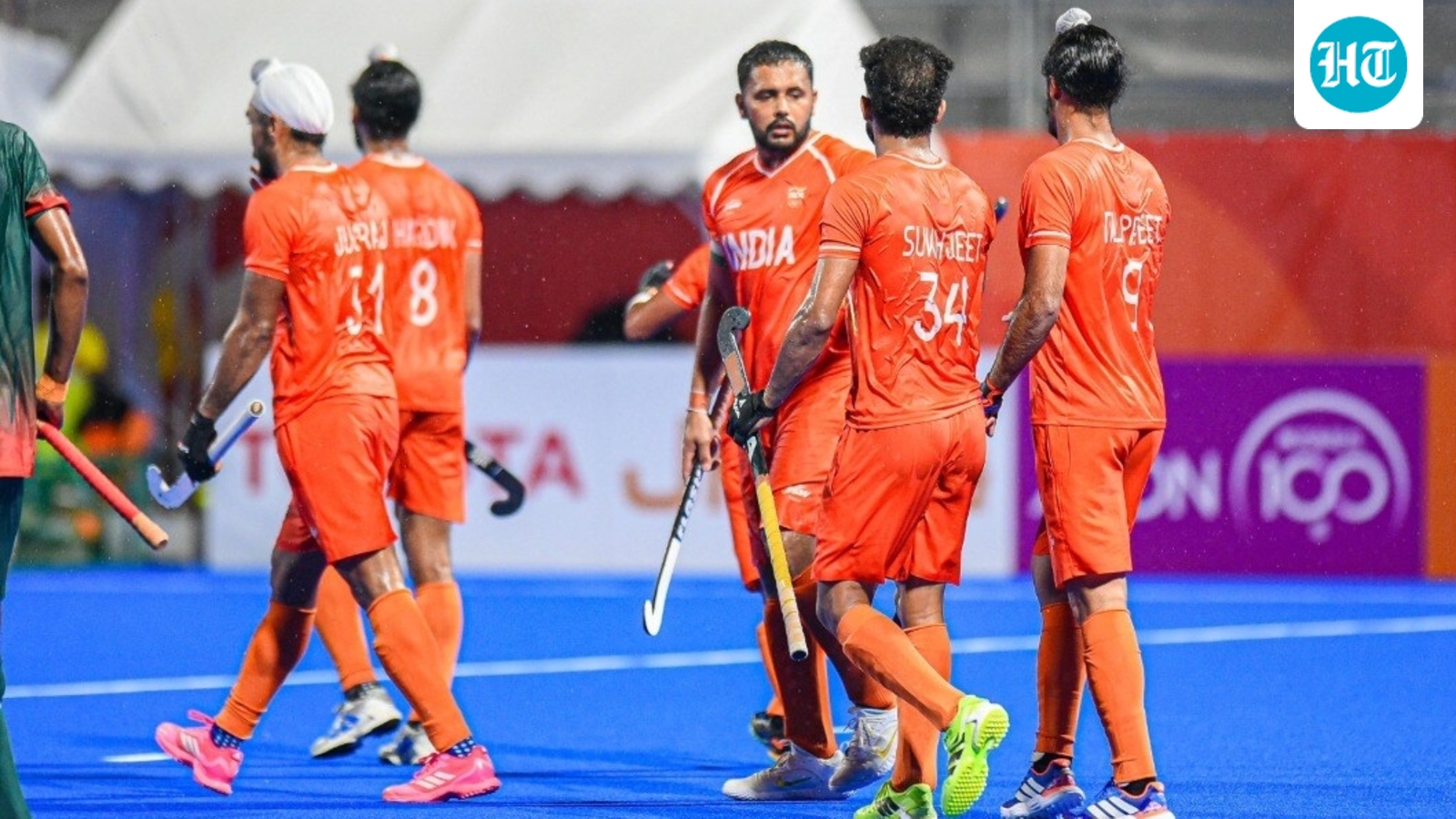
This iconic clash carries a lot of weight. History, legacy, prestige and a heavy dose of enmity define this rivalry; just the name of this contest easily draws crowds and eyeballs. Unfortunately, the contest has been reduced to a one-sided match, a rivalry that exists only in the name.
With the rise of Indian hockey and the downfall of Pakistan, there is very little uncertainty about which team starts as the favourite. India have not lost to their neighbours in a decade. The last time Pakistan defeated India was in the 2016 South Asian Games final in Guwahati.
Since then, India have dominated the fixture, winning 18 of the 21 meetings, with two draws and one no result. Their most recent encounter, at the World Cup in Amstelveen in August, ended in a 5-3 Indian victory.
It is world No.12 Pakistan’s challenge to turn this predictability on its head, especially with a spot in the Asian Games final at stake.
For all the imbalance, India-Pakistan matches rarely lack emotion or entertainment. The rivalry may no longer be defined by evenly matched results, but it continues to produce intensity, attacking quality and, increasingly, goals.
One of India’s primary strengths is the variety in their attack. Skipper Harmanpreet Singh remains the central figure, particularly from penalty corners (PC) while Abhishek’s performance in the World Cup clash underlined the danger India possess in open play.
That combination — set-piece precision, individual skill and pressure from the midfield — gives India several ways to hurt Pakistan. If Pakistan sit deep to protect their circle, India have the patience and passing ability to move them around. If they press high, India can exploit the space behind them through quick transitions.
The key, however, will be to sustain that pressure. Against Pakistan in the World Cup, India surged to a 3-0 lead inside 20 minutes but allowed their opponents to recover. Pakistan scored twice in the second quarter and added another early in the final period, briefly threatening to make the contest uncomfortable.
India have to ensure that their defensive lapses do not give their opponents a route back into the contest. The three goals conceded were significant. Their control on the ball weakened as the match progressed, turnovers increased and their defensive structure became less secure.
At the Asian Games too, though the Craig Fulton-coached team won all five group matches to top Pool A, they allowed minnows like Indonesia and Sri Lanka to score against them. South Korea, in fact, punched in two goals in India’s 8-2 win.
That is one area Fulton will want corrected. India cannot afford to give Pakistan opportunities, particularly if the match becomes an open, end-to-end contest. Pakistan’s forward line has enough pace and finishing ability to punish mistakes as Hannan Shahid demonstrated with two goals in the World Cup meeting.
India’s challenge is therefore not simply to attack better. It is to manage the game better after taking the lead — retain possession, avoid cheap turnovers and prevent Pakistan from building momentum. A fast start may be expected, but the semi-final could be decided by how India respond when the initial wave of pressure fades.
Pakistan enter the match as underdogs. Yet they remain one of Asia’s most decorated hockey nations and the most successful team in Asian Games history, with eight gold medals to India’s four.
Their recent decline has been tied to deeper structural problems. Financial difficulties, administrative instability, lack of domestic competition and the weakening of departmental hockey have all affected the country’s player development. Pakistan have also missed the last three Olympics and two of the last four World Cups, while India have built a far more consistent high-performance system.
The contrast in preparation is stark. India spend much of the year together in national camps and regularly compete against the world’s best teams. Pakistan’s players have had fewer domestic tournaments and generally assemble only shortly before major events. That difference in fitness, tactical cohesion and match rhythm could become increasingly important as the semi-final progresses.
Still, Pakistan have the ingredients for an upset — pressure India early, disrupt Harmanpreet’s PC opportunities and force the Indian defence into uncomfortable situations. Pakistan cannot allow India to settle into their preferred rhythm or fall behind in the opening quarter.
“In tournament hockey, all roads lead to this point. Semi-finals are games of consequence, so it’s exciting,” Fulton said. “We’ll fine tune all that we have to for penalty-corner attack, penalty-corner defence and whatever else we are focusing on. But the main thing is it’s about us. It’s about putting our game-plan in. We’ve had five good games and got good momentum going into this (semi-final).”
Malaysia and South Korea contest the other semi-final, but the spotlight will inevitably fall on India and Pakistan. Pakistan are seeking not merely a final berth but a statement that their hockey revival can withstand the strongest team in Asia.
Defending champions India are pursuing another gold medal to continue their dominance in the continent — they have not lost to an Asian team in four years. But they must first negotiate the emotional intensity of a match that remains bigger than the form guide.
Recent history points decisively towards India. Their attacking depth and superior preparation should make them overwhelming favourites. But if the World Cup meeting offered one warning, it was that Pakistan remain capable of turning a comfortable Indian advantage into a competitive match.
Raj Kumar Pal out injured, Nilakanta comes in
India will be without midfielder Raj Kumar Pal, who has been ruled out after sustaining a left thumb fracture during the team's last pool match against Bangladesh. Travelling reserve Nilakanta Sharma has been brought into the squad as his replacement.
“It’s just unfortunate for Raj. At the same time, we have great experience that’s coming in. Nilakanta has been at the Olympics, World Cup. So, it’s a nice addition in terms of an experienced player coming in at an important time,” said Fulton.
Thursday's weather forecast for Kakamigahara is sunny, unlike incessant rain at the start of this week.
KioskNews shows a cleaned-up reading view extracted from the publisher’s page — the original always lives on their site, not ours.