Delhi HC allows activist Natasha Narwal to travel to UK for academic work
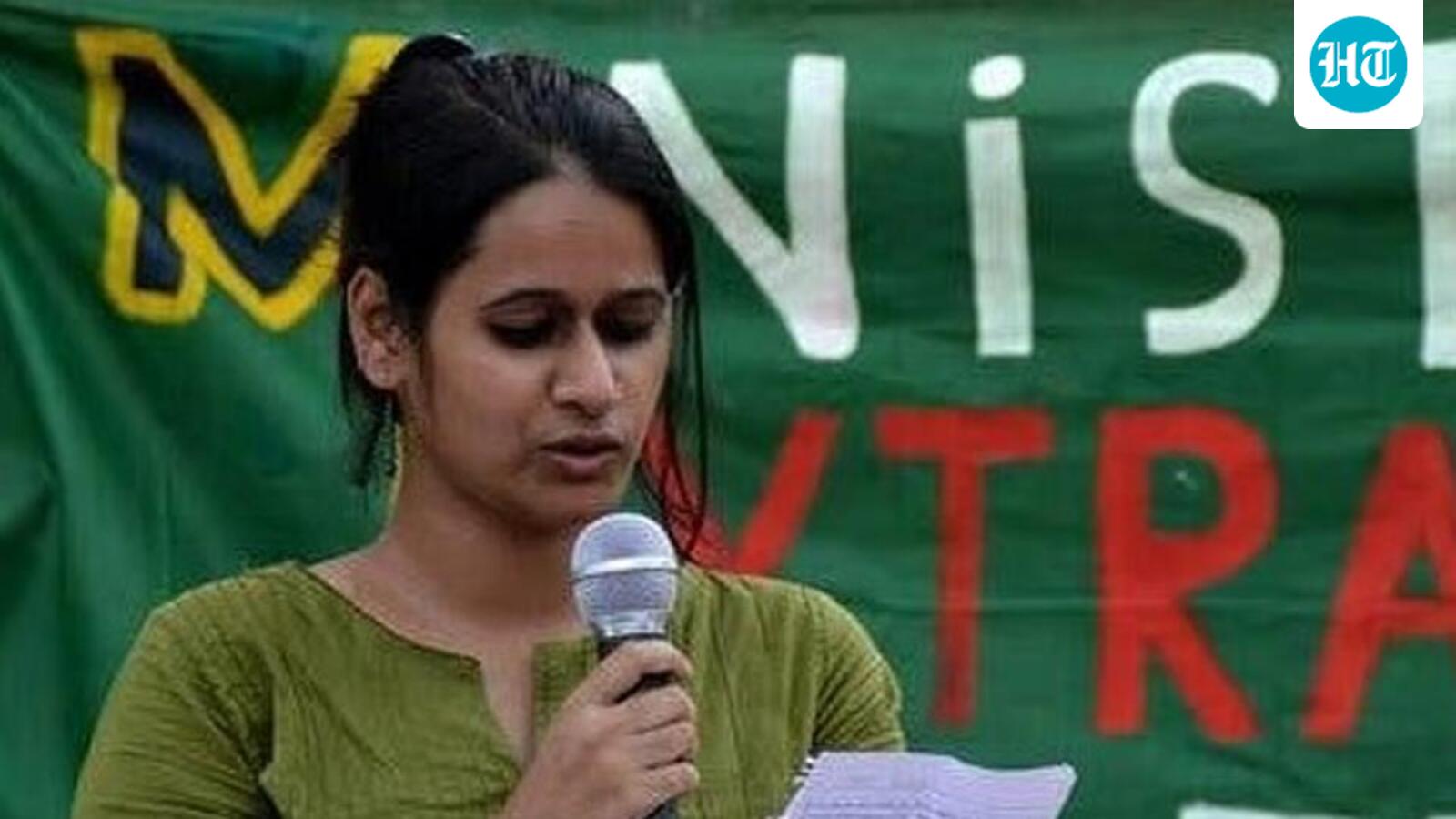
The Delhi high court on Friday allowed activist Natasha Narwal, an accused in the larger conspiracy case relating to the 2020 Delhi riots, to travel to the United Kingdom from November 2 to December 1 for an academic conference and research work, observing that the right to travel abroad cannot be curtailed under Article 21 of the Constitution.
A bench of Justice Amit Bansal allowed Narwal to travel subject to furnishing a personal bond of ₹1 lakh, with her brother, who resides in Haryana, standing as surety.
“We cannot restrict the right to travel under Article 21. Your hands are not tied, you are the government of India. The trial will take 20 years. You cannot keep the person here. It is a renowned university and she wants to travel for academic pursuits,” the bench remarked.
The court directed Narwal and her brother to furnish an undertaking before the trial court that she would return to India and would not seek asylum in the UK. She was also directed not to make any public statements on the merits of the pending case during her stay in the UK and to surrender her passport before the trial court within 48 hours of returning to India.
The court took note of a letter from Narwal’s supervisor stating that her physical presence was required for supervisory meetings, presentations of her research work before academic staff and researchers, and participation in doctoral training on campus.
Narwal had approached the high court challenging the trial court’s October 6 order denying her permission to travel abroad. While rejecting her plea, the trial court had noted that the case was at the stage of consideration of charges and that the offences under the Unlawful Activities (Prevention) Act (UAPA) for which she had been chargesheeted carried punishments ranging up to life imprisonment and, in some cases, the death penalty.
It had observed that the right to travel abroad was not absolute and that the pendency of proceedings under the UAPA was a relevant consideration.
Opposing the plea, Additional Solicitor General SV Raju, appearing for the Delhi Police, argued that the UK’s stringent extradition laws could make it difficult to secure Narwal’s return if she failed to come back to India. Raju further submitted that, according to an email from the university, a co-author could present the academic paper in her absence. He argued that Narwal’s physical presence was not necessary, pointing out that she had been pursuing her course virtually for the past three years.
KioskNews shows a cleaned-up reading view extracted from the publisher’s page — the original always lives on their site, not ours.