HARD ROW TO HOE: Bread & Wine: What’s the future of wheat and wine farming? (Part Six)
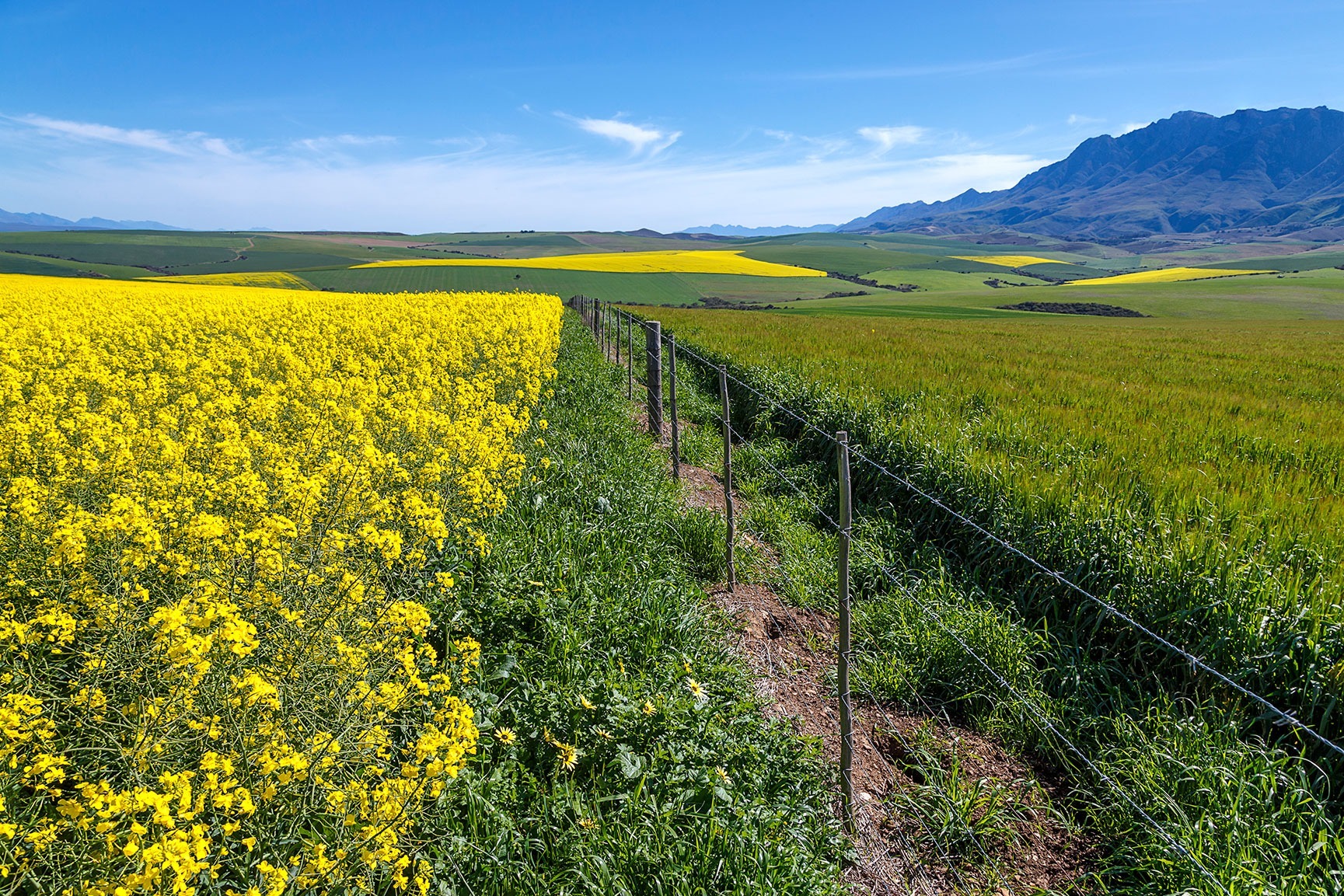
This is the sixth in a six-part series. Read Part One, Part Two, Part Three, Part Four and Part Five.
So, what have we discovered in this series? Seen from the road, the Cape’s bread and wine country looks reassuringly settled. Wheat rolls over the Swartland, vines climb the mountain slopes and white-gabled estates promise that civilisation is safely fermenting in oak.
Inside the farm gate, however, both crops are asking the same awkward question: if the harvest no longer pays for the farm, what exactly is keeping the landscape going?
For wine, the answer is increasingly everything around the grape. Restaurants, cottages, weddings, olive oil, tasting rooms, mountain bike trails and, on some estates, an owner whose fortune ripened in a completely different industry.
The grape is still the star, but it no longer always pays the cast. A vineyard has become part farm, part theatre set and part very attractive place to have lunch.
That is not necessarily a bad bargain. Tourism can preserve jobs, old buildings, open land and wines that would otherwise never be made. Outside capital can give a crop the time it requires. But it changes the nature of farming. The land survives because it can sell an experience, a view or a lifestyle as well as a bottle. A good farmer must also become a hotelier, restaurateur and brand manager, or find someone prepared to pay for the privilege of owning the view.
Wheat has no such supporting glamour. There’s no tasting room at the end of a grain field and few will book a wedding beside a wheat field. Its escape routes are scale, diversification and enough money elsewhere to survive the years when farming runs backwards.
Michiel Smuts can absorb losses partly because he invested beyond his family farm, Grasrug. That’s sensible business, but it also makes the point: the wheat is being supported by income the wheat did not earn.
Modern farming was supposed to beat uncertainty with machinery, chemistry and precision. Instead, each new efficiency comes with a larger bill.
Equipment saves labour but raises the price of admission. Sprays protect a crop, but add another cost before anything has been harvested. The farmer pays Cape prices for inputs and accepts a grain price shaped far beyond the Cape.
Then the weather arrives and treats the spreadsheet as a work of fiction. Wheat requires rain in the right months, not merely an annual total that looks respectable in retrospect. Vines need years of care before producing well, yet hail can strip them quickly and smoke can spoil a vintage without burning a single row.
When margins are healthy, a bad season is painful. When margins have already vanished, it decides who can afford to plant again.
There’s another sponsor, less visible than a wealthy owner or a busy restaurant: the land itself. Farming has long borrowed from soil, rivers and the remnants of the Cape’s original vegetation without putting those costs on the label.
Monocrops need defending from weeds, fungi and insects. The cheaper defence is often the harsher one. More careful methods may use fewer chemicals, disturb the soil less and employ more people, but narrow margins make virtue an expensive optional extra.
This is why the chemical argument cannot be reduced to good farmers and bad farmers. The system asks growers to produce uniform crops cheaply and that’s the bottom line. Johan Simons’s bleak observation that poison costs less than people is not simply a farmer’s excuse. It is a description of what the market rewards. The bottle has a price. The river issues no invoice.
The cheap loaf and bargain bottle are therefore slightly fictional objects. Their price leaves things out: the owner’s capital, the farmer’s unpaid risk, the side-business that carries the crop, the soil that’s slowly simplified and the public landscape everyone enjoys for free.
Somebody covers the difference. Sometimes it’s a wedding guest or a billionaire. Sometimes it’s a farmer’s savings. Sometimes it’s the future.
The likely result will not be the sudden disappearance of wheat and vines. It is a rearrangement.
Vineyards will increasingly survive as prestigious brands, visitor destinations or beautiful assets backed by other money.
Grain production will move towards fewer, larger and better-capitalised operators with sufficient capital to survive hard times.
The postcard may remain unchanged long after the business model printed on its reverse has expired.
Nor is there a neat return possible to the landscape that existed before the plough. Much of its ecological memory has already been lost. Farming more softly is possible and this series has found reasons for cautious optimism in reduced spraying, less disturbance and the rebuilding of living soil.
But technique alone cannot repair an economy that punishes care. If careful farming costs more and earns the same, it will depend on unusually committed people – until they run out of money.
The real choice is not between farming and nature, as if the Cape can simply remove the vines, roll up the wheatfields and begin again. Bread and wine support towns, workers, skills and traditions – and they remain two of the better reasons to sit around a table.
The choice is whether their full cost is paid deliberately, through fairer returns, shared risk and support for stewardship, or hidden in another balance sheet and passed downstream.
Bread and wine began with wild yeast and good fortune. Their future in the Western Cape will require rather more deliberate magic.
The challenge is no longer making dough rise or grapes ferment. It’s finding models of survival that provide buffers in hard times, be they farming methods, wedding venues, tourist attractions, offshore fortunes or several consecutive years of perfect weather. Of these the last – weather – is the wildcard. We just don’t know what’s up ahead. DM
KioskNews shows a cleaned-up reading view extracted from the publisher’s page — the original always lives on their site, not ours.