10 Westerns for the Taylor Sheridan Fan

Ben Brewster is a filmmaker, critic, screenwriter, and actor whose work sits at the intersection of film culture, craft analysis, and storytelling.
He is a movie list contributing writer at Collider and a contributing writer for High on Films, where he covers contemporary cinema, independent film, and festival releases with an eye toward narrative structure, performance, and visual language.
Ben is an active film festival participant, having worked with Newport Film, the Nantucket Film Festival and as a screener for the Austin, Boston & Woodstock film festivals.
He brings to that work a programming instinct shaped by years of close engagement with independent and documentary cinema. This comes with a deep investment in the kinds of films that rarely find their way into the mainstream conversation without someone willing to advocate for them.
His background spans documentary and narrative filmmaking, film marketing, and production, including work with award-winning directors. This as well as developing his own indie production company, Lilac Creative Studio, through which he develops and produces original work across fiction and nonfiction forms.
His debut documentary, Diamond in the Rust, is an examination of economic redevelopment and displacement in the Queens area of New York City. The film was recently accepted to the Unisphere Film Festival, the Defense of Democracy Film Festival, and the Urbanite Arts & Film Festival. This would mark his first festival recognition as a director.
In addition to his writing and programming work, Ben hosts Beneath the Bloom, a film podcast exploring the work behind the scenes in cinema, and the struggles one can face to make a movie become a reality. The show reflects the same sensibility that runs through all of his work. A conviction that film is not merely entertainment but one of the most powerful tools human beings have for understanding each other.
Across mediums, his work is driven by a deep belief in film as a communal, transformative art form.
Sign in to your Collider account
Taylor Sheridan has built an entire cinematic universe out of a very specific aesthetic: dust, silence, moral compromise, and the slow-burning violence of people pushed past their limits by land, money, and often history. Whether he is writing it himself, or just casting a long shadow over the genre he has vitalized, his fingerprints are all over how contemporary audiences think a Western should feel. Sheridan takes a grounded approach, unglamorous and unafraid to let its characters be broken by the unforgiving outlaws and violence of the modern Western. Now, this list is by no means strictly movies he has written or directed. It's a collection of Westerns that share the same temperament: unflinching violence with real consequences, landscape as its own character, and a persistent interest in the people history usually leaves out of the frame.
Yet it isn't the genre that binds this piece together; it's actually the tone. These are films that treat the American West as a moral proving ground instead of a backdrop for an adventure where survival costs something and nobody runs off clean. Some are recent, some are decades old, and a couple are recent enough that they're still finding their audience. Together, they make the case for exactly why Sheridan's brand of Western has resonated so strongly, because it was never really new. It was always there, waiting for someone to bring it back to the front of the room.
Here are ten Westerns, ranked, that should be next on the list for anyone who's worked through Wind River, his more recent Yellowstone 1883, and Landman projects and is hungry for more of that same unsparing sensibility. Some of these lean into Sheridan's specific obsessions directly: guilt, land, and the impossibility of clean redemption, and others arrive at the same place from a completely different angle or decade. What unites all of these entries is a complete refusal to let the frontier, old or new, look easy.
10 'Horizon: An American Saga' (2024)

Kevin Costner's sprawling self-financed epic is the kind of ambitious, old-fashioned Western that modern studios mostly don't green-light anymore, a multi-decade, multi-chapter saga about the settling and unsettling of the American frontier. Told through a wide ensemble of intersecting lives, the project was definitely uneven in aspects, but Costner's direction takes some risks big studios would balk at, and sometimes it deems the audience worthy of its time. The violence lands, when it comes, with a blunt, unglamorous weight that fits squarely in Sheridan territory. It's a film best viewed as a first chapter. A foundation, rather than a complete statement, but one that might be sturdier than its mixed reception suggested. Costner's own personal investment in the project gives the whole thing a stubborn, old-school sincerity that is pretty unique in an era of studio-mandated franchise film-making.
If you like what Taylor Sheridan does, this one hits a similar nerve. It insists the West was not made by one big hero. Instead, the American Frontier grows out of a tangled mix of people. Settlers, troops, and Indigenous communities all clash over the same places. The story moves along several paths at once. Sienna Miller stars as a mother who survives an Apache raid on the town, Sam Worthington is the cavalry officer who takes her in, and Costner himself doesn't appear until well into the run-time. He is a laconic horse trader drawn into the midst of a family feud. Following the development of the Western as a literary tradition that the Yellowstone universe itself is indebted to, Horizon: An American Saga (Chapter 1) is a towering work of messy ambition. It manages to plant the seeds for something greater even in its first installment. Anyone who gravitated towards Sheridan's interest in the land as a contested and prized possession would find much to appreciate in the slow-burn construction of this film. However, much time passes before the promised sequels arrive, the early chapters of Horizon are a testament to old-fashioned, Western storytelling.
9 'Butcher's Crossing' (2023)

Gabe Polsky's adaptation of John Edward William's 1960 novel is about an idealistic Harvard dropout who finances a buffalo-hunting expedition. The trip is led by the increasingly unhinged Miller (Nicolas Cage) into the Colorado wilderness, which sees the protagonist's dreams of pioneer life cut short by the realities of the frontier. Cage is in uncharacteristically subdued form as the obsessively driven hunter whose deranged, money-driven philosophy drives the film's third act denouement; Polsky leans into the novel's reputation as a "'tragicomic' picaresque" but finds himself unable to distance himself from the brutal honesty of the script's treatment of the exploitation of the American wilderness. The film's quirky style feels like a mismatch with its source material at first, but grows on repeat viewings as one appreciates its willingness to look unflinchingly at the amorality at the heart of frontier life.
Thematically closest to the works of Sheridan is perhaps its focus on the way in which the promise of the frontier turns men into something feral and grasping. As in his best works, there is no room for mortality in Butcher's Crossing; the entire system is designed to deny the protagonist any conception of ethics. The slaughter of the herds and the way in which it fuels the men's thirst for blood is thematically akin to much of Sheridan's fiction. It repeatedly examines humanity's capacity for brutality and the environments its inhabitants contaminate in the process. A slow, yet punishing movie that paints a bleak portrait of frontier life.
8 'Cold in July' (2014)

Jim Mickle's genre-bending thriller doesn't take place in the American West. However, its tone and themes are strongly reminiscent of the Neo-Western tradition. Michael C. Hall of Dexter fame, plays an unassuming family man, who kills a home invader that cascades into an escalating cycle of violence with the hired killer and the private investigator looking into the incident. Cold in July is a film far from boxing itself into neat genre expectations at any point. It shifts from a home invasion thriller to a noir-tinged mystery, to a buddy movie meaning between all with a degree of smoothness that should keep audiences engaged. Mickle fills the screen with the touches and details that give its setting that 1980s East Texas feel. The film is buoyed by an excellent performance from Don Johnson that doesn't allow the tonal whiplash of the project to affect its overall confidence.
As a work indebted to the traditions of the Western, Cold in July examines a lot of similar tonal elements to that of Sheridan's work. In particular, the way in which life on the edge of society exposes men to a harsher moral code. The reluctance of Hall's lead character to participate in the violence is what drives the epic final act showdown in this one, a storytelling element that resonates strongly with the majority of the stories Sheridan has penned or directed. It is the film's willingness to depict the amorality of the American frontier, and its mix of genre provides a fitting counterpart to the more straight-edged Westerns that compromise the majority of the canon.
7 'Mystery Road' (2013)

Ivan Sen's Australian outback thriller is one of the more recent attempts in a long line of projects dedicated to examining how Aboriginal Australians are affected by modern technological advancements and a society that still doesn't completely recognize them as equal. The story follows detective Jay Swan as he uncovers a series of murders in an isolated farming community. Mystery Road operates as a slow-burner mystery with a contemplative quality to it that sees the vast Australian as a character in its own right within the film's proceedings. Sen, who also shot and edited the movie, has a clear fondness for Western nostalgia, with his depiction of the landscape reminiscent of the vistas one associates with the most storied examples of the genre. Aaron Pedersen is compelling as the conflicted, hesitant protagonist. He is constantly caught between his understanding of the world and the practical necessities required for solving the crime at hand.
Thematically closest to the works of Sheridan perhaps has to be the examination of how the structures of society function to suppress the Aboriginal Australians. It is a theme that finds its closest counterpart in the latter half of Wind River. Similar to the later project, Mystery Road utilizes the Western genre as a means to explore more universal themes. The ambiguity of the movie's resolution provides a fitting thematic complement to the similarly nihilistic endings of many of Sheridan's more grounded, contemporary works. Atmosphere works here to depict the many brutal realities of life on the frontier.
6 'Hostiles' (2017)

This Western is from a familiar duo — Scott Cooper (Out of the Furnace, The Pale Blue Eye) and Christian Bale, and it might be the darkest movie on the list. Hostiles examines the life of a battle-scarred cavalry officer (Bale), who is tasked with escorting a dying Cheyenne war chief and his family back to his tribal lands. Hostiles focuses its deeper meaning on seeing humanity in others through the larger Western setting against its main characters' near-impossible circumstances. It is a career-defining turn from Bale as the gruff but decent officer who finds himself humbled and sobered by the experience. He builds a strong chemistry opposite Rosamund Pike's portrayal of the equally strong grieving widow, a tandem that works as one of the movie's more durable assets. Cooper depicts the West with a uniform beauty if occasionally forbidding. The already powerfully emotional script is supported by a significantly talented cast that includes Wes Studi as the ailing war chief, and they force the audience to reckon with the moral ambiguity at the heart of the project's central relationship.
As much a Western as anything on this list, Hostiles mulls over similar themes to some of Sheridan's finest works. It particularly focuses on the moral ambiguities that encompass life on the frontier. Like a lot of his later works, the third act confrontation of Hostiles is grounded in the character's life experiences that Cooper has taken the time to show and explain to the audience over the movie's first two acts. The experiences here, however, are the brutalizing effects of the ruthless American West. Like the nihilistic elements of Sheridan's more famous projects, the characters are often forced to reconsider their lives in light of recent bloody encounters. Few westerns of this decade have effectively set such a morally grey predicament as its thematic core as this one.
5 'The Homesman' (2014)

Tommy Lee Jones directs and stars in an unsentimental Western about a stoic frontiersman reluctantly helping a grieving widow transport three women who have suffered breakdowns from the hardships of pioneer life. A task made much more difficult by the dangers imposed by the local terrain. Jones plays disreputable wanderer and claim jumper George Briggs, who agrees to help the woman only in an effort to avoid paying off his own debts. Hilary Swank is stellar as the resilient yet emotionally repressed lead, a role showcasing her wide range as an actress. The film follows a non-linear structure that supports the narrative well, subverting most of the stereotypical genre conventions of a Western in favor of capturing the harsh realities of life on the frontier. Jones's direction is appropriately unadorned and finds beauty in the simplicity of the Western landscape.
The Homesman is yet another example on this list of how a Western akin to Sheridan's grasps as much as possible from its deliberately vast and always dangerous setting. It is a conception of land as a character in its own right, and its a testament to the genre for how well so many projects have utilized it. Like how Sheridan often stresses the uniquely brutal nature of life beyond civilization, this film stresses the hurdles that women on the frontier had to face. The Homesman sits with the consequences of isolation, a dark but insightful subject and a bleak tone taken for a seemingly run-of-the-mill Western drama on the surface.
4 'Bone Tomahawk' (2015)

S. Craig Zahler's debut feature is a blood-soaked ride following a posse of men who set out to rescue some of the town's citizens from a tribe of vicious and sadistic locals, only to run into much greater horrors in the process. Zahler's script blends elements of the Western and the slasher movie nearly in equal measure, proving this ethically dubious creative choice right through the degree of realism he puts in his characters prior to their horrific deaths. Richard Jenkins is a scene-stealing highlight as an aging deputy whose boisterous nature provides an effective contrast to the film's darker narrative outlook. The unhurried approach Zahler takes in the first act pays off in dividends through a second act that sees each member taken down in a variety of gory fashions. A directorial debut that certainly announced the type of voice Zahler would covet from the industry for years to come.
Like Sheridan's projects, Bone Tomahawk shows the Western as a complete and utter nightmare. Zahler focuses heavily on the horror elements to push the violence of the movie with its unapologetic gore in a more direct manner than one would usually expect from a Western. Such vibrant depictions of the ugliness of death should remind audiences of the frontier as Sheridan sees it as being this deliberately uncompromising environment. Bone Tomahawk is considered under cult classic status by many, and that only continues to gain in reputation over time. It's a fitting choice for a list dedicated to one of the creative staples of the modern Neo-Western.
3 'No Country For Old Men' (2007)

The Coens' adaptation of Cormac McCarthy's novel follows Llewelyn Moss (Josh Brolin), a Vietnam veteran who witnesses the aftermath of a drug deal gone wrong. He finds himself pursued by both a psychotic serial killer hitman (Javier Bardem) and a weary older sheriff (Tommy Lee Jones) as he attempts to evade capture. Barely a Western in tone, or simply put a Coens' Brothers take on a Western, No Country for Old Men is an analysis of life in the modern West that pushes every genre convention to its most devastating and epic effect. The Coens' stripped back approach to the material sees little in the way of score or editing beyond what is strictly necessary. The film captures the mood of a sun-scorched West through exquisite cinematography from the great Roger Deakins and Bardem's virtuosic turn as the relentless killer. Universally acclaimed at the time of its release, it won numerous awards, including Best Picture, Director, and Adapted Screenplay at the Oscars.
It is difficult to overstate the importance of No Country for Old Men to the works of Sheridan, as it paved the way and excitement for many of the later developments in the modern Neo-Western. Ed Tom Bell, the elderly sheriff at the center of the movie, is a clear forebear for Jeff Bridges's Marcus Hamilton in Hell or High Water, both being confronted by a world that has largely moved on without them. No Country's thematic concerns are similarly grounded in a study of the moral consequences of life in the West, something seen throughout Sheridan's more recent works. It directly influenced how audiences see the American West as a lawless land in a more modern time period.
2 'Hell or High Water' (2016)

David Mackenzie's modern-day Western, Hell or High Water, was written by Sheridan himself and stars Jeff Bridges and Chris Pine. It explores how the economy has failed entire Texas communities, focusing on a pair of criminal brothers (pine and Ben Foster) and the aging sheriff (Bridges) tasked with stopping them. Hell or High Water is really about class struggle, and it masquerades as a traditional Western, and even though it truly has no direct predecessors, it obviously directly relates to the tone and themes of the rest of Sheridan's decorated catalog. The script plays with the exploitation of natural resources, a familiar through line seen in his subsequent films and leans on the tension between law and order that has become such a welcome recurring preoccupation of the genre.
Every performance fits seamlessly into the world, with Bridges in particular capturing the weary fatalism of a man who has seen better days. Sheridan's Oscar-nominated screenplay provides the project with a sense of thematic heft, and brings an efficient approach to storytelling that has become a hallmark of the more talented modern directors working in the language of the Western. Hell or High Water portrays a world in which the frontier is no longer a physical place but simply a state of mind. Few Westerns engage so directly with contemporary issues without losing sight of the genre's tent pole strengths. It is a film about the American West thematically grounded in the realities of its decline as a cultural touchstone.
1 'Sicario' (2015)

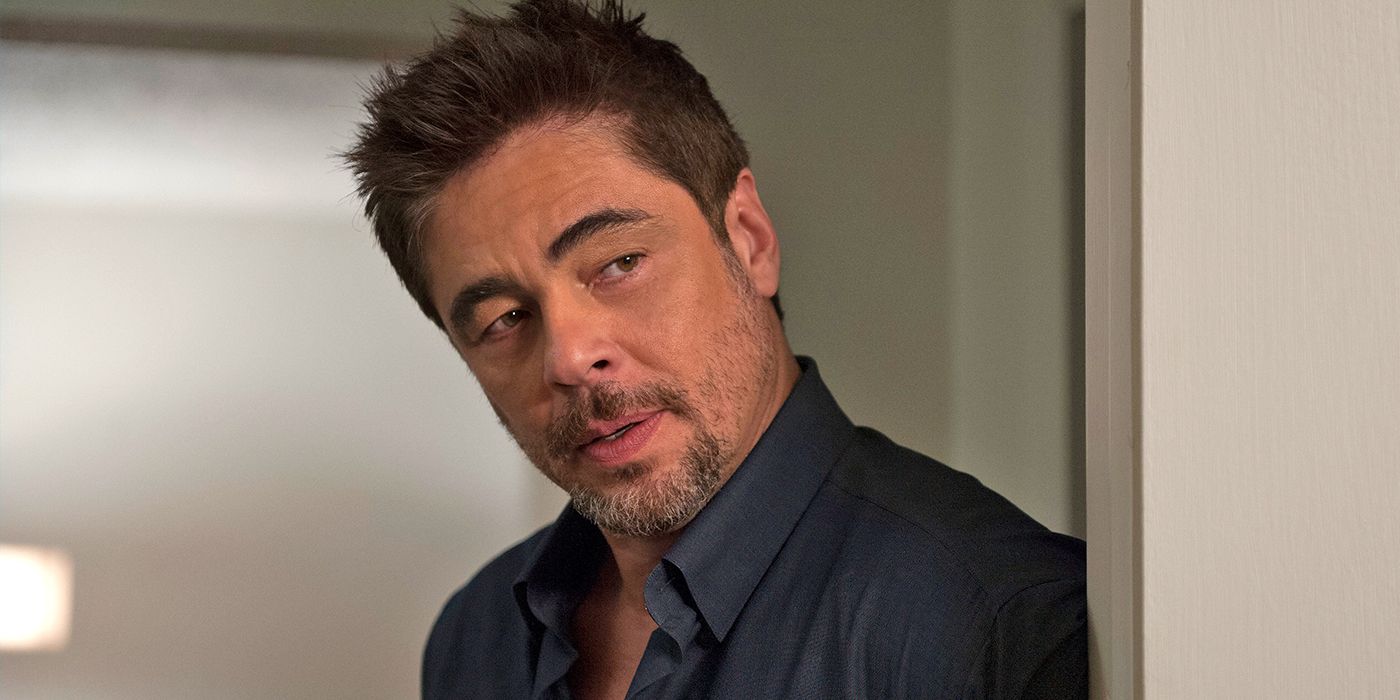
Denis Villenueve's cartel thriller stars Emily Blunt as Kate, an FBI agent whose idealism is tested when she is assigned to a task force investigating a Mexican cartel boss following a horrifying massacre in an Arizona suburb. Her handlers, Josh Brolin's flip-flop-wearing operative Matt Graver and Benicio del Toro's frighteningly efficient Alejandro, refuse to share any information with her. Sicario bases its tension and suspense on Blunt's and Del Toro's character's relentless pursuit to discover their true intentions. The direction of this film is similarly unorthodox, depicting the hunt for the cartel boss in the elemental structure of a war movie than a Western might expect from such a project. Roger Deakin's exquisite cinematography and Johann Johannsson's subterranean score combine for an impressively oppressive atmosphere.
This movie marked the initial chapter in what Sheridan has described as his loose frontier trilogy alongside Hell or High Water and Wind River. Nearly every obsession he would carry into the rest of his career is present in his earlier pieces of work. The border functions as the modern equivalent to the frontier, a space in which the institutions meant to protect society are as likely to fail as succeed. But the film trades on Blunt's performance as someone thrust into a world far darker than she had expected. She follows an arc as an outsider analyzing the inner workings of the system and quickly comes to the realization that her principles are irrelevant to those who operate within it. There's no clean victory here. Sicario is often considered to be the darkest expression of Sheridan's moral pessimism, emphasizing the design of the law enforcement system itself as being the main issue.

- Release Date
- September 17, 2015
- Runtime
- 122 minutes
- Director
- Denis Villeneuve
- Writers
- Taylor Sheridan
- Producers
- Basil Iwanyk, Edward McDonnell, Ellen H. Schwartz, Molly Smith, Thad Luckinbill, Stacy Perskie
KioskNews shows a cleaned-up reading view extracted from the publisher’s page — the original always lives on their site, not ours.