DPP warns of China-linked candidates
By Chen Yun and William Hetherington / Staff reporter, with staff writer


A growing number of China-linked figures are entering the local elections, the Democratic Progressive Party’s (DPP) China Affairs Department said yesterday as it urged vigilance over possible political influence.
A total of 19,695 candidates have registered for 11,051 positions in the nine-in-one local elections on Nov. 28, according to the Central Election Commission.
The department warned about three types of candidates.
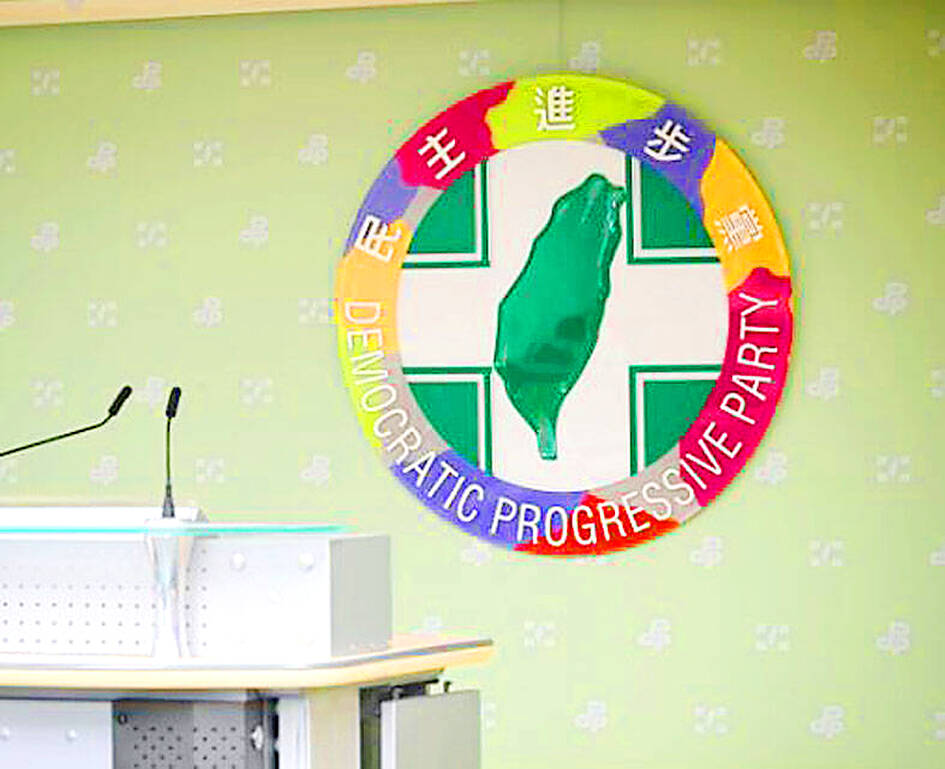
The logo of the Democratic Progressive Party is pictured at the party headquarters in Taipei in an undated photograph.
Photo: Chen Yi-kuan, Taipei Times
The first are those who clearly linked to China and building grassroots networks in Taiwan, it said.
For example, Labor Party candidate Chen Chu-ying (陳竹音) has publicly expressed support for unification with China, and said she hoped to give up her Taiwanese household registration to obtain a Chinese ID.
Chen plans to run for a New Taipei City council seat in the city’s 11th electoral district, and has maintained close contact with borough wardens in Sijhih, participated in temple activities and produced local videos to build her profile, the department said.
That approach is similar to that of China Unification Promotion Party founder Chang An-le (張安樂), who has long cultivated ties with neighborhoods, farmers’ and fishers’ associations and temples, it added.
The second are Chinese spouses, it said.
This year, 26 Chinese spouses registered to run for office, seven more than in the previous election and an increase of nearly 37 percent, the department said.
Nineteen are running for village or neighborhood chief, while two are seeking seats on municipal councils, two on county or city councils, one is running for township or city mayor, and two are seeking seats as township or city representatives, it said.
The participation of Chinese spouses in politics face many issues, such as nationality, loyalty obligations and eligibility for public office, the department said, adding that it is also necessary to determine whether such people are attempting to challenge existing laws.
Their eligibility to run, sources of campaign funds and political connections must all be strictly scrutinized, it said.
The third are politicians who have long maintained close ties with China’s “united front” and Taiwan Affairs Office (TAO), it said.
The department expressed concern over the eligibility of Chinese Nationalist Party (KMT) candidate Xu Gong-fan (徐功凡) to run for Miaoli County Toufen Township (頭份) mayor, after reports said he had led delegations to China several times and been received by TAO officials.
The trips were also publicly praised on the official Web site of an official from China’s Sichuan Province.
“If these were ordinary city-to-city exchanges, why were the people receiving the delegations so often from the TAO?” the department asked. “If these were simply visits, why would China’s united front agencies continue to devote personnel and resources to engaging with local political figures, neighborhood chiefs and grassroots organizations in Taiwan?”
There are the questions that Taiwanese must ask, it said.
The government must investigate the matter in accordance with the law, the department said, adding that all candidates have a responsibility to clearly explain to voters their backgrounds and connections.
It called on the authorities to strictly scrutinize candidates’ eligibility, nationality status, political donations and overseas resources, saying that Taiwan’s grassroots democratic safeguards must be protected.
KioskNews shows a cleaned-up reading view extracted from the publisher’s page — the original always lives on their site, not ours.